
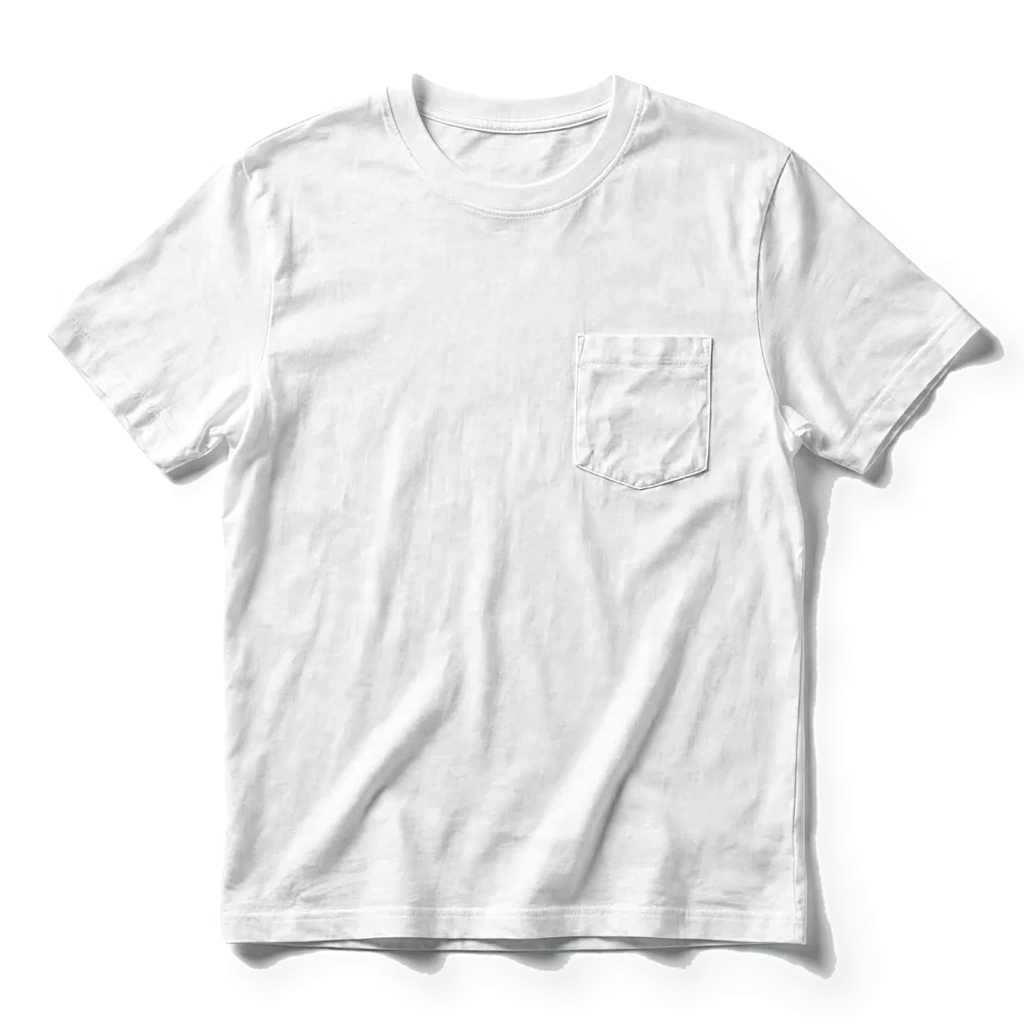
Pocket T-Shirt Manufacturer Bangladesh for Casual Brands and Workwear Programmes
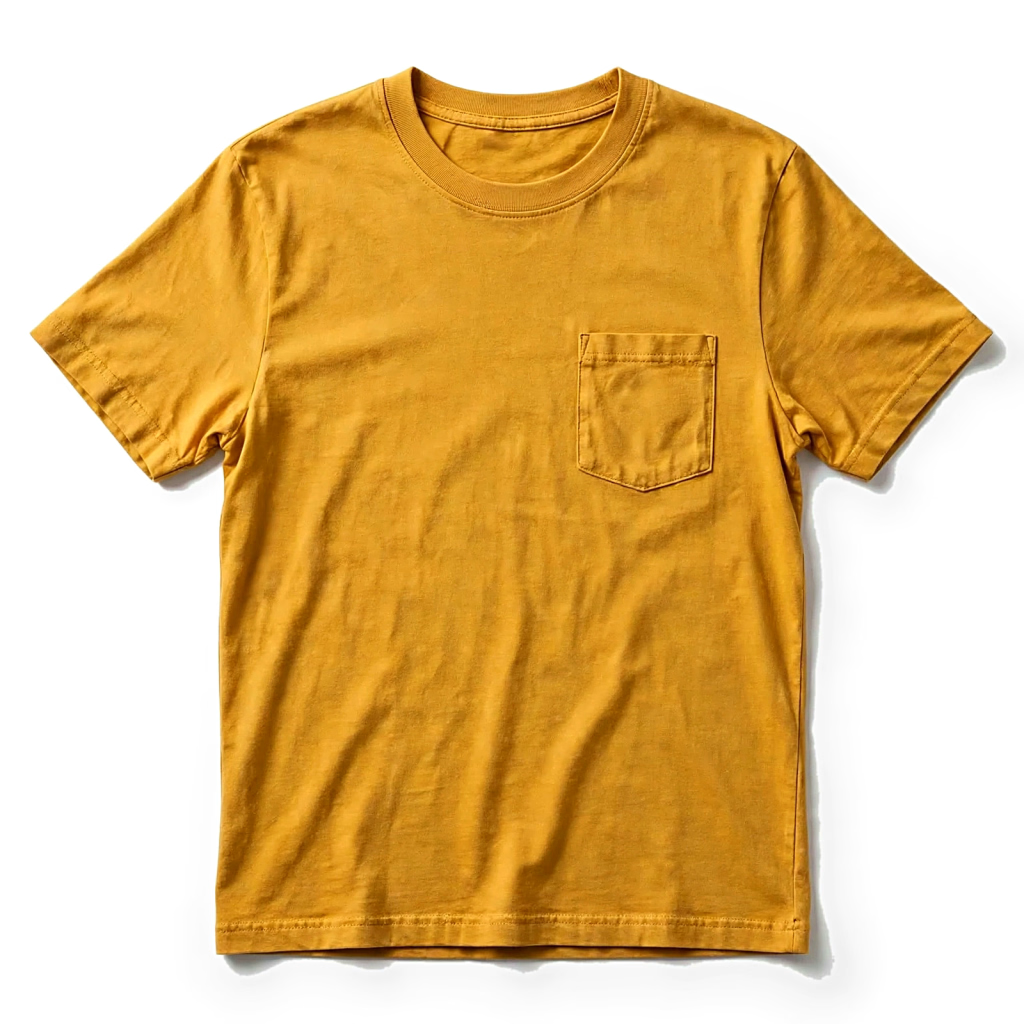
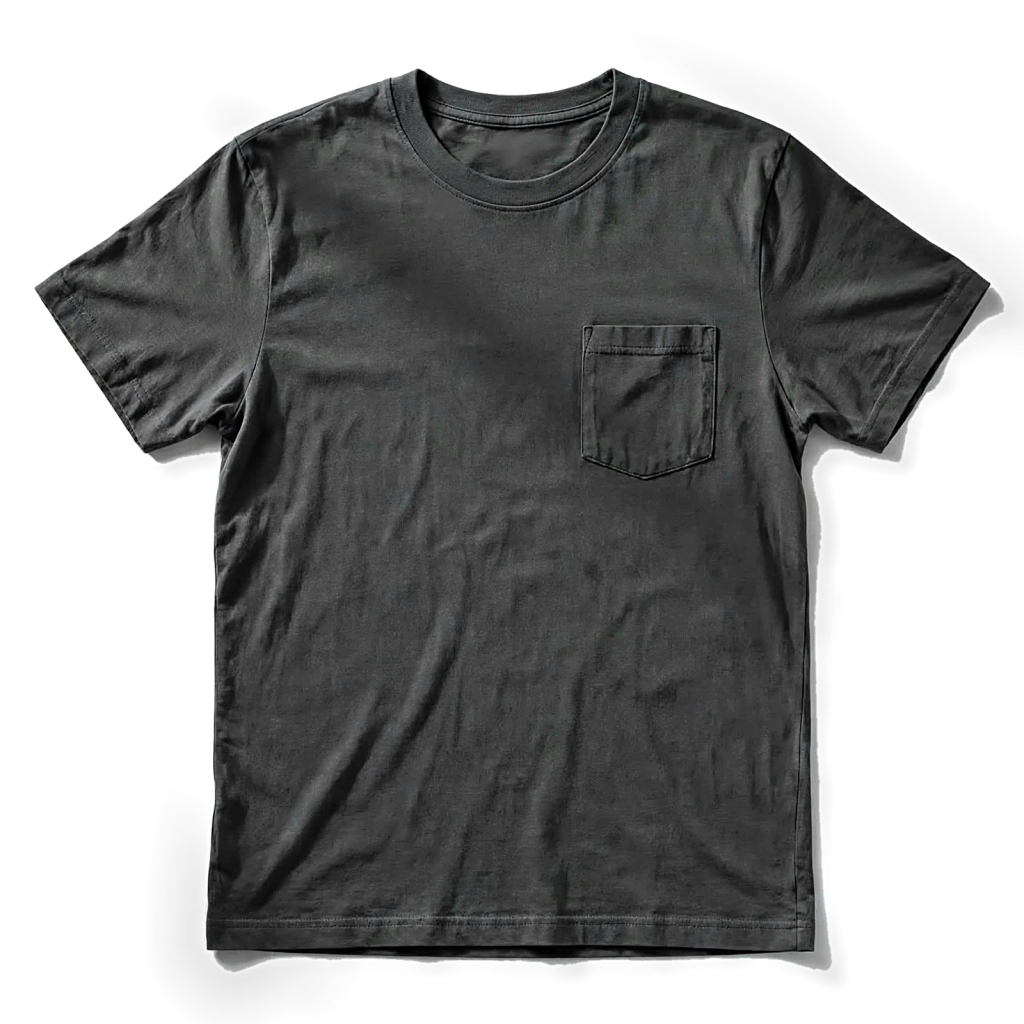
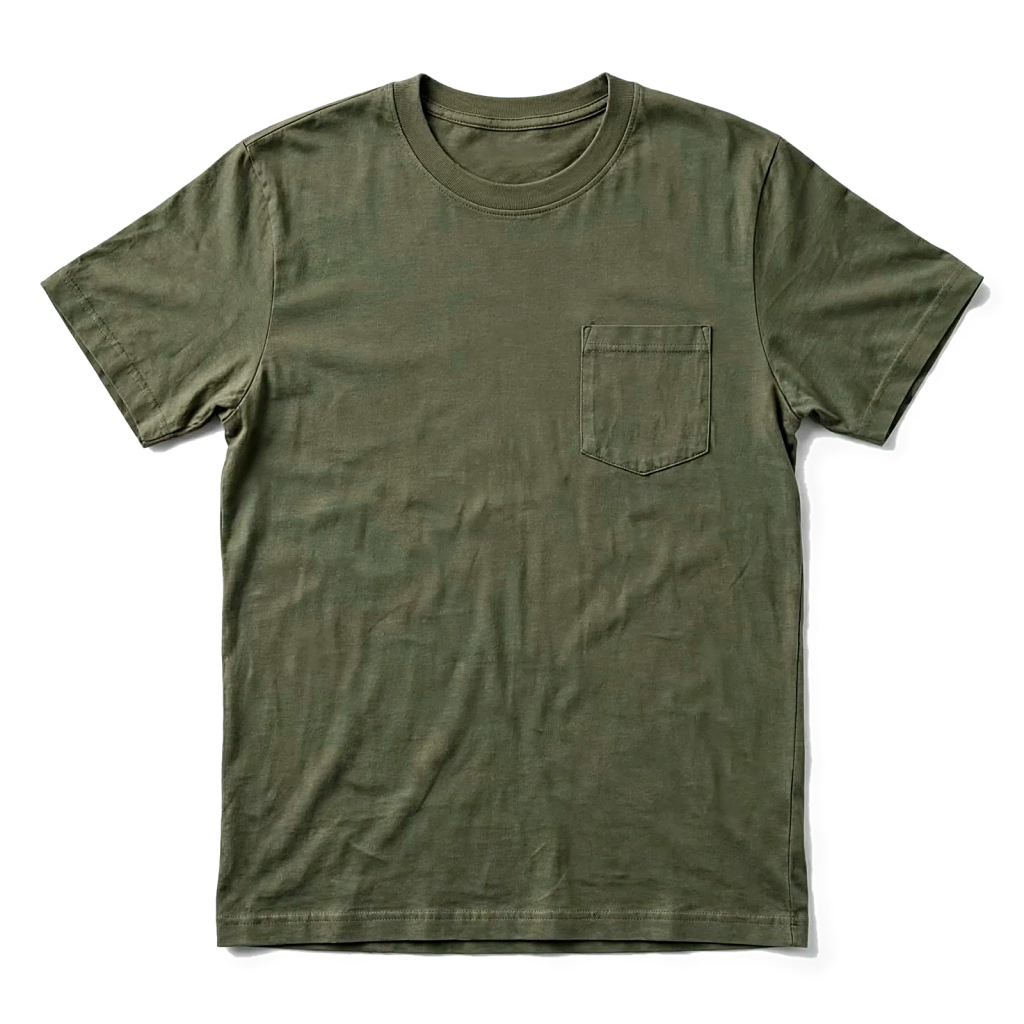
The pocket t-shirt has lived several lives: workwear staple, surf and skate uniform, quiet premium basic. On a plain garment the pocket is what the eye lands on, and every wearer judges it. Retail brands use it to lift a basics range above the plain tee beside it; workwear buyers use it because a pocket is useful; promotional buyers use the pocket itself as the branding position.
Our lines sew pocket tees as a standing style, with the pocket operations templated so the last shirt off the line carries its pocket exactly where the first one did.
Pocket T-Shirt Fabric Options
- 100 percent cotton single jersey at 160 to 180 GSM – the classic pocket tee body, substantial enough to carry the pocket cleanly
- Slub jersey for a textured, garment-dyed casual look
- Heavyweight cotton at 200 to 220 GSM for workwear and premium basics programmes
- Cotton and polyester blends for hard-washing work and service use
- Organic cotton options, knitted to order for sustainability-led basics ranges
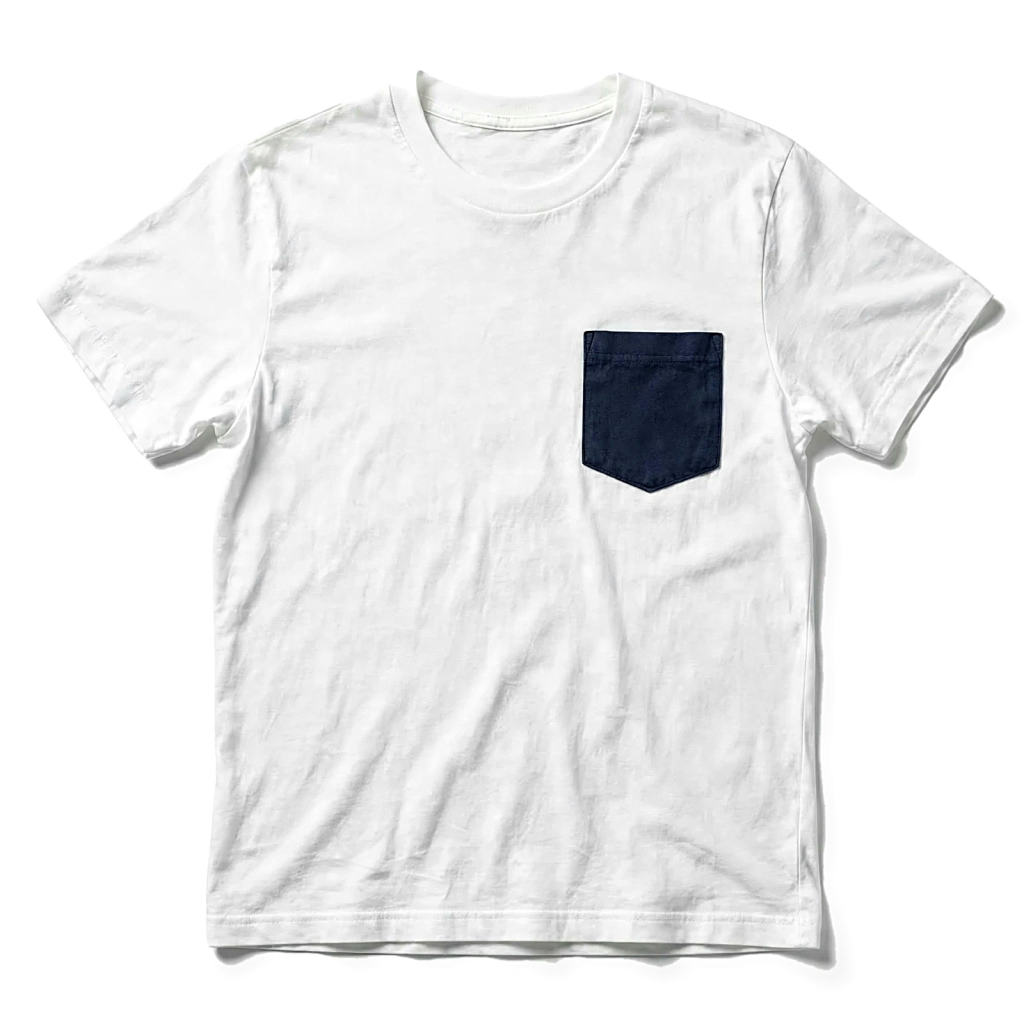
Contrast pockets draw from the same shade library as our bodies, or from woven checks, chambray and printed cloth where a fashion brief makes the pocket the whole story. Same-fabric pockets are cut from the body’s own fabric lot and shade-checked against it, weight matched so the pocket never drags the chest.
Pocket T-Shirt Styles, Pockets and Fits
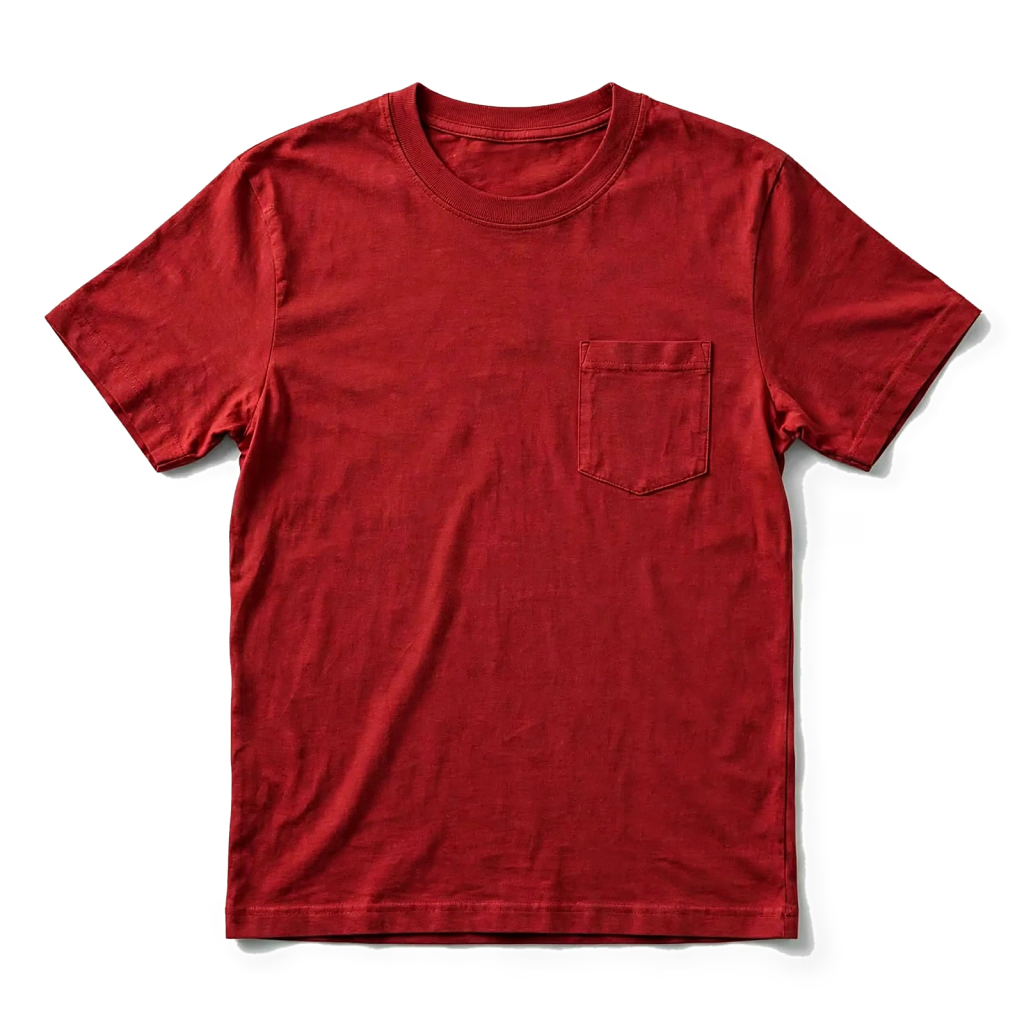
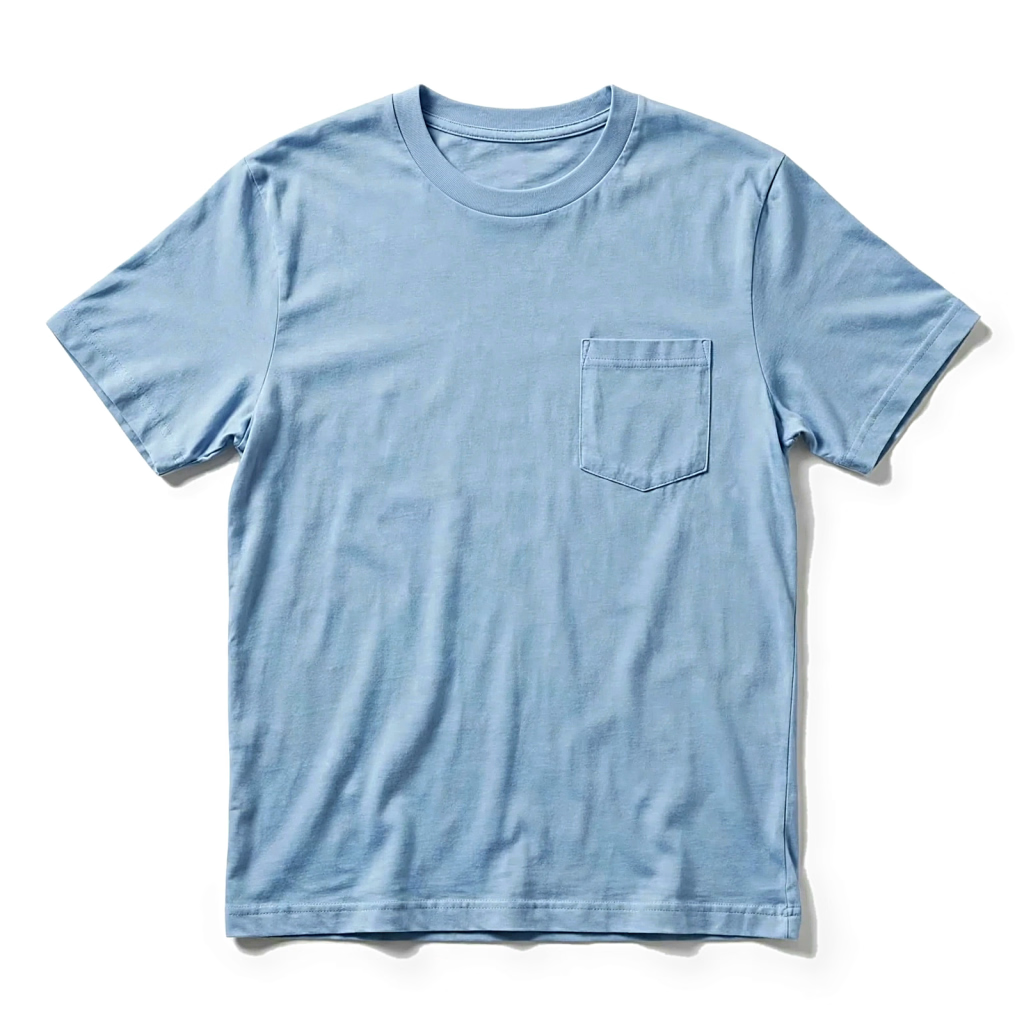
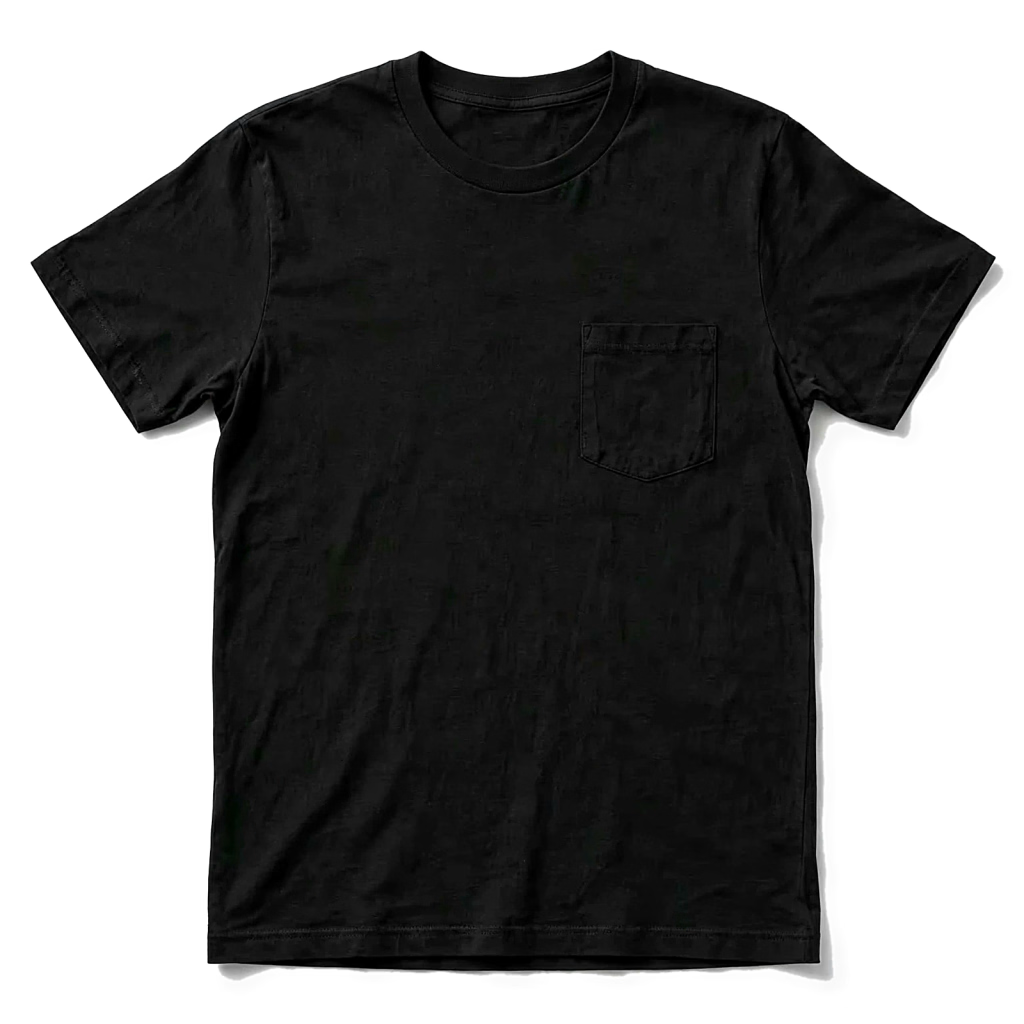
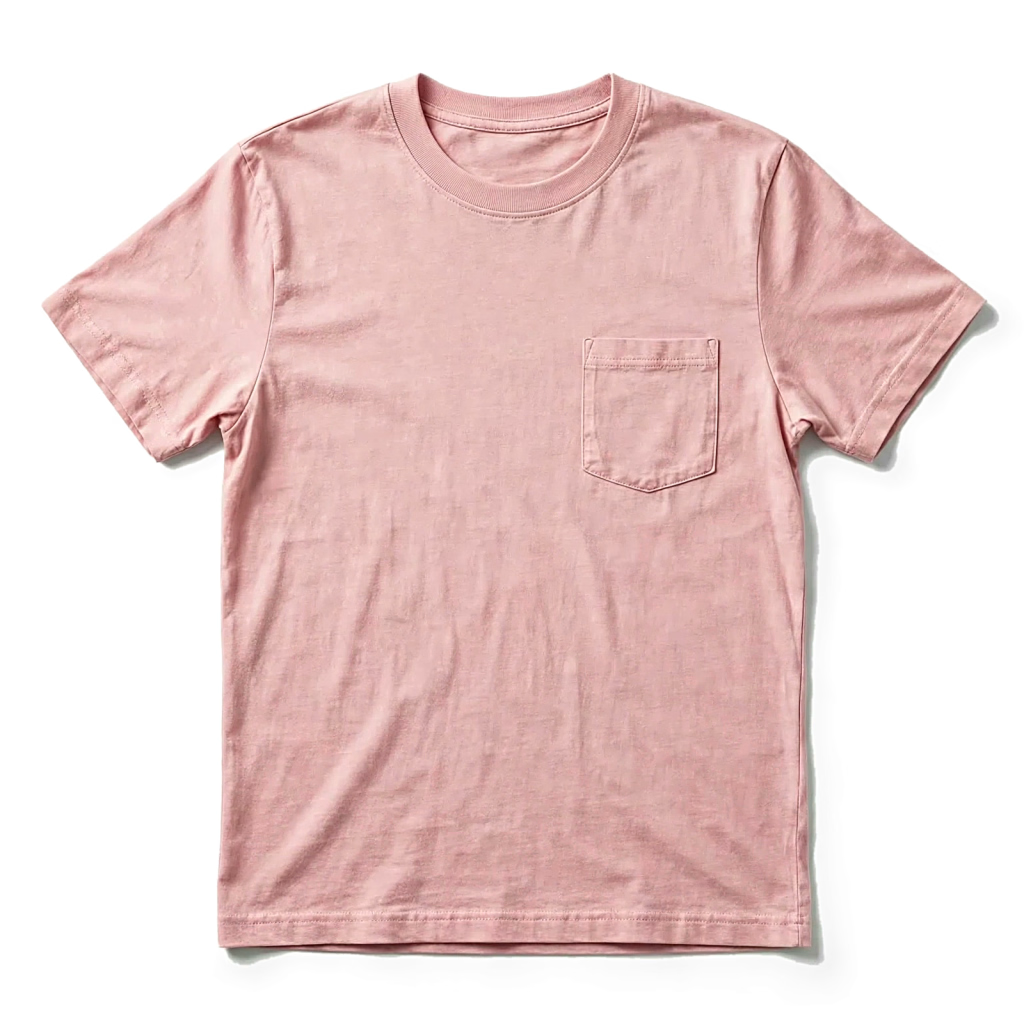
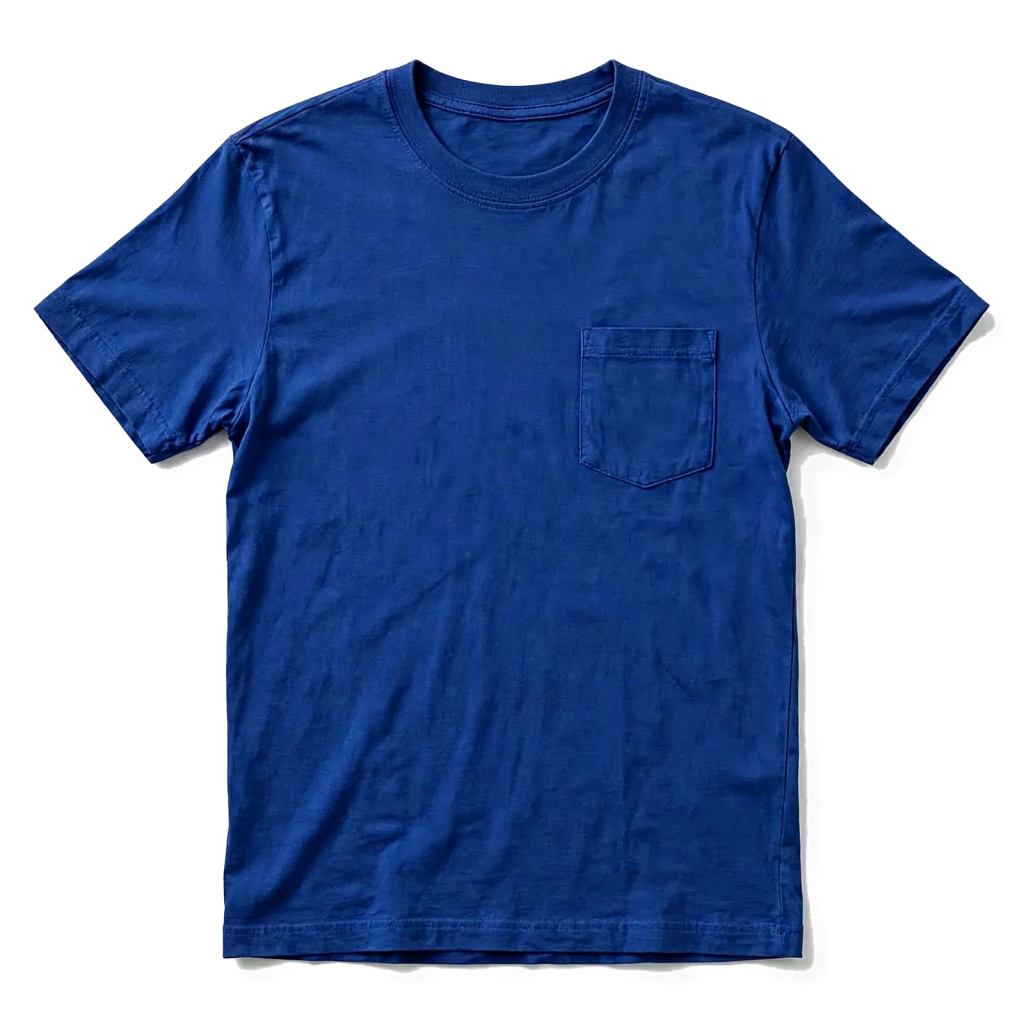
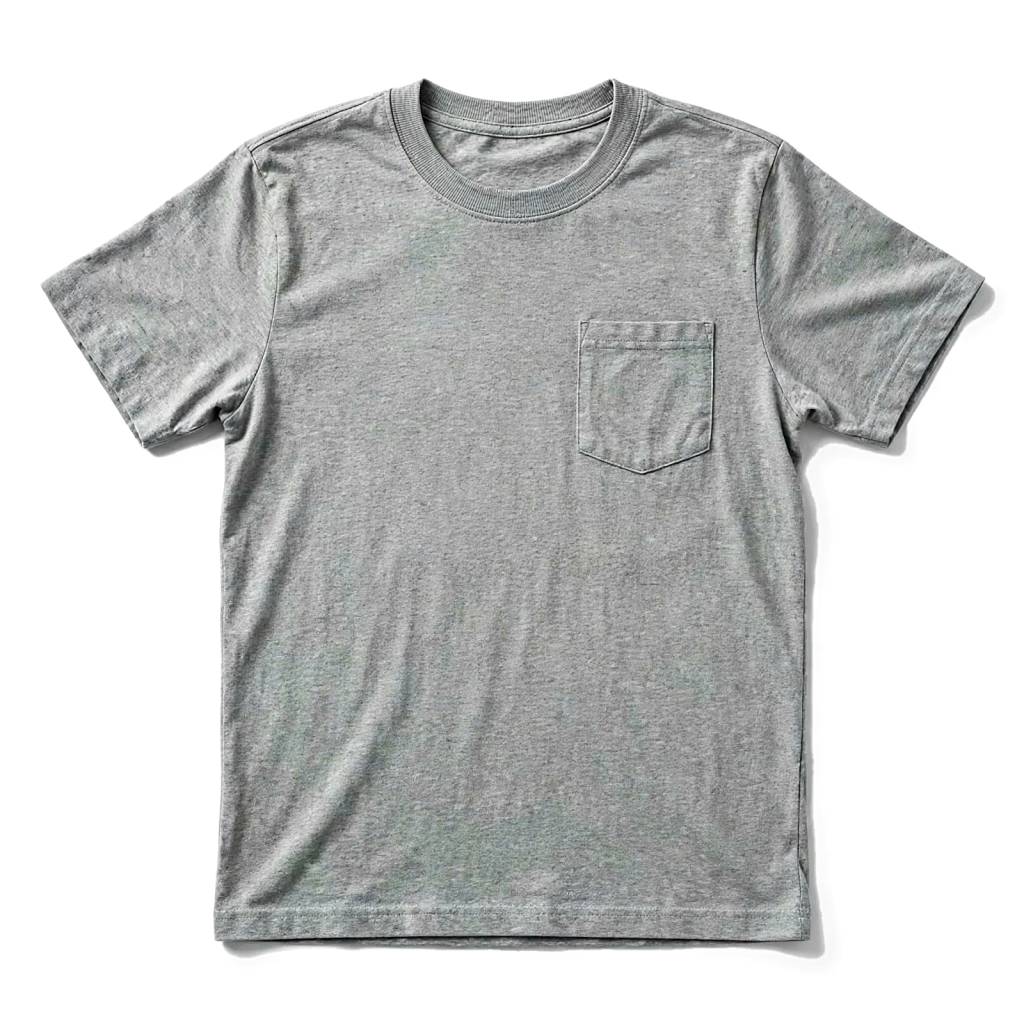
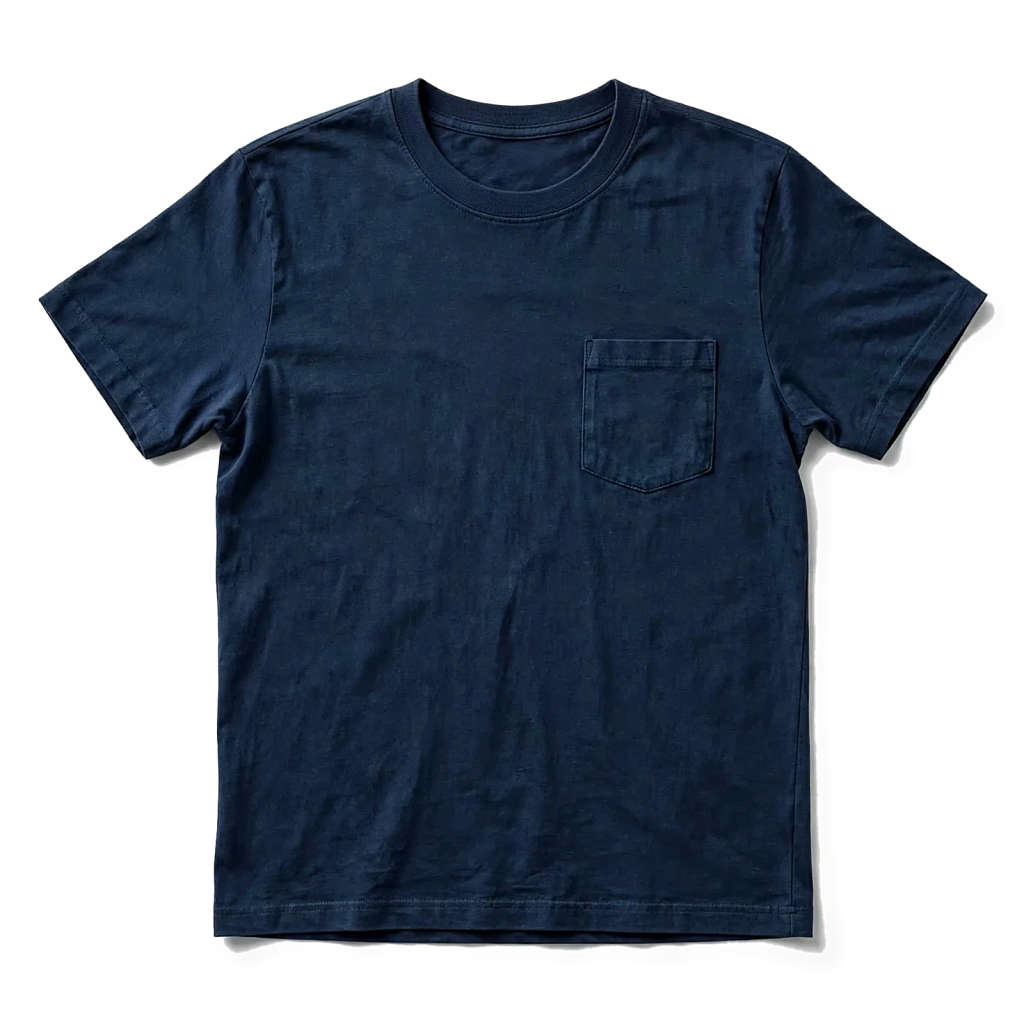
The classic pocket is a single chest patch, squared or with a pointed bottom, sized to the chest and set on the left as worn. Variations carry the design story: a button-through pocket for workwear and heritage styles, a contrast pocket in a second colour or a woven fabric, a printed pocket that carries the artwork instead of the chest, and a double or sleeve pocket for utility-led programmes.
Fits run regular, relaxed and slim, with ladies styles shaped and pocket-scaled, not a mens pocket shrunk. Long sleeve and henley-placket versions extend the style into cooler months and heritage-led ranges. Contrast-pocket programmes for Italy and South Korea push the story hardest, pairing chambray, checks and second colours against plain bodies.
All variants share the same pocket template family, so a buyer can build a small pocket-tee collection without paying for separate developments on every style.
Pocket Cutting, Setting and Stitching Craft Behind Workwear Tees for the USA, Canada and Japan
A pocket fails in three ways: it sits crooked, it bags open, or its stitching wanders. We cut pockets on a template so every one is the same shape, press the edges before setting so the stitch line follows a true edge, and set the position from measured points off the shoulder and side seam, held to a couple of millimetres and checked on first pieces against the approved sample.
Workwear builds for the USA and Canada add a stitched pen slot inside the pocket and bartacks at both top corners, set at a density that survives daily pulling. Heritage buyers in Japan favour the button-through pocket, its stitch density and bartack placement matched to vintage workwear.
Custom Embroidery, Printing and Branding
The pocket offers branding positions other tees cannot: a small embroidered mark on the pocket itself, a print that appears to go into the pocket, or a woven label on the pocket edge. Chest printing beside or above the pocket and full back prints serve promotional programmes.
Private label finishing – neck print or woven label, branded tape, folded and bagged presentation – runs in the same operation. Buyers who run a full basics range pair pocket tees with our blank t-shirts for printing so the pocket and plain styles share one fabric and shade standard.
Custom Sizes, Fits and Colours
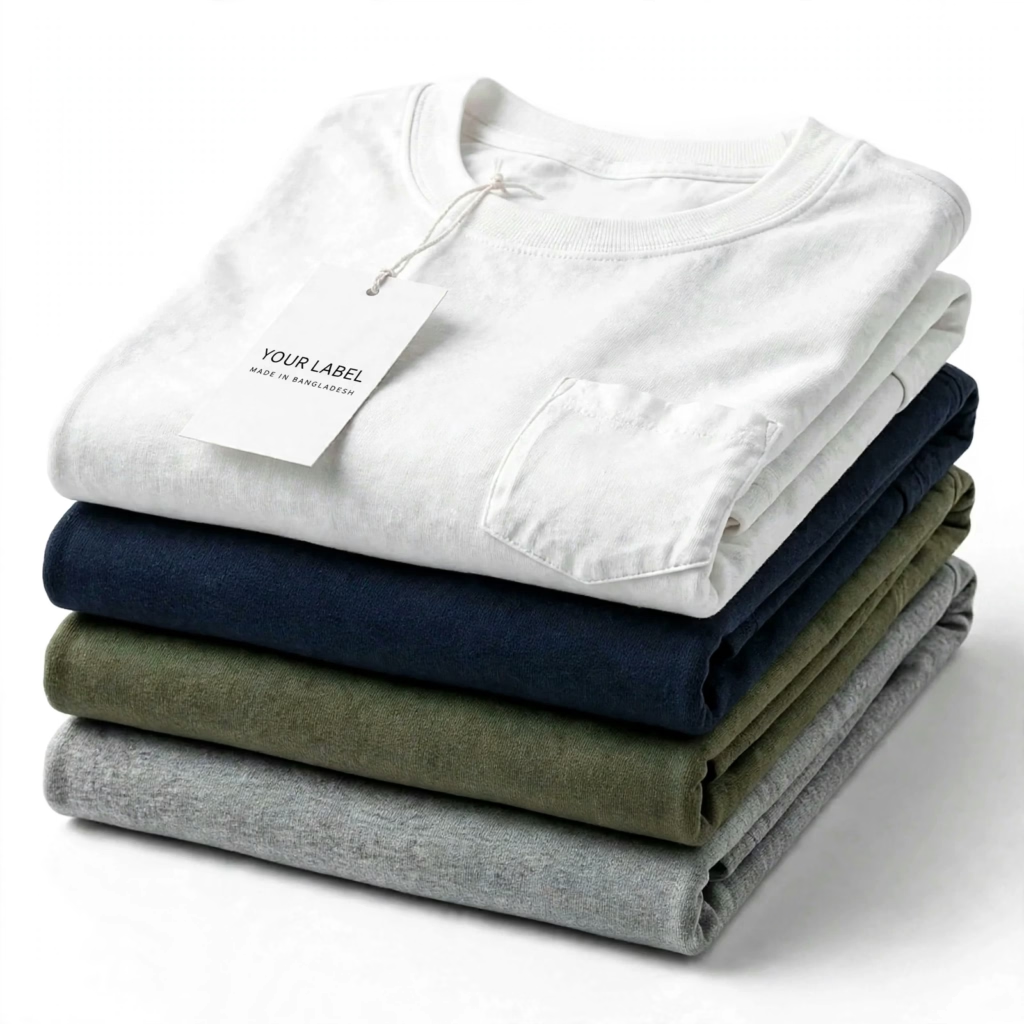
Sizes run XS to 3XL in mens, with ladies and youth grading available, and the pocket is re-proportioned across the run – a detail cheaper makers skip, leaving small sizes wearing an oversized pocket. Core colours cover white, black, navy, grey marl, olive, red and sky, with seasonal and contrast shades dyed to order. Two-tone programmes, body and pocket colours swapped across a pack, are quoted as one style family.
Pocket T-Shirt Sampling and Development
Sampling shows the pocket at full honesty: production fabric, production stitching, the pocket set by the same template the bulk will use. Buyers check position, proportion and feel, and we adjust size or placement on a revised sample where the design eye wants it moved.
A few millimetres at this stage is a conversation; in bulk it is a remake. Studio photographs help buyers in the UK, Canada or Australia judge placement alongside the couriered sample.
Quality Assurance and Production Follow-Up
Pocket position and stitching are on the inspection checklist by name: first pieces from every bundle are measured for placement, finished shirts checked for open or bagging pockets, and contrast styles checked pocket shade against body shade under standard light.
The wider garment follows the same routine as all our tees – fabric checked before cutting, measurements verified, final AQL inspection with photographs shared. Workwear programmes for Germany and the Netherlands carry the fibre-content, care and origin labelling those markets require, verified on the finished garment. One contact follows the order, so a pocket question reaches someone who can walk to the line.
Pocket T-Shirts for Workwear, Retail Basics and Promotions
Workwear buyers value the pocket as equipment – a place for a pen, a pass, a phone kept shut with a button, for trades that bend and climb. Retailers value it as the smallest design story there is, the detail that lets a basics range hold a better price. Promotional buyers value a surface nobody else at the event is using.
All three judgements come down to the same thing: the pocket is the garment’s signature, and it has to be sewn like one. Programmes across the USA and Canada reorder the style season after season because a good pocket tee does not date.
Why Source Pocket T-Shirts from Bangladesh?
A pocket tee looks like the simplest garment in the catalogue, and that is why it exposes a factory: the pocket is either straight, flat and in the right place, or the shirt is wrong. Bangladesh suits it because its sewing lines are deep in this kind of work – jersey knitted and dyed close to the cutting tables, operators who set pockets all day.
The supporting trades sit in the same districts: chambray and checks for contrast pockets, buttons and bartack capacity for workwear builds, dye houses that hold body and pocket shades to one standard. A drifted shade is corrected in days, and reorders are sewn against the corrected standard.
Why Choose Siatex Bangladesh?
Siatex Bangladesh has manufactured clothing in Bangladesh since 1987, and the pocket tee is a house speciality: your pocket template, placement marks and stitch settings are recorded on a specification file, and the approved sample kept beside the bulk at inspection – a pocket two millimetres off is caught here, not in your warehouse.
One merchandiser owns your order from fabric booking to carton, and the file makes the second order simpler than the first. Volume buyers can see the same template discipline at scale on our bulk t-shirts programme.
Looking for a Pocket T-Shirt Manufacturer Bangladesh?
Same-fabric and quiet, or contrast and loud – which pocket story does your range need? Send the style and the pocket idea, and we will sample both routes on production fabric – what you approve is what the bulk delivers.
If you are still sketching the pocket, a photograph of a shirt you like is enough to start – proportion and placement are conversations we have every week.
Siatex Bangladesh
Made in Bangladesh
OEM/ODM Private Label Production Only
Pocket Size and Placement – The Proportions That Make the Shirt
A standard chest pocket sits with its top edge roughly at the level of the second button of a shirt placket, its inner edge a measured distance from the centre front, and its width near a ninth of the chest – proportions worked out over decades of workwear.
Move it two centimetres outward and the shirt looks vintage; make it ten percent larger and it reads as utility; shrink it and the style turns fashion-quiet. None is wrong, but each is a decision, and it belongs at sampling, in millimetres, on the approval record.
We grade pocket size across the size run so an XS and a 3XL carry the same design, not the same pocket.
Same-Fabric, Contrast or Printed – Three Pocket Stories
The same-fabric pocket is the purest version: the detail is shape and stitching alone, and it suits premium basics where quiet is the brand. The contrast pocket – a second colour, a chambray, a check – makes the pocket the design, and suits younger, surf-led ranges that need one loud note.
The printed pocket carries artwork on the pocket only, a memorable promotional position that keeps the rest of the shirt clean and wearable after the event. All three run on one body block, so a range can offer them side by side and let the customer choose the volume.
A caution from experience: printed pockets must be printed before the pocket is sewn, never after, or the print edges are trapped by the stitch line – a small process point that separates factories who know this garment from those learning it on your order.
Workwear Pockets – Buttons, Bartacks and Honest Use
A working pocket is used hard: hands in and out all day, tools and phones adding weight the fashion version never sees. For workwear we deepen the pocket slightly, add a button or concealed stud where the trade needs security, bartack both top corners, and sew it in heavier thread on a reinforced setting.
The body fabric steps up in weight at the same time, because a strong pocket on a weak shirt simply tears the shirt instead. Buyers in the USA, Europe and Canada specify this build once, and it becomes their standing pattern.
Finished cartons sail from Chattogram to Rotterdam for mainland Europe, Savannah for the United States and Montreal for Canada, with export paperwork prepared alongside the goods.