
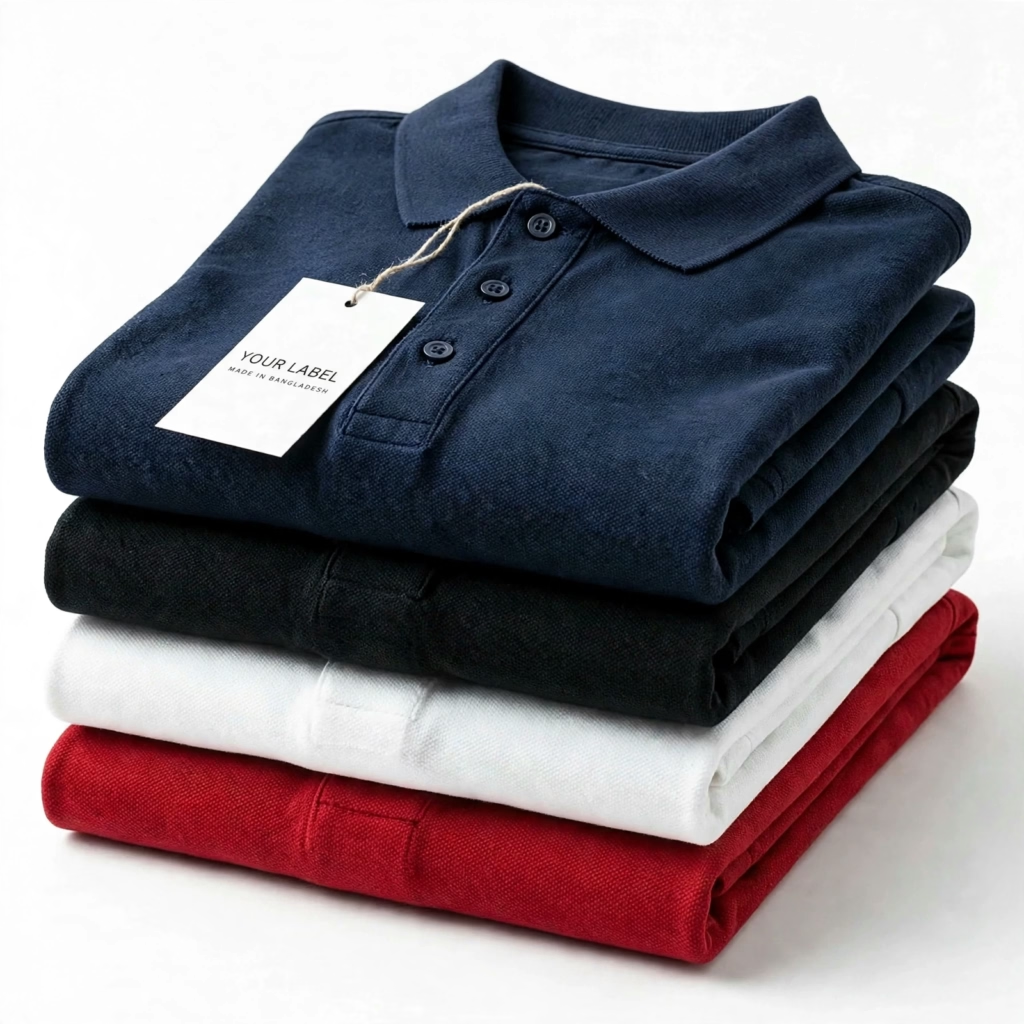
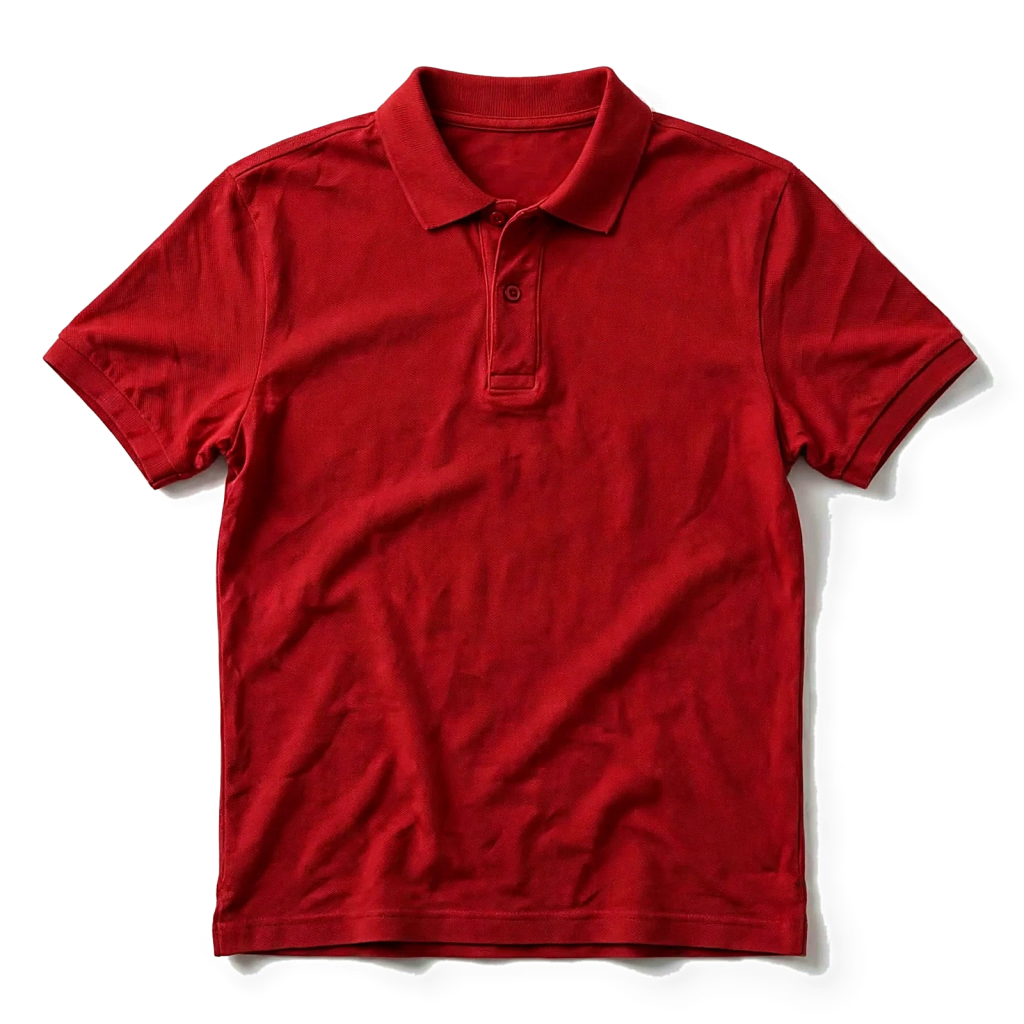
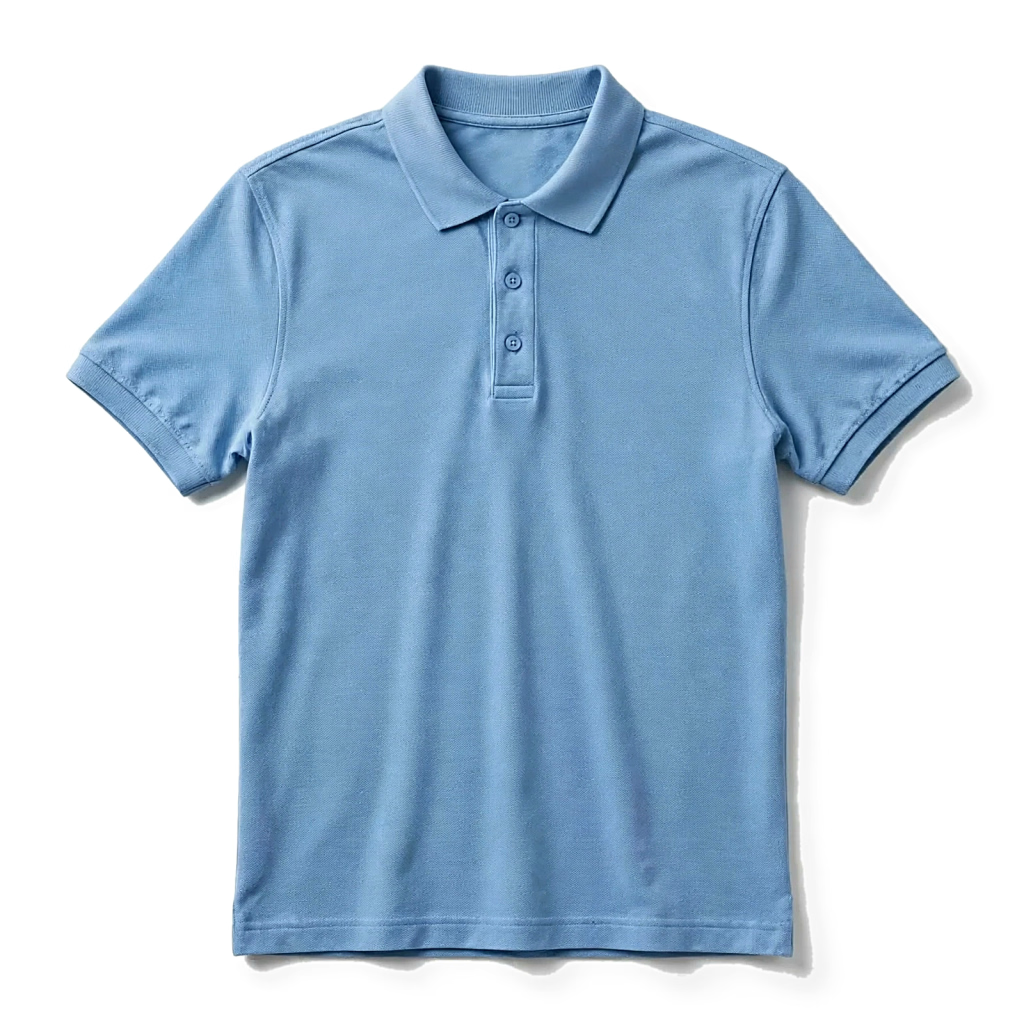
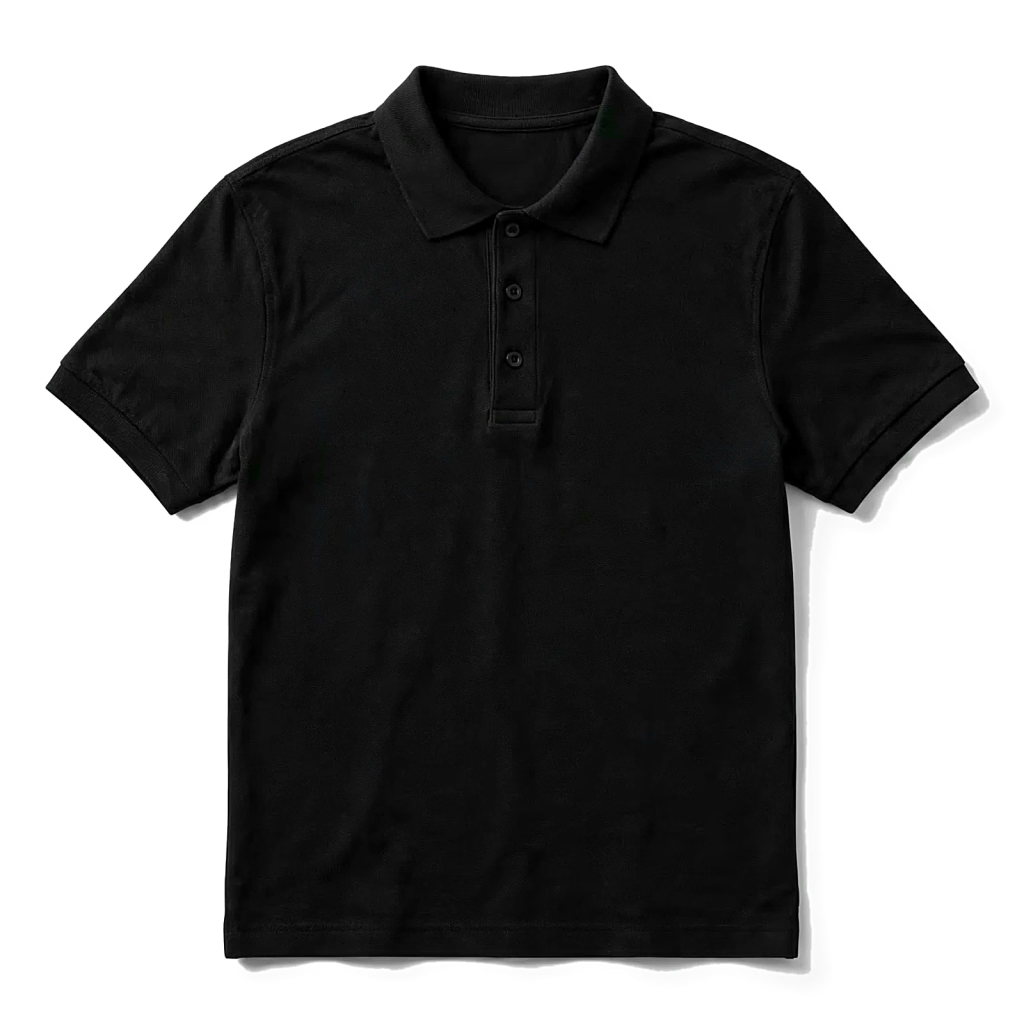
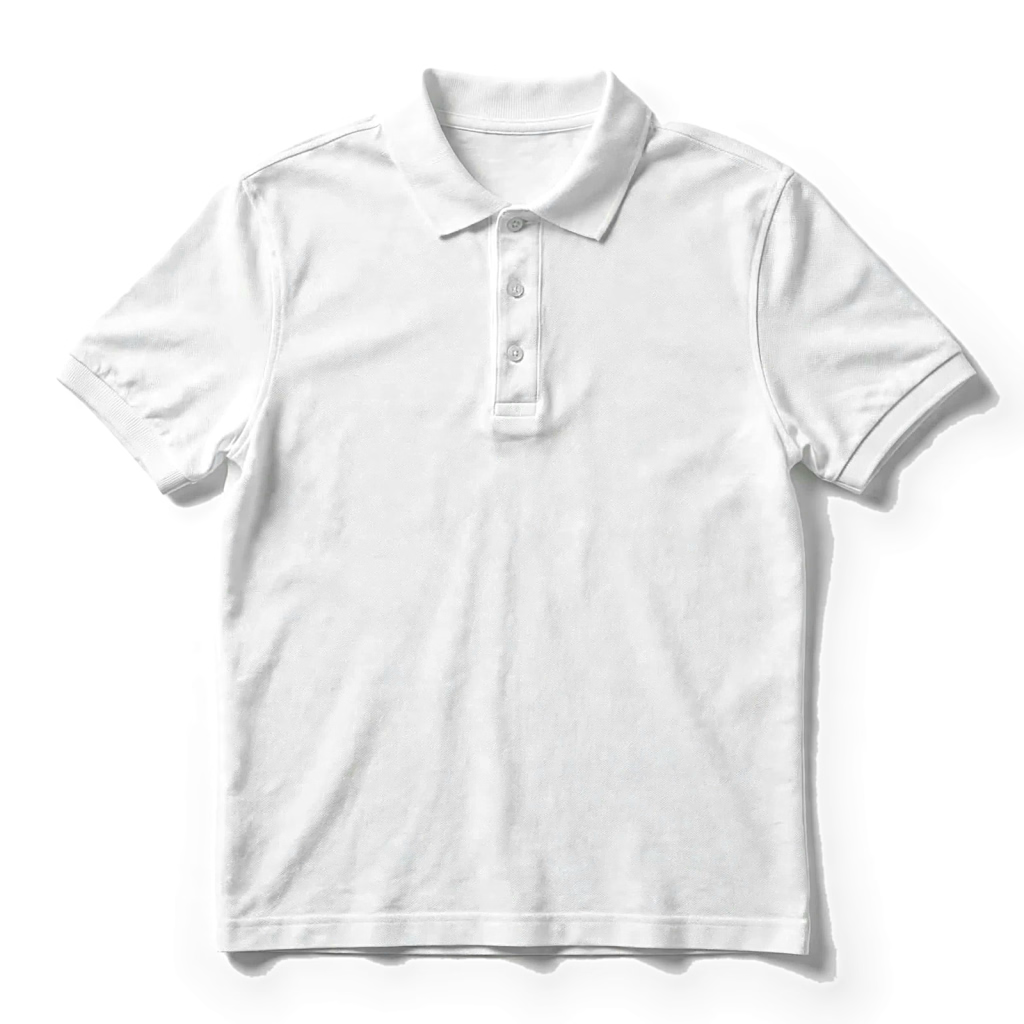
Polo Shirts Manufacturer Bangladesh for Uniform, Corporate and Team Programmes
The polo shirt became the world’s staff uniform because it solves a problem: smart enough for a customer meeting, comfortable enough for a full shift, and priced for issuing to a whole workforce. But a uniform is a system, not a shirt – it needs the same shade across men and women, depots, and this year’s and last year’s intakes.
That system thinking is how our polo programmes are run: one specification, one embroidery standard, one shade file, held for the programme’s life, one team running the whole chain in-house – knitting, dyeing, sewing, embroidery, packing – and a top-up reorder given the same care as the first full order.
Polo Shirts Fabric Options
- Cotton polyester piqué at 200 to 220 GSM – the uniform workhorse, colourfast and shape-stable through constant washing
- 100 percent cotton piqué for programmes that prefer a natural hand and classic finish
- Cool-flow and moisture-management piqué for outdoor, delivery and warm-climate staff wear
- Heavyweight piqué at 240 GSM for premium corporate and hospitality programmes
- Antimicrobial and easy-care finishes where the working environment asks for them
Uniform fabrics are chosen for the wash they will actually get – domestic, commercial or industrial – so we ask before we quote. Cool-flow piqué earns its place on warm-climate programmes, from southern USA delivery fleets to UAE resort staff wear.
Polo Styles, Collars and Fits for Staff Wear
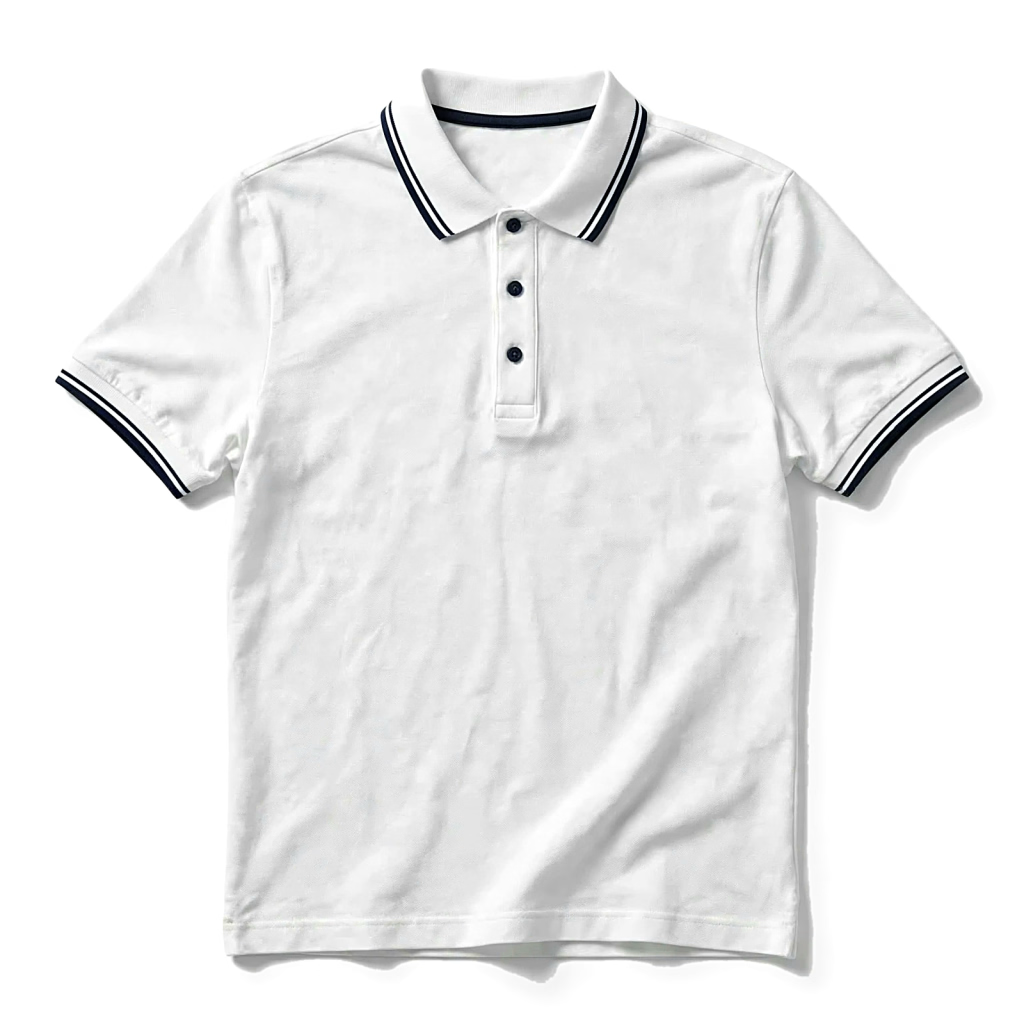
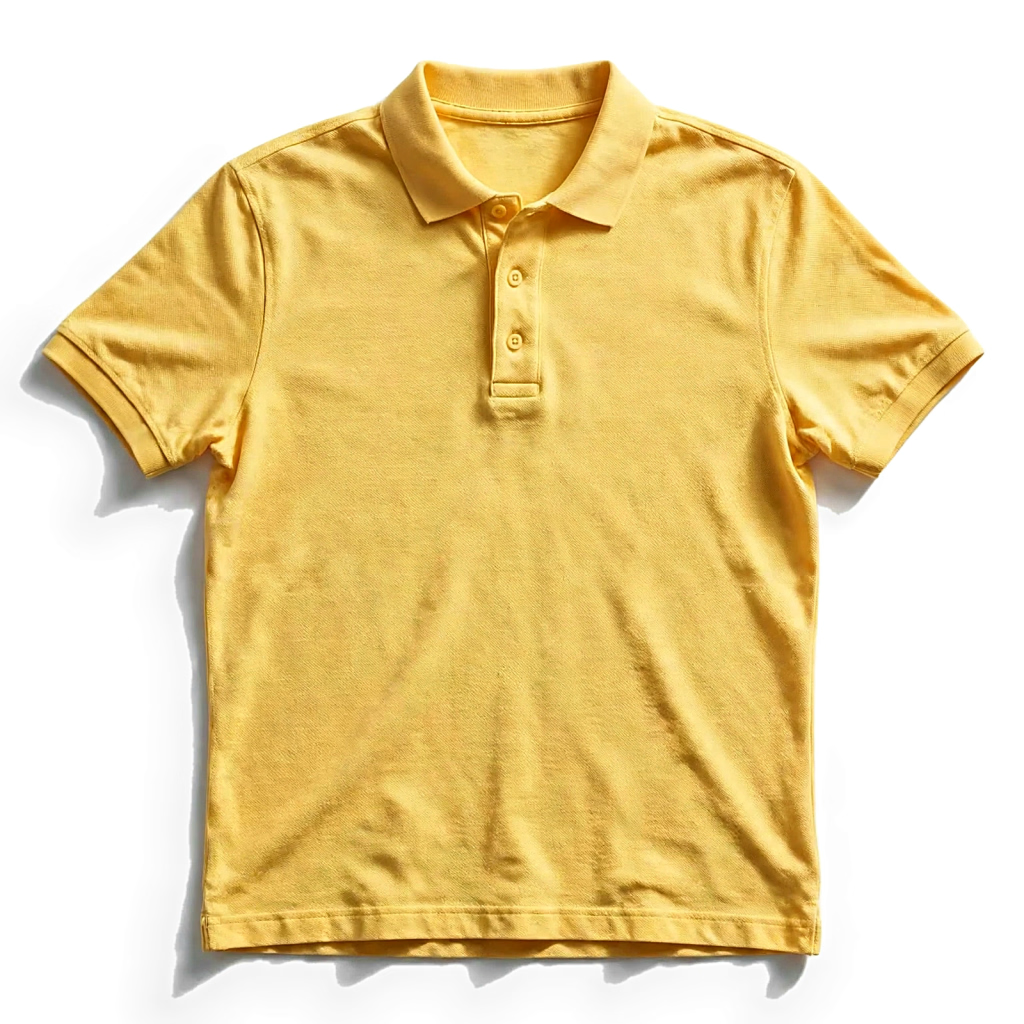
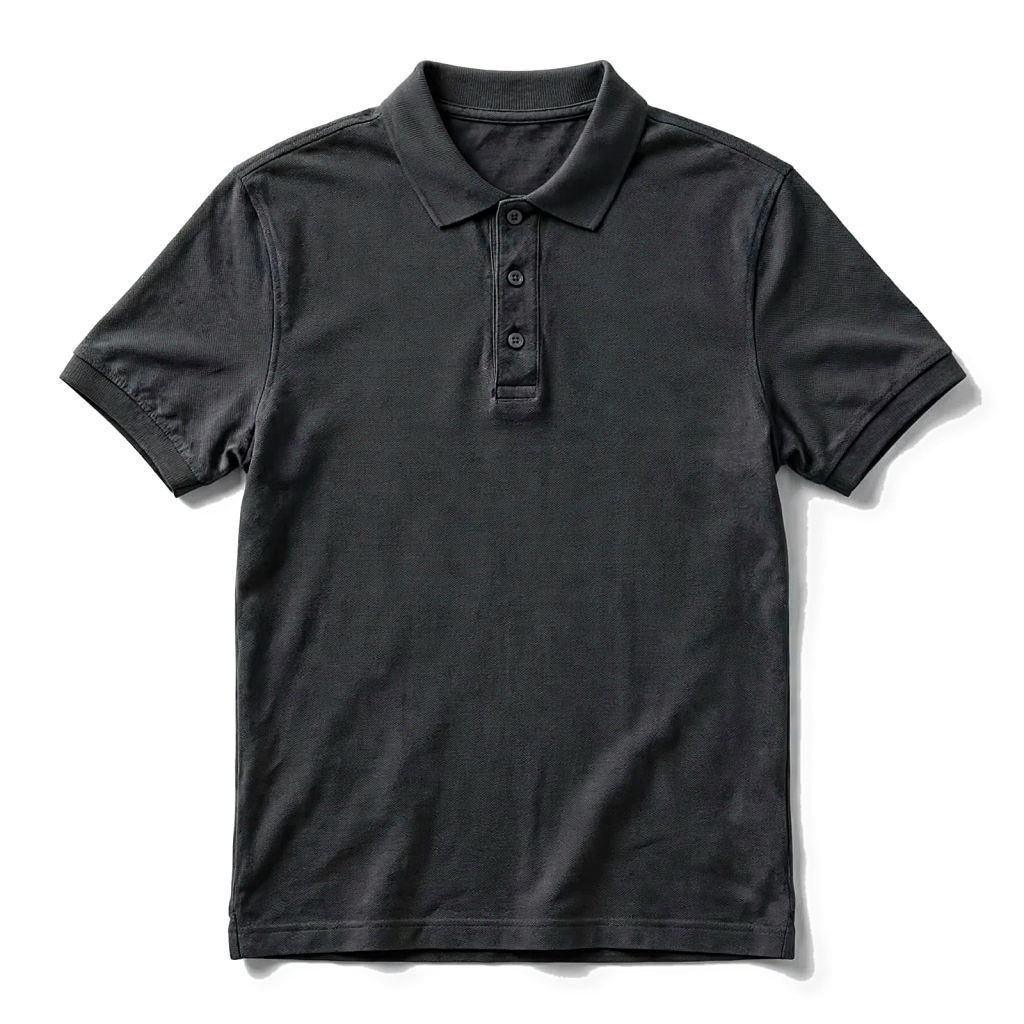
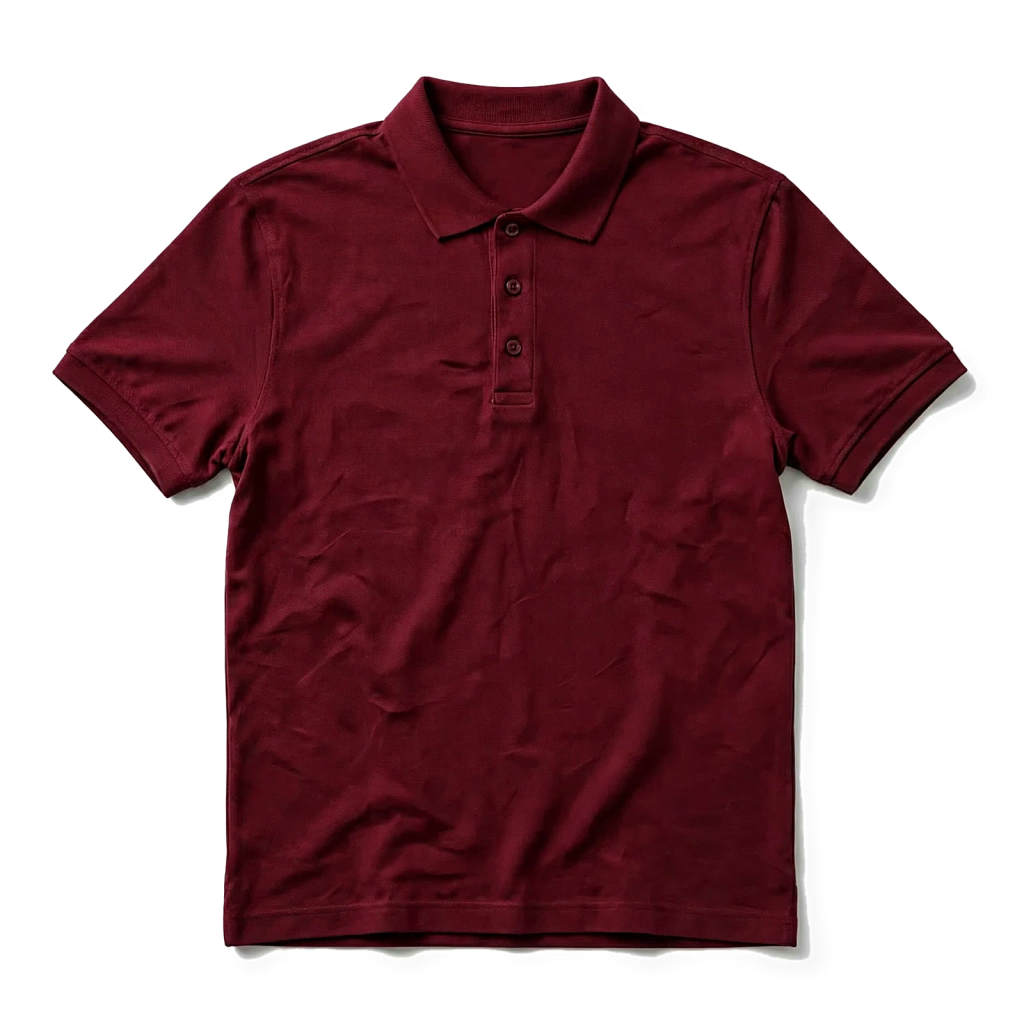
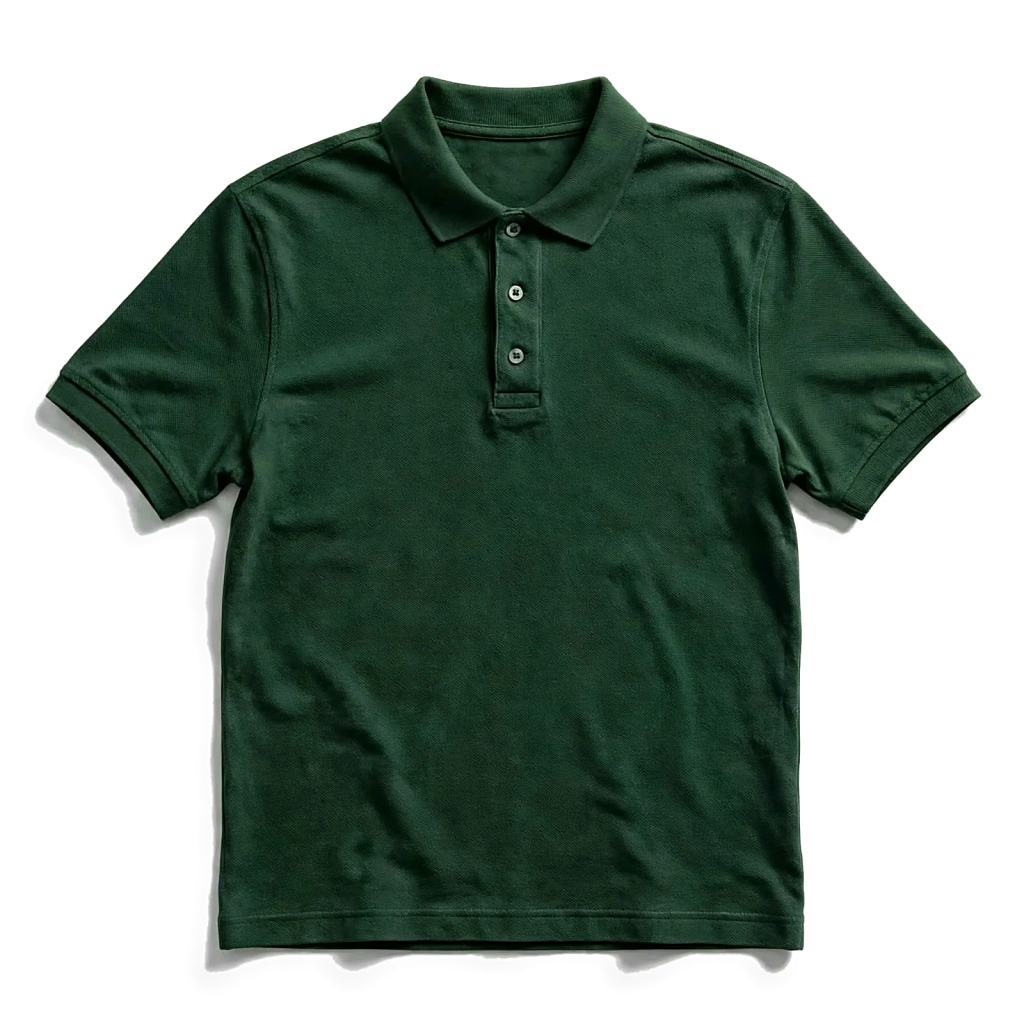
The core programme style is the placket polo with a knitted collar and cuffs, in mens and ladies fits – the ladies style shaped, with a shorter placket, rather than a shrunken mens pattern. Long sleeve polos cover outdoor and winter roles, and tipped collars and contrast panels carry brand colours.
Golf and resort styles – breathable piqué, a softer hand feel, a smarter collar – serve leisure programmes in Spain and the UAE, and hi-visibility styles cover site briefs. Every style shares the shade standard and embroidery placement map, so a mixed issue dresses as one team.
Name and role personalisation – names, job titles, site names embroidered per garment – runs from the buyer’s issue list, checked name by name at packing. School uniform polos hold one shade and one collar standard across every age group.
Piqué, Collar and Placket Craft – Built to the German Collar Standard
Uniform polos fail at the collar and the placket first, so that is where the craft concentrates: collars knitted to size and finished to lie flat after washing, plackets fused and stitched to stand straight, buttons secured with wrapped shanks, and side vents reinforced for daily wear. These standards sit in the programme specification the inspection team measures against.
German corporate buyers judge a knitted collar hardest – it must sit flat, hold its edge and match the body shade wash after wash – so collar construction is specified and sampled to that standard. Shoulder seams are taped, hems levelled for the tumble dryer, and the piqué face knitted tight enough for clean embroidery.
Embroidery, Badges and Programme Branding
Left-chest embroidery is the uniform standard, digitised once from your artwork, proofed on the actual piqué, and locked – thread colours, stitch count and badge size recorded so a badge sewn next year is indistinguishable from this year’s. Sleeve and back embroidery, printed backs for event staff, and woven badges are run in the same programme.
Where a workforce is split across sites, packing is organised by location and size ratio against your issue list, so a depot box arrives ready to hand out. Programmes that also dress events can add printed pieces from our promo t-shirts line under the same artwork file.
Sizes, Ratios and Colour Management
Size runs span XS to 4XL across mens and ladies, and the ratio is built from your workforce data where you have it – most employers over-buy the middle and under-buy the ends, and an honest ratio conversation at order stage saves a mid-season panic.
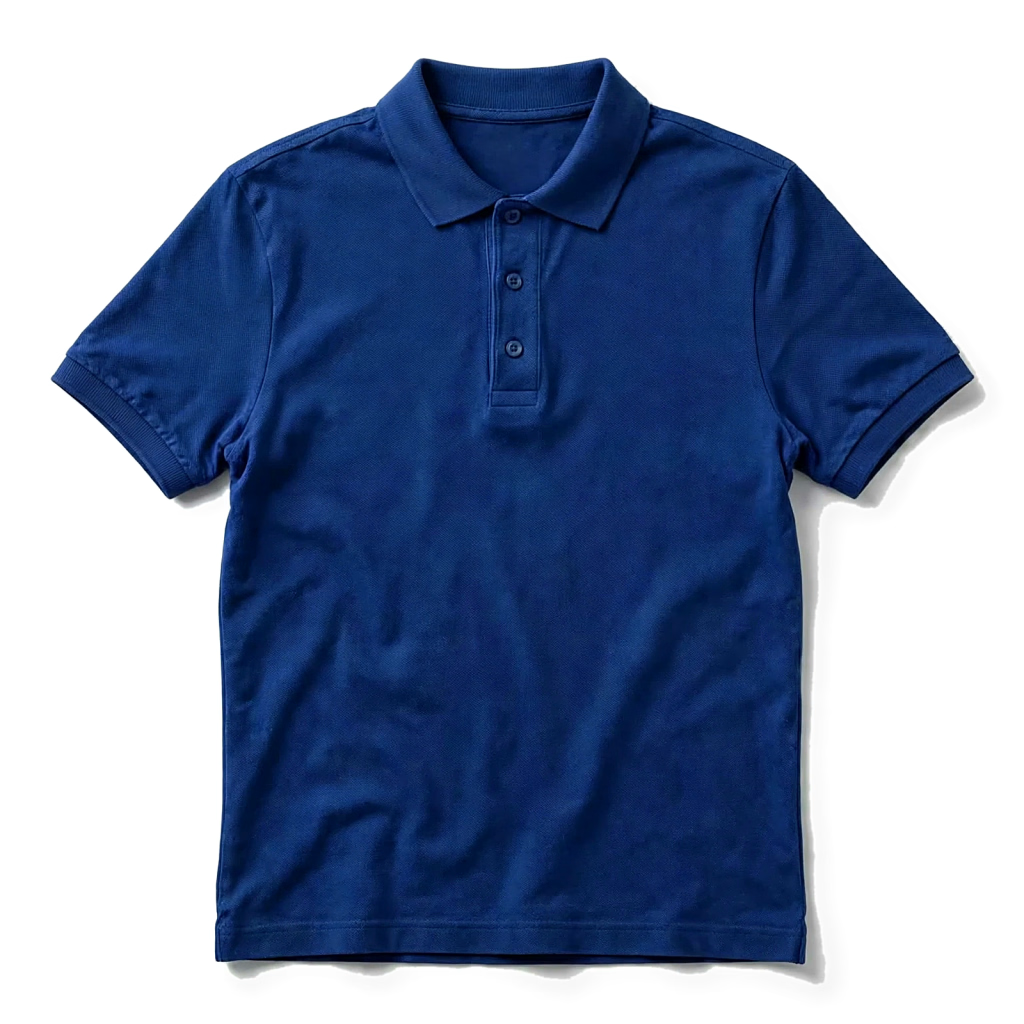
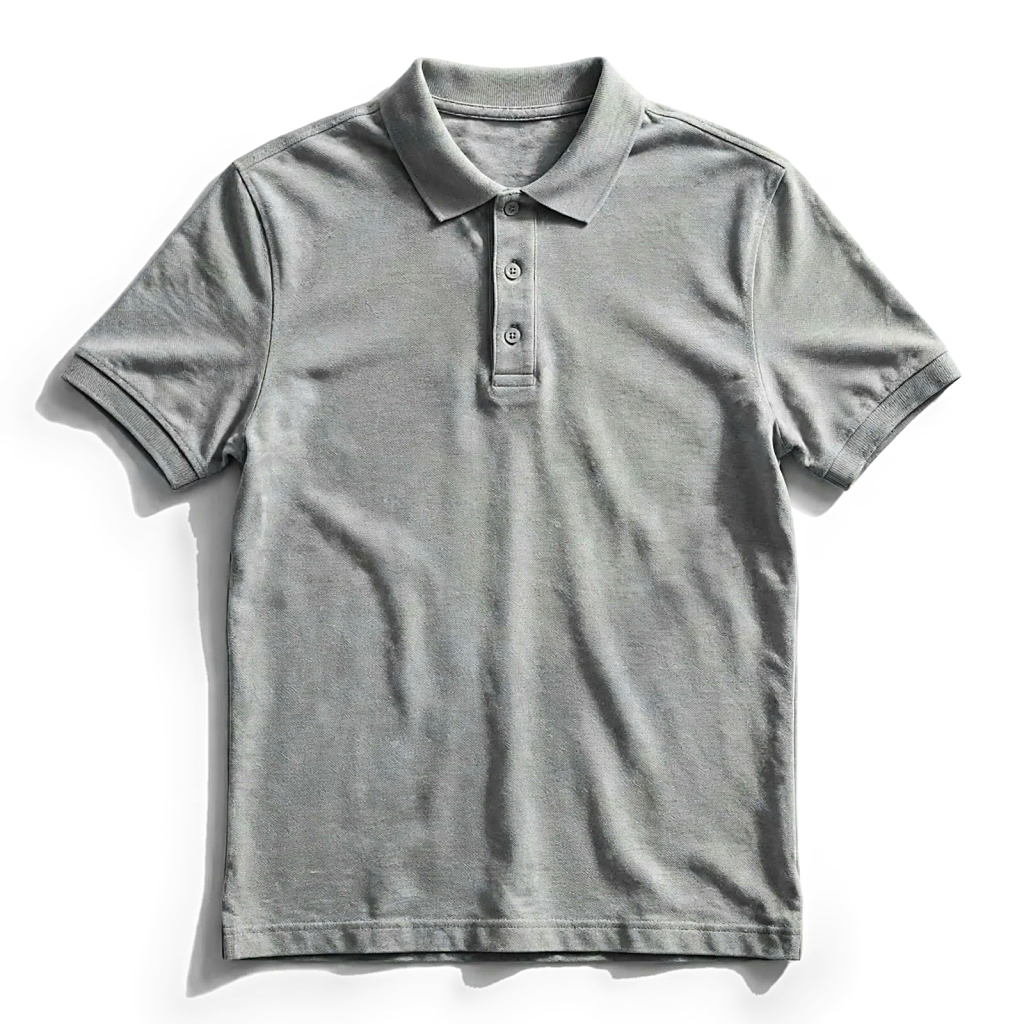
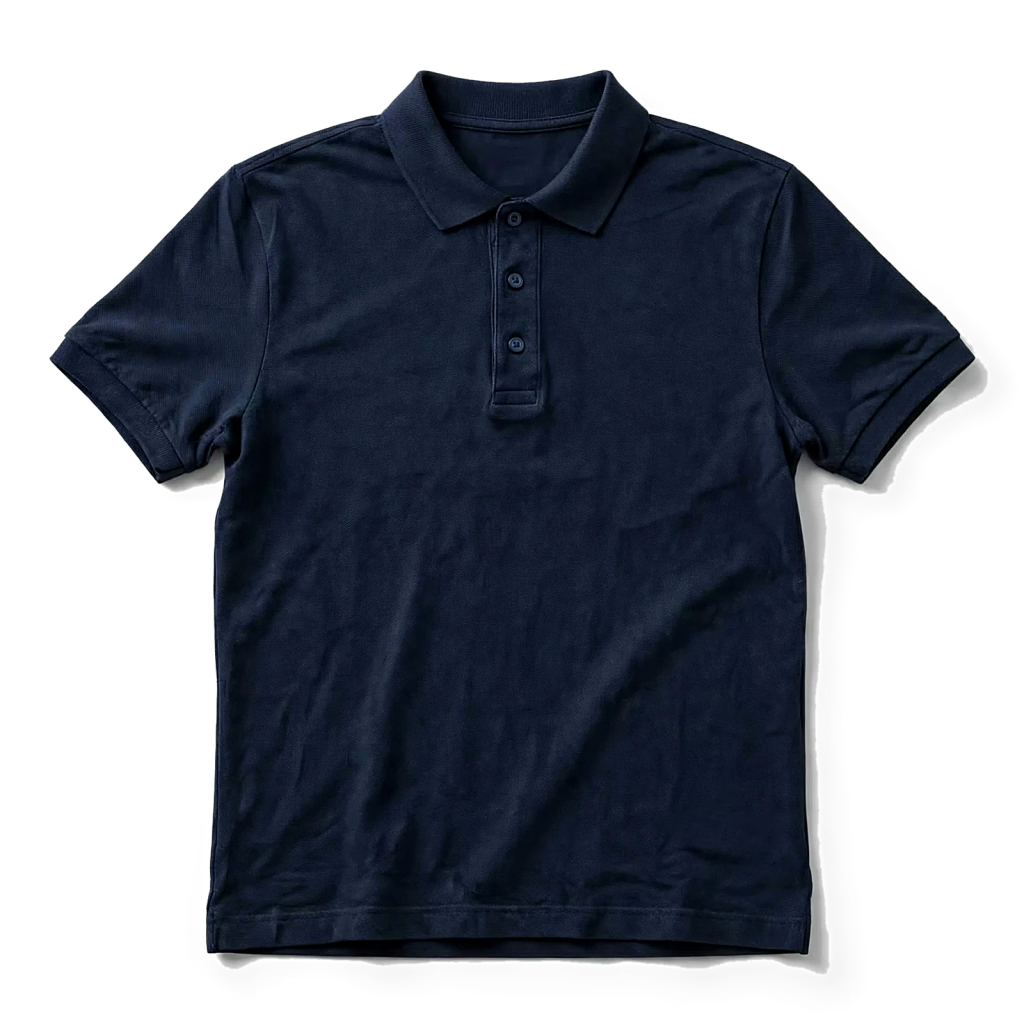
Core uniform colours (navy, black, white, red, royal, grey, bottle green) are held as running shades with lab-dip standards on file; a corporate colour is dyed and locked the same way. Reorder shades are matched back to the retained standard, not to the last batch, so the programme cannot drift by degrees.
Sampling and Embroidery Approval
Every programme starts with an embroidered sample on the production piqué: the real shirt, the real badge, washed once before dispatch where the buyer wishes, because embroidery behaviour and collar set only tell the truth after water.
Fit is approved across a size set rather than a single medium wherever the workforce spans sizes, and the approved sample set – garments plus the embroidery proof – is filed as the standard. Buyers managing programmes from the UK, Canada or Australia typically approve centrally and share our studio photographs with their sites, keeping one decision for every location.
Quality Assurance and Production Follow-Up
Programme orders are inspected for the uniform virtues: shade consistency across the whole run checked under standard light, embroidery audited badge by badge against the locked proof, and collars and plackets checked at first output of every line. Sizes are measured across the full run rather than the middle of it.
Packing accuracy against the issue list is verified before sealing, and final AQL results with photographs go to the buyer. One contact owns the programme, term after term.
Polo Shirts for Hospitality, Retail Staff and Schools
Hospitality buyers judge the polo at the end of a double shift and the fiftieth wash; retailers judge it as part of the shop’s visual standard, identical in every branch; schools judge it as parents do – by whether the colour and collar survive the term.
Hotel and restaurant programmes in France and Denmark ask for a smarter collar and an easy-care finish surviving daily commercial laundering; golf and resort programmes in Spain and the UAE want breathable piqué with a premium hand feel.
A uniform is re-judged every day it is worn, by people who did not choose it – the highest standard any garment is held to, and the one our programme discipline is built for.
Why Source Polo Shirts from Bangladesh?
A polo programme lives or dies on repeatability, and Bangladesh is organised for exactly that. Piqué knitting, dyeing, embroidery and sewing sit inside the same garment districts, so collar, body and badge are made under one quality culture.
Local yarn and trim supply keeps lead times honest, embroidery beside the sewing lines keeps badges in the same inspection system, and production for the USA, the UK, Germany, Canada and Australia runs to the labelling and testing those markets expect, including OEKO-TEX options and REACH-compliant dyeing for European programmes – a price the finance team accepts and a collar the operations team never has to apologise for.
Why Choose Siatex Bangladesh?
Siatex Bangladesh has manufactured in Bangladesh since 1987, and uniform polo programmes are among our longest relationships because the system holds: a shade file that never drifts, an embroidery file locked at first approval, and a named contact who knows the programme’s history.
Reorders are confirmations, not new negotiations, and new styles join on the same standards. Buyers who want the fashion side of the polo will find it in our polo t-shirts range, made in the same piqué qualities.
Looking for a Polo Shirts Manufacturer Bangladesh?
A polo programme runs calmly when the decisions are made once – collar standard, placket construction and shade file set at first sample, then repeated across seasons, sites and reorders. Send the colours, the size ratio if you have it, and the logo artwork, and we will come back with a programme price, an embroidery sample plan and honest lead times.
If you are taking over from a current supplier whose shade has drifted, send a shirt from the original batch – we will match the standard you started with, not the one you ended with.
Siatex Bangladesh
Made in Bangladesh
OEM/ODM Private Label Production Only
Running a Uniform Programme – Ratios, Reorders and Shade Control
Three habits separate a calm uniform programme from a yearly crisis. First, build the size ratio from the actual workforce and review it annually, because workforces change shape. Second, reorder against the retained shade standard and embroidery proof, never against a shirt taken from stock – a slightly faded stock shirt used as the match target walks the programme’s colour away from itself, one acceptable batch at a time.
Third, hold a small buffer of fast-moving sizes at the busiest site; the cost is trivial against an emergency order at express prices. Suppliers who run programmes well make all three easy. Programme cartons sail from Chattogram to Hamburg for Germany and northern Europe, New York for the United States and Melbourne for Australia.
Cotton or Cotton-Polyester Piqué for Uniforms?
Pure cotton piqué feels better on day one and photographs softer; a cotton-rich blend with polyester keeps its colour and shape longer under commercial washing and dries faster in a working week. The honest answer depends on the wash.
Domestic washing at home favours either, with cotton ahead on comfort; weekly commercial or industrial laundering favours the blend by the third month, when cotton-only polos begin to show shade loss at the collar and cuffs. Where staff wash shirts at home, the blend also forgives the mixed temperatures and detergents of real households, which is why most large employers standardise on it.
We state the fabric behaviour plainly at quotation and sample in the recommended cloth, because a uniform replaced early is the most expensive uniform there is.
Embroidery Standards – Digitising Once, Sewing Forever
A badge that varies between orders usually traces back to artwork being re-digitised, re-sized informally, or sewn on different machines with different tensions. The programme answer is custody: one digitised file, one recorded stitch count and thread list, one approved physical proof kept flat and dark-stored, and production machines set against that proof at the start of every run.
Small text and fine detail are tested at sampling and, where thread cannot hold them honestly, we say so and propose the smallest change that sews cleanly for a decade. That conversation, held once at the start, is what a ten-year badge standard is made of.