
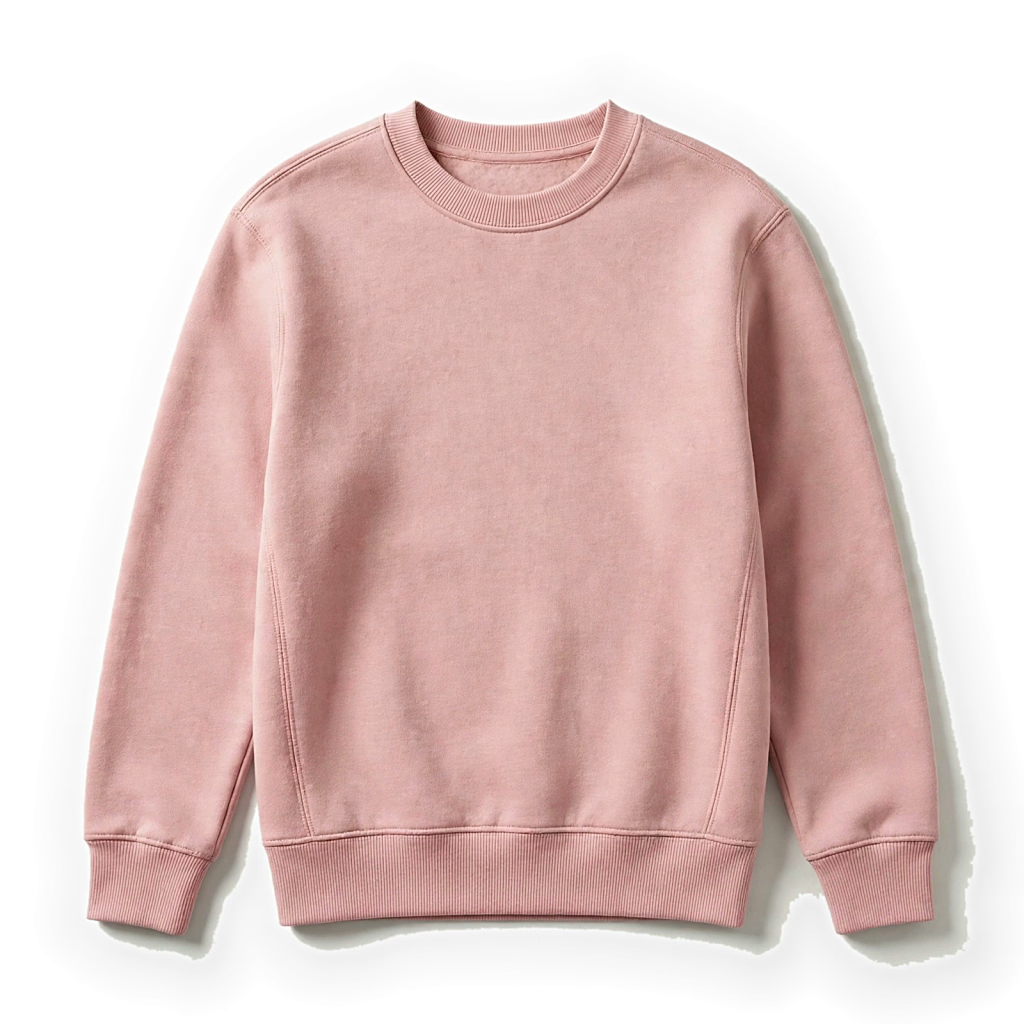
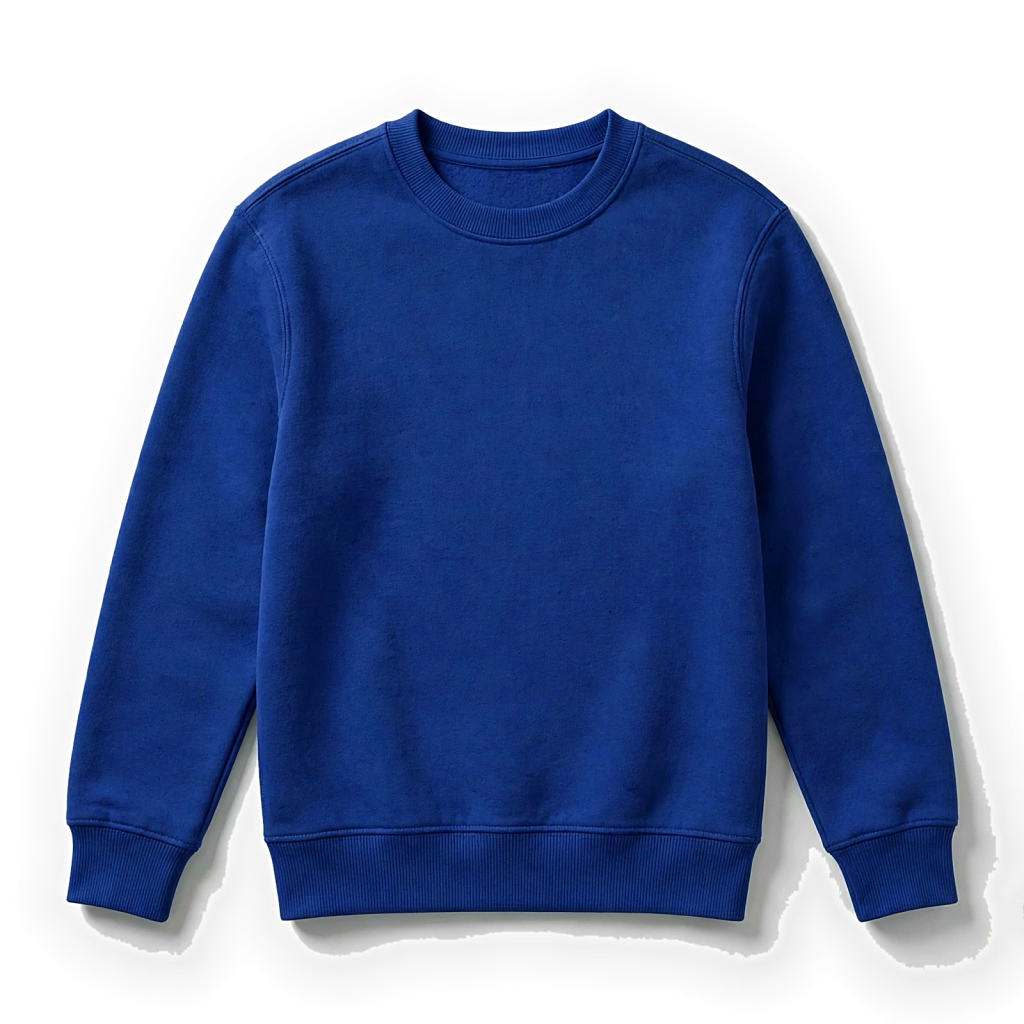
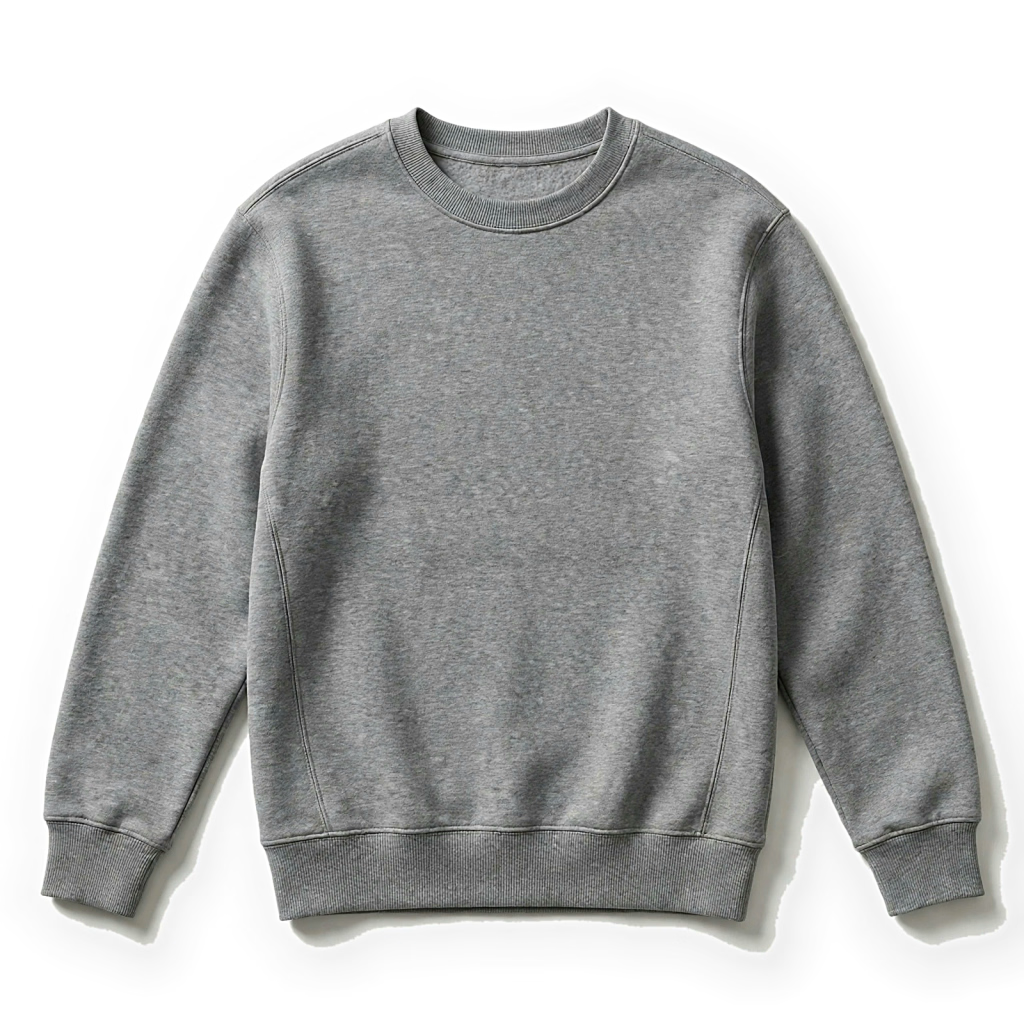
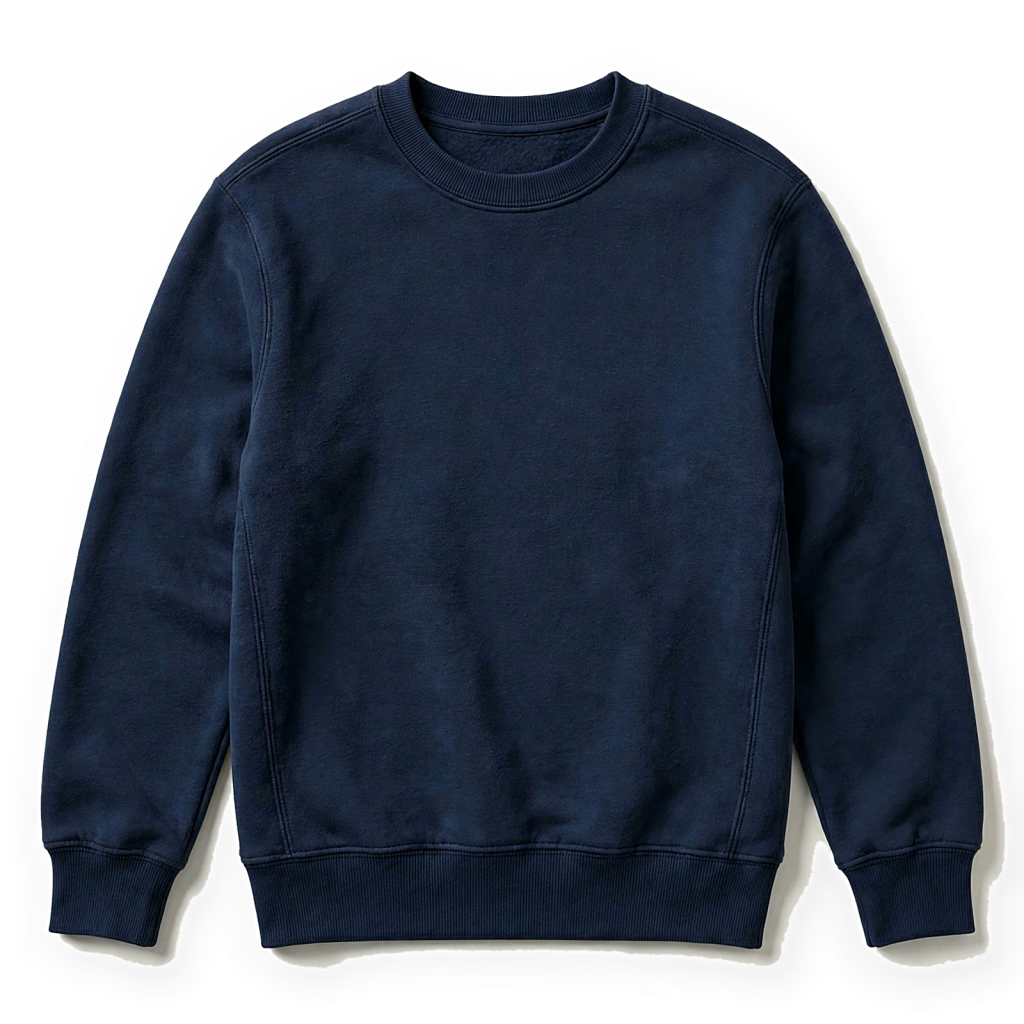
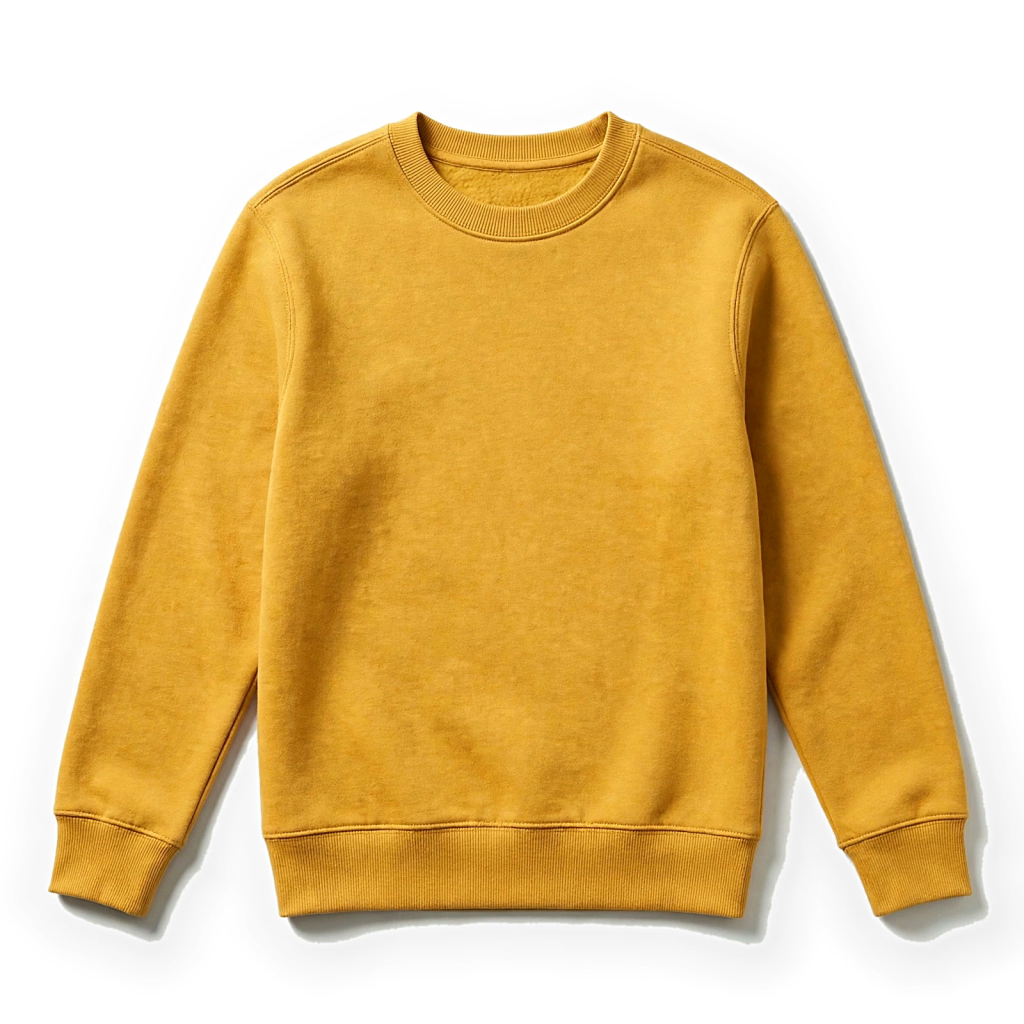
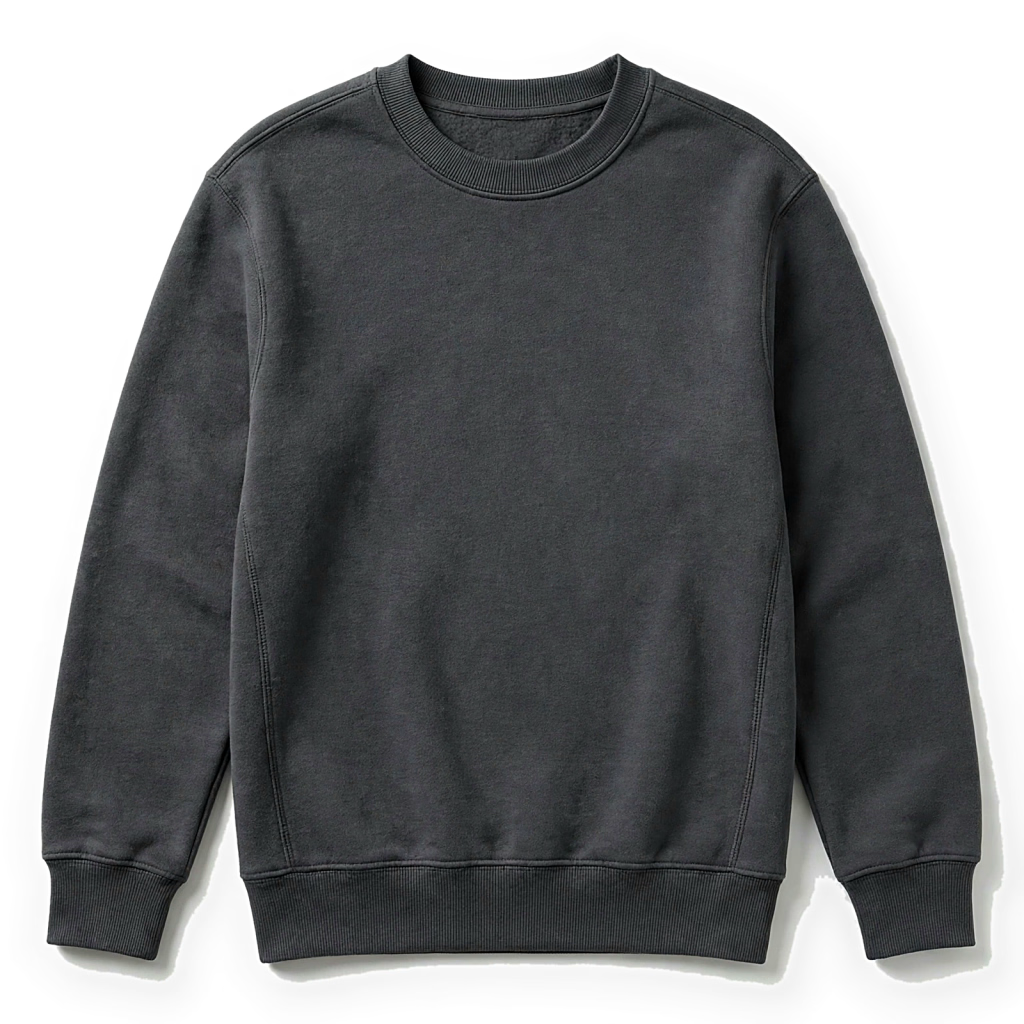
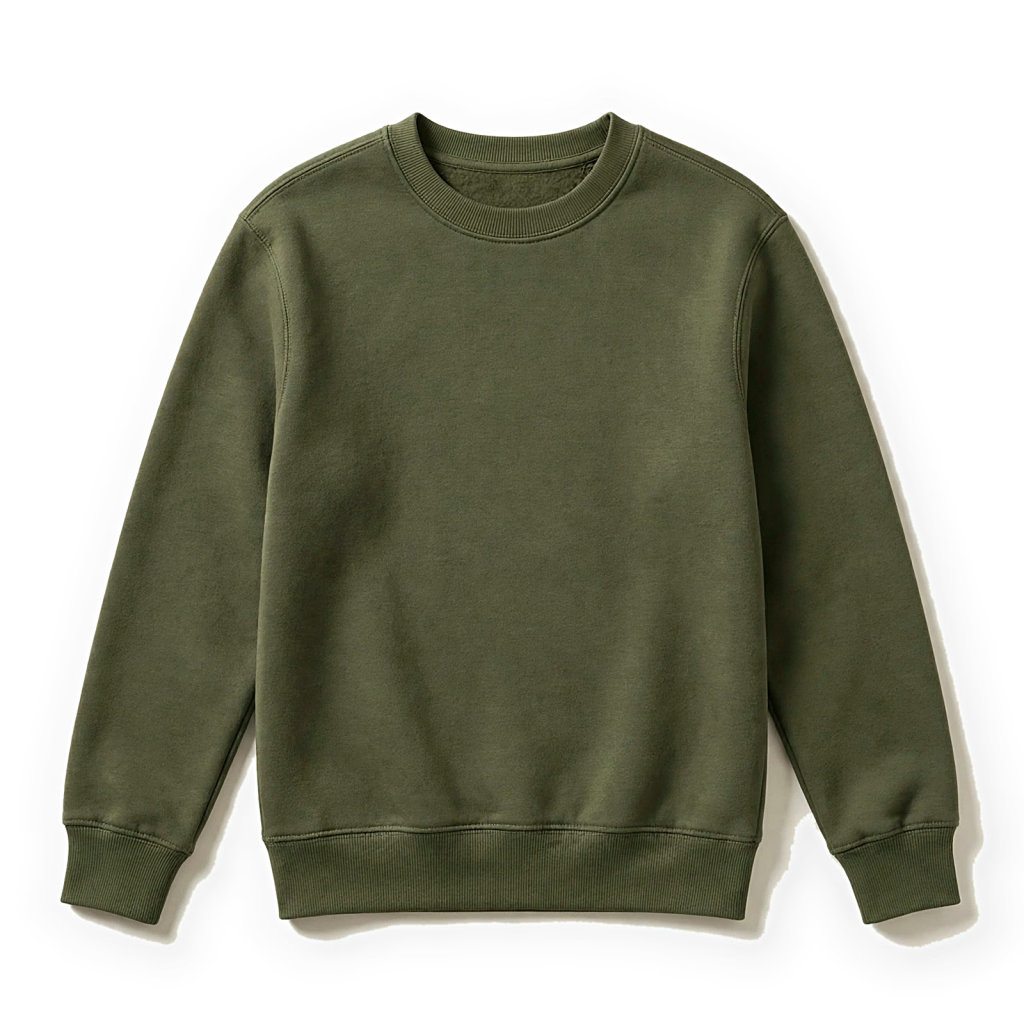
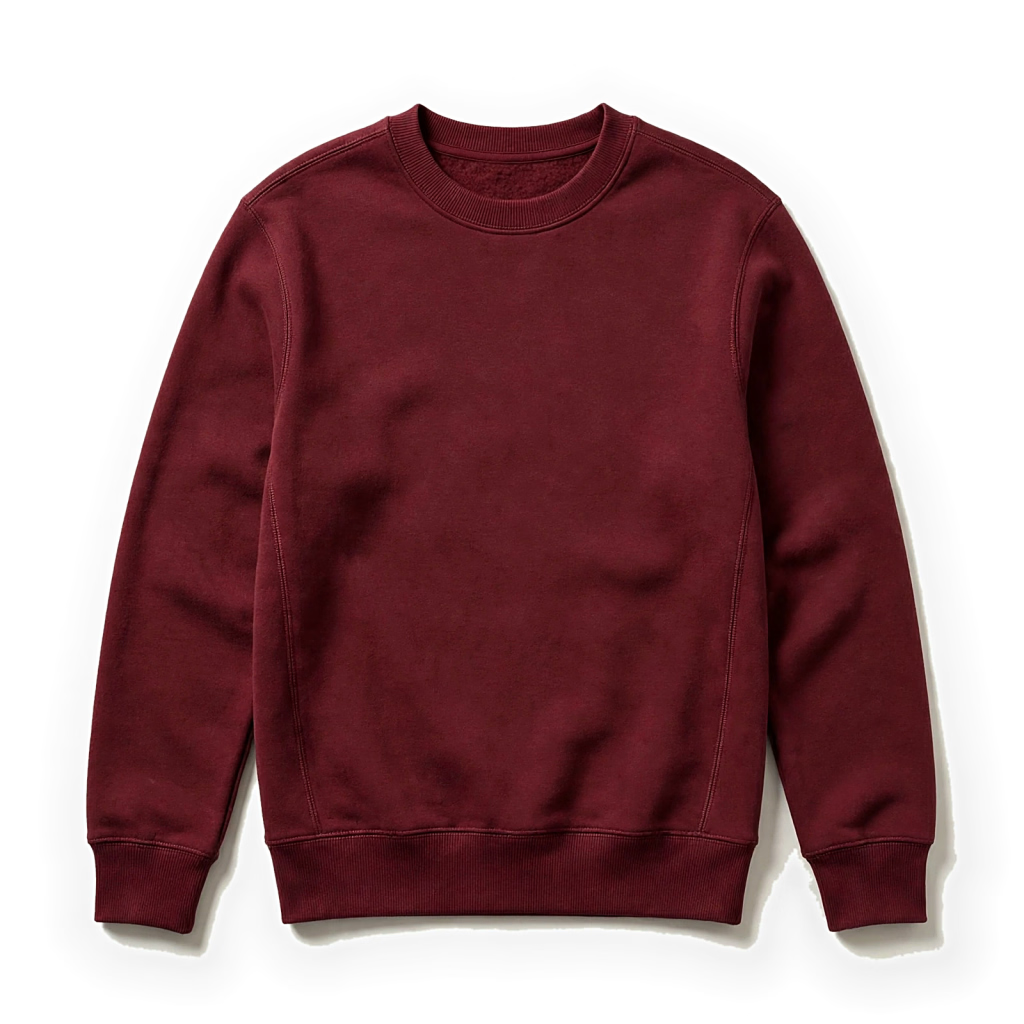
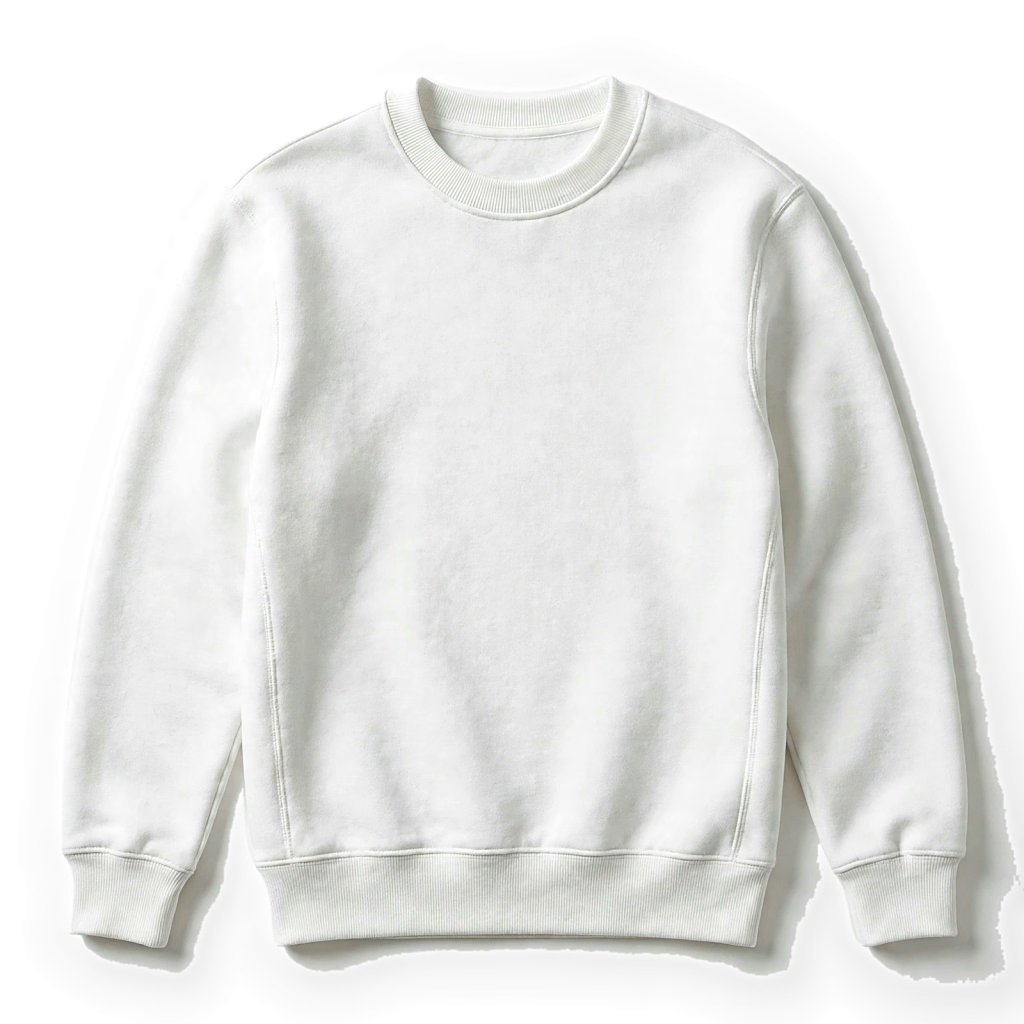
Sweatshirts Manufacturer Bangladesh for Retail, Campus and Workwear Ranges
The crew sweatshirt is the garment fleece ranges are built around. A retailer hangs its autumn basics on it, a university prints its name across the chest, a sports club issues it to members, and a workwear buyer hands it out as the warm layer under a jacket. Different buyers, same test: honest weight in the hand, ribs that still grip after twenty washes.
Our lines treat the sweatshirt as a year-round staple, never a seasonal filler: fabric is knitted and brushed for its programme, so the hand feel agreed at sampling is the one that lands in the buyer’s warehouse.
Sweatshirt Fabric Options
- Brushed fleece at 280 to 320 GSM in cotton-rich and polyester blends – the standard weight, warm with a soft raised inside
- 100 percent cotton fleece for natural-hand premium basics and retail ranges
- Loopback fleece (French terry) for lighter unbrushed sweatshirts worn across more of the year
- Heavyweight fleece at 350 to 400 GSM for workwear, outdoor and premium programmes
- Organic and recycled-blend fleeces knitted to order for sustainability-led collections
Brushing is even across the width and the cloth rests before cutting, with anti-pilling finishing where a hard-wearing brief asks for it – the inside stays soft and the face smooth for longer.
Sweatshirt Styles, Necks and Fits
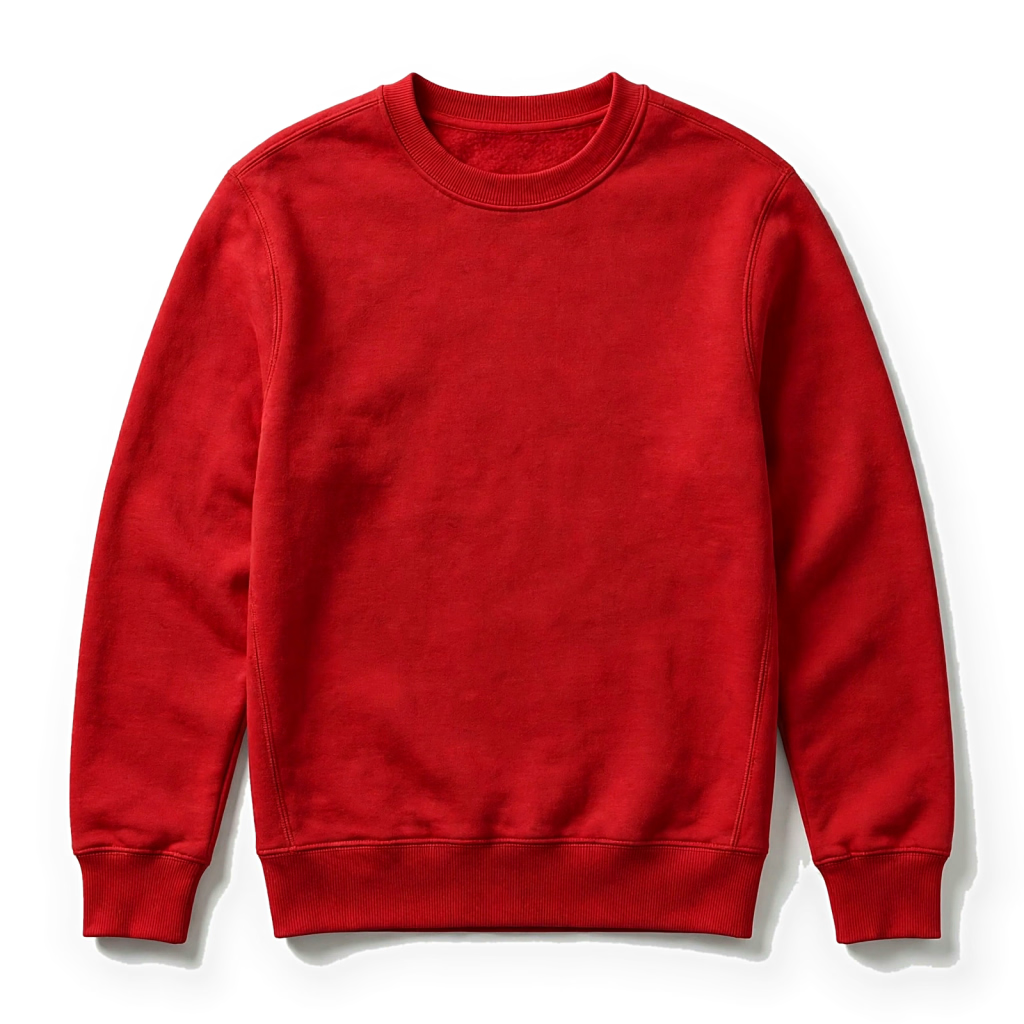
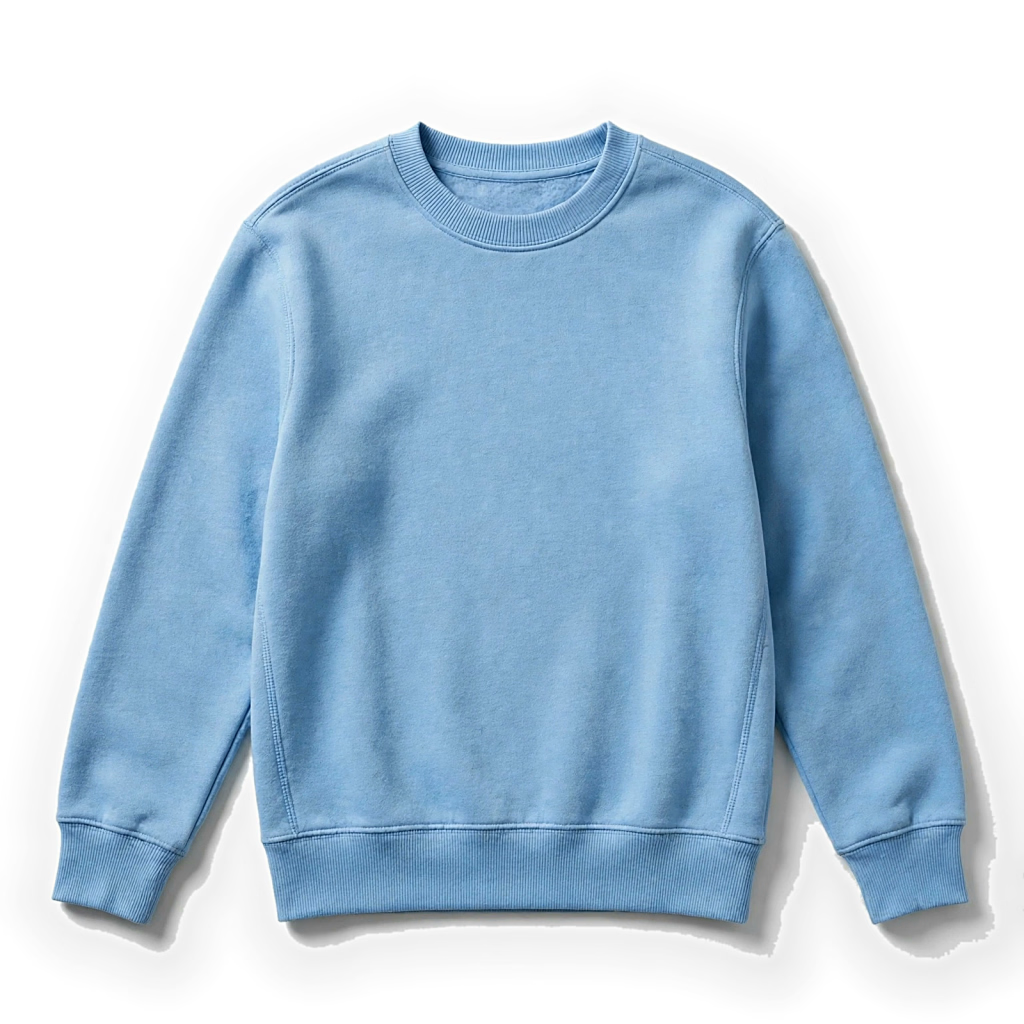
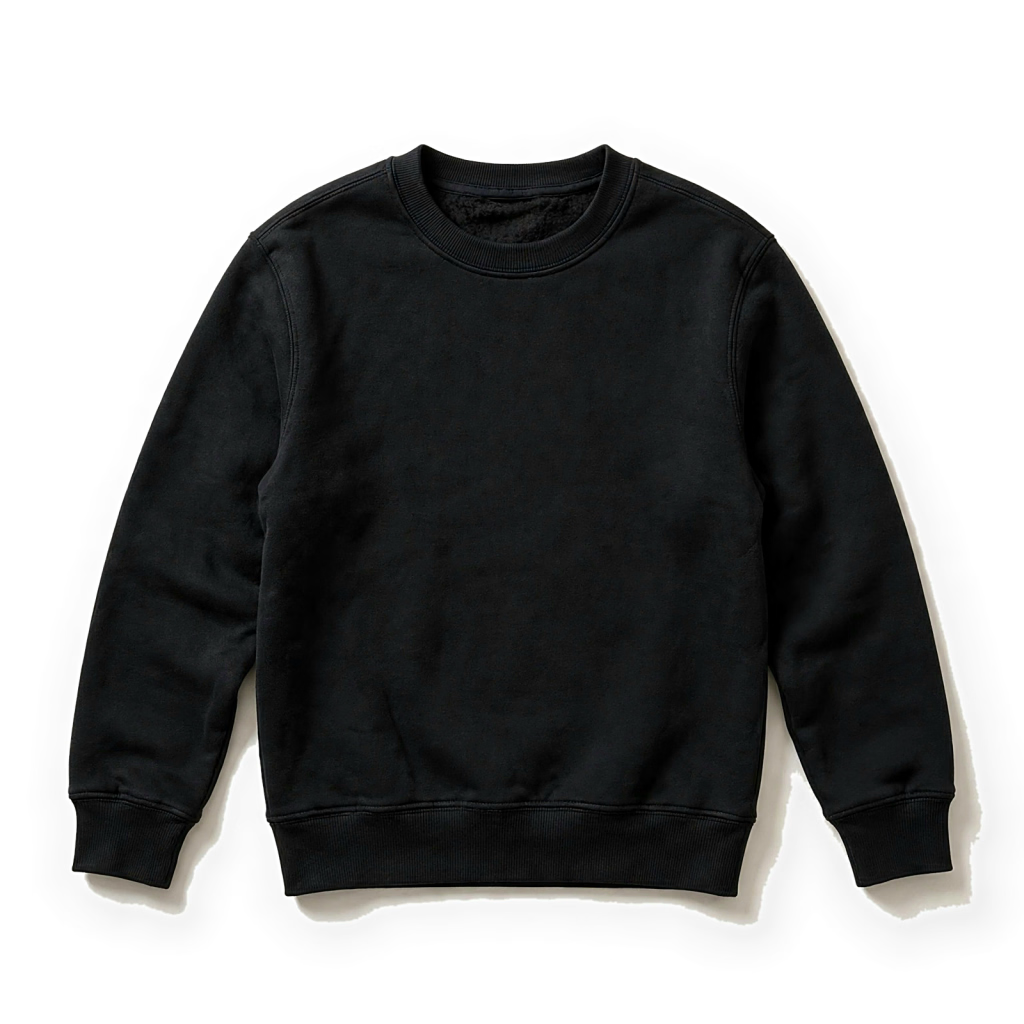
The crew neck with a ribbed collar is the core style, marked by the small V-stitch insert at the front neck that has identified a proper sweatshirt for generations. Raglan sleeves suit sport and campus orders; set-in sleeves give retail and workwear their cleaner shoulder.
Fits run regular, relaxed and oversized across mens, ladies and youth blocks, ladies cut on shaped patterns of their own rather than scaled-down mens blocks. Bodies are side-seamed as standard – a tubular body twists after washing – and collar, cuffs and hem are ribbed with elastane. Tall and plus sizes grade from the same block, and Japanese buyers often specify the shorter, boxier body their market prefers.
Brushed Fleece and Rib Craft Behind Winter Sweatshirts for Canada and Denmark
Most of a sweatshirt’s quality is settled before a needle touches it. The face is knitted tight so it stays smooth under print, the inside brushed evenly with no thin patches, and the cloth rests before cutting so the garment holds its shape instead of growing in the wash.
The ribs decide how the garment ages. Collar, cuffs and hem carry elastane and are attached at the ratio the weight needs, so the neck lies flat, cuffs spring back after a push up the forearm, and the hem holds the body line.
Winter programmes test that craft hardest: Canadian campus stores and Danish workwear buyers order the heavy brushed weights, wash them hard and judge the collar after a season, not at delivery, so collar recovery and brush retention are checked on washed pieces before bulk is released.
Custom Embroidery, Printing and Branding
Few garments carry branding as willingly as a sweatshirt chest. Embroidered crests serve universities and clubs, screen prints carry retail graphics and event artwork, and appliqué with chenille lettering gives campus and varsity ranges the raised finish buyers expect.
Sleeve prints, small hip marks and woven hem labels round out a retail range, and private label finishing – woven or printed neck labels, branded tape, folding and bagging – is completed inside the same order. A matched fleece programme often runs one artwork across our hoodies and the crew together, both held to a single shade standard, and Spanish retail chains frequently pair the two styles in one seasonal drop.
Custom Sizes, Fits and Colours
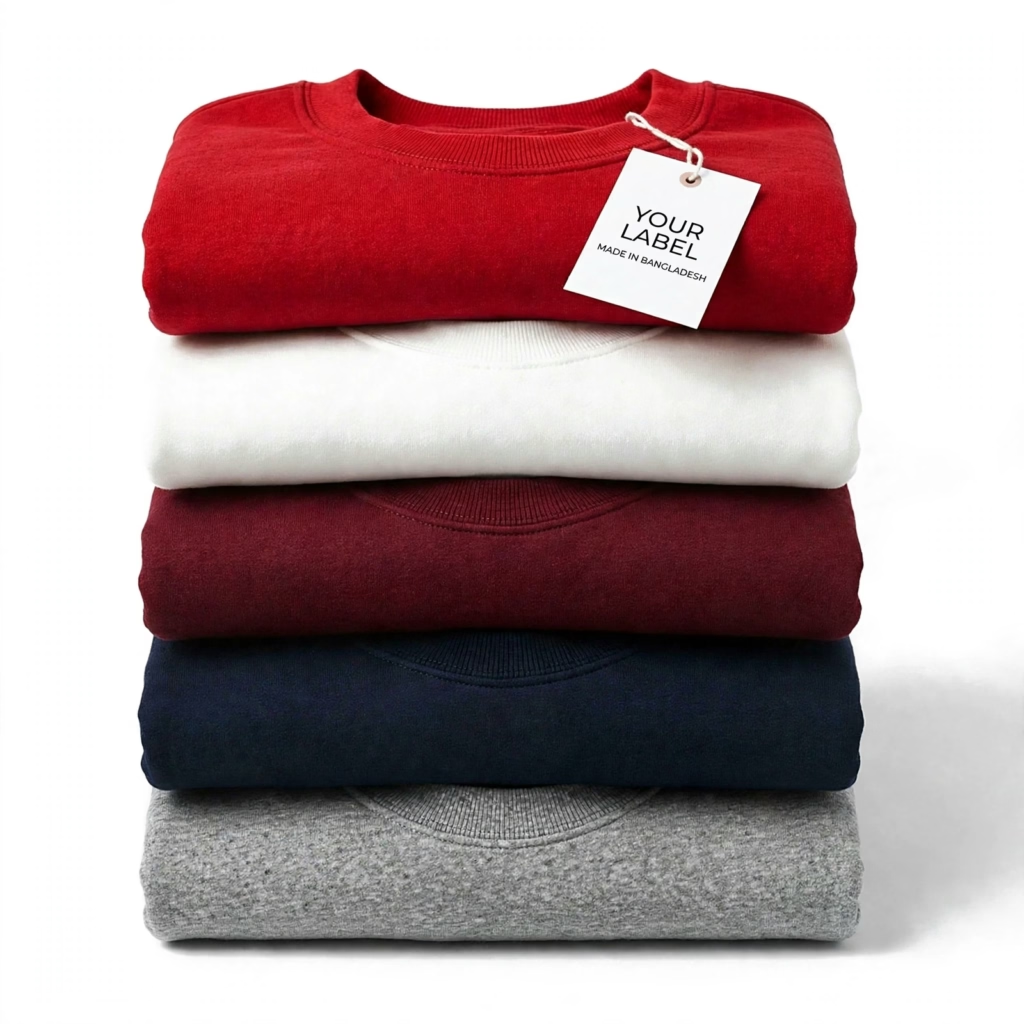
Adult sizes run XS to 3XL beside a full youth range, all graded from one block family so fit stays consistent across the run. Grey marl, navy, black, white, red, royal and bottle green run as standard shades in every fleece programme.
Seasonal colours are dyed to a swatch or Pantone reference, melange and garment-dyed effects included. Nothing is knitted until the lab-dip is approved; the standard stays on file, so a reorder two seasons later matches the sweatshirts already in store.
Sweatshirt Sampling and Product Development
A sample sewn in a substitute fleece proves nothing, so every sample leaves here in the production fabric at the production weight, finished exactly as the bulk will run. Buyers are asked to wear it and wash it, because brush feel, shrinkage and rib behaviour only reveal themselves in use.
Measurements are worked from the tech pack or a reference garment the buyer sends. Comments come back, a revised sample follows where the fit needs one, and the approved garment – kept with its fabric swatch and trim card – becomes the standard the bulk is measured against at final inspection.
Quality Assurance and Production Follow-Up
Fleece lots are checked for weight, shade and evenness of brush before cutting, and shrinkage is tested lot by lot. Finished sweatshirts are measured and weighed, then inspected for the faults fleece likes to hide: thin brushing, twisted bodies, tired ribs and collars that wave.
Prints and embroidery are compared with the approved standard under standard light, collar and cuff recovery is tested on inspection pieces, and a final AQL inspection closes the order. Results and photographs go to the buyer as routine; one named contact stays with the programme from fabric booking to carton.
Sweatshirts for Universities, Clubs and Everyday Retail
A university buys belonging: the same sweatshirt, in the same shade, with the same crest, ready for this year’s intake just as it was for last year’s. A club buys the same promise on a smaller rail, and a workwear buyer buys warmth that survives industrial laundry and still looks presentable at the end of a shift.
Retailers buy the hand feel that makes a shopper pick the garment up a second time. One production standard serves all of them when the fabric is honest and the ribs are made properly, and with the file held, a reorder is a short confirmation, not a fresh negotiation.
Why Source Sweatshirts from Bangladesh?
Sweatshirts reward a country that can do the whole job at home. Bangladesh knits the fleece, raises it, dyes it, cuts it and sews it inside one industry, so a heavyweight garment carries no freight cost on imported fabric.
The depth of the sewing base shows in exactly the operations this garment depends on: rib attachment at the right ratio, flat seam finishing and clean neck work, repeated at volume without drifting. Export paperwork, testing and labelling for the USA, the UK, Germany, Canada and Australia are daily routine here.
Why Choose Siatex Bangladesh?
Siatex Bangladesh has made clothing in Bangladesh since 1987, and fleece is a standing line in the factory, not a guest that arrives each autumn. One team carries your order from fabric booking to final carton, and the sample you approved is physically on the table when the bulk is inspected.
Your specification – weight, shade, brush standard, rib recovery, branding – is recorded in full, so the next season starts from a proven file instead of a blank page. Programmes wanting the hooded companion style will find it on our hoodie sweatshirts page, from the same fleece library.
Looking for a Sweatshirts Manufacturer Bangladesh?
Most sweatshirt business is not a single order; it is a programme that returns every season – a campus range refreshed for a new intake, a workwear issue renewed for winter, a retail fleece story that has earned its rail space. Your weight, shade and rib standards stay on file and your branding stays locked, so each season’s order starts from the standard the last one proved.
Send the style and the weight you are planning, and we will return a price, a fabric swatch at that weight and a sampling plan. Still choosing between brushed and loopback? Say so – the leading candidate will be sampled and swatches of both sent, because a sweatshirt is chosen by hand and by warmth, not by a number on a page.
Siatex Bangladesh
Made in Bangladesh
OEM/ODM Private Label Production Only
The V-Stitch and Rib Details That Mark a Real Sweatshirt
The little V of ribbing set into the front neck began as a sweat patch on athletic tops and remains the sweatshirt’s signature. Treat it as an honesty test: the insert must sit level, be stitched cleanly and come from the same rib as the collar, or it wrinkles and cheapens the front.
Cuffs and hem tell the same story. Rib width, tension and recovery decide whether the garment keeps its line through the season or relaxes into shapelessness by mid-winter. Judge those three territories first and you have judged the sweatshirt.
Raglan or Set-In Sleeves – Choosing the Shoulder
A raglan sleeve runs diagonally into the neck and leaves the chest unbroken, which is why teamwear, training ranges and campus programmes with a big chest print favour it; it also moves freer on the body. A set-in sleeve builds a cleaner, more tailored shoulder, the natural choice for retail basics and workwear under jackets.
The decision belongs at development, because it changes the pattern, the shoulder fit and the printable area. Record it on the specification and hold it across the range: a rail mixing both inside one style family looks accidental, a deliberate choice looks designed.
Holding the Shade and Weight Across a Whole Programme
A sweatshirt programme seldom fails on its first delivery. It fails on the third, when the navy has quietly warmed, the fleece weighs a little less, or the grey marl is a different grey beside it. The defence is custody of the standard: approved lab-dip, approved-weight swatch and approved garment kept together and checked at every reorder.
Bulk cloth is checked against that file before cutting, and finished garments are weighed and shade-checked against it at inspection. Finished cartons sail from Chattogram to Felixstowe for the UK, Hamburg for Germany and Toronto for Canada.