
Private Label Clothing Manufacturer in Bangladesh
A private label clothing programme succeeds or fails on one question: does the finished garment carry your brand exactly as your customers expect? As your private label clothing manufacturer, Siatex Bangladesh makes that garment under your label and to your specification. At Siatex Bangladesh every garment is made under your label only - your woven label at the neck, your hangtag on its string, your print on the chest - because private label here is the whole order, not a side service.
Nothing is pulled from a shelf to be relabelled. Nothing is held in stock: your range is manufactured after your order is confirmed, cut, sewn and branded to your specification as garments move through finishing. Style, fabric, colours and trims all come from your tech pack, so the garment your customer opens is the garment your brand team approved.
We run private label clothing programmes for brands, importers and retail buyers in the USA, the UK, Germany, Canada and Australia, across knit, woven and sweater families: t-shirts, fleece, shirts, dresses, trousers and children's wear, each carrying the buyer's labels, tags and packaging rather than ours.
Private Label Clothing Production in Bangladesh Under Your Brand
The sections below follow your brand through one order: where your label is sewn, how your trims are checked, how your artwork is printed or embroidered, how garments are packed under your identity, and how sampling and repeats keep every delivery consistent.
1. Your Label on Every Garment
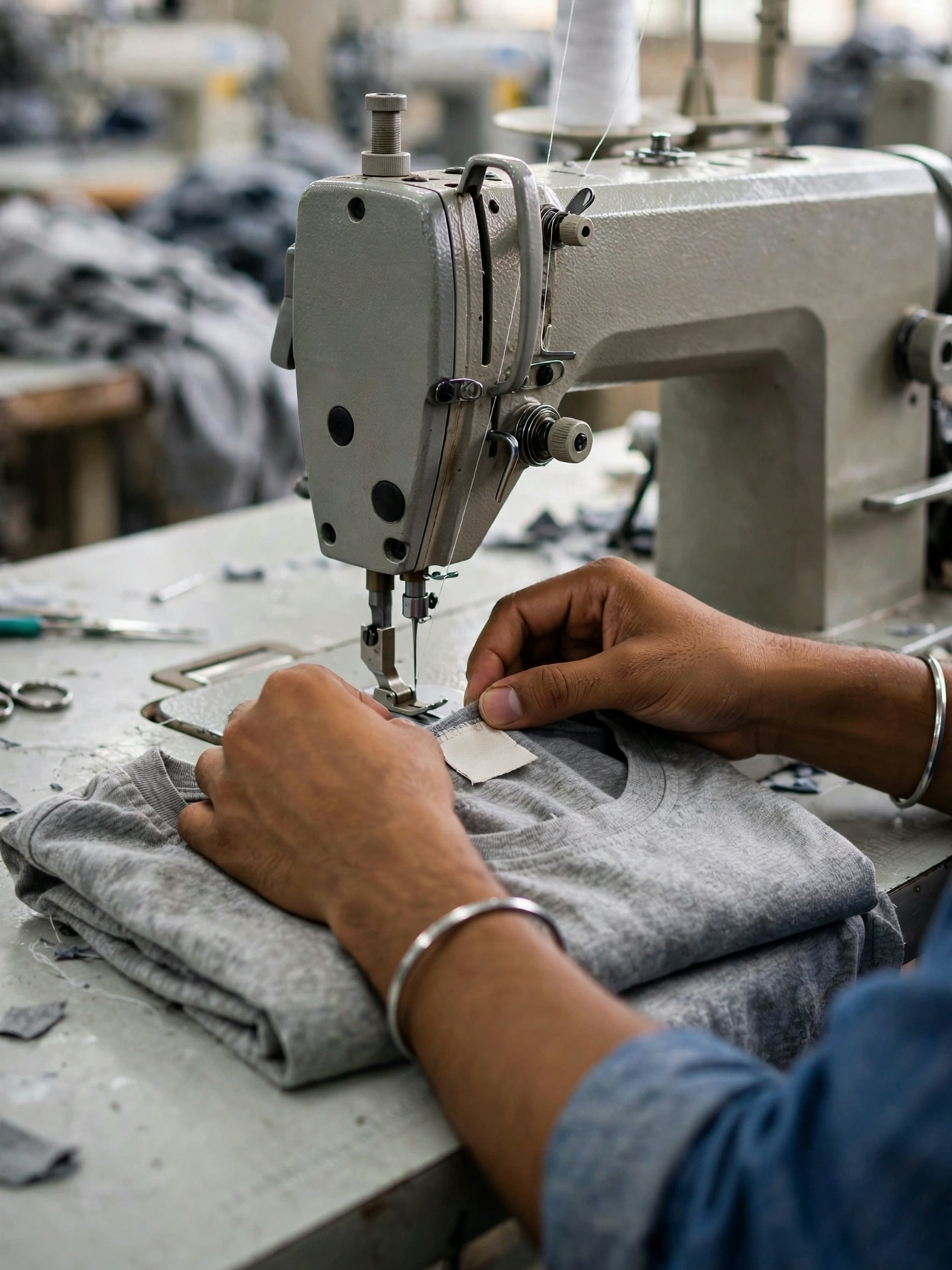
Private label clothing stands or falls on the label, so your main label is treated as a component of the order, not an afterthought. Your approved label artwork is kept on file, woven labels are produced to your specification – size, fold, colours and lettering – and each batch is checked against the approved sample before sewing.
Placement follows your brand manual: centre back neck on tops, waistband on trousers, side seam where your design asks for it. Size and care labels carry your wording and your market’s legal text, and our merchandising and quality team checks label position on the first pieces off the line and again at final inspection.
2. Woven Labels, Hangtags and Brand Trims
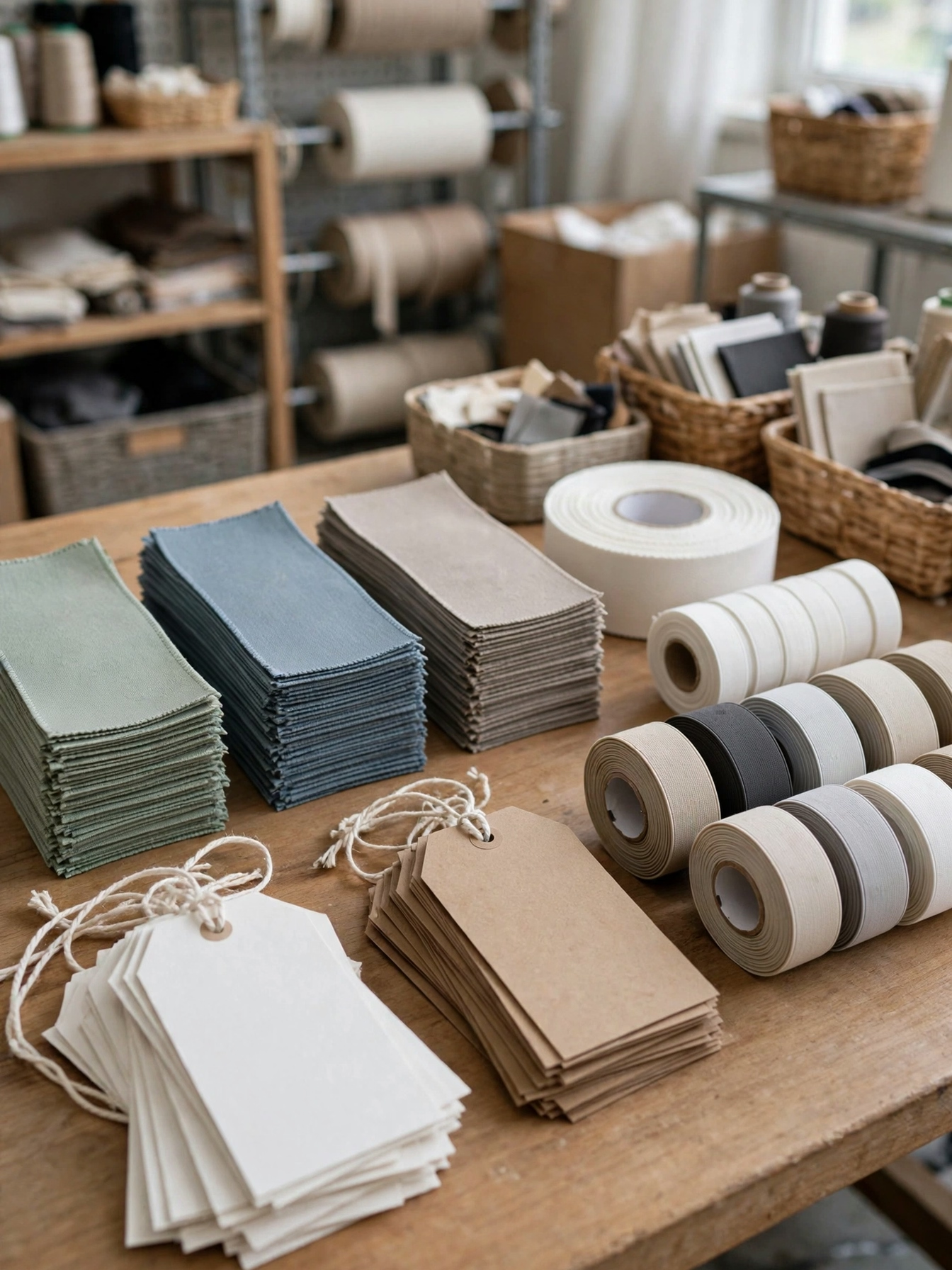
A private label clothing range is recognised by its small details, and those details are specified, sampled and approved like any other part of the garment. Alongside the main woven label, your programme can carry the brand trims your retail presentation needs:
- Woven main labels in damask, satin or taffeta weave
- Printed size, care and fibre content labels in your wording
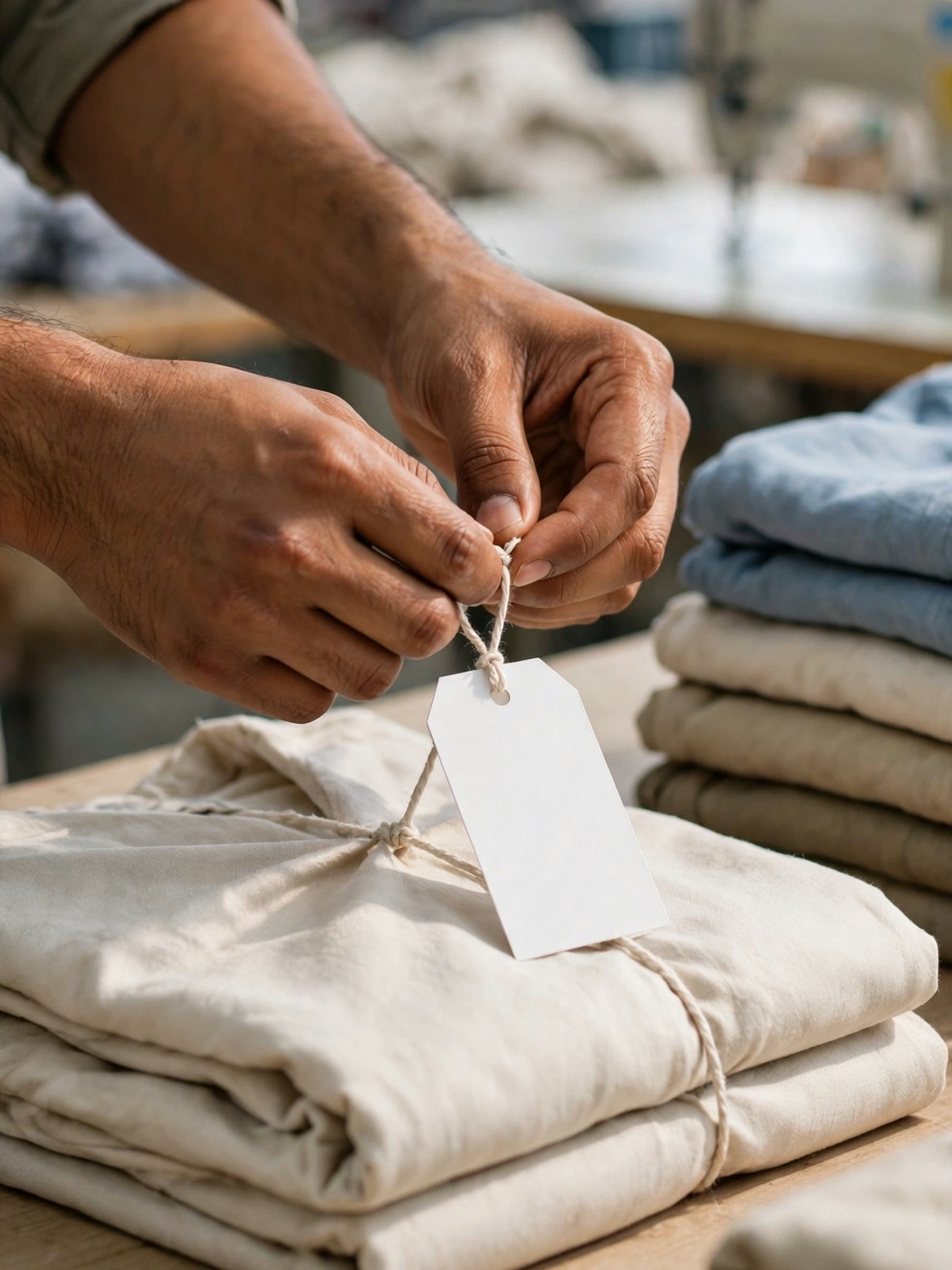
- Hangtags with your logo, barcode and price panel
- Heat-transfer and printed neck labels for tagless styles
- Branded buttons, drawcord tips, zip pullers and leather patches
- Embroidered badges and motifs from our embroidery services
Trims are ordered against your confirmed garment order and checked on arrival for colour, spelling and finish before release to the lines. A misspelt label caught on arrival costs a day; the same label caught after sewing costs the order – so nothing reaches a garment until it matches the approved set exactly.
3. Printing and Embroidery Under Your Brand
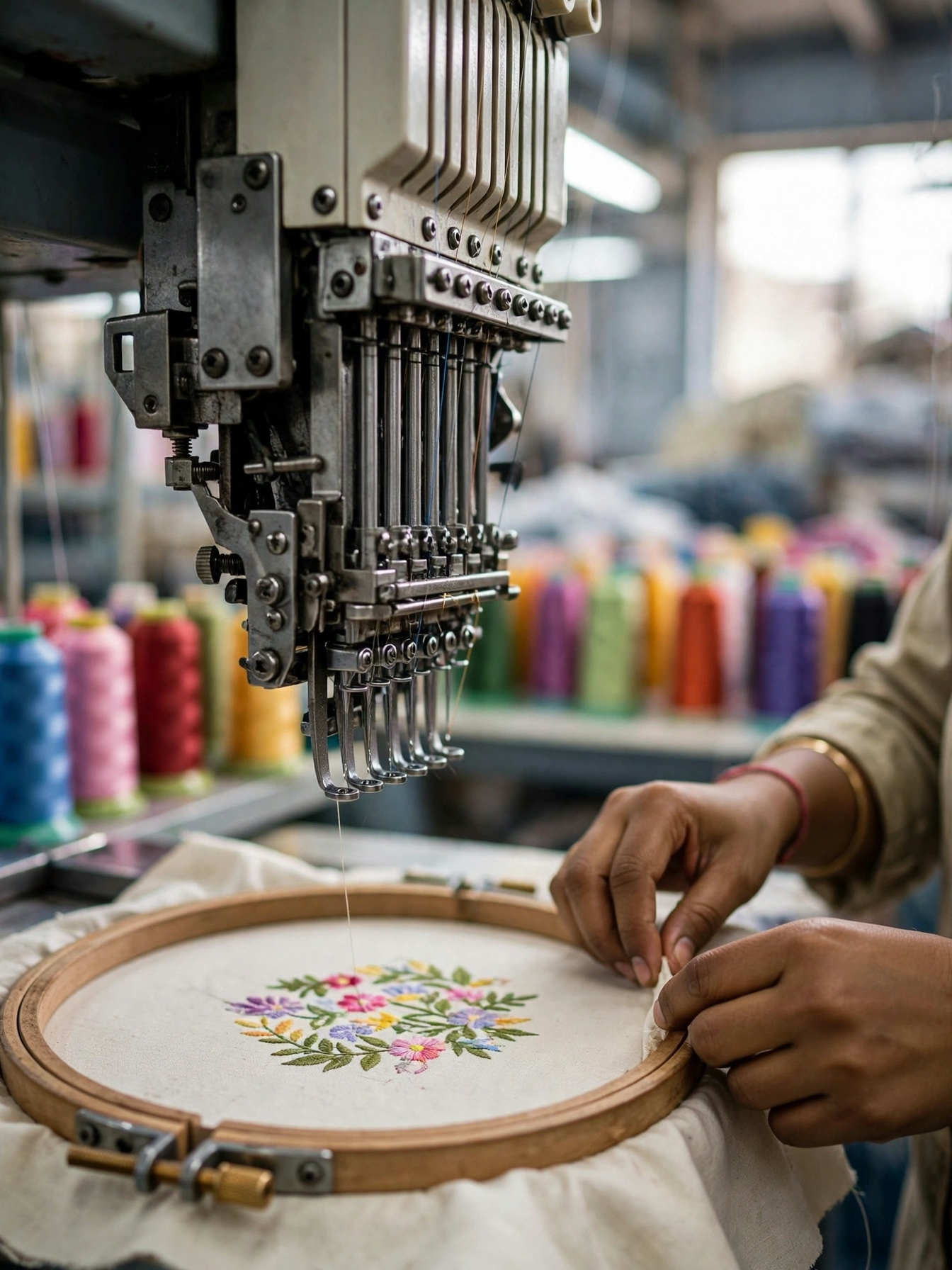
On private label clothing your artwork is part of the brand: it is reproduced only on your garments, to your approved strike-off, and nowhere else. Chest, back and sleeve prints and all-over designs are developed through our printing services in the technique your fabric and design need – screen, digital, puff, foil or discharge – with colour matched to your references before bulk.
Embroidery follows the same discipline: your motif is digitised from your file, stitched out for approval and run at the confirmed size and position. Spanish labels often build a season around one embroidered chest motif carried across colours, while Dutch brands favour small tonal logos at the hem – both work because the approved stitch-out, not memory, sets the standard.
4. Retail-Ready Packaging With Your Identity
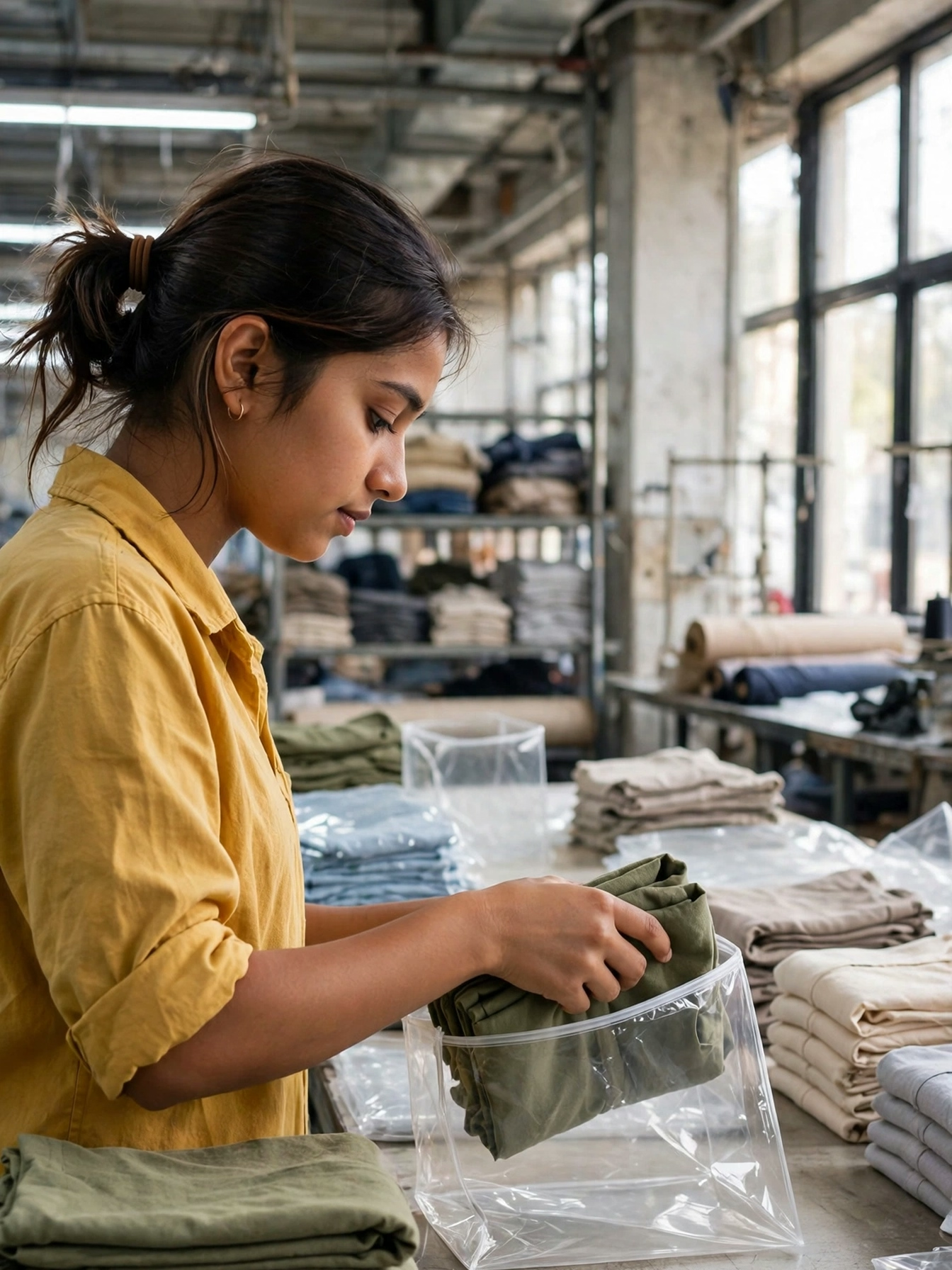
Private label clothing leaves here looking like yours, not ours. Each garment is folded to your presentation standard, tagged with your hangtag and packed in your polybag or box, following the full specification set out on our packaging page – your barcode, your size stickers, your carton marks, and nothing with our name on it.
- Individual polybags with your barcode and size sticker
- Folded presentation with tissue or boards, as specified
- Hangtags tied or pinned at your chosen position
- Ratio or solid-size packing to your packing list
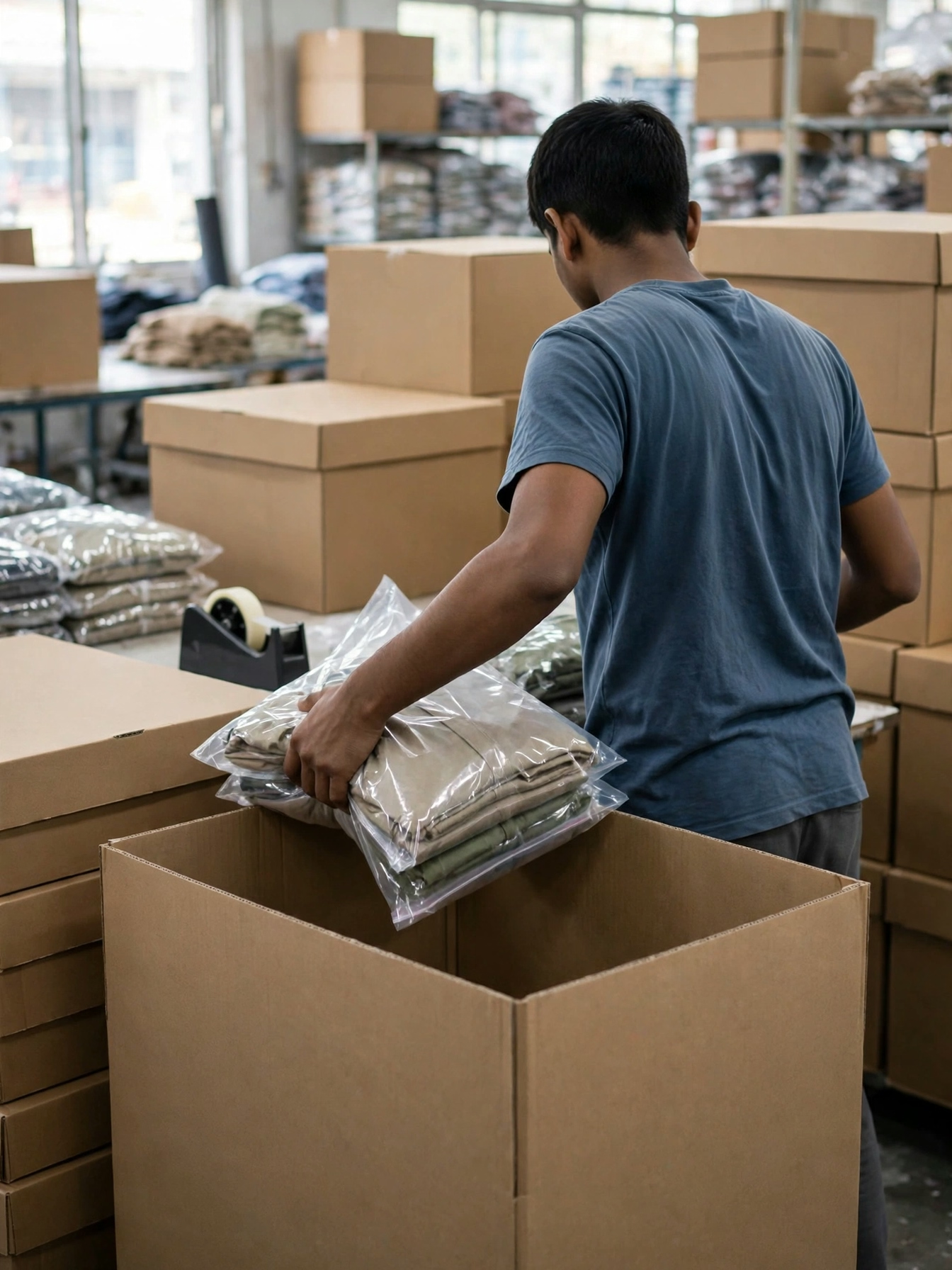
- Cartons marked with your brand, style and destination codes
Cartons are counted and documented against your packing list before they leave, and orders ship from Chattogram port to your warehouse or your forwarder’s consolidation point. Programmes bound for Saudi Arabia are packed with the same brand discipline: your labels, your documents and your identity on every carton, ready for your distribution centre to process without relabelling.
5. Sampling Under Your Brand Before Bulk
Private label clothing is approved as a branded product, not as a plain garment with a label added later. Your samples are made with your labels, your trims and your packaging in place, through our sample development process, so what you sign off is what your customers will see.
- Proto sample in your chosen fabric with your trims
- Fit sample with your labels sewn in position
- Print and embroidery strike-offs for your approval
- Pre-production sample packed in your retail packaging
- Size set graded from your own measurement chart
Fit and branding comments come back together, round by round, until the pre-production sample is signed off as the bulk standard. Swedish labels often run two fit rounds with the branded trims in place, checking how the label sits after washing as carefully as the fit – because bulk then repeats an approved branded garment, not an approximation.
6. Brand Confidentiality and Repeat Orders
Your private label clothing designs, artwork files and label specifications are your property, and they are handled that way here. Artwork is stored against your account, used only on your orders and never shown to another buyer; patterns, grading and trim sets stay on your file, so a repeat order starts from your records, not a fresh conversation. Talk to us before you brief another private label clothing manufacturer about a style that has to be right first time.
That continuity is why buyers build categories with us season after season: a private label leggings programme, for example, repeats with the same labels, the same packaging and the same fit, changing only the colours your range plan calls for. As a family-run business we treat your brand the way we treat our own name – carefully, and for the long term. A private label clothing manufacturer earns its place on the second order, not the first, so our follow-up is built for repeats. Labels, hangtags and packaging are fitted at the factory, which is what makes a private label clothing manufacturer different from a sewing subcontractor. Buyers building organic ranges can check the GOTS standard their private label line will be judged against.
Your Private Label Clothing Manufacturer in Bangladesh
Everything above runs the same way on a first order and a fiftieth: your label, your specification, your packing. A private label clothing manufacturer should be easy to check before you commit, so samples, references and a costed quotation come before any bulk booking.
Building a Private Label Range From a Small Start
Most private label ranges do not begin with a full collection. A buyer starts with a few core styles – a t-shirt group, a fleece group, one woven line – proves the branding, the fit and the retail presentation in store, and then widens the range season by season once the first deliveries sell through.
That pattern is familiar here. Spanish buyers often open with printed t-shirts and add embroidery the following season; Dutch labels build from one trouser style into a full bottoms programme; and Swedish brands start with knitwear basics before extending into woven pieces. Starting small keeps sampling focused and the first bulk order honest, because every style in it has earned its place. Each step adds branding before it adds volume, so the range grows on proven ground.
Keeping Your Brand Presentation Consistent
Consistency is the quiet work of private label: the same label position, the same hangtag card, the same fold and polybag on the tenth order as on the first. Your approved trim set, packaging specification and pre-production sample are kept on file and checked against at every repeat, so nothing drifts while nobody is watching.
It matters most to buyers selling one style in several markets at once. A hoodie shipped to the USA and the same one shipped to the UK should open identically on both shelves – same labels, same barcode format, same presentation – and the file held here makes that a routine outcome, not a hope. Your merchandiser reports against the same checklist on every order, so a change is spotted at the packing table, not on the shelf.
Artwork Files and Approvals, Step by Step
Send your artwork as vector files where you have them – AI, EPS or PDF for prints and logos, with fonts outlined and colour references named. Embroidery motifs can start from a clean image file, which is digitised into a stitch file and sewn out for your approval before it touches a garment. Label artwork follows the same route: your file, a woven proof, your written approval.
Each approval is recorded against your order: strike-off approved, stitch-out approved, label proof approved, packaging proof approved. Nothing moves to bulk on a verbal yes, and the approved proofs stay on your file, so a repeat order a year later is checked against the same physical standards your team signed off originally.