
Ripped Jeans Fabrics: Rigid Denim, Stretch Denim and Washed Cloth
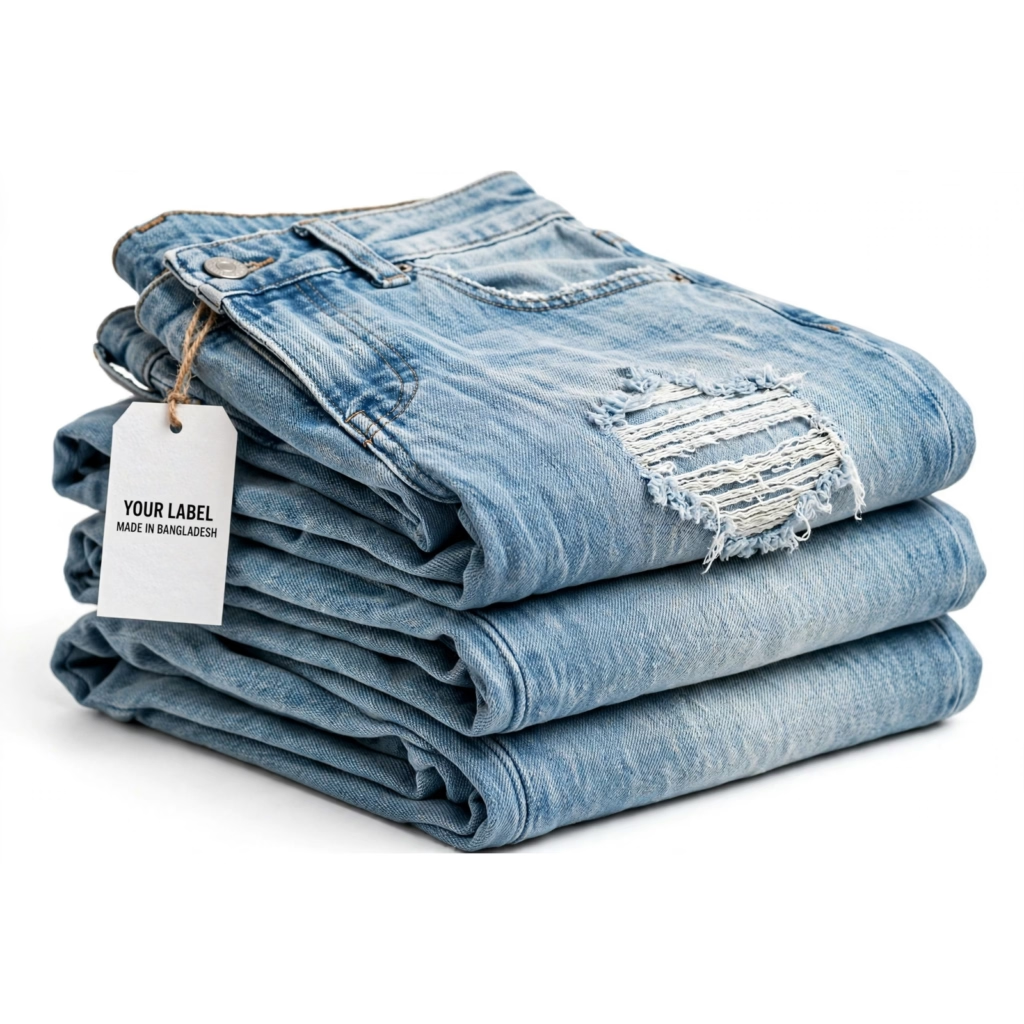
The cloth decides whether distressing reads as honest wear or as damage, so weight and yarn choice are settled before the first rip is marked. Heavier cloth holds an open knee rip with threads intact, while lighter weights suit scrapes and abrasion.
- Rigid cotton denim for a firm body
- Cotton elastane denim with comfort stretch
- Heavy denim holding open knee rips
- Black denim washed to charcoal shades
- Indigo denim in light, mid, dark bases
- White weft yarns showing through worn areas
- Slub denim with a vintage surface texture
- Other buyer-specified denim to your hand feel
Every wash route is proven on the cloth used across our core denim jeans programmes, so plain and distressed styles share one colour language.
Ripped Jeans Sizes, Fits and Waist Ranges by Measurement Chart
Waist sizes are graded from your chart with rise, thigh and inseam moving together, so the knee rip sits at the knee on every size. Regular and slim blocks are carried, each with its own grading.
Slimmer fits follow the graded blocks of our skinny jeans range, while this line keeps a straighter leg opening. Fit samples are washed before measuring, because a finished pair measures differently from a sewn one.
Ripped Jeans Construction: Rip Mapping, Fraying and Repair Stitching
Distressing is planned on the paper pattern before cutting: every rip, scrape and whisker is drawn to position and size, then transferred to the sewn pair as a marked map. Nothing is torn freehand, so both legs carry the same story.
- Rip placement mapped on the pattern per size
- Whiskers and creases set by hand sanding
- Frayed edges left natural, threads trimmed to length
- Repair stitching worked behind open rips
- Pocket corners reinforced against tearing strain
- Hems scraped or left clean to your map
The five-pocket build follows the same pattern discipline as our bootcut jeans, with the leg opening checked before distressing begins.
Customising Your Ripped Jeans: Wash Levels, Rip Styles and Trims
The wash level runs as a scale, from a light scrape on a dark base to open knee rips on a pale stone wash, each level approved on a wash panel before bulk. Rip style, thread colour and trim finishes follow your brief.
- Knee rips open, closed-thread or backed
- Thigh slashes and nick details
- Stone, bleach and hand-sanded wash routes
- Repair stitching in matching or contrast thread
- Back patches, rivets, buttons to artwork
- Pocket stitch designs from your guide
Buyers in France often pair heavy knee rips with a clean dark wash, keeping the damage as one statement. The same wash round develops our bell bottom jeans panels, so ranges can mix plain and distressed styles.
Ripped Jeans Sampling and Wash Development
Sampling starts with your rip map drawn onto the pattern, a trial pair sewn in your base size and the full wash route run exactly as bulk will run. The jeans come back with the wash panel, so shade, rip size and thread length are approved on cloth, not on a screen.
Wash trials are shared with our denim shorts programme, keeping one wash language across the story. Buyers in Spain often approve the rip map from photographed panels, then confirm on the sewn pair before grading.
Ripped Jeans Quality Assurance and Production Follow-Up for USA and UK Buyers
Distressing is where a bulk order drifts most easily, so our quality team checks the worn details against the approved map pair by pair. As a family-run manufacturer, we hold the sampling pair as the standard for every carton.
- Rip position checked against the approved map
- Both legs compared as a pair
- Repair stitching density checked behind rips
- Wash shade compared with the approved panel
- Thread length and fray checked at finishing
- Measurements reviewed before packing begins
- Final pair-by-pair inspection before cartons seal
Any pair of jeans with rips off the map or a drifted wash is pulled and reworked or rejected, never cartoned.
Ordering Your Ripped Jeans: Approvals, Terms and Repeat Orders
Starting is simple: send a tech pack, a reference pair or photographs of the distressing you want built. Drawing on 37 years of experience, our team replies with denim options, a rip map draft and a sampling plan for your jeans, and prices are quoted per style against your specification.
Nothing moves to cutting until the paperwork is settled with you: payment route, sailing window and the split across styles all sit in a written confirmation. You hold the approvals at sample, wash panel and dispatch, and the signed-off rip map stays on file so the next order wears the same story.
Shipping and Delivery of Your Ripped Jeans Order
Finished jeans are folded flat so the frayed areas sit smooth, each pair in your polybag with your labels and tags, and cartons are marked to your template. Consignments ship from Chattogram port, with Japan served on regular sailings for buyers there.
Your delivery date drives the booking: sea freight carries the volume, air freight steps in when the calendar is tight. Before anything is booked you receive carton weights and dimensions, and dispatch is confirmed by your merchandiser the moment the container leaves Bangladesh.
Ripped Jeans Stories for France and Spain Buyers
French labels build distressed stories around restraint: one open knee rip on a dark wash, the rest of the pair kept clean, so the damage carries the whole design. The rip map is drawn tightly, with thread lengths and fray agreed before the first sample is washed.
Buyers serving Spain lean warmer, asking for sun-faded mid blues, hand-sanded thighs and scraped hems that read as summers of wear. Both markets work to the same discipline: the worn story is mapped, sampled and approved on cloth before bulk cutting begins.
How USA and Germany Labels Build a Distressed Denim Range
Labels in the USA often anchor a denim range on one heavily ripped style, then soften the story across lighter washes as the season settles. German buyers plan the same jeans with closer attention to repeatability, asking that the hundredth pair matches the approved sample pair exactly.
Because the rip map, wash recipe and label artwork stay on file, a repeat order skips development and goes straight to cloth booking. Ranges widen one wash level at a time from that base, while the approved fit block never moves.
Shipping to the USA, the UK and Australia
When the final check is passed, the cartons are built to your list and loaded for the sailings that run weekly toward the USA, the UK and Australia out of Chattogram. Your marks go on every carton, and the list inside matches the format your warehouse already works with, so intake counting is quick.
Most buyers move bulk by sea and keep air for the styles a launch cannot wait for; on either route the carton weights and sizes are sent ahead, so the landed figure is known before the goods move. Each pair is packed flat in its own polybag, and dispatch is confirmed to you on the day the container sails.