
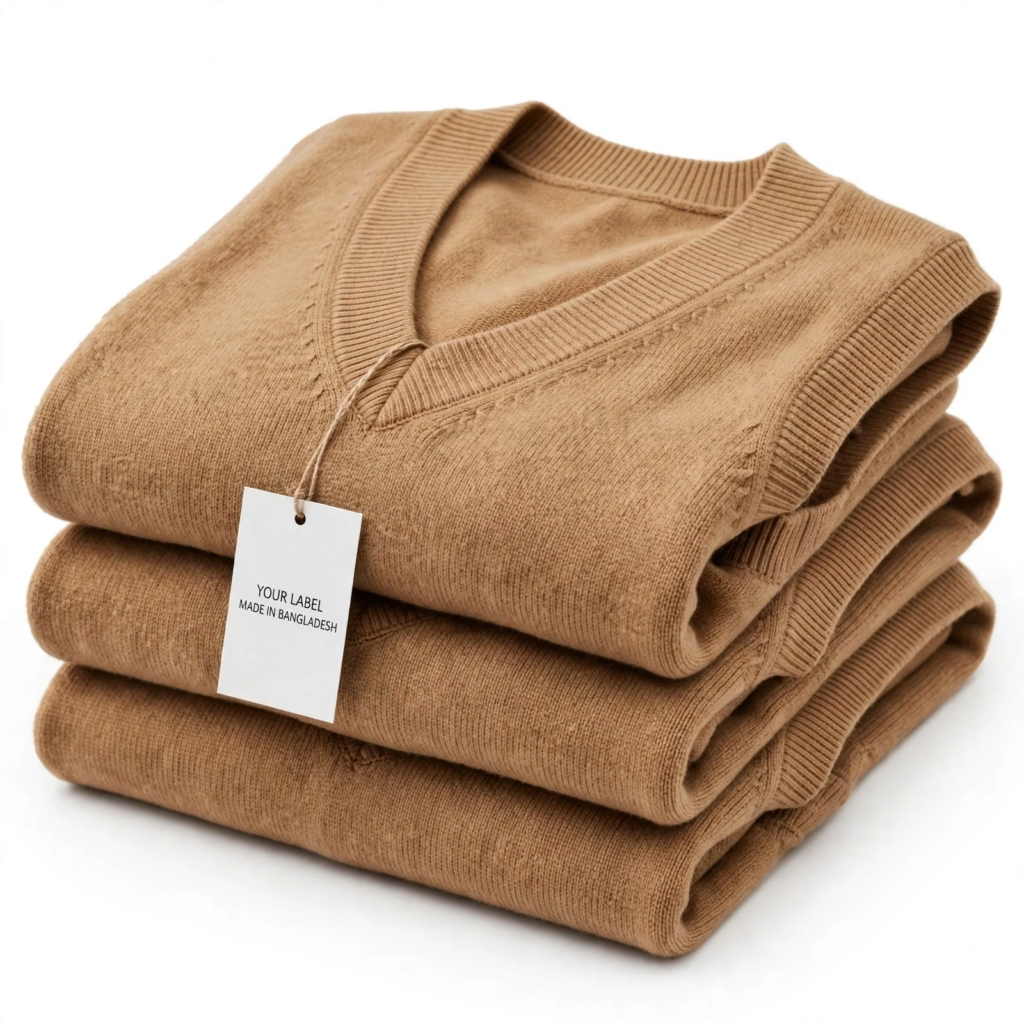
Sweater Vest Manufacturer in Bangladesh for Knitwear and Uniform Buyers
Siatex manufactures sleeveless styles for knitwear labels, school uniform suppliers and golf and fashion retailers who want a layering piece for the range. Working from Bangladesh, we knit every vest to the buyer’s own pattern, measurement chart and yarn specification, so the vest approved at sampling is the vest your customers receive.
Nothing is pulled from a shelf, because each order starts only after written confirmation and follows the buyer’s label from the first knitted panel to the final fold. Every vest leaves exactly as specified, protecting repeat orders.
Yarn and Fibre Choices Behind Every Sweater Vest
The yarn decides how a vest drapes and wears, so each programme starts with fibre, blend and count agreed against the target hand feel. Buyers in Spain often favour cotton-rich blends for school and golf ranges, while colder stories take wool-rich yarns.
- Acrylic yarns for easy-care school and uniform vests
- Cotton yarns for breathable warm-weather vests
- Cotton-acrylic blends for softness and shape retention
- Wool-rich blends for colder seasonal stories
- Melange and marl yarns for textured plain bodies
- Fine 2/48 Nm counts for smooth lightweight knits
- 2/30 Nm counts for a firmer hand feel
- 5GG chunky knits for textured fashion vests
- 7GG mid-gauge knits for classic uniform vests
- 12GG fine-gauge knits for smooth layering vests
- Other buyer-specified yarns, blends and counts developed to order
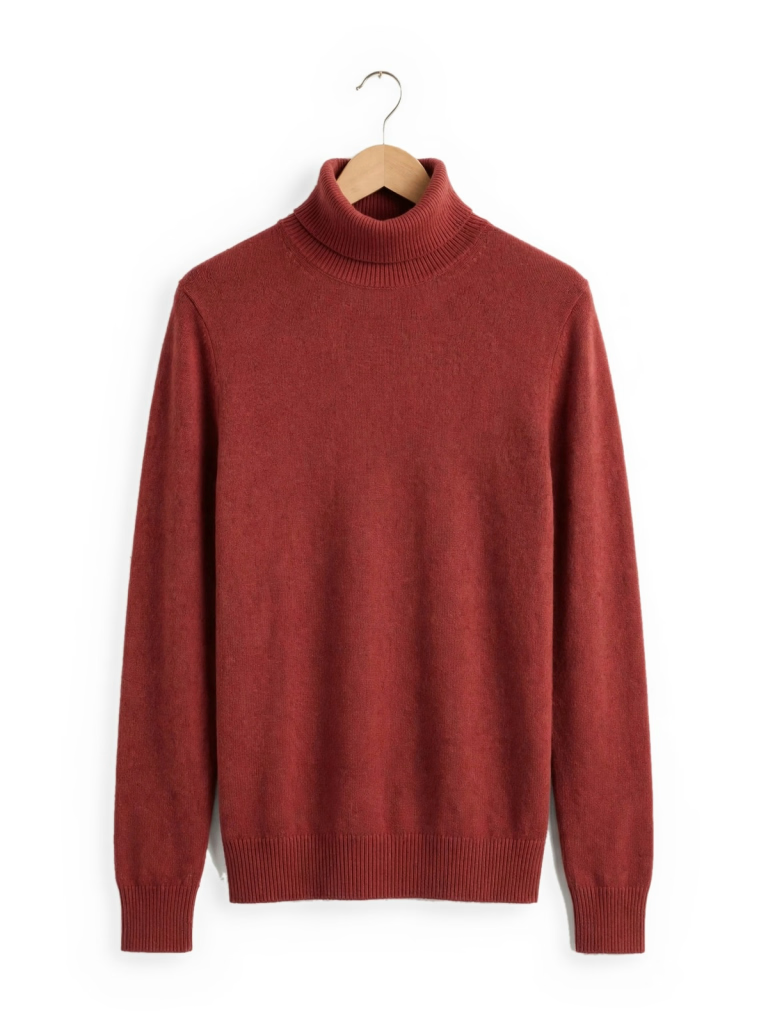
Every yarn lot is checked before knitting, and the same yarn story can carry a coordinated cowl neck sweater in bulk.
Custom Sweater Vest Sizes, Fits and Size Ranges for Germany and Canada Buyers
Fit decides whether a vest is layered daily or left in the wardrobe, so every style is graded from the buyer’s own chart rather than a house block. Chest, body length, V-neck depth and armhole depth are set size by size, with regular and relaxed vest fits developed separately for layering over shirts.
Buyers in Germany and Canada receive measurement reports at sample stage, and tolerance checks run again in bulk, so every size shares the same neckline drop and proportions.
V-Neck, Armhole and Hem Construction on a Sweater Vest
The V-neck band of each vest is knitted separately and linked point to point onto the body, so the neckline sits flat over a shirt collar. Fully-fashioned panels keep the shoulder shaping on a sleeveless garment, where every seam is on show.
- V-neck bands in 1×1 or 2×2 rib, knitted to the buyer’s depth
- Armhole bands shaped to sit flat over a shirt sleeve
- Hem rib that recovers after wear
- Fully-fashioned panels with clean shoulder shaping
- Point-to-point linking at the neck and armhole seams
- Contrast tipping knitted in, never printed on
Fashion buyers in South Korea take the vest as the colour layer over a plain shirt, in camel, cream or burgundy. Buyers wanting the same neckline with sleeves develop the matching v-neck sweater alongside it.
Gauges and Stitch Structures for a Knitted Sweater Vest
Gauge sets the character of the knit, and this vest programme covers the gauges sleeveless styles need most. Chunky 5GG knits give a textured, cosy vest, 7GG balances structure with softness for uniform stories, and 12GG fine knits produce a smooth vest for layering under a blazer.
The body is knitted in clean stocking stitch as the standard structure, with moss stitch and cable panels where the design calls for texture. School programmes pair naturally with our school uniform vest production, with crests embroidered after knitting.
Colours, Stripes and Crests for Your Sweater Vest
Colour carries the vest story: camel leads this programme, with cream for classic uniform dressing and burgundy for golf and heritage ranges. Tipping stripes are knitted into the neck and armhole ribs in your club, school or brand colours, never applied afterwards.
- Contrast tipping on the neck and armhole bands
- Embroidered school, club or corporate crests
- Cable, moss or textured stitch panels
- V depth and rib depth set to your pattern
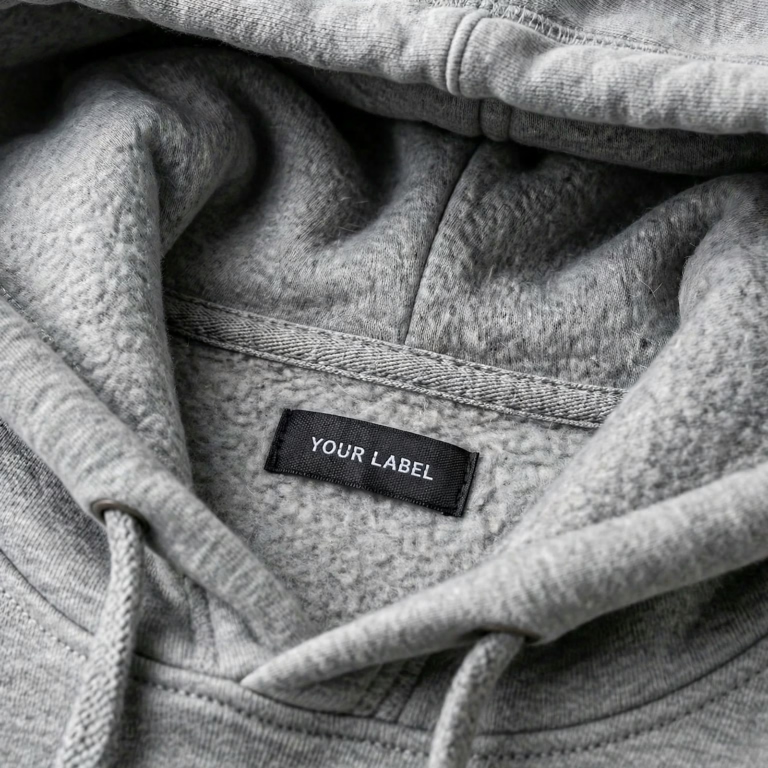
- Your woven label at the inside back neck
- Size and care labels in your brand format
Buyers adding texture can develop a cable knit sweater in the same yarn story, so the vest and its sleeved partner read as one collection.
Private Label Sweater Vest Production
Every vest is produced under the buyer’s label only, because private label manufacture is the whole point of the range. Your woven main label, size label and care label are applied exactly as your brand manual sets out, and buyers can develop a matching high neck sweater under the same programme.
Hangtags, polybags and carton markings carry your identity alone, and nothing on the finished vest names anyone else. Labels are checked against approved artwork before production, so the first and last vest packed present your brand identically.
Sweater Vest Sampling and Product Development
Sampling turns your sketch, photograph or reference garment into a wearable vest before any bulk commitment is made.
- Send a tech pack, photograph or reference vest
- Yarn and gauge agreed against your target hand feel
- Proto vest knitted and measured against your chart
- Fit comments worked through round by round
- Pre-production vest signed off as the bulk standard
Once signed off, the pre-production vest becomes the bulk standard, with reports and photographs shared at each stage.
Quality Control on Every Sweater Vest Order
Quality is protected by checking, not by hoping, and our merchandising and quality team follows every vest order from yarn arrival to final packing.
- Yarn lot and shade checked before knitting begins
- Panel measurements checked against the size chart
- Neck, armhole and hem rib recovery checks
- Linking and seam inspection on every vest
- Needle detection and final random inspection before sealing
Faults are corrected at the stage where they appear, so problems never travel down the line. As a family-run team, we treat your vest range as our own, which keeps returns low.
Production Follow-Up for Your Sweater Vest Order
A named merchandiser follows your order daily and reports progress in plain language, from yarn booking through knitting, linking, finishing and packing. Photographs of your actual vest production are available at each stage for your sales team.
Buyers draw on 37 years of garment-making experience behind that follow-up, which keeps your vest launch dates realistic.
Packaging and Shipping Sweater Vest Orders from Bangladesh
Each vest is folded flat with tissue or packed to your specification, because a knitted vest keeps its shape best when the ribs are folded, not stretched. Cartons carry your marks, barcodes and packing lists, and weights and dimensions are confirmed before booking, so your vest freight can be planned.
Orders ship from Chattogram port to the USA, the UK, Germany, Canada and Australia, with Saudi Arabia served on regular sailings for buyers building Gulf distribution. Documents follow your forwarder’s checklist, so cartons clear quickly.
How to Start Your Sweater Vest Order
Starting is simple: send your tech pack, a clear photograph or an original vest sample of the style you want to build.
There is no obligation to proceed beyond the sample stage, and every approval point is confirmed in writing before the next step begins. One conversation turns your vest idea into a sampled, costed programme, so your first order starts with clarity.
How Should Buyers in Spain and South Korea Build a Sweater Vest Range?
Buyers in Spain usually build the vest around school and golf stories: a clean V-neck in cotton-rich yarn, worn over a shirt through mild weather, with tipped bands carrying the school or club colours. One approved block in camel and burgundy covers both stories, so the range stays tight while the trims alone change the customer it speaks to.
Buyers in South Korea more often treat the vest as a fashion layer, styled over a plain shirt or under a blazer in fine-gauge knits. Planning the uniform and fashion routes on one shared pattern keeps sampling simple, because grading, rib structures and labels are shared while colour and gauge change the look of the garment. Both routes protect margin, because one development covers two markets.
Keeping a Sweater Vest Fresh for USA and UK Customers
Care guidance protects the knit your customers paid for. A vest should be folded flat rather than hung, because hanging stretches the shoulders and armhole ribs over time. Gentle washing in cool water, drying flat and easing the neck band back into line while the knit is still damp keeps the ribs firm and the V sitting cleanly. A short wash test on the pre-production sample confirms this guidance before it is printed for your labels.
Retailers in the USA and UK reduce returns by printing these points on the care label and the product page, in plain language buyers actually read. We apply your care wording exactly as supplied, and pack each garment folded so it reaches the shelf with its neck band already sitting correctly and ready to wear.
How Sweater Vest Orders Reach Germany, Canada and Australia
Export packing is planned with the destination in mind, so cartons for Germany, Canada and Australia are marked, counted and documented before they leave Bangladesh. Orders travel from Chattogram port by sea for planned seasonal drops, or by air when a launch date cannot move, with packing lists matched to your forwarder’s routine and carton weights confirmed before booking. Consolidated paperwork also makes customs clearance calmer for your receiving team.
Buyers running the same vest across all three markets can consolidate sizes and colours into one production run, then split cartons by destination at packing. That keeps the garment identical in every market while your documents stay clean, and your warehouse teams receive cartons they can process straight away, without relabelling, recounting or repacking at the other end.