
Custom Womens Athleisure Dress Manufacturer in Bangladesh for Active Labels
A custom womens athleisure dress manufacturer in Bangladesh is judged in two worlds at once: the dress has to move like sportswear and photograph like a dress. Most garments fail one of the two. This one is built to pass both, in a stretch knit that works as hard as it looks.
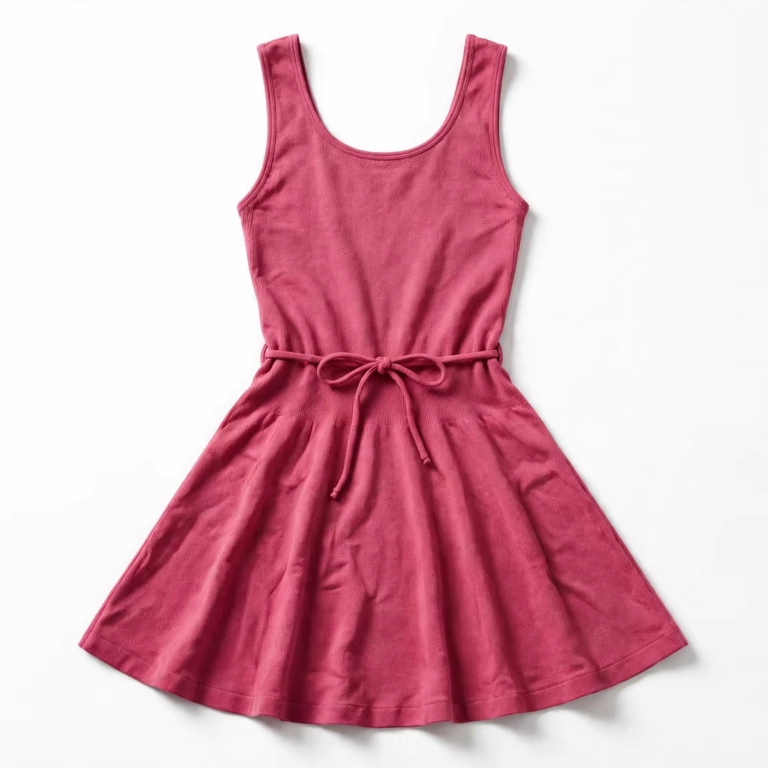
This beetroot pink dress is made at your level: your quality in the knit and the stitching, your fabric weight and stretch, your design in the scoop, the drawstring and the flare, your measurement chart behind the fit. One garment, two wardrobes, your standard in both.
Materials – Your fabric call sets the cloth: a beetroot pink stretch knit with the recovery an active dress needs, soft against the skin and firm enough to hold the flare. The colour is dyed to your standard and checked against it in daylight.
Functionality – Your design sets the dress: sleeveless with a bound scoop neckline, a drawstring at the waist that ties in a bow at the front, and a flared skirt that falls above the knee. The waist adjusts on the body, not only on the size chart.
Size – Your measurement chart rules the fit: bodice, waist placement and skirt length graded from your chart, with the drawstring giving each wearer a final adjustment the chart cannot. An active dress must fit at the start of the workout and at the end.
Customisation – Your level covers the whole garment: your colours beyond this beetroot pink, your label inside the back neck, your cord and bow spec, your length call. Quality, fabric, design and measurement follow your standard from sample to sealed carton.
Order the sample dress and wear it through a real class before you judge it. Start through the contact page with your chart and colour standard.
The Beetroot Dress, Piece by Piece
The bodice is a clean sleeveless scoop, bound at the neck and armholes so the edges stay smooth against moving skin. At the waist a drawstring runs through a channel and ties in a bow at the front; below it the skirt flares out in soft folds to above the knee.
The back is plain, the scoop repeated, the waist channel running smooth with no tie at the back. There are no zips, no buttons and nothing to snag: the dress pulls on and works.
- Sleeveless, bound scoop neckline
- Drawstring waist, bow tied at the front
- Flared skirt, above-knee length
- Pull-on, no zips or buttons
- Back plain, channel smooth
Two Wardrobes in One Garment
The athleisure customer does not change between the studio and the street; she adds a jacket and keeps moving. A dress that only works in one of those places makes her choose, and she solves the problem by buying from a label that does not make her choose.
That is the commercial logic of this body: the knit and the fit belong to sport, the scoop and the flare belong to the dress rail, and the drawstring bow is the small feminine signal that tips it from kit into clothing. Your label sells the hour before the class and the hour after it in one garment.
Athleisure Dress Supplier in Bangladesh for USA Active Labels
American active labels live on repeat purchase: the customer who trusts the dress buys the second colour without a fitting room. That trust is built on consistency – the same waist placement, the same flare, the same knit hand in every colour and every reorder.
Your label’s runs are cut from one cloth lot per colour and graded off one chart, so the beetroot dress and its successor colourways wear identically. The bow, the scoop depth and the length are spec lines, not habits, and they hold from the first run to the fifth.
- One cloth lot per colour
- Colourways wear identically
- Scoop, bow and length are spec lines
- Reorders graded off the same chart
Build Sheet for the Beetroot Dress
The build sheet is the dress reduced to decisions: knit, colour, scoop depth, cord, flare, length. Keep it beside the approved sample and the two together are the contract every later run is sewn against.
| Fabric | Stretch knit, beetroot pink |
|---|---|
| Neckline | Bound scoop neck |
| Sleeves | Sleeveless, bound armholes |
| Waist | Drawstring channel, bow at the front |
| Skirt | Flared, above-knee length |
| Closure | Pull-on, no zip or buttons |
| Fit | Fitted bodice, adjustable waist |
| Sizes | XS to XXL, graded to your chart |
| Label | Your woven label inside the back neck |
The Drawstring Is a Fit Tool, Not a Decoration
A fixed waist fits the body it was graded for and argues with every other one. The drawstring ends the argument: the wearer sets her own waist in two seconds, the bow marks the setting, and the dress fits the same after lunch as before it.
The channel is stitched to carry that daily work: the cord slides without twisting, the eyelets are clean, and the cord ends are finished so they cannot fray into the wash. Your label can spec cord colour and bow length; the mechanics stay exactly as sampled.
The Flare Has to Move Without Clinging
A knit skirt that clings is a leggings problem in a dress’s clothing. This flare is cut with enough sweep to fall away from the leg and swing when the wearer moves, and the knit weight is chosen so the swing reads as cloth, not as cling.
That balance is a sample-stage judgement: too light and the skirt flies, too heavy and it drags. Your approved sample is the weight standard, and every lot is checked against its hand before cutting.
- Sweep cut to fall away from the leg
- Knit weight balanced at sample stage
- Approved sample kept as the hand standard
- Every lot checked against it
Active Dress Exporter in Bangladesh for UK and European Labels
European athleisure buyers ask the wash question early: does the colour hold, does the waist channel survive, does the knit pill where a bag strap rubs? The honest answers are built, not promised: colourfast dyeing to your standard, a channel stitched for daily tying, and a knit surface checked for pilling resistance at sample stage.
Your label can build the colour story across seasons on this one body, knowing the fit file does not move. A rail that keeps its fit and changes its colours is the cheapest kind of range growth there is.
Checked in Motion Before It Is Packed
A dress built for movement is inspected in movement. The sample comes back from its class test and goes straight onto the measuring table: waist position, scoop depth and skirt length read against the chart while the knit is still warm from being worn, because that is the state your customer will judge it in.
Packing respects the garment’s softness. The dress is folded once across the skirt, the cord laid loose along the channel rather than tied tight, so no bow-shaped crease is pressed into the waist of a dress that has never been worn.
- Sample worn, washed and re-measured
- Channel and cord pull-tested
- Run checked colour by colour
- Folded with the bow flat
One Body, a Colour Story
Beetroot pink is the opening colour, chosen because it photographs warmly and wears across skin tones. Around it your label can build the story: deep tones for winter, brights for spring, each dyed to a recorded standard and sampled on the approved pattern first.
Send the colour standards as physical swatches where you can. A screen’s pink and a dyer’s pink are cousins, not twins, and the swatch removes the argument before it starts.
Beetroot also earns its place commercially: it sits between pink and red, feminine without being sugary, and it carries from spring into autumn better than a pastel does. A colour that works for three seasons in one garment is a colour a buyer can commit to in depth.
Depth matters on a dress like this because the purchase is rarely a single unit for the customer either: she buys the colour she loves, then the second colour for the other half of her week.
A label that stocks the body in three honest colours sells the same dress twice to the same woman, and that is the best kind of growth there is.
More From the Dress Floor
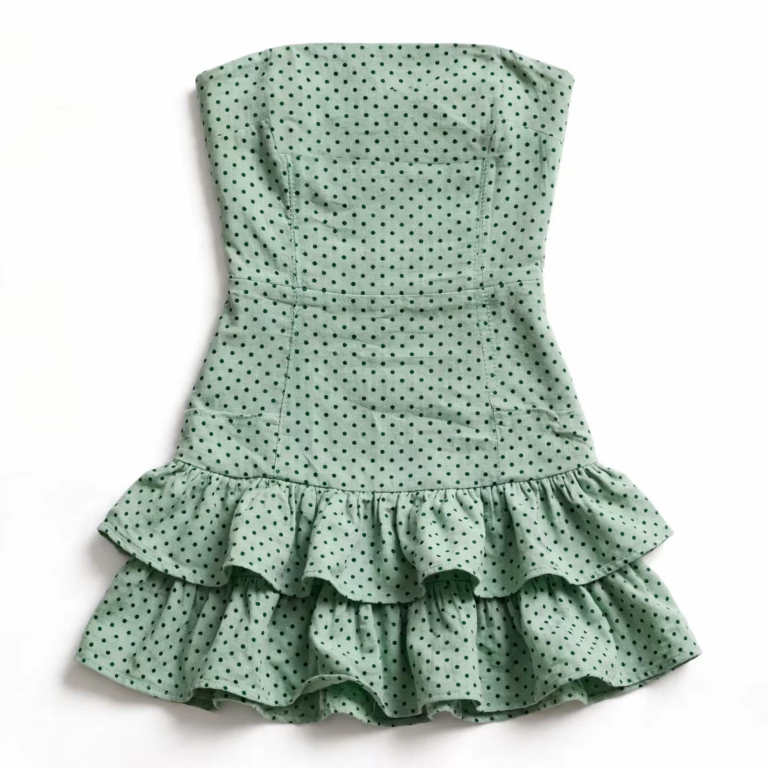
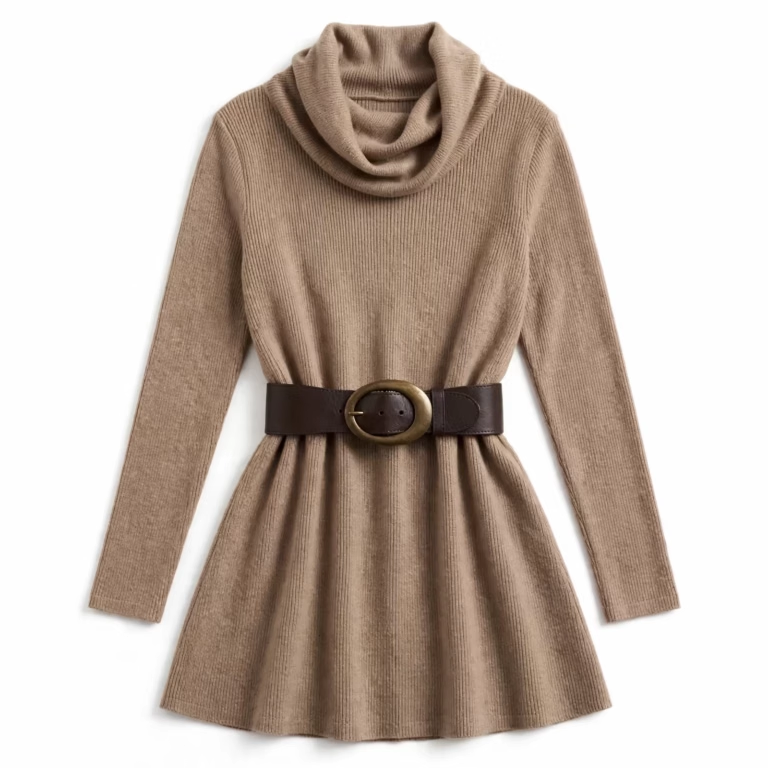
The dress floor also makes the taupe cowl sweater dress for the knit rail and the mint polka dot dress for summer.
The girls skater dress carries the same flare logic into the kids rail, and the full range sits under ladies dresses.
Trade buyers can follow Bangladesh’s garment exports through the International Trade Centre.
Grading a Dress the Wearer Finishes Fitting
An adjustable waist changes how honestly a size range can be graded. The bodice and skirt still grade from your chart in the usual steps, but the waist is graded as a range rather than a point, because the cord closes the last part of the fit on the body itself.
That makes the middle sizes forgiving and the edge sizes truthful: the smallest and largest are sampled on real bodies from your panel where possible, and the bow position is checked at both ends, since a cord that ties sweetly in a medium can sit awkwardly at an extreme.
- Waist graded as a range, not a point
- Bodice and skirt grade as usual
- Edge sizes checked on real bodies
- Bow position verified at both ends
Questions Buyers Ask About Athleisure Dresses
Can a USA label set its own knit weight for this dress?
Yes. Knit weight is a sample-stage decision on the build sheet: your sample is knitted and worn at your weight, and the bulk is checked against its hand. Lighter and heavier both run on the same pattern and flare.
Can a Spanish label move the bow or drop it for a cleaner waist?
The bow is where the drawstring ties, so dropping it means changing the closure, which can be sampled: a hidden tie or an elastic-only waist are both buildable. What is never done is shipping a different waist than the one your sample approved.
Can an Australian label run three colours in one order?
Yes. Each colour is cut from its own cloth lot and checked colour by colour, with quantities by size on one order grid. The fit, flare and waist placement stay identical across all three, so your rail reads as one dress in three colours.
Opening a Programme With One Honest Dress
Wear the sample the way your customer will: class in the morning, errands after, washing machine in the evening. If the waist still sits where you tied it and the skirt still swings instead of clinging, the dress has told you the truth about itself.
From there the programme is paperwork and discipline: the worn sample kept as the standard, the knit and colour values recorded, the chart signed. Send your measurements through the contact page, and the sample that starts your programme is cut from them.
Labels joining later get the same dress, not a descendant of it: the fit file, the knit spec and the colour standards are the programme, and they outlast any single season’s order. That continuity is what turns a good dress into a label’s signature piece.
The Rail Maths of a Two-World Dress
Retailers price this dress twice in their heads: once against the active rail, once against the dress rail, and it undercuts neither by accident. It borrows the active rail’s fabric logic and the dress rail’s silhouette, so a buyer can place it in either department and it earns its space in both.
For a label, that flexibility is range insurance. If the season’s active story cools, the same dress, restyled with a jacket in the photography, walks over to the dress rail without a single stitch changed. Few garments give a buyer that second chance.
- Priced honestly against both rails
- Restyles across departments unchanged
- One fit file serves two stories
- Photography, not pattern, does the moving