
Top 10 Baseball Jersey Exporters in Bangladesh
This guide ranks the Top 10 Baseball Jersey Exporters in Bangladesh the way a teamwear buyer actually works: who can cut, sew and finish a button-front jersey properly, hold a colour across a full squad order, and ship on the date promised.
Every name here was checked against the same yardsticks, because a baseball jersey is a specialist garment. The placket has to sit straight, the piping has to match on both sides, and the mesh has to take lettering, numbers and washing without fading.
We also weighed how each exporter handles the work around the garment itself: sampling speed, size grading across a squad, private label finishing and export packing. A famous name with slow sampling can cost a buyer a whole season of league orders.
How We Ranked the Top 10 Baseball Jersey Exporters in Bangladesh for Buyers Worldwide
This guide ranks the Top 10 Baseball Jersey Exporters in Bangladesh the way a teamwear buyer actually works: who can cut, sew and finish a button-front jersey properly, hold a colour across a full squad order, and ship on the date promised.
Every name here was checked against the same yardsticks, because a baseball jersey is a specialist garment. The placket has to sit straight, the piping has to match on both sides, and the mesh has to take lettering, numbers and washing without fading.
We also weighed how each exporter handles the work around the garment itself: sampling speed, size grading across a squad, private label finishing and export packing. A famous name with slow sampling can cost a buyer a whole season of league orders.
- Proven knit sportswear and team jersey production
- Sampling, grading and colour control a buyer can test
- Export record with teamwear, retail or league buyers
The Top 10 at a Glance
The table below gives the short version of the ranking, with each exporter’s base, its known strength and the buyer it usually fits best. The profiles after it explain the reasoning in full, including the watch points a careful buyer should test.
| Company | Base | Known strength | Typical buyer |
|---|---|---|---|
| Siatex | Bangladesh, exporting since 1987 | Custom jersey programmes made to specification | Teamwear brands, clubs and private labels |
| DBL Group | Gazipur | Vertical knit with sportswear fabrics in house | Global sports and high-street brands |
| Snowtex Group | Dhamrai | Sportswear and outerwear at scale | Sports retail chains and importers |
| Youngone Corporation | Chattogram export zones | Technical synthetic programmes | Premium outdoor and sports brands |
| Fakir Apparels | Narayanganj | Activewear and functional knitwear | European high-street retailers |
| Epyllion Group | Gazipur production | Vertical knit with its own testing laboratory | Brands needing fabric development |
| Ananta Group | Savar | Diversified range including activewear | Large retail programmes |
| Standard Group | Gazipur | Four decades of export production | Retailers and uniform buyers |
| Palmal Group | Factories across Bangladesh | Knit tops and bottoms at serious volume | Global high-street chains |
| AKH Group | Savar | Jogging suits and teamwear in its own lines | Retail chains and teamwear importers |
Read the ranking as a starting shortlist, not a verdict. The right exporter for a fifty-piece club order is rarely the right exporter for a national retail programme, and the profiles mark which end of that scale each name serves best.
One pattern runs through all ten: the strongest names control their cloth. Whether the fabric is knitted inside the group or developed with a long-standing mill, colour and weight are settled before cutting, which is exactly where jersey programmes succeed or fail.
1. Siatex: Custom Baseball Jersey Programmes Made to Your Specification
Siatex has made and exported garments from Bangladesh since 1987, and its baseball jersey work follows the same rule as everything else it sews: nothing is made ahead of an order. Every programme starts from the buyer’s own specification, never from a shelf.
That means the jersey is built at your level from the first sample: your colours, your cloth, your lettering and numbering, your sizes graded on your own measurement chart, and your label inside the neck. The sample is approved before bulk production begins.
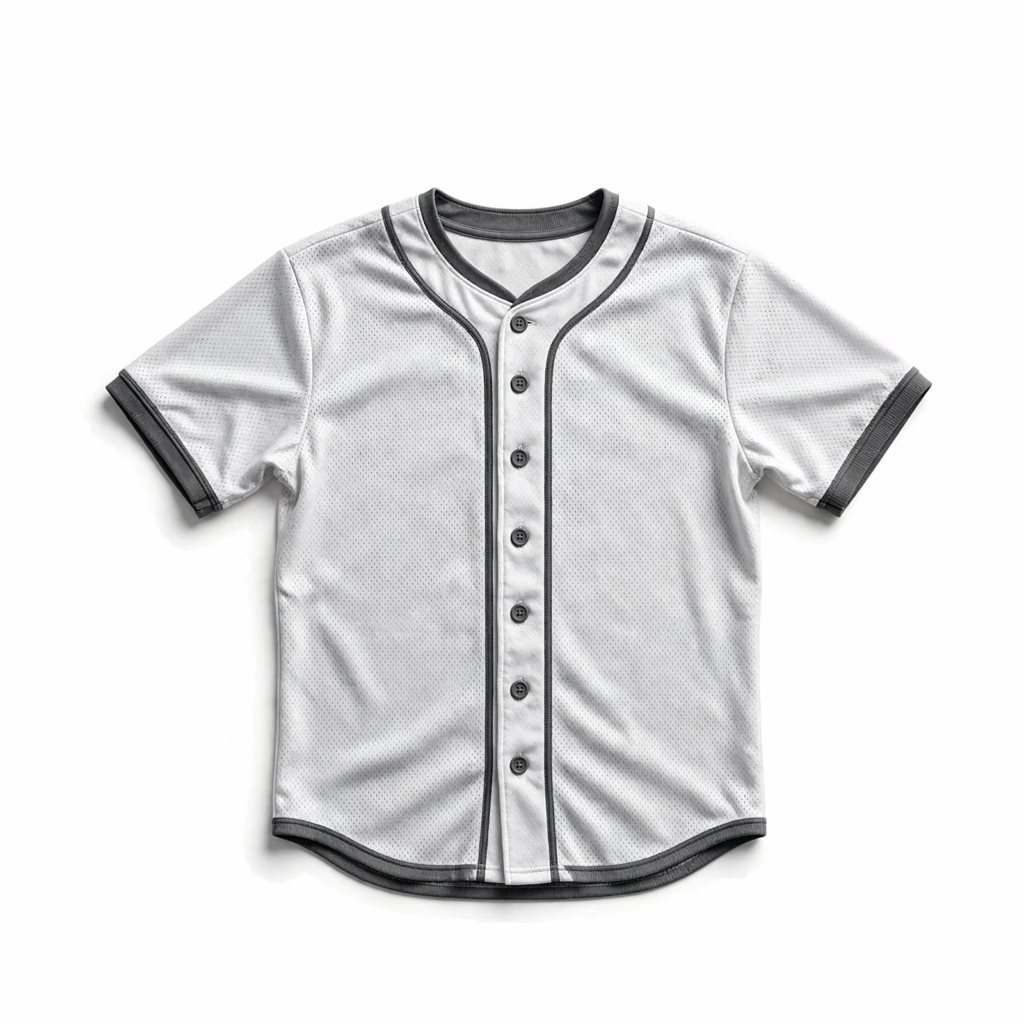
The anchor style is the classic button-front jersey in polyester mesh, with piping down the placket and around the collar, but the construction is a starting point. Buyers regularly adjust the collar form, the sleeve trim, the hem shape and the fabric weight.
- Best fit: buyers who want the jersey built around their own design
- Making garments in Bangladesh since 1987
- Watch point: custom work rewards a clear tech pack at sampling
Because the programme is written around your design, your quality standard is the one the line works to: your fabric, your print placement, your measurement tolerances. Send a sample brief and the first conversation is about your jersey, not a catalogue page.
See the Jersey Range Behind This Profile
Buyers comparing constructions before they commit to a sample can work through our sports jersey manufacturer page for the wider team jersey range, and our sportswear manufacturer page for the training and warm-up styles that usually travel with a full jersey programme.
2. DBL Group: Vertical Knit Power With Sportswear Fabrics
DBL Group began in 1991 as Dulal Brothers and has grown into one of the country’s leading vertically integrated knit groups, based in Gazipur. Spinning, knitting, dyeing, printing, washing and accessories sit inside the group, which gives its knit programmes unusual fabric control.
Its knitting division publicly highlights sportswear and activewear fabrics, and knit sportswear sits among the group’s famous products. For a jersey buyer, that matters: the mesh and interlock bases a baseball jersey is cut from are developed by the same group that sews them.
Puma sits among its key clients alongside Esprit, G-Star and George, and the group became Puma’s official franchise operator in Bangladesh in 2019. It also holds platinum supplier standing with H and M for knit clothing, a marker of long-run consistency.
- Best fit: jersey programmes where fabric development sits inside the group
- Founded 1991, vertical from spinning to garments
- Watch point: capacity books early for seasonal programmes
For a buyer whose jersey lives or dies on its cloth, DBL’s structure is the argument: weight, hand feel and shade are controlled at source rather than negotiated with an outside mill, and colour matching across a repeat order starts from its own yarn.
3. Snowtex Group: Sportswear and Outerwear Scale From Dhamrai
Snowtex Group built its name on outerwear, and its Snowtex Outerwear operation at Dhamrai now spans outerwear, workwear and sportswear. The group reports around thirty million outerwear pieces a year and a workforce in the region of twenty thousand people across its factories.
Sportswear is a stated line of the business rather than a sideline, and its long collaboration with a major European sports retailer, recognised with a ten-year collaboration award, shows it can hold a sports buyer’s standards across many seasons of repeat programmes.
Its exports to France alone have been reported above one hundred million dollars, and its factories carry LEED green certification. A National Export Trophy also sits on its record, which places it among the country’s recognised export performers over many years.
- Best fit: larger sportswear programmes needing proven export discipline
- Sportswear, outerwear and workwear from Dhamrai
- Watch point: a big-group diary can move slowly for small orders
A baseball jersey is a lighter garment than Snowtex’s famous jackets, but the disciplines transfer directly: panel accuracy, trim control and carton discipline. Buyers with a full teamwear range, jerseys included, will find its sportswear lines an organised place to consolidate production.
4. Youngone Corporation: Technical Programmes at Global Scale
Youngone Corporation has operated in Bangladesh since 1980, centred on the export processing zones at Chattogram, and employs more than sixty thousand people in the country. It is known globally as a main supplier of The North Face products and works with premium outdoor brands.
Its distinguishing strength is technical synthetic production: the group makes its own man-made fibre fabrics, which is the same fabric family a modern baseball jersey is cut from. Buyers chasing a precise mesh weight or a textured knit start from a strong base here.
Exports from its Bangladesh operations run above a billion dollars, and its programmes are built around demanding technical specifications. That culture suits jerseys with engineered panels, sublimation printing and strict colour standards, where the buyer’s specification is detailed and tested at every stage.
- Best fit: technical jersey programmes with detailed specifications
- In Bangladesh since 1980, with its own synthetic fabric production
- Watch point: minimum programmes suit established brands best
Youngone is rarely the cheapest route onto this list, and it does not try to be. Its place here rests on capability: when a jersey programme needs fabric engineering as much as sewing, few factories in the country can match its depth.
5. Fakir Apparels: The Activewear Specialist in Knit
Fakir Apparels was established in 1998 at Fatullah in Narayanganj and runs as a fully export-oriented composite knitwear maker. Its own description of the business says the set-up was built to handle activewear, functional and technical products, which is precise and useful positioning.
That focus shows in its buyer list, which includes H and M, C and A, Primark, Esprit, S.Oliver and Tom Tailor. European high-street buyers return to factories that hold fit and colour across seasons, and Fakir has kept those relationships over long periods.
For baseball jerseys, the relevant point is the functional knit base: breathable meshes, interlocks and stretch panels are everyday work for an activewear line. A buyer bringing a jersey design to Fakir is asking for a variation on work the factory already does well.
- Best fit: jersey and activewear programmes for European retail buyers
- Established 1998, composite knitwear at Narayanganj
- Watch point: peak season capacity is contested by long-term buyers
Fakir’s profile in this ranking is the specialist’s: narrower than the giant groups, but pointed directly at the product family a baseball jersey belongs to. Buyers who value a functional-knit track record over sheer group size will read this profile closely.
6. Epyllion Group: Vertical Knit With Its Own Testing Laboratory
Epyllion Group started in 1994 at Mirpur with two sewing lines and two hundred workers, and now runs around one hundred and sixty sewing lines with more than twenty-three thousand employees. Fabric, yarn dyeing, washing, accessories and a testing laboratory sit inside the group.
That laboratory is a genuinely useful detail for jersey buyers. Colour fastness, shrinkage and print durability can be checked in house against the buyer’s standard before a bulk run starts, which removes one of the common causes of a rejected teamwear delivery.
The group supplies buyers across Europe, the USA, Asia and Africa, and activewear sources describe a clear focus on high-quality activewear and sportswear within its knit range. Its vertical structure means a jersey’s cloth, dyeing and sewing answer to one management team.
- Best fit: buyers who want fabric and testing under one roof
- Started 1994, now more than 23,000 employees
- Watch point: fabric development routes take time at sampling
Epyllion earns its place through control rather than fame. A baseball jersey programme with sublimated panels and strict wash standards needs exactly the combination it offers: its own fabric, its own dyeing and a laboratory that can prove the result before shipment.
7. Ananta Group: Diversified Scale From Denim to Activewear
Ananta Group was founded in 1992 and is based at Savar, employing around twenty-six thousand workers across its operations. Its published range is unusually wide, covering denim, suits, sweaters, intimates, outerwear and activewear, which makes it a consolidation point for mixed programmes.
Activewear inside that range is the line a jersey buyer should ask about. A group that already sews performance knitwear for export has the machinery, the needle discipline and the finishing habits a button-front mesh jersey needs, even if jerseys are not its headline product.
Reported turnover above three hundred and fifty million dollars underlines the scale behind the range. For a buyer placing jerseys alongside other teamwear and leisure lines, one group handling the whole order can simplify inspection, packing and shipping considerably for everyone involved in the programme.
- Best fit: mixed teamwear programmes placed with one group
- Founded 1992, around 26,000 workers at Savar
- Watch point: confirm which unit sews the jersey line
Ananta’s honest position in this ranking is the diversified one: not a jersey specialist, but a large, experienced exporter whose activewear lines make it a credible home for team jersey production when the order travels with a wider programme of garments.
8. Standard Group: Four Decades of Export Discipline
Standard Group entered export garment production in 1984 and runs factories in Gazipur. Four decades of shipping to international buyers have built the habits that matter most in teamwear: stable patterns, consistent sizing and paperwork that clears ports without drama or delay.
Its product range spans woven bottoms, tops, outerwear, activewear and workwear, and the group keeps accessories, printing and embroidery in house. For a baseball jersey, in-house printing and embroidery matter directly, because lettering and numbering are where team orders are won or lost.
Buyers should still test the jersey construction itself at sampling, since the group’s fame rests more on woven and general export lines than on sportswear alone. What they are buying is process discipline applied to a garment the factory can certainly learn to sew well.
- Best fit: buyers valuing in-house print and embroidery control
- Exporting since 1984, factories in Gazipur
- Watch point: sample the placket and piping construction carefully
Standard Group closes the top eight as the steady hand of the list. Not every programme needs the newest technical fabric; many need a factory that answers emails, holds dates and sews the same jersey in March that it sampled in January.
9. Palmal Group: Knit Tops and Bottoms at Serious Volume
Palmal Group began in 1984 and has grown into one of the largest knit operations, with twenty-seven owned factories and more than thirty-three thousand employees. It reports more than fourteen million pieces a month and around one hundred and eighty tons of fabric a day.
Its customer list includes H and M, Gap, Levi’s, Walmart, Next and Zara, and its famous products are knit tops and bottoms, jackets, sleepwear and dresses. Annual exports are reported around four hundred and fourteen million dollars, with twelve LEED-certified factories in the group.
We place Palmal honestly: it is a knit volume house, not a sportswear specialist. But a baseball jersey is, in production terms, a knitted top with a placket, and a group sewing knit tops at this scale can absorb large jersey programmes without strain.
- Best fit: very large jersey volumes inside a knit programme
- 27 owned factories, more than 14 million pieces a month
- Watch point: small team orders sit below its natural order size
Palmal’s route onto this list is capacity. When a retail buyer wants jerseys by the hundred thousand alongside a core knit range, the conversation turns to factories that simply cannot miss, and Palmal’s monthly numbers put it in that small company.
10. AKH Group: Teamwear Lines in Its Own Product Lists
AKH Group was established in 1997 at Hemayetpur, Savar. Its knitting and dyeing arm’s registered line of business is unusually direct for this guide: it lists the jogging suit by name alongside T-shirts, polo shirts, sweatshirts, tank tops and pyjama sets.
Jogging suits and team jerseys are close cousins in production: knitted polyester or cotton-rich bases, panel construction, ribbed trims and printed or embroidered decoration. A group that names teamwear-adjacent products in its own lines starts a jersey conversation from experience, not from a blank page.
Group clients include H and M, Zara, Primark, Target and Macy’s, and recent reporting cites exports of four hundred and seventy million dollars in 2024 with a LEED Gold factory at Dhamrai. That is serious export weight behind a comparatively low-profile name.
- Best fit: teamwear programmes wanting a named knit product base
- Established 1997, group exports reported at $470M in 2024
- Watch point: agree the jersey fabric base clearly at sampling
AKH rounds out the ten as the list’s quiet achiever. Its own product lines name the garment family this guide is about, its buyers are international retail names, and its scale is proven, which is a combination many better-known factories cannot better.
How a Baseball Jersey Is Made: From Mesh Roll to Carton
A baseball jersey starts as a roll of knitted polyester mesh or interlock, checked for shade and weight before cutting. Panels are cut to the buyer’s pattern, the placket is formed and piped, and buttons are set only after the front sits perfectly straight.
- Fabric inspection for shade, weight and mesh evenness
- Panel cutting to the buyer’s own pattern and grading
- Placket forming, piping and button setting in line
- Lettering, numbering and label work to the buyer’s artwork
- Final measurement audit, pressing and export packing
Decoration decides the route after sewing. Sublimation prints the design into the cloth itself before cutting, while tackle twill lettering and embroidery are applied to the finished garment. Each route has its own sampling checks, and a good exporter explains them before quoting.
How to Choose the Right Baseball Jersey Exporter for Your Programme
Start with the garment, not the group brochure. Send the same jersey brief to three names on this list, compare the samples side by side, and judge the placket, the piping match and the button setting before you discuss price with any of them.
- Ask which factory unit will actually sew the jersey
- Test colour matching across a full size run
- Check lettering and numbering on a washed sample
- Confirm the label, packing and carton format in writing
- Agree the shipment date against your season calendar
Red Flags Worth Walking Away From
Walk away from any exporter who will not sample before quoting a bulk price, who cannot show a washed sample, or who treats the measurement chart as a rough guide. A jersey programme magnifies small errors across every shirt in the squad.
Be equally careful with promises that sound too easy. Piping that matches on both fronts, buttons that survive a season of washing and numbers that stay sharp are earned through process, and a serious factory talks about that process in specific detail.
Baseball Jersey Styles Buyers Order Most From Bangladesh
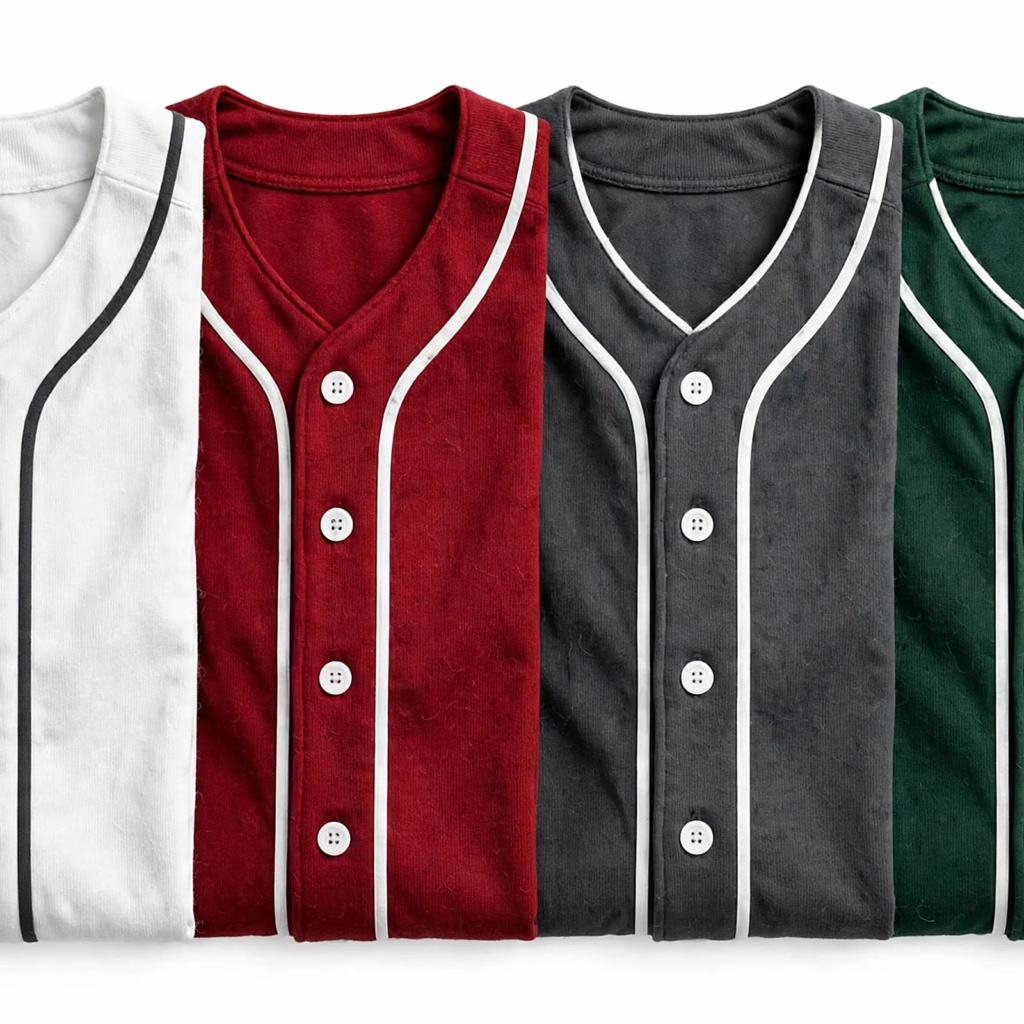
The classic button-front jersey remains the most ordered style: a full placket, piping in a contrast colour and a curved hem. It serves school, college and league programmes where the traditional look is part of the uniform’s identity and sponsor space matters.
- Classic button-front jersey with contrast piping
- Two-button pullover jersey for training and youth leagues
- V-neck pullover jersey in sublimated team colours
- Sleeveless softball jersey with contrast binding
- Full sublimation jersey with all-over artwork
- Heritage style jersey with tackle twill lettering
- Fan replica jersey for retail and supporter programmes
Alongside these, warm-up and training tops usually travel in the same order, which is why buyers often review our activewear manufacturer page when planning the full programme rather than the match jersey alone, because the squad wears both on the same day.
Jersey Fabrics and Construction: What Separates a Good Jersey From a Cheap One
Fabric comes first. A good baseball jersey is cut from polyester mesh or interlock that breathes on the field, holds its colour under floodlights and survives repeated washing. The knit should feel light and dry, never boardy, clammy or thin enough to tear.
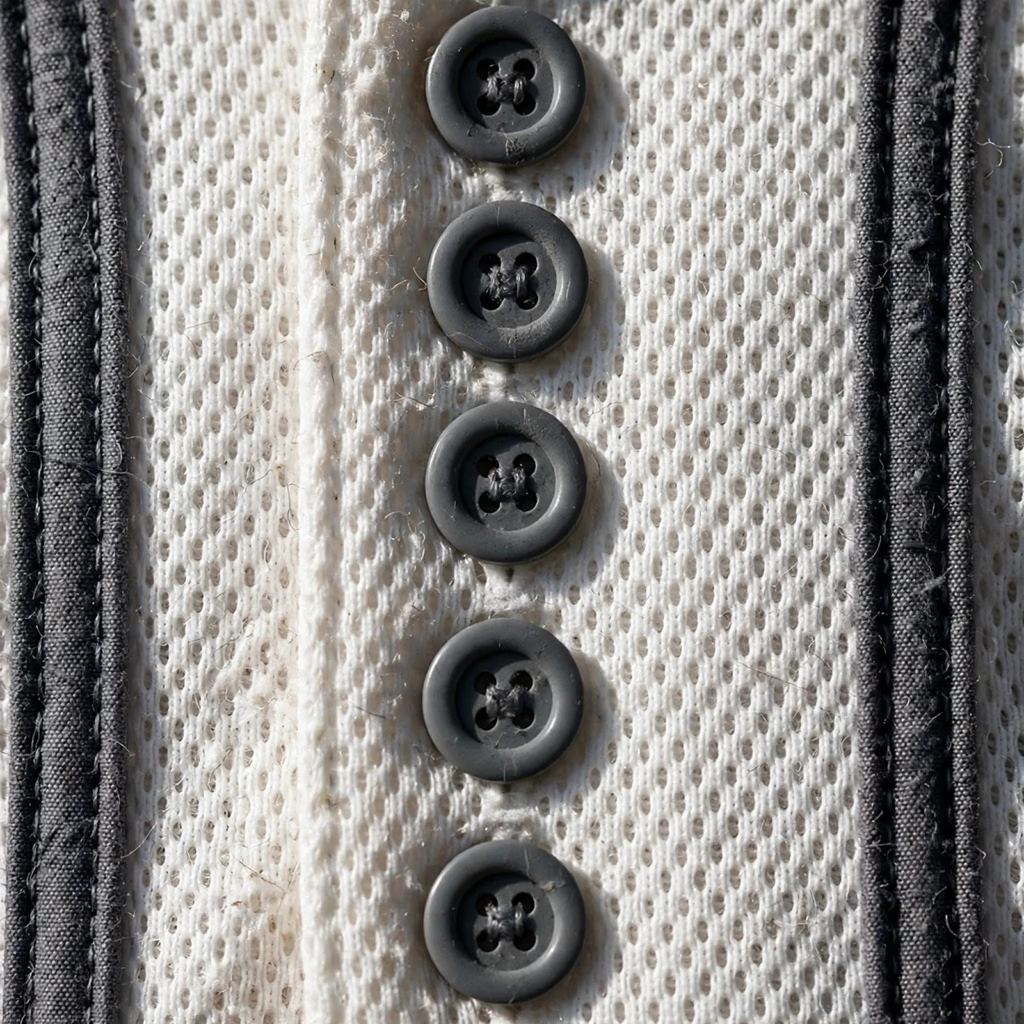
Construction shows next. The placket must drop straight from the collar to the hem, the piping must run evenly on both sides, and the buttons must be set firmly enough to take a season of fastening without pulling at the cloth around them.
- Mesh or interlock weight matched to the playing climate
- Piping sewn evenly, matched at the collar and hem
- Buttons set with backing so they cannot pull through
- Hem shape held by pattern, not by pressing alone
Sublimation quality is the third separator. Printed colour should sit inside the cloth with no cracking at the fold lines, and lettering edges should stay sharp after washing. Ask for a washed print sample and stretch it: a poor print shows itself immediately.
Grading is the quiet fourth point. A squad order spans youth sizes to adult sizes, and the jersey should look like the same garment at both ends of the run. Check the smallest and largest samples against the chart, not only the middle size.
None of these checks needs laboratory equipment. A tape measure, a washing machine and a bright light will tell a buyer more about a jersey than a glossy capability presentation, and the exporters worth using welcome exactly that kind of practical testing.
Markets: Where Bangladesh Baseball Jerseys Sell, and What Each Market Asks
Baseball jerseys made in Bangladesh travel furthest to the game’s heartland markets, but the orders differ by country. The six markets below account for most of the enquiries behind this guide, and each one buys the same garment for slightly different reasons.
The USA: The Heartland of the Game
The USA is the natural first market: school, college, travel-ball and amateur league programmes reorder jerseys every season, and fan replica shirts add a retail layer on top. Volumes are large, size runs are wide and delivery dates are fixed by season starts.
American buyers also set the decoration standard most exporters work to. Tackle twill lettering, arched names and large back numbers are everyday requests, so a factory’s lettering room matters as much as its sewing lines for this market’s programmes each year.
The UK: Club Kits and a Growing Game
Baseball and softball clubs across the UK kit out senior and youth teams from a small but organised league structure, and universities add steady programme orders. Buyers are usually club officers ordering carefully, with club colours and crests that cannot drift between seasons.
Order sizes are smaller than American programmes, which favours exporters comfortable with modest runs and patient sampling. Repeat accuracy matters more than headline capacity: the second season’s jerseys must match the first season’s exactly, in shade, lettering and fit across every repeat order.
Germany: Specification-Led Teamwear Buying
German baseball and softball clubs buy through a federation structure and through teamwear dealers, and both routes are specification-led. Expect detailed size charts, fabric declarations and delivery paperwork to be checked closely, with little tolerance for substitutions after sampling has been approved.
That discipline suits Bangladesh’s stronger exporters well. A factory that works to written specifications, and can prove colour and measurement control with records, will find German buyers loyal once the first programme lands correctly and on the agreed date, season after season.
France: Sports Retail and Club Programmes
France combines an established baseball and softball federation scene with sports retail demand for fan and fashion-led jersey styles. Club orders value correct crests and colours, while retail orders add swing tickets, barcodes and presentation standards to the same basic garment.
French buyers often plan in collections, so a jersey may sit inside a wider teamwear range with training tops and caps. Exporters who can keep one colour story consistent across several garment types earn the whole programme rather than a single style.
Canada: School, League and Layering Sense
Canadian school and community leagues order on a calendar shaped by a shorter outdoor season, which compresses delivery windows in spring. Jerseys are also worn over warm layers early in the season, so buyers pay attention to room through the body and sleeve.
Like the American market, Canada expects confident lettering and numbering, often in both official languages for school programmes. Exporters who check artwork carefully at the sampling stage, rather than at the packing table, avoid the most expensive mistake in this market entirely.
Australia: Season-Reversed Summer Programmes
Australia plays baseball through its summer, which reverses the production calendar for Bangladesh factories: sampling lands when northern programmes are shipping. Clubs, state leagues and school competitions order classic button-front styles, with lightweight mesh favoured for hot playing conditions across most regions.
The reversed season is a genuine advantage for organised buyers. Factory capacity that is contested in spring is easier to book for Australian delivery dates, and a well-planned programme can secure better sampling attention simply by arriving at the quieter point of the year.
Fabric weight is the detail Australian buyers test hardest. A jersey that feels right in a northern spring can feel heavy in Brisbane or Perth heat, so breathable mesh and honest weight declarations at sampling carry more weight than price differences between exporters.
What Decides the Price of a Baseball Jersey Programme
Jersey pricing is built from the cloth upward: fabric weight and composition, the decoration route, and the size range all move the number before sewing is even discussed. A plain button-front jersey and a fully sublimated, lettered programme are different products in cost terms.
- Fabric type, weight and whether it is knitted in house
- Decoration route: sublimation, twill lettering or embroidery
- Number of sizes and colourways in the programme
- Label, ticket, packing and carton requirements
- Order volume and the delivery window against the season
Buyers comparing quotations should compare like with like. Ask each exporter to price the same specification, including the same fabric weight and the same decoration, and treat any quotation that ignores part of the specification as a warning rather than a bargain.
The cheapest sample is not always the cheapest programme. Rejected cartons, reprinted lettering and missed season starts cost more than a slightly higher unit price from a factory whose process you have tested, which is why this guide weighs control alongside cost.
FAQ: Questions Buyers Ask Before Placing a Baseball Jersey Order
Which exporter should a small club start with?
Start with an exporter whose sampling route is built for custom programmes rather than catalogue volume. A club order is small but exacting, with colours, crests and numbers that must match, so a made-to-order maker usually serves a club better than a giant group.
Which names fit a very large retail jersey programme?
The volume houses on this list, such as Palmal, DBL and Youngone, are structured for large programmes with wide size runs and strict delivery schedules. Retail buyers should still sample the exact jersey construction, because scale alone does not guarantee a straight placket.
How do I judge a baseball jersey sample before committing?
Wash it, stretch the printed areas, fasten every button and measure it against your chart at the chest, length and sleeve. Then check the piping lines against each other in bright light: small faults visible on one sample will repeat across the order.
What fabric should I choose for a baseball jersey?
Choose polyester mesh for hot conditions and interlock where a smoother print surface or a slightly heavier hand is wanted. Both should be specified by weight and tested as a washed sample, because the same fabric name covers a wide quality range.
Can I order baseball jerseys with my own label and packing?
Yes. Every exporter on this list works with buyer labels, and the stronger ones build the label, ticket and packing format into the sample itself. Agree the full branding set before bulk production, so the first carton arrives ready for your shelf or your squad.
About This Guide
This guide to the Top 10 Baseball Jersey Exporters in Bangladesh was compiled from company records, trade reporting and exporter product lines, and it is refreshed as factories change. Siatex is listed first because this is a Siatex guide, and that interest is stated openly.
Start With a Sample, Whichever Name You Choose
Every strong programme on this page began the same way: with one sample, checked properly. Choose the two or three names that fit your order size and market, send them the same brief, and let the samples, not the brochures, make the decision for you.
Siatex trades openly and documents every order properly; we are members of the Bangladesh Garments Buying House Association, and every contract is handled with that standing behind it, from the first sample review to the final export carton leaving Bangladesh for your market.
Get a Price for Your Baseball Jersey Programme
Send your jersey design, your fabric preference and your size chart, and we will price the programme properly from your specification: your colours, your lettering, your measurement and your label, sample first. Get Price and the sampling conversation can begin from there.