

Custom Mens Dark Red Polo Shirt Manufacturer in Bangladesh for Deep Red Uniform and Retail Ranges
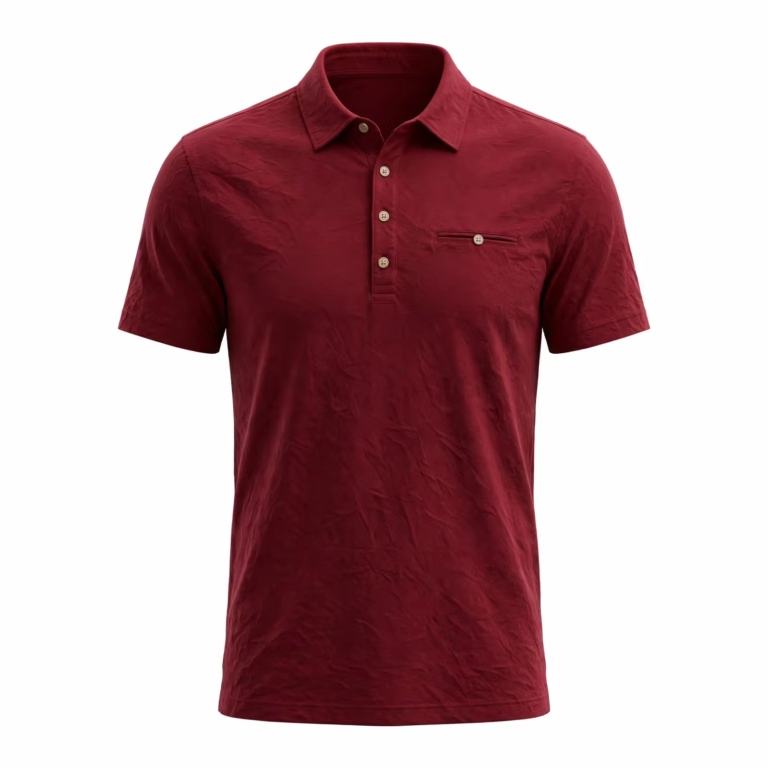
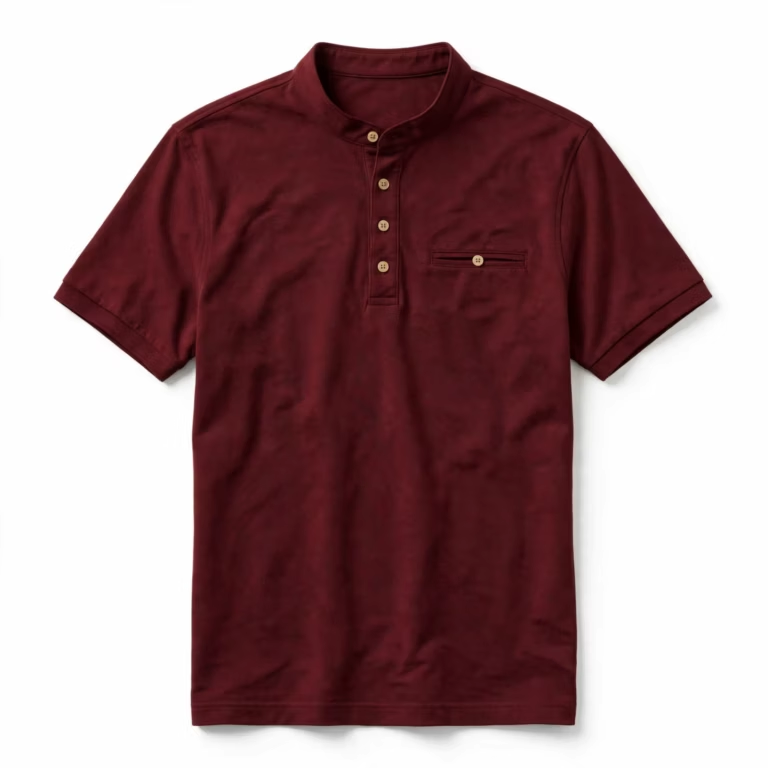
Dark red is the polo colour buyers reach for when black feels too hard and bright red feels too loud. This shirt holds one deep burgundy shade across the collar, the placket, the sleeves and the body, so a full size run reads as one calm, premium block of colour on the rail.
Siatex makes it as a custom mens dark red polo shirt manufacturer in bangladesh for uniform programmes, hospitality ranges and retail own-label lines. Your shade, your button choice and your chest detail are set at sampling, then held across every repeat order.
One Deep Burgundy Shade Carried Through Every Panel
There is no contrast trim anywhere on this polo, and that restraint is the design. The collar is cut from the same crinkled pique as the body, the placket is self fabric, and even the small chest welt matches, so nothing interrupts the red.
The only accents are the buttons: four small light beige buttons down the placket and one more on the chest welt. Against the deep red they read warm and deliberate, the way horn buttons read on a good knit.
Four Buttons Where Most Polos Stop at Two
The narrow placket runs from the collar to mid-chest and carries four buttons, all fastened in the product photographs. The longer button line gives the neck a deeper, smarter opening than the standard two-button polo and lets the wearer open the shirt one button further on warm days.
- Self-fabric collar with pointed tips and a short stand
- Four light beige buttons on a narrow mid-chest placket
- Buttoned welt detail on the left chest
- Plain hemmed short sleeves, no cuff band
Every button is sewn to survive industrial laundering, and spare buttons ride in the polybag of every garment. Button colour and count both change on your instruction at sampling.
A Buttoned Welt on the Chest Instead of a Pocket
The chest detail deserves a second look: a narrow horizontal welt with a single light button at its outer end. It gives the front the finished note a pocket would give, without a pocket bag breaking the line of the shirt or sagging under a badge.
Buyers who want a true patch pocket, a pen pocket or chest embroidery instead get it on the same body. The welt is our standard finish; your artwork, your pocket, your call.
Plain Hemmed Sleeves and a Straight Longer Hem
The short sleeves end in a plain turned hem rather than a ribbed cuff band, which keeps the arm line clean and the crinkled texture running unbroken to the edge. The body hem is straight, with no side vents, over a slightly longer body than a standard polo block.
That extra length is deliberate: the shirt stays tucked through a working day and covers the waistband worn loose. A shorter fashion block is cut just as easily when your range wants it.
Crinkled Pique Cotton With the Crumple Left In
The cloth is a cotton pique with a clear natural crinkle worked through the whole garment. Held close, the fine pique loops read through the crumple; worn, the surface catches light unevenly and looks softly lived-in rather than board-flat.
- Fine pique loops for airflow on warm days
- Natural crinkle that hides travel and packing creases
- Matte surface with no synthetic shine
- Colour held deep into the fibre for repeat washing
Because the texture is already broken, the shirt forgives the creases a plain pique would show after a day in a suitcase. Hospitality and travel-retail buyers order it for exactly that reason.
How the Dark Red Shade Is Matched and Held
Red shades drift more visibly than almost any other colour, so your burgundy is matched under daylight and store light before the first bulk dye lot. The approved lab dip then travels with the order as the standard every later lot is judged against.
Each dye lot is checked panel against panel before cutting. A lot that reads brighter or browner than your standard is re-dyed, never shaded into the order quietly.
Sizes Graded on Your Own Measurement Chart
The size run is graded from your measurement chart, not from a house block you have never seen. Chest, body length, sleeve length and collar size follow your numbers size by size, and the longer body of this style is written into the chart itself.
A measured size set is sewn before bulk so your team can fit it on your own fit model. Corrections come back, the pattern is adjusted, and only then does cutting start.
Where This Polo Earns Its Place in a Range
Dark red sits in more programmes than buyers first expect. It carries winery and steakhouse uniforms, hotel concierge teams, golf club staff shirts, school house colours and autumn retail ranges that need warmth without brightness.
The four-button placket lifts it above the basic staff polo, so the same shirt covers front-of-house roles. One body, several programmes, fewer styles to manage.
Your Label, Your Buttons, Your Chest Mark
The inside back neck carries your own woven label, the black label with your name in white that your customers learn to look for. Size and care labels follow your market’s rules, and your swing tickets and packing finish the garment as your product.
Buttons change colour, the welt becomes a pocket or an embroidered crest, and the red itself moves brighter or deeper. Each change is sampled and photographed for your approval before bulk.
Production in Bangladesh With Checking at Every Stage
Every shirt is cut, sewn and finished under our own supervision in Bangladesh. Inline checks follow the placket setting, the button sewing and the welt placement, because small details are where a plain shirt shows its quality.
Finished garments are measured against your chart, pressed and folded to your packing instruction. Cartons are marked by size and colour so your warehouse books them in without a recount.
The Collar That Keeps Its Points
A polo collar tells on a cheap shirt first: the points curl, the fold softens and the neck starts to look tired within a season. This collar is cut from the same crinkled pique as the body and built over a short stand, so it sits up behind the neck and folds down into clean pointed tips.
The stand height and the point length both follow your pattern. Uniform buyers usually keep the points classic and short; fashion buyers lengthen them slightly, and either way the collar is checked flat and folded before the shirt is packed.
Bulk Colour Consistency Across a Long Programme
Uniform programmes reorder for years, and the tenth order has to match the first under the same lights. Your approved burgundy standard stays on file with the dye house reference, and every new lot is compared against it before cutting begins.
Within one order, all panels of a shirt come from the same dye lot, so a sleeve can never read lighter than its body. Cartons are packed from one lot as well, which keeps a full size run consistent on the rail.
Sampling This Polo Before You Commit
The sampling round settles everything this page describes: your red under your lights, the four-button placket, the welt or your pocket, the longer body and your label inside the neck. Samples are measured against your chart and photographed before they ship.
Most buyers approve on the first round and correct on the second at most. Nothing moves to bulk until your written approval lands, so the production run holds no surprises for either side.
Care and Packing Set for Your Market
The care label is written for the cloth you approved and the rules of the market you sell into, in the languages your customers read. Washing guidance protects the deep red: cool wash, shade dry, and the colour holds its depth far longer.
Packing follows your instruction, from single polybags with size stickers for retail to ratio packs for uniform distribution. Your swing ticket, your barcode and your carton marks are applied here, so stock arrives shelf-ready.
Ordering This Polo in Your Own Red
Send your shade reference, your size chart and your chest detail choice, and the first samples come back in your red with your label inside. Once you approve them, bulk production follows the same standard the samples set.
Alongside this dark red, the polo family covers lighter and brighter grounds, including our light lemon polo shirt and the soft pink polo shirt.
Why the Longer Body Matters at Work
A standard polo block ends right at the waistband, and the first time the wearer reaches up or bends, the shirt rides out of the tuck. This body runs longer, so the hem stays anchored through a full shift of reaching, lifting and bending.
Worn loose, the same length covers the waistband cleanly and reads deliberate rather than oversized, because the fit through the chest and shoulders stays regular. Your chart sets the exact length either way.
Questions Buyers Ask About This Dark Red Polo
Is the colour a bright red or a burgundy?
Our standard is a deep burgundy red, darker and calmer than a classic pillar-box red. Your own shade reference always wins, and the lab dip is approved by you before dyeing.
Can the placket have fewer buttons?
Yes. Two and three-button plackets are cut on the same body, and the button colour changes with your programme. The four-button line is our standard because buyers keep choosing it at sampling.
Does the crinkle wash out?
No. The crumpled texture is part of how the cloth is finished, and it survives washing as a soft surface texture. The care label on your production run is written for the exact cloth you approve.
Built Alongside the Wider Polo Family
This shirt is one body in a polo programme that runs from plain grounds to melange and contrast work. Buyers building a full colour story often pair it with the plain brown polo shirt for the same programmes.
For lighter textured grounds, the light grey melange polo shirt carries the same placket and fit. Trade buyers can verify our exporter registration through the International Trade Centre.
Set Your Red and We Hold It
A plain polo lives or dies on its shade and its small details. Send the red you want, the buttons you want and the chart you grade by, and this shirt comes back in your colour, at your quality, in your sizes, with your label inside the neck.