
Top 10 Tracksuits Exporters in Bangladesh
We ranked these exporters the way a buyer actually judges a tracksuit programme: fabric range and control, panel cutting accuracy, stripe and print application, sampling speed, audit standing, and the markets each factory already serves every season for repeat retail programmes.
Bangladesh earns its place in tracksuit sourcing because the full chain sits inside one country: knitting, dyeing, cutting, sewing, finishing and packing under one roof. Buyers in the USA, the UK, Germany, France, Canada and Australia source tracksuits here every season.
- Fabric first: tricot, interlock, fleece and mesh, matched across the set
- Set discipline: sampling speed, stripe alignment, zip and packing quality
- Market record: real sportswear buyers served season after season
Read the Top 10 Tracksuits Exporters in Bangladesh below as a working shortlist rather than a trophy table. The right name depends on your programme: a fashion tracksuit, a team kit or a training range each rewards a different kind of factory strength.
How We Ranked the Top 10 Tracksuits Exporters in Bangladesh for Buyers Worldwide
We ranked these exporters the way a buyer actually judges a tracksuit programme: fabric range and control, panel cutting accuracy, stripe and print application, sampling speed, audit standing, and the markets each factory already serves every season for repeat retail programmes.
Bangladesh earns its place in tracksuit sourcing because the full chain sits inside one country: knitting, dyeing, cutting, sewing, finishing and packing under one roof. Buyers in the USA, the UK, Germany, France, Canada and Australia source tracksuits here every season.
- Fabric first: tricot, interlock, fleece and mesh, matched across the set
- Set discipline: sampling speed, stripe alignment, zip and packing quality
- Market record: real sportswear buyers served season after season
Read the Top 10 Tracksuits Exporters in Bangladesh below as a working shortlist rather than a trophy table. The right name depends on your programme: a fashion tracksuit, a team kit or a training range each rewards a different kind of factory strength.
The Top 10 at a Glance
The table below condenses each exporter into the facts a buyer checks first: base, what the factory is known for, its main fabrics and the buyer markets it serves. The profiles that follow give the evidence behind every line, name by name, in order.
| Exporter | Base | Known For | Main Fabrics | Buyer Markets |
|---|---|---|---|---|
| Siatex | Bangladesh | Custom tracksuits made to the buyer’s own specification | Polyester tricot, interlock, brushed fleece | USA, UK, Germany, France, Canada, Australia |
| DBL Group | Gazipur | Vertical knit group; knitting division highlights sportswear fabrics | Knit jersey, interlock, piqué | Europe, USA |
| Snowtex Group | Dhamrai | Outerwear and sportswear specialist with a decade-long sports retail collaboration | Woven shells, fleece, softshell | France, Europe, USA |
| Youngone Corporation | Chattogram | Technical outdoor maker for global performance brands | Man-made fibre fabrics, woven shells | USA, Europe, worldwide |
| Fakir Apparels | Narayanganj | Composite knit house set up to handle activewear, functional and technical products | Knit jersey, fleece, interlock | Europe, UK |
| Epyllion Group | Bangladesh | Vertical knit group with its own testing laboratory | Knit jersey, fleece, rib knits | Europe, USA, Asia |
| Ananta Group | Savar | Diversified group, denim to activewear and outerwear | Denim, woven and knit cloth | USA, Europe |
| Standard Group | Gazipur | Long-running exporter spanning activewear and workwear | Woven twill and knit cloth | USA, Europe |
| Palmal Group | Bangladesh | Vertical knitwear giant; knit tops and bottoms at scale | Knit jersey, fleece, rib knits | USA, UK, Europe, Canada, Australia |
| AKH Group | Savar | Knit group whose product lines name the jogging suit | Knit jersey, fleece, sweatshirt cloth | Europe, USA |
Read the table as a map, not a verdict. A factory that leads on technical outdoor programmes may be the wrong fit for a fashion tracksuit, while a knit giant built for volume can be exactly right for a training range at a sharp price.
The order reflects all-round fit for a typical custom tracksuit programme: fabric control, set construction, sampling discipline and market record weighed together. Your own order may differ, and the how-to-choose section below shows how to re-rank this list against your brief.
1. Siatex: Custom Tracksuit Programmes Made to Your Specification
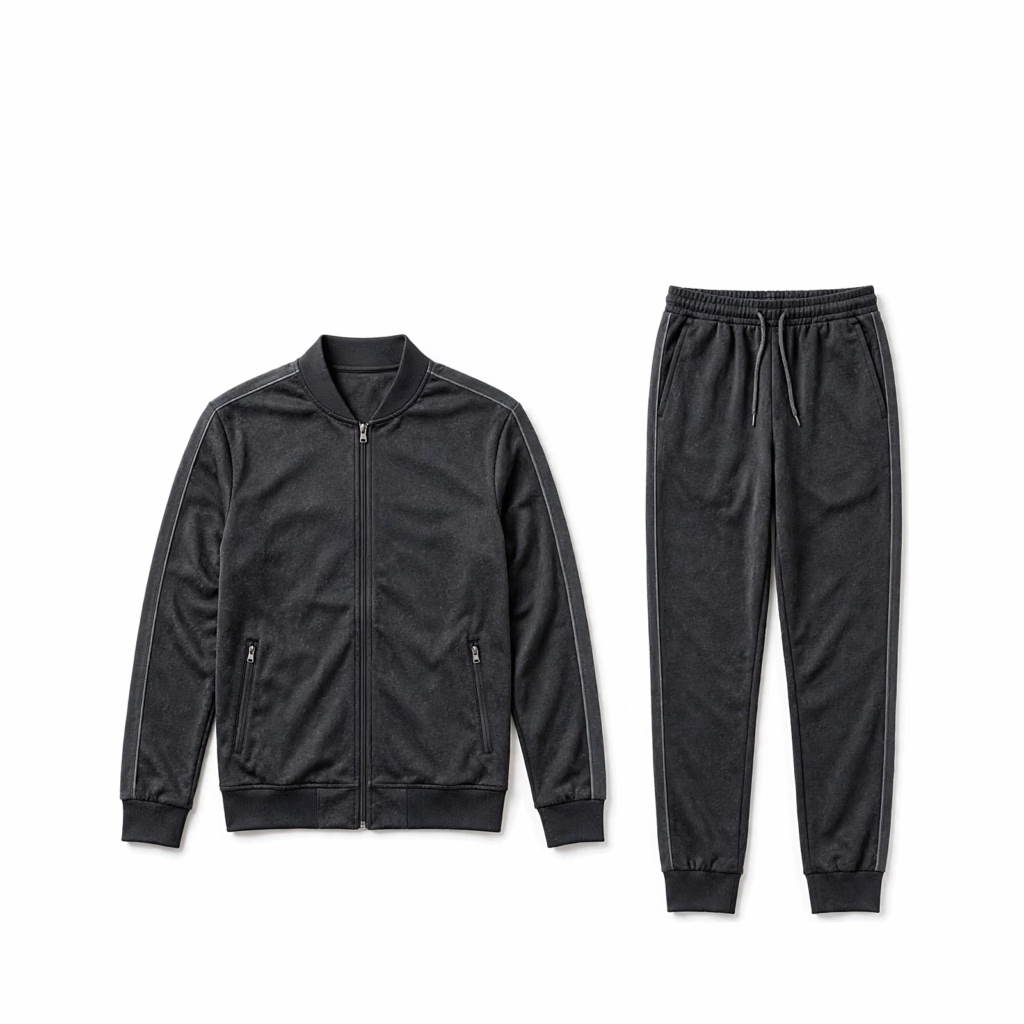
Siatex has made garments in Bangladesh since 1987, and the tracksuit sits at the centre of our sportswear work: full-zip jackets, jogger pants, training sets and team kits sewn as matched sets. Every programme starts from your specification, never from a ready range.
That means your fabric, your weight, your print, your measurement chart and your label. You choose the tricot, interlock or fleece, set the panel colours and stripe work, and approve a sample made to your spec first; bulk production follows only after that approval.
- Best fit: private label brands, teamwear suppliers and custom retailers
- Custom production only, sampling before bulk
- Jacket and pants cut from one dye lot, graded as a pair
The tracksuit range covers classic tricot sets with side stripes, fleece-lined winter sets, panelled training suits with mesh inserts, sublimation-printed fashion sets and plain basics for promotion work. Each style is quoted against your own tech pack, not a catalogue page.
Because the same team handles your sampling, bulk and repeats, a tracksuit that sells through comes back identical next season: same cloth, same fit block, same stripe placement. That continuity turns a one-off order into a programme a buyer can plan around.
See the Tracksuit Range Behind This Profile
Our tracksuit manufacturer page sets out the set styles, fabrics and custom options in full, and our wider sportswear manufacturer range shows the training and gym lines sewn beside them for the same buyers, all under the same made-to-order model.
2. DBL Group: Vertical Knit Power With Sportswear Fabrics
DBL Group began in 1991 as Dulal Brothers and has grown into one of the country’s leading vertically integrated knit groups, based in Gazipur. Spinning, knitting, dyeing, printing, washing and accessories sit inside the group, which gives its knit programmes unusual fabric control.
Its knitting division publicly highlights sportswear and activewear fabrics, and its knit sportswear lines are listed among the group’s famous products. Long relationships with buyers like H and M, where it holds platinum supplier standing for knit clothing, underline the consistency.
Puma sits among its key clients alongside Esprit, G-Star and George, and the group became Puma’s official franchise operator in Bangladesh in 2019. A sports brand relationship of that depth shapes its thinking on panel fit, stretch recovery and colour matching.
- Best fit: knit-led tracksuits where fabric development sits inside the group
- Founded 1991, vertical from spinning to garments
- Watch point: capacity books early for seasonal programmes
For a buyer whose tracksuit lives or dies on its cloth, DBL’s structure is the argument: the same group that knits the fabric sews the garment, so weight, hand feel and shade are controlled at source, not negotiated with an outside mill.
3. Snowtex Group: Sportswear Specialist With a Sports Retail Pedigree
Snowtex Group built its name in outerwear through Snowtex Outerwear at Dhamrai, and the group spans outerwear, workwear and sportswear. That mix matters for tracksuits, because a training set borrows as much from jacket making as it does from knit sewing.
The group’s strongest sportswear credential is retail-side: a ten-year collaboration award and a supply chain performance award from Decathlon, one of the world’s toughest sports retailers. A decade of repeat sports orders tests zips, seams and colourfastness harder than any single audit.
Snowtex reports around thirty million outerwear pieces a year across a workforce in the low twenty-thousands, with green factories and exports to France alone passing one hundred million dollars. National Export Trophy recognition sits behind those numbers in the industry record.
- Best fit: training sets, team kits and jacket-led tracksuits
- Decathlon collaboration and performance awards on record
- Watch point: knit-only basics sit better with a knit specialist
Buyers who need a tracksuit to behave like light outerwear, with a proper zip front, storm details and hard-wearing shells, will find Snowtex’s jacket discipline a natural fit, especially on programmes shared with a wider outerwear order in the same shipment.
4. Youngone Corporation: Technical Programmes at Global Scale
Youngone has operated in Bangladesh since 1980, building vast production bases in the Chattogram export processing zones and employing more than sixty thousand people in the country. Its export earnings from Bangladesh pass one billion dollars a year in industry reporting.
The company is known worldwide as a main supplier of The North Face products and works with Arc’teryx, which places its Bangladesh lines inside the technical end of outdoor clothing: taped seams, engineered panels and fabrics that must perform in weather.
Youngone also makes its own man-made fibre fabrics, and that vertical step shows in its tracksuits and training wear: the cloth is developed for stretch, moisture movement and abrasion resistance before a single panel is cut, not bought in as a commodity.
- Best fit: technical training sets tested like equipment
- In Bangladesh since 1980, own man-made fibre fabrics
- Watch point: minimums set for global brand programmes
A buyer developing a premium training set with performance claims to defend will value Youngone’s testing culture. Its scale and brand list make it the benchmark name on this list for technical construction, even where it opens widest to big programmes.
5. Fakir Apparels: The Activewear Specialist in Knit
Fakir Apparels was established in 1998 at Fatullah in Narayanganj as a fully export-oriented composite knitwear maker in Bangladesh. Its own company description is the clearest sportswear statement on this list: a set-up built to handle activewear, functional and technical products.
That wording matters because it describes intent, not accident. A composite knit house that organises its dyeing, knitting and sewing around functional products builds the stretch panels, mesh inserts and moisture-led fabrics a modern tracksuit programme depends on every day.
Its buyer record backs the claim: H and M, C and A, Primark, Esprit, S.Oliver and Tom Tailor all appear in reported client lists. Serving that spread of European high-street names means passing repeated social and technical audits across many seasons.
- Best fit: knit tracksuits and activewear for European high-street buyers
- Established 1998, composite knit at Fatullah
- Watch point: woven shell tracksuits sit outside the core offer
For a knit tracksuit with functional fabric claims, Fakir is one of the most directly qualified names in the country. Buyers should still test with a sample round, as with any name here, but the specialism itself is a matter of public record.
6. Epyllion Group: Vertical Knit With Its Own Testing Laboratory
Epyllion Group started in 1994 at Mirpur with two sewing lines and two hundred workers, and has grown into a vertical knit group of more than twenty-three thousand employees and around one hundred and sixty sewing lines across its units.
Fabric production, yarn dyeing, washing, accessories and a testing laboratory all sit inside the group, and listings describe a focus on quality activewear and sportswear. For a tracksuit buyer, the in-house laboratory is the detail that counts most at sampling stage.
Shrinkage, colourfastness and stretch recovery decide whether a tracksuit set still matches after washing, and a group that tests inside its own walls answers them in days, not weeks. Its knit range covers the jerseys and fleeces tracksuits are sewn from.
- Best fit: knit programmes needing in-house fabric test evidence
- Founded 1994, fabric to garment with its own laboratory
- Watch point: capacity shared with a wide knit order book
Epyllion suits a buyer who wants one group accountable for cloth and garment together, with test reports produced in-house. Its long growth from two lines to a full vertical group also signals the management depth behind big repeat programmes season after season.
7. Ananta Group: Diversified Scale From Denim to Activewear
Ananta Group was founded back in 1992 and employs around twenty-six thousand people across its Bangladesh units in and around Savar today. It is a diversified maker: denim, suits, sweaters, intimates, outerwear and activewear all appear in its published product range.
That breadth is Ananta’s argument for tracksuit buyers running mixed programmes. A retailer ordering training sets beside denim and outerwear can consolidate development, auditing and shipping inside one group instead of managing three separate factory relationships across the same season.
Its activewear lines sit inside a group used to the audit and compliance rhythm of large Western buyers, and its sewing scale lets it run jacket and pants lines in parallel, so sets leave matched and packed together in one shipment.
- Best fit: consolidated programmes shipping tracksuits beside denim and outerwear
- Founded 1992, around twenty-six thousand workers
- Watch point: tracksuits compete with the group’s core categories
Ananta is rarely the cheapest single-product answer, but for a buyer building up a full sportswear and casual range under one roof, its breadth shortens the supplier list and the audit calendar in a way few knit specialists anywhere can match.
8. Standard Group: Four Decades of Export Discipline
Standard Group entered export garment making in 1984 with woven garments, and its factories around Gazipur have shipped to demanding Western buyers ever since, without a break. Few names on this list can point to a longer unbroken export record in Bangladesh.
Its published range spans woven bottoms, tops, outerwear, activewear and workwear, with accessories, printing and embroidery held inside the group. That in-house trim and branding control is directly useful on tracksuits, where zips, cords, stripes and logos decide the retail look.
Workwear discipline shapes its sewing culture: garments built to be worn hard and reordered for years. A training tracksuit made with that mindset holds its cuffs, waistband and panel shape through the kind of use that ends cheaper sets early.
- Best fit: durable training and team sets, beside workwear lines
- Exporting since 1984, trims and branding in-house
- Watch point: knit fashion sets sit better with a knit house
Standard Group rewards buyers who value steadiness: long buyer relationships, in-house branding operations of its own and a product range that already includes activewear. On a multi-season teamwear contract, that steadiness can matter far more than a sharper first quote.
9. Palmal Group: Knit Tops and Bottoms at Serious Volume
Palmal Group began in 1984 and reports twenty-seven owned factories, more than thirty-three thousand employees and over fourteen million pieces a month across its units, with fabric production around one hundred and eighty tons a day inside its vertically integrated knitwear operation.
Its own published figures put annual exports around four hundred and fourteen million dollars, with twelve LEED-certified factories and more than thirty-five customers, including H and M, Gap, Levi’s, Walmart, Next and Zara across its knit programmes in several markets.
Knit tops and knit bottoms are its famous products, and a tracksuit is exactly that pairing: a zip jacket over a jogger bottom. A group sewing both halves at this volume understands set matching, ratio packing and colour discipline from long practice.
- Best fit: high-volume knit tracksuit basics across several markets
- Twenty-seven factories, knit tops and bottoms at scale
- Watch point: small detailed sets sit below its natural order size
Palmal’s buyer markets already span the USA, the UK, Europe, Canada and Australia, which suits a label selling the same tracksuit across continents. Few factories anywhere can absorb a sudden reorder on a selling set the way this group can.
10. AKH Group: The Jogging Suit in Its Own Product Lines
AKH Group was established in 1997 and runs its knit operations from Hemayetpur in Savar. It earns its place here on unusually direct evidence: its knitting and dyeing unit’s registered product lines name the jogging suit alongside T-shirts, polos and sweatshirts.
A jogging suit is a tracksuit by another name, and a group that lists it as a core product has the patterns, panel practice and set-packing routine in place. Its shirt unit names jogging suits too, widening its set-making base further.
Reported group buyers include H and M, Zara, Primark, Target and Macy’s, and company material cites exports of four hundred and seventy million dollars in 2024 with a LEED Gold factory at Dhamrai. That is serious knit volume behind the tracksuit claim.
- Best fit: classic jogging suit sets for high-street programmes
- Jogging suits named in its own registered product lines
- Watch point: shell tracksuits belong with a woven specialist
AKH closes the list because its tracksuit evidence needs no interpretation at all: the product is named in its own lines. For a buyer whose programme is the classic two-piece jogging set, that directness makes sampling conversations refreshingly short and practical.
How a Tracksuit Is Made: From Tricot Roll to Carton
A tracksuit looks simple and is not. The jacket and pants must match in shade, stripe position and hand feel although they are cut as separate panels, sewn on different lines and only meet again at final inspection and packing.
- Fabric stage. Cloth dyed to the approved shade and rested before cutting.
- Cutting. Jacket and pants panels from one dye lot, stripes to the placement marks.
- Sewing. Panels joined, stripes and prints applied, zips set straight.
- Waistband work. Elastic fitted, drawcord threaded and tipped, ankle cuffs set.
- Finishing. Sets pressed, checked as pairs, packed to the buyer’s ratio plan.
Two stages decide the result. Cutting accuracy decides whether stripes meet cleanly at the seams, and shade discipline decides whether jacket and pants still match each other under shop lighting. Everything else is good factory routine; those two are tracksuit craft.
How to Choose the Right Tracksuits Exporter for Your Programme
Start from your programme, not from the ranking. A fashion tracksuit with printed panels, a club team kit and a value training set reward different factories, and the strongest name for one programme can easily be an expensive mismatch for another.
- Match the cloth first. Judge the factory by its fabric test reports.
- Sample the set, not the jacket. Shade, stripes and fit across both pieces.
- Ask who sews repeats. The sample line should sew bulk and reorders.
- Check the branding route. Stripes, prints and labels under factory control.
- Read the market record. Your market’s rules known from practice.
Red Flags Worth Walking Away From
Be careful when a factory will not name the cloth source for your set, quotes before seeing your measurement chart, or shows samples whose jacket and pants differ in shade. Each habit predicts a bulk problem that late inspection cannot fix.
Walk away from any exporter who treats the sample as a sales prop rather than a production promise. On tracksuits the sample is the contract: if the set in hand is not the set the line can repeat, the price quoted is meaningless.
Tracksuit Styles Buyers Order Most From Bangladesh
Most tracksuit volume falls into a handful of proven styles. The list below covers the sets buyers reorder season after season, and naming your style early helps any exporter on this page quote the right cloth, trims and construction first time.
- Classic tricot set. Full-zip jacket and tapered jogger with a side stripe.
- Fleece-lined winter set. Brushed warmth for cold-market training.
- Panelled training suit. Mesh and contrast panels for club programmes.
- Sublimation fashion set. Printed jacket panels, plain pants.
- Team kit set. Club colours and numbering across a full squad.
- Jogger and zip basics. Plain sets for promotion and value retail.
- Women’s leisure set. Softer cloth, shaped waistband, closer fit.
Style changes the factory conversation. A sublimation set needs print control a plain set never tests, while a team kit lives on colour accuracy across sizes. The same factories sew the wider activewear range listed on our activewear manufacturer page.
Tracksuit Fabrics and Construction: What Separates a Good Tracksuit From a Cheap One
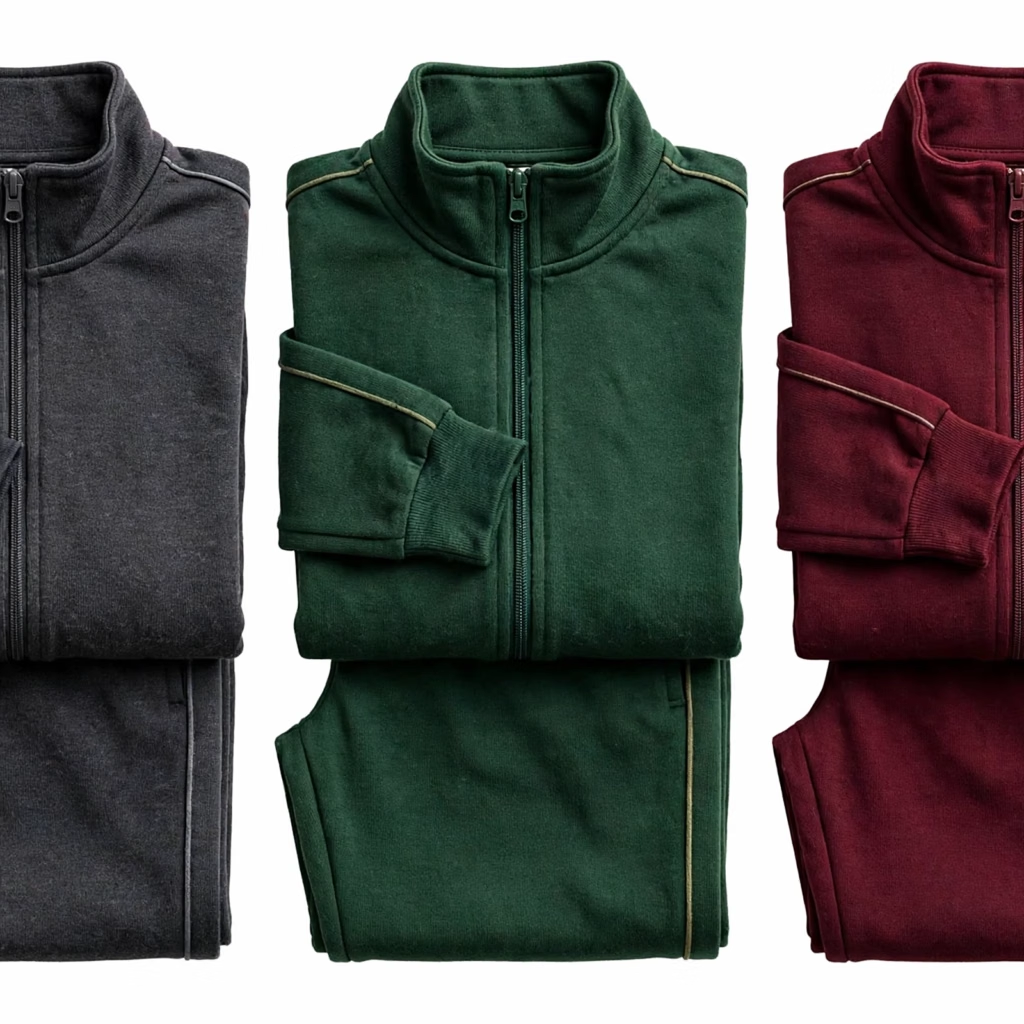
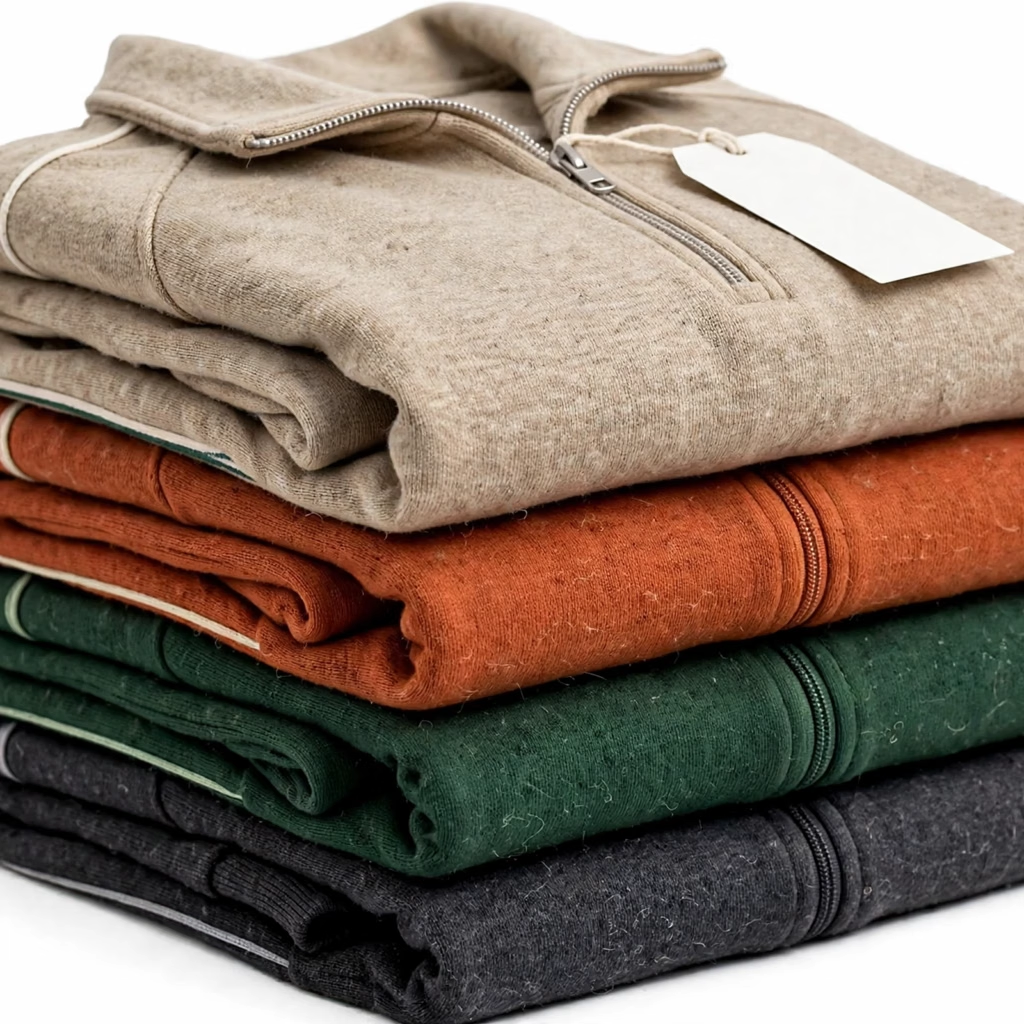
Three cloth families carry nearly every tracksuit programme in this trade. Polyester tricot gives the smooth slight-sheen face of the classic set, interlock gives a softer double-faced hand feel, and fleece, plain or brushed, gives winter weight and warmth for cold markets.
- Tricot. Smooth, light, quick to dry; the classic tracksuit face.
- Interlock. Double-faced and stable, with a softer hand feel.
- Brushed fleece. A warm inside face for winter sets.
- Mesh panels. Open knit inserts that move air in training.
Panel discipline is where good sets separate. Jacket and pants must be cut from one dye lot, stripes must land level on every size, and the set must be graded as a pair so a large jacket never meets a short pant.
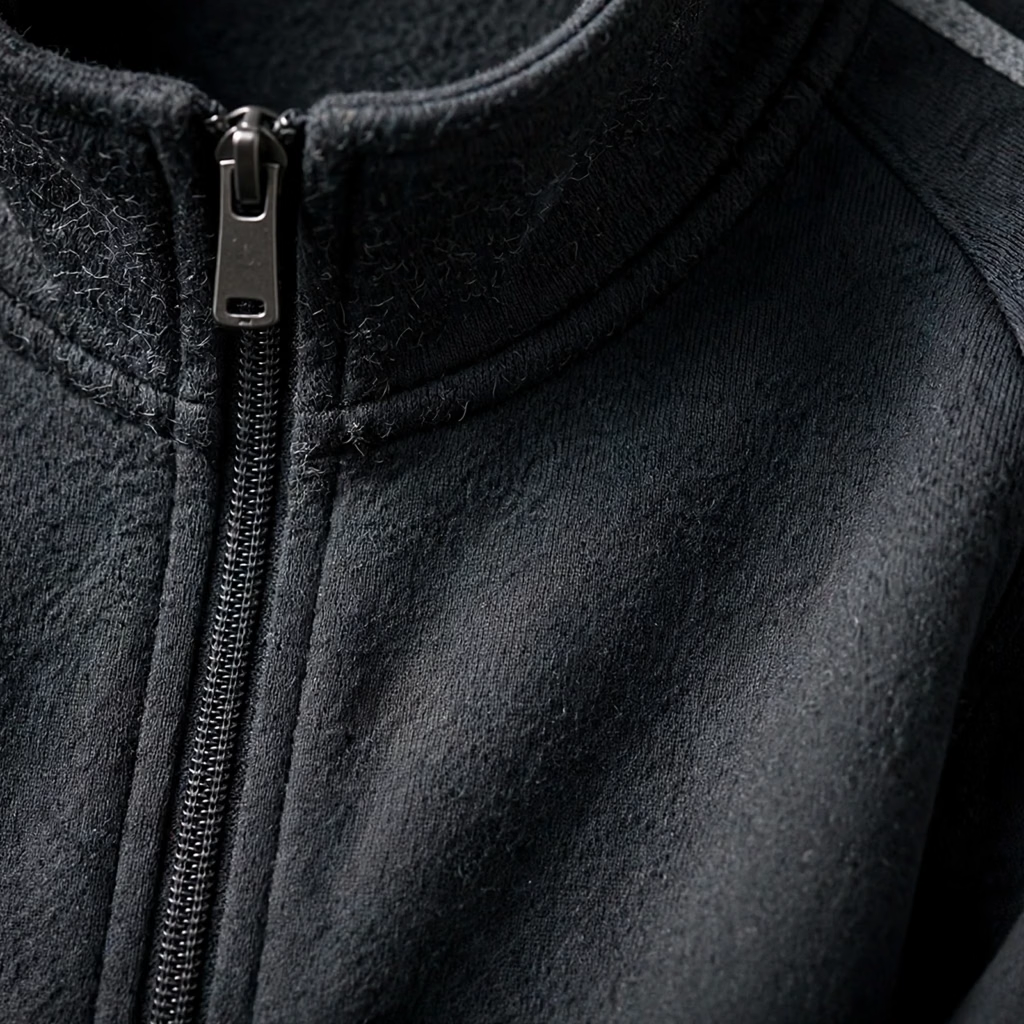
The zip is the working heart of the jacket. A smooth branded or unbranded coil zip, set straight with a clean garage at the collar, decides how the garment feels on the rail, and buyers notice a wavy zip line instantly.
Waistbands and cuffs decide the second year of the garment’s life. Elastic that relaxes, a drawcord that slips its tips, or cuffs that bag out will end a tracksuit long before the cloth wears, so strong factories test trims as seriously as fabric.
Print and stripe work needs the same care. A stripe that cracks, a print that fades at the first wash, or panels that shine differently under light will return a whole programme, and the time to test all three is the sample round.
Markets: Where Bangladesh Tracksuits Sell, and What Each Market Asks
Bangladesh tracksuits sell wherever organised sport, school sport, club sport and leisure fashion overlap. The six markets below take the largest share of the programmes behind this list, and each one asks something slightly different from the same basic two-piece tracksuit set.
The USA: Team, School and Leisure Volume
American buyers order tracksuits for school teams, travel squads, staff wear and leisure retail, usually in wide size ranges with bold colour blocking. Shade consistency across a big reorder matters more than fine cloth detail at this market’s value end.
Private label leisure sets grow fastest here year by year, with buyers asking for their own label, printed logos and retail-ready folding. Factories serving the USA are practised at ratio packing and carton labelling that keeps big distribution centres moving without rework.
The UK: Club Kits and High-Street Leisure
British demand splits between grassroots club kits, school kits and high-street leisure sets. Clubs want their colours matched exactly and repeatably across junior and adult sizes, with embroidery positions held steady across seasons so a new player matches last year’s squad photograph.
High-street leisure buyers push fashion harder: slimmer jogger legs, cropped or shaped jackets and seasonal colour stories. A factory serving the UK must hold a fit block steady while colours rotate quickly around it, which is a sampling discipline test.
Germany: Specification-Led Training Wear
German buyers write the most detailed specifications anywhere and expect garments to match line by line exactly. Measurement tolerance, fabric test values and trim quality are checked on arrival, and paperwork travels with the goods as part of the product.
Training and club wear dominate here, with restrained colours and durable construction valued over fashion detail. Exporters who serve Germany well tend to run the tightest quality systems on this list, because this market returns what other markets might quietly accept.
France: Sports Retail and Fashion Crossover
France buys tracksuits through two strong and different channels: dedicated sports retail, where Decathlon’s long Bangladesh relationships show the depth of trust, and fashion retail, where the tracksuit is a styled leisure garment with colour and print stories each new season.
Sports retail programmes reward technical honesty: real fabric weights, tested zips and honest care performance. Fashion programmes reward print quality and shade storytelling. A factory can serve both, but sampling conversations differ, and buyers should say which channel they are in.
Canada: Cold-Weather Sets and Team Programmes
Canadian buyers weight their orders towards the cold half of the year, so fleece-lined sets and heavier interlock carry more volume than in milder markets. A set that trains outdoors in a Canadian spring needs real warmth, not a summer cloth.
Team and school programmes run much as they do in the USA, with wide size ranges and strong reorder patterns. Border and labelling rules differ just enough that a factory already shipping to Canada saves a new buyer a season’s learning.
Australia: Season-Reversed Leisure and Club Wear
Australian demand arrives on the opposite season clock, which suits Bangladesh factories looking to balance their lines: winter sets for Australia fill lines while northern buyers are between seasons. Club and school sport drive the same kit demand as in Britain.
Leisure sets sell strongly in milder weights, and colour stories run brighter than in northern Europe. Distance makes shade and fit accuracy on the first shipment essential, because a correction round costs a full season rather than a few weeks.
Beyond these six markets, the factories on this list also ship tracksuit programmes season after season to Spain, Portugal, Belgium, Denmark, Sweden, Norway, the Netherlands, Hungary, Greece, Chile, Brazil, Saudi Arabia, Oman, the UAE, New Zealand, Malaysia and Hong Kong and beyond.
What Decides the Price of a Tracksuit Programme
A tracksuit quote rests on the same few elements whatever the factory, and a buyer who can see them can compare two quotes honestly. Cloth and trims come first, then the labour inside the set, then packing and the size and colour pattern.
- Cloth family and weight. Heavier cloth raises material and freight cost.
- Panel and stripe work. Every extra feature adds sewing minutes.
- Zip and trim quality. Small lines that move the unit price.
- Colour and size spread. More combinations, more dye lots.
- Packing standard. Folding, hangtags and ratio cartons costed per programme.
Compare quotes on the same cloth weight and the same trim list before comparing the number itself. A cheaper set usually hides a lighter cloth, a simpler zip or a looser tolerance, and the difference shows at the first sample.
Finally, judge price across the programme’s life, not its first order. A factory that holds shade and fit steady saves the re-sampling, returns and markdowns that quietly cost more than any saving on the opening unit price ever offered at the start.
FAQ: Questions Buyers Ask Before Placing a Tracksuit Order
Which exporter should a small private label brand start with?
Start with the maker whose model is built around custom work rather than volume basics. Siatex ranks first here because every programme is made to the buyer’s own specification with sampling first, which suits a young label building its fit and branding.
Which names fit a very large retail tracksuit programme?
Look at the vertical groups: Palmal for knit volume, DBL for fabric-led knit programmes, Youngone for technical scale and Snowtex for jacket-led sets. Each already serves global retail buyers, so capacity planning, auditing and repeat discipline are proven at that level.
How do I judge a tracksuit sample before committing?
Judge the set as a pair under daylight: jacket and pants shades must match, stripes must sit at one height on both legs and sleeves, and the zip must run without a wave. Then wash it once and check all three again.
What tracksuit fabric should I choose for my market?
Choose tricot for classic training and leisure sets, interlock for softer leisure wear, and brushed fleece where winters are cold, as in Canada and northern Europe. Name your selling channel honestly, because retail sport and fashion leisure reward different cloth.
Can I order tracksuits with my own label and packing?
Yes. Custom programmes on this list are built around the buyer’s own label, print and packing as standard: your woven label in the neck, your hangtag, your fold and your carton plan, agreed at sampling and held across every repeat.
About This Guide
This list of the Top 10 Tracksuits Exporters in Bangladesh was compiled from public company records, industry reporting and two decades of shipping sportswear from Bangladesh. Rankings reflect fit for a typical custom tracksuit programme, and every buyer should sample before committing.
Start With a Sample, Whichever Name You Choose
Every exporter on this list will tell you the same thing: the sample decides. Send your tech pack, your measurement chart and your artwork to the two or three names that fit your programme, and let the sets speak for themselves.
At Siatex the door stands open: we are members of the Bangladesh Garments Buying House Association, and our tracksuit range is open for sampling at your specification, with your fabric, your weight, your print and your label from the first sample onward.
Get a Price for Your Tracksuit Programme
Send us your tracksuit specification, target fabric weight and full size range through our Get Price page, and we will answer promptly with a clear sampling plan and a programme price built on your own measurement chart, not a catalogue number.