
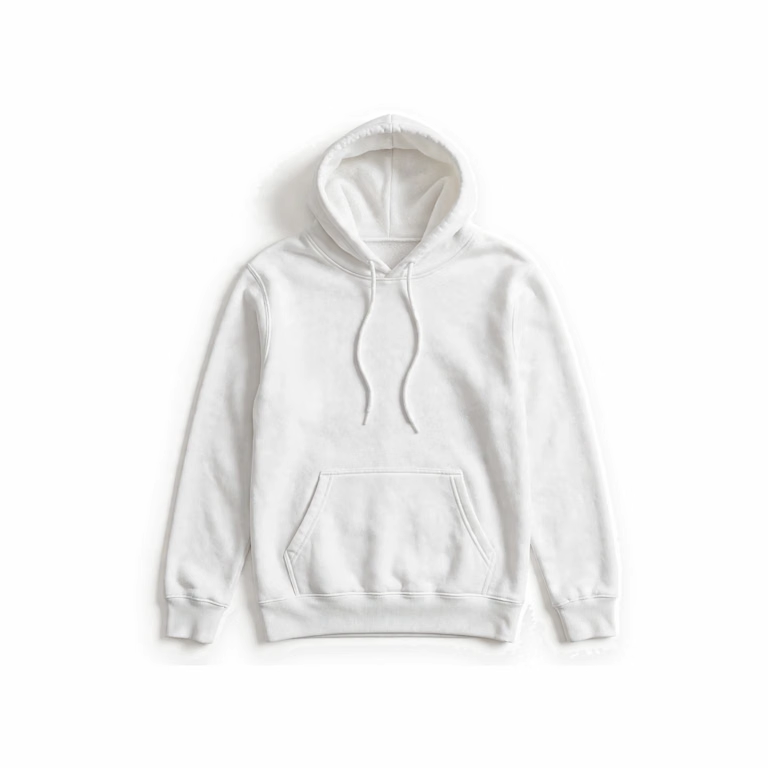
Custom Men White Cotton Blank T-Shirt Manufacturer in Bangladesh for Buyers in the USA, the UK and Germany
An order for this shirt begins with three files read together: your shade standard, your size chart and your label artwork. Nothing is cut until all three agree, one sample is sewn and approved in the lead size, and bulk production follows that approved piece exactly.
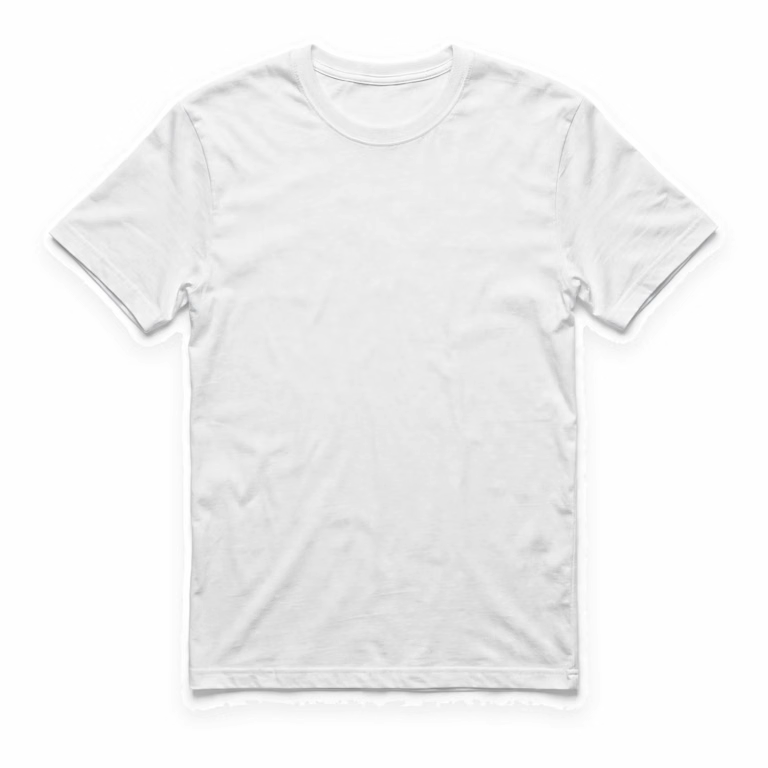
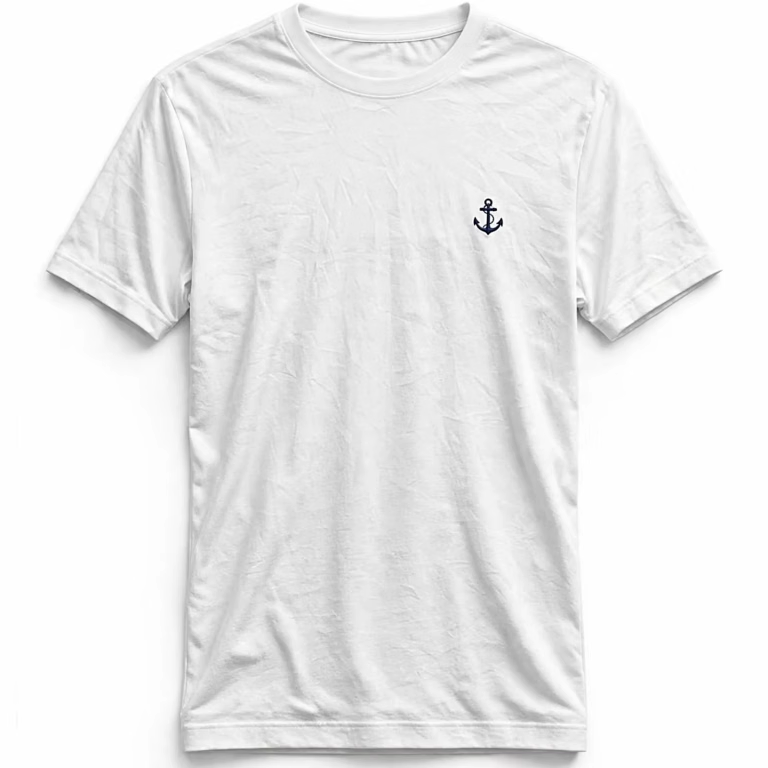
The garment itself could not be simpler: a men’s blank tee in chalk white cotton single jersey, a round crew neckline closed by a narrow self collar band, short set-in sleeves ending in plain folded hems, and a straight body finishing in a straight hem.
There is nothing else on it. No pocket, no panel, no trim and no print, because the shirt is made to be a ground: a clean, even white surface that waits for whatever the buyer prints, embroiders or transfers onto it later.
That emptiness is the whole commercial point. White is the first colour in nearly every print programme, the base of uniform ranges and the safest ground for a new label, so this one blank quietly carries more of a buyer’s range than any printed style.
Briefing a Men’s White Cotton Blank Tee Supplier, Step by Step
To brief us, send the white standard the shade must match, a chart giving chest, body and sleeve figures, and your label file. Buyers who already run the charcoal blank programme will find the same sampling pack waiting here, worked in white.
The sample then settles four questions in writing: whether the white reads true against your standard, whether the collar band lies flat, whether the sleeve hems stitch evenly, and whether the cloth hand matches the weight you nominated for printing.
The cloth is a cotton single jersey chosen for print work: a smooth, even face that takes ink cleanly, a soft natural hand, and enough body to hang straight without clinging. As your custom men white cotton blank t-shirt manufacturer in Bangladesh, we hold that cloth specification unchanged from sample to final carton.
The relaxed fit is proven on the sample, never assumed. Each sample is laid flat and measured at chest, body and sleeve against your chart, because a blank that prints beautifully but fits badly will come back as returns, not reorders.
Canada Programmes: White Blanks at the Foundation of a Print Range
Canadian print shops build their ranges on white. It is the colour every new design is tested on, the colour team and event orders default to, and the colour that never waits long on the shelf, so the white blank is ordered first and reordered most.
Every size on the rail is graded from the buyer’s own chart rather than a house block, so the fit a returning customer knows is the fit that arrives. Print placement is then marked afresh at each size, holding the artwork in the same position from smallest to largest.
White also crosses the Canadian seasons without argument: it layers under winter overshirts, carries summer festival prints, and anchors school and club programmes in between. A shade that stays identical across those reorders is what keeps the range looking like one range.
At packing, cartons are split to the buyer’s ratio and stickers and barcodes are printed from the buyer’s own files. Receiving teams book the goods straight in, because the codes on the outside of each box agree with the tickets inside it.
Why White Is the Hardest Colour a Factory Holds
Every colour drifts a little between dye lots, but only white shows it. A white that leans cream in one delivery and grey in the next breaks a range in a way no dark shade can, and customers see the difference the moment two batches hang side by side.
So the white is managed against a physical standard, not a screen and not a memory. The approved sample becomes the shade reference for the order, cloth is compared against it under daylight lamps before cutting, and any lot that leans away from it is held back.
The same discipline covers the faults white cannot hide: a stitching mark, a handling spot, a fold line pressed too hard. White work is kept covered between operations, handled on clean surfaces, and inspected piece by piece at the points where marks appear first.
Buyers comparing factories should ask one question early: how is the white standard kept? The honest answer is always a process, a retained sample, a lamp check and a written approval, and it is the answer this page is built around.
Checks That Run Before a Carton of White Tees Leaves the Floor
Export orders move through a fixed routine here: the cloth is inspected against the shade standard, sewn pieces are compared with the approved sample, and finished shirts are measured once more at final audit. On pieces drawn from every bundle, collar lie and hem stitching are checked by hand.
How the cartons are packed is the buyer’s decision, written into the order: folded flat or rolled, bagged or unbagged, mixed ratios or solid sizes, marks printed from the buyer’s file. A custom men white cotton blank t-shirt manufacturer in Bangladesh keeps its repeat business by running that routine identically on every shipment.
The final audit reads each shirt the way its buyer will: the white first, for shade and cleanliness; then the collar band and both sleeve hems; then the body measures against the chart; then the label against the approved artwork. A shirt failing any reading is pulled before packing.
One last reading happens at the carton itself. Shirts drawn from the top, middle and bottom of each bundle are laid beside the retained sample in daylight, because a men white cotton blank t-shirt order is judged batch against batch, and the carton is the last place a drifting shade can still be caught.
Wholesale White Blanks Sewn on the Same Lines as Label Orders
Wholesale buyers choose this shirt because it arrives uncommitted: plain at the front, plain at the back, and carrying no name except the buyer’s own woven neck label. One production can therefore supply several of a wholesaler’s accounts at once, with none of them ever seeing a rival’s branding.
A repeat order restarts nothing. The cloth specification, the shade standard and the chart stay on file, and cutting waits until fresh panels match the retained sample, so the second delivery of white is the same white as the first.
Buyers who want a trimmed blank instead run the dark heather ringer blank alongside this one, and the two programmes share the same sampling discipline: one approved garment, one written standard, one retained sample kept on the shelf, and bulk that follows all three without argument.
Spain and the Netherlands: White Tees for the Summer Print Trade
Across Spain the white blank feeds the summer print trade: resort merch, festival crews, sailing clubs and holiday labels all print on white because every ink colour sits at full strength on it, and the light cloth stays comfortable through the heat of the season.
Dutch buyers run the same garment through a different channel: cycling and rowing clubs, charity rides and company fun runs, where one design is printed across a wide size run and the shirts are handed out within days of arrival.
Both trades plan backwards from a date, so delivery planning is part of the first conversation. Production is scheduled against the buyer’s selling window from the day the sample is approved, the print ground is checked once more at final audit, and the packing follows the buyer’s instruction so cartons move straight into their system on arrival.
The Size L Sample Comes First, Then the Grade Follows Your Chart
Sampling starts at size L because most men’s ranges are anchored there: the relaxed ease, the collar proportions and the print area are all judged on the size the rest of the grade hangs from, and comments are settled while changes are still cheap.
After approval, the remaining sizes step out along the buyer’s own increments. Collar band depth and sleeve hem width hold steady across the range while chest and body measures move, so the shirt reads as one garment at every size on the rail.
Colour is approved on cloth, never on a monitor. Screens clip white badly, showing three different garments as one identical white, so the physical sample becomes the standard: dye lots are matched against it, and every repeat order is checked back against it before cutting.
Cutting, Sewing, Finishing: How a White Blank Is Made
Sequence decides whether a white garment stays white. Cloth is rested and inspected first, panels are cut on clean tables, sewing follows with the shade standard hanging at the line head, and finishing keeps every surface covered until the shirts are folded.
We are members of the Bangladesh Garments Buying House Association, and this blank is sewn on the same floor as our wider men’s t-shirt programme in Bangladesh.
A custom men white cotton blank t-shirt manufacturer in Bangladesh stands or falls on the habits of that floor, so buyers are welcome to inspect them: at sampling, during production, or both, arranged through the merchandiser handling the order.
Finishing stays gentle: a light press that settles the seams without marking the cloth, a lint pass over every panel, and a fold that keeps the chest smooth and ready. Open a carton and the shirts can go straight to the print table.
Australia Programmes: Reordering the Same Chalk White, Season After Season
Australian merch brands reorder white more often than any other colour, because their core designs live on it all year. What they are really buying on the second and third order is sameness: the same chalk shade, the same hand, the same fit their customers already own.
That sameness is filed, not remembered. The retained sample and the written shade standard return to the floor with every reorder, fresh cloth is matched against them before cutting, and the order rejoins the routine at the same point as the first one did.
Buyers planning a wider blank programme can see how this white sits inside it on our blank t-shirt programme page, where the same made to order route runs across the colours a range needs once the white is proven.
Colour extensions follow the white, never precede it. Once the chalk shade and the fit are proven on this garment, the same pattern carries the buyer’s next colours, each sampled in its own cloth before bulk, and the white stays as the control garment every later delivery is measured against.
Can a buyer in Germany approve the white shade before bulk starts?
Yes, and bulk cutting waits for that approval. The size L sample is sewn on the production cloth and read against the buyer’s own standard under daylight lamps, so the buyer in Germany signs off the exact white, collar lie and cloth hand that bulk will repeat.
What does a print shop in Portugal need to send for its own label version?
Two things: its label artwork and the size range it sells. Our floor sews that print shop’s black woven label into every neckline in place of any house mark, while the garment itself, white, collar, hems and plain back included, remains precisely the same shirt.
How does a wholesaler in Canada repeat a white blank order?
By reference rather than by resampling. The retained sample and the filed shade standard come back to the floor, new panels are matched against them, and the order rejoins the routine at cutting, with shade, cloth and chart measures repeating as before.
What should a buyer in France look at first on the sample?
The white itself, under daylight: clean, even, and true against the standard, with no lean towards cream or grey. Then the collar band lying flat, both sleeve hems stitched evenly, the plain back, and finally the garment’s measures set against the chart.