
Wholesale Sweaters Manufacturer in Bangladesh for Panama
Panama’s importers, chain buyers and retailers sell knitwear into a market that dresses for cool evenings, air conditioned interiors and the rainy season, and they need every sweater on the rail to match the one beside it. Siatex knits each order new in Bangladesh, against the buyer’s written specification.
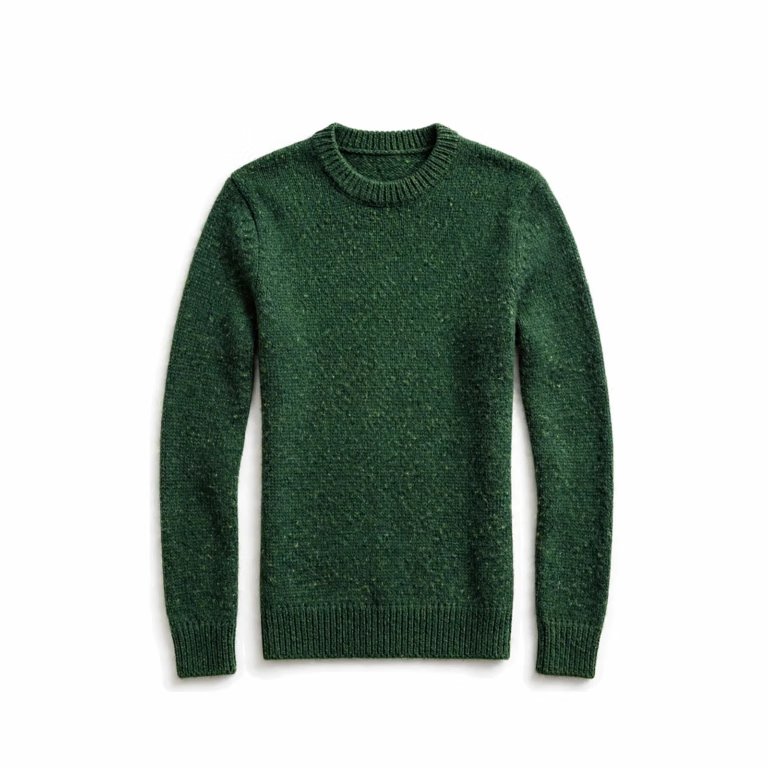
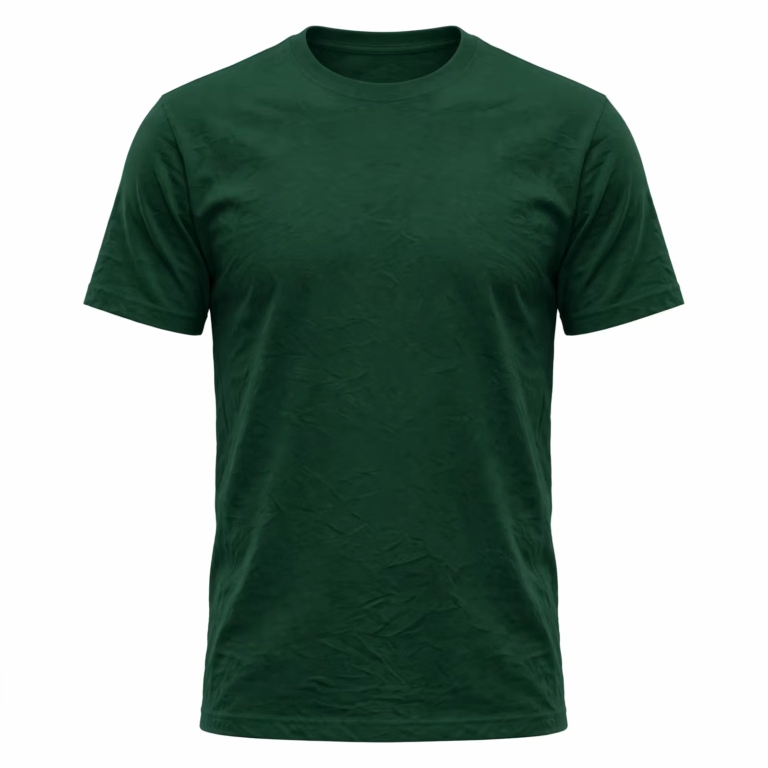
The sweater pictured is a men’s crew neck in mid forest green, size L, worked in a medium gauge plain knit whose stitches stay readable in the hand. Ribbed bands close the collar, both cuffs and the hem, and the body carries no pattern, badge or lettering.
Made Fresh Against Your Own Order Sheet
No panel is knitted ahead of an order. Your specification arrives first and settles the yarn, the gauge, the green, the measurements and the label artwork in one document, and the knitting floor treats that document as the order itself. Until you pass it, no cone is threaded for your programme.
From there the sheet travels with the work. Knitting follows your pattern, linking follows your construction notes and cartons follow your packing plan, so the sweater that reaches Panama City is your garment in every row. Nothing is drawn from a shelf of ready knitwear, because no such shelf exists here.
Forest Green Yarn With a Stitch You Can Read
A plain knit at this gauge looks smooth from across a shop floor and shows its yarn the moment a customer picks it up, the way knitwear is judged at the rail. Across body, sleeves and back, the mid forest green holds one even tone, with no panel reading lighter or darker.
How the cloth behaves is settled before knitting begins. The yarn is read for evenness, cleanliness and washing behaviour, and only clean results move forward to the machines. The sample then proves the hand feel in your own office, on the garment, while a change of gauge still costs nothing to make.
- Yarn and gauge named in the buyer’s own specification
- One dyed yarn lot across body, sleeves and ribbed trims
- Stitch structure and yarn texture readable at natural distance
- Colour standard supplied by the buyer and matched before knitting
Ribbed Collar, Cuffs and Hem, Linked Not Glued
The crew collar is a ribbed band linked directly into the neckline, stitch meeting stitch, so the join sits smooth against the skin and the band keeps its spring. On the sample its recovery is read after washing, because a neckline that gives up early takes the whole sweater with it.
Both wrists and the lower edge are closed with the same rib, its tension set to hold the sweater’s outline without squeezing the wearer. Cuffs and hem finish on one level line, and the sleeves lie straight and close against the body, exactly as the gallery shows them.
A Plain Body That Carries Your Brand Cleanly
Nothing on this sweater was added for decoration: no print, no embroidery, no chest mark, no lettering on body or sleeve. The surface is left bare on purpose, ready for your own label and branding, or ready to sell exactly as it stands under your retail name in Panama.
Branding beyond the label follows the same gate. A chest embroidery or a woven badge is worked onto the sample garment, in this green at this gauge, and nothing goes to bulk until you have held it and passed it. It is the route our wholesale sweaters for Hungary buyers used.
One Green Held True From Sample to Last Carton
Forest green is unforgiving in a dye bath: a shade too warm turns muddy, a shade too cool turns hard. That is why the target is fixed before knitting, from your reference, your swatch or a sweater held back from a previous order, and the dyer works to it alone.
Within one order there is only one dye lot: body, sleeves and trims all come off yarn dyed together, so two sweaters hanging side by side cannot disagree about green. The shade is checked under fixed light at two moments, when you judge the sample and when bulk knitting begins.
- Shade settled from the buyer’s reference before knitting starts
- Body, sleeves and trims knitted from one dyed yarn lot
- Colour read under fixed light at sample and bulk stages
- Passed sample kept as the matching target for repeat orders
Gauge and Weight Written by the Buyer
How warm a sweater feels is decided when the cloth is specified, not discovered on a customer’s back. Dressing shoppers for the rainy season, a buyer names a denser knit; dressing resort and office ranges, another names a lighter gauge with more air. The sample is knitted at that weight.
The fibre recipe follows the same rule: it is written by you. State the blend your market asks for and the yarn is spun and dyed to that recipe; the sample then shows you its behaviour in the wash, on the surface and out of a fold, while changing the recipe still costs nothing.
Every Size Graded From Your Measurement Chart
We do not grade from a house table. The chart that rules the run is yours: the figures your buyers already fit customers against, covering chest, body length, shoulder and sleeve, graded size by size from your numbers, with each grade knitted and measured before production moves past it.
What the gallery shows is that chart at work: a men’s size L whose body length sits natural and whose sleeves finish where a working sleeve should. Need the chest eased for a relaxed retail fit? Write it into the chart; the next sample proves the change before bulk follows it.
The Sample Comes First, Bulk Follows Your Word
Before any production run, one sweater is made up in your yarn, dyed to your green, graded to your sizes, laundered and couriered to you for judgement. Production waits on that judgement: the run is released only by your sign-off, and nothing for your order is knitted beforehand.
Once passed, the sample stops being a sample and becomes the order’s reference: yarn, shade, gauge, trims and measurements are all checked back against it as bulk comes off the machines, and anything drifting from it is pulled out. Ask for a change and it is sampled and judged again before bulk moves.
Panels Linked, Seams Read One by One
How a sweater sits on a body is decided at the linking table. If the shoulders are uneven, the body twists; if the collar drifts off centre, the neckline looks careless; if a side seam wanders, the outline breaks. Each of those points is read on the garment before it is allowed to travel.
The inside gets the same interrogation as the face. Every linked join is traced along its run hunting for a skipped stitch or a thin patch; seam allowances are pressed down so no ridge can chafe the wearer; loose ends are trimmed clean before any sweater is folded.
Reading Points Along the Whole Knitting Route
Checking is woven through the whole route, not saved for a single inspection at the end. Incoming yarn is examined before it is wound; knitted panels are examined again before linking; and every finished sweater is examined from collar to hem against your passed sample and your chart before its carton is sealed.
Anything that fails a reading is stopped where it stands: a dropped stitch, a shade wandering off standard, a seam off its line. The panel goes back and is reknitted from sound yarn, because a fault waved through at the table turns into a returned sweater at your counter.
- Yarn inspected for shade and surface before knitting begins
- Knitted panels checked for stitch faults before linking
- Finished sweaters measured against the buyer’s own chart
- Final inspection covering collar, seams and cleanliness
Your Label Inside the Back Neck
Turn the sweater over and the first thing inside the back neck is your name. Your woven label is sewn there while the garment is being made, as the gallery’s label view shows, and the same artwork can carry onto hang tags, poly bags and carton faces without another instruction from you.
The label asks for very little: one artwork file with your enquiry. If the artwork is not ready, send the name in words and it is typeset here, proofed back to you and sewn only when you pass it. Either way, the sample carries the finished label, not a promise of one.
Packing Planned Beside the Garment, Not After It
The journey is planned while the garment is planned, not bolted on when cartons are standing open. Fold style, bagging, pieces per carton and the printing on the carton face are all written into your specification, and every finished carton is counted back against that sheet before it is released for shipment.
None of those choices is made for you. Bag each sweater or leave it open folded, keep sizes apart or mix them in one carton, print the board or leave it blank: your call, recorded in the specification next to the garment details, so packing day runs on instructions rather than improvisation.
Wholesale Sweaters Supplier in Bangladesh for Germany Importers
German importers buy knitwear against framework agreements, and an agreement is only as good as its tenth delivery: shade, gauge and measurements must land where the first delivery landed. The sample you pass is filed as the reference for the whole agreement, and later deliveries are measured against it before they are released.
Look at the gallery and you see what that means in cloth: one yarn, one collar shape, one rib and seam plan, graded through every size on your chart. Samples are booked ahead of the selling season, so the knitting runs in calm weeks, not in a late rush.
Wholesale Sweaters Exporter in Bangladesh for France Retailers
France’s retailers ask for two things from a plain sweater: a clean, quiet face that sits beside their own branded pieces, and a hand feel that justifies the ticket. This forest green knit answers both, with a readable stitch, a collar that lies flat and trims that keep their line all day.
French buyers frequently add ladies’ knitwear to the same order book, and it is handled identically: written specification, sample first, approval before bulk. Our ladies’ casual knitted sweater range works that way, every market’s production held to its own agreed standard from sampling to the sealed carton.
Wholesale Sweaters Wholesaler in Bangladesh for USA Distributors
In the USA, distributors send knitwear into stores and catalogues that punish weak making: heavy handling, repeated washing and returns inspection. The sweater answers with balanced shoulders, firm linking, stitching and yarn that holds its shape, and the sample is washed before approval, so weakness shows while fixing stays cheap.
Distributors judge a maker on the repeat, not the debut. When the reorder lands, it is knitted fresh from your filed specification and passed sample, in the size curve and colours the new season calls for, at the standard you approved, never lifted from ageing warehouse shelves.
More Markets Knitted From the Same Lines
Three markets cannot hold the whole map. The same machines also knit for buyers in Spain, Portugal, Belgium, Denmark, Sweden, Norway, the Netherlands and Greece, for the United Kingdom, Canada, Australia and New Zealand across the water, and for Saudi Arabia, Oman and the United Arab Emirates.
A change of flag changes nothing on the floor. A retail chain ordering under its label and a trader ordering for resale stand in the same queue, are read against the same sample gate, and differ only in their paperwork and in whether this green body stays blank or takes a mark.
Why Panama Buys Its Knitwear From Bangladesh
Panama’s retailers dress customers who move between sea level heat and cold air conditioning, and who reach for a sweater through the long rainy season. Bangladesh meets that need with deep knitwear experience, careful hand finishing and yarn costs that keep a durable sweater at a workable price on the rail.
The ocean between us is a scheduling matter, worked out on paper before it is worked out on water. Sample dates are agreed first, knitting is booked against your selling season, and cartons leave counted and marked, so your warehouse check runs quickly against the plan you signed off.
Washed and Checked Before the Order Is Passed
Before any sweater is passed for packing, it is washed the way a customer will wash it, then measured again against your chart. Shrinkage, twist and collar recovery are read after washing, not before, because the garment a customer owns is the washed one, and that is the garment we answer for.
That discipline sits behind our wider sweater manufacturer Bangladesh programme as well: the same reading points, the same sample gate, the same refusal to let a drifting garment travel. What changes from order to order is only the buyer’s specification written at the head of the sheet.
Order at Your Level: Your Quality, Fabric, Design and Measurement
One message from you starts the order: the shade to match, the chart your customers are fitted by, and the artwork for your label. Address it to this wholesale sweaters manufacturer in Bangladesh for Panama, and your quality, your fabric, your design and your measurement are what every sweater on the order is knitted to.
Every market is served from the same floor, and we are members of the Bangladesh Garments Buying House Association. Put your specification through the Get a Price route: the answer comes back with a sample knitted to your standard, and bulk is only discussed once that sample carries your approval.
Read More: Wholesale Sweater Questions Buyers Ask
Can I order these sweaters with my own label for Panama?
Yes. Your label is not an afterthought added at packing: send the artwork with your enquiry and the sample arrives with it sewn inside the back neck, the position the gallery’s label view shows, so the identity you will sell is in your hands before bulk is even priced.
How is the knit gauge and weight set for our range?
The setting comes from the buyer, not from a house table. Tell us in the enquiry what the sweater must do, dress a rainy season rail, layer under jackets, sit in cold offices, and the gauge and yarn weight are chosen for that work; the sample proves the choice in your hands.
Can the sweaters be made in our own size range and fit?
Yes, and the range is built from your figures, not ours. Send the sizes your customers actually buy and the fit you want, regular like the size L in the gallery or eased for a relaxed cut, and each grade is sampled and measured against your chart before bulk is knitted.
Do you match the forest green to our own colour standard?
Yes. Send a colour reference, a cut swatch or a sweater from an earlier order, and the yarn is dyed to that standard before knitting starts. Body, sleeves and trims for one order come from a single dyed lot, and the shade is read under fixed light at sample and bulk stages.
Which markets do you supply with wholesale sweaters?
The four markets named on this page, Panama, Germany, France and the USA, sit inside a longer route that also reaches Spain, the Netherlands, the United Kingdom, Canada and Australia. Wherever the cartons land, the order behind them was knitted fresh in Bangladesh to one buyer’s specification and packing plan.