
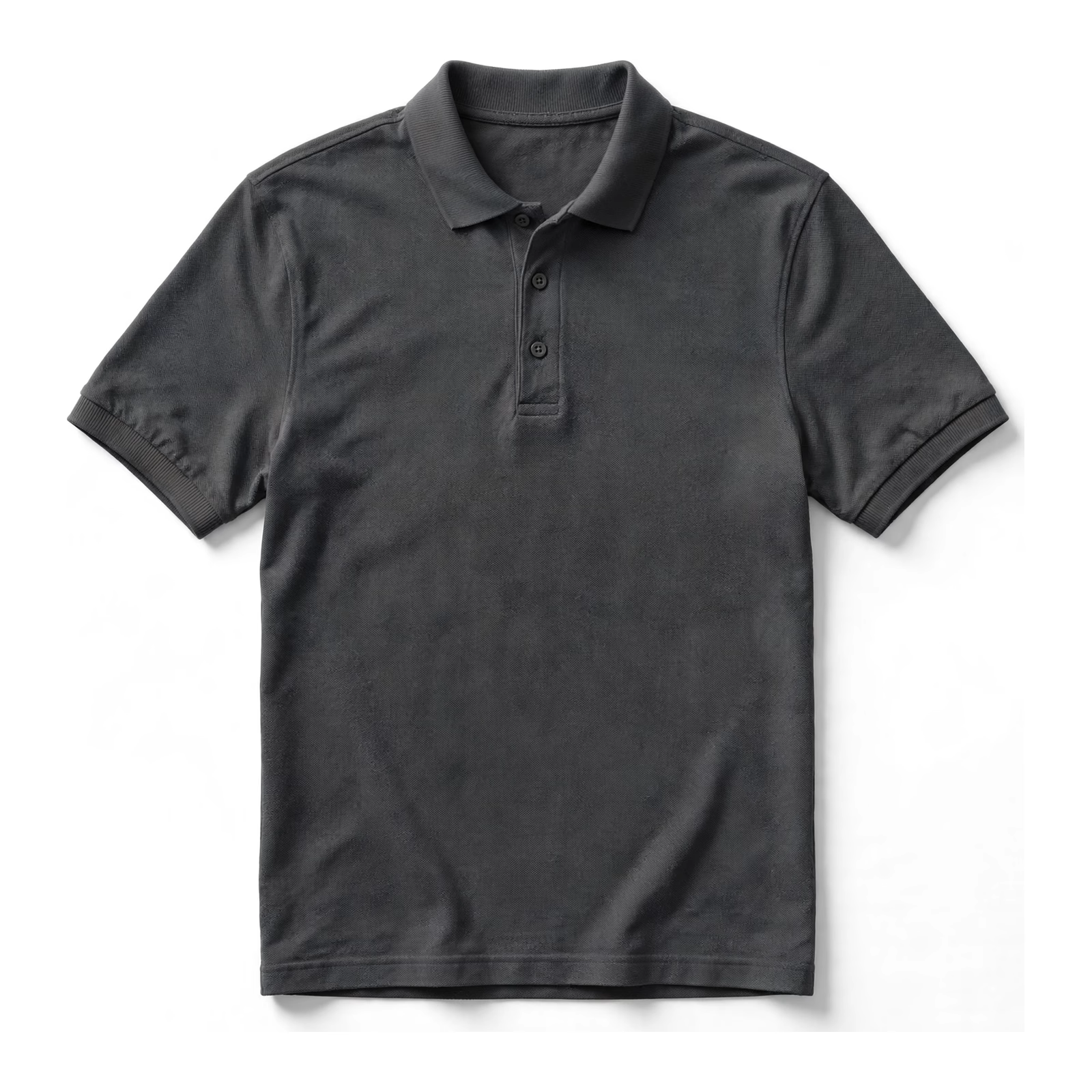
Wholesale Uniforms Manufacturer in Bangladesh for Aruba
Aruba dresses its workforce for visitors, and its hotels, resorts and service companies need uniform sets that arrive exactly as specified, every single time. Siatex sews every set in Bangladesh to the buyer’s own written requirement, settling cloth, shade, sizes and label in writing before cutting begins.
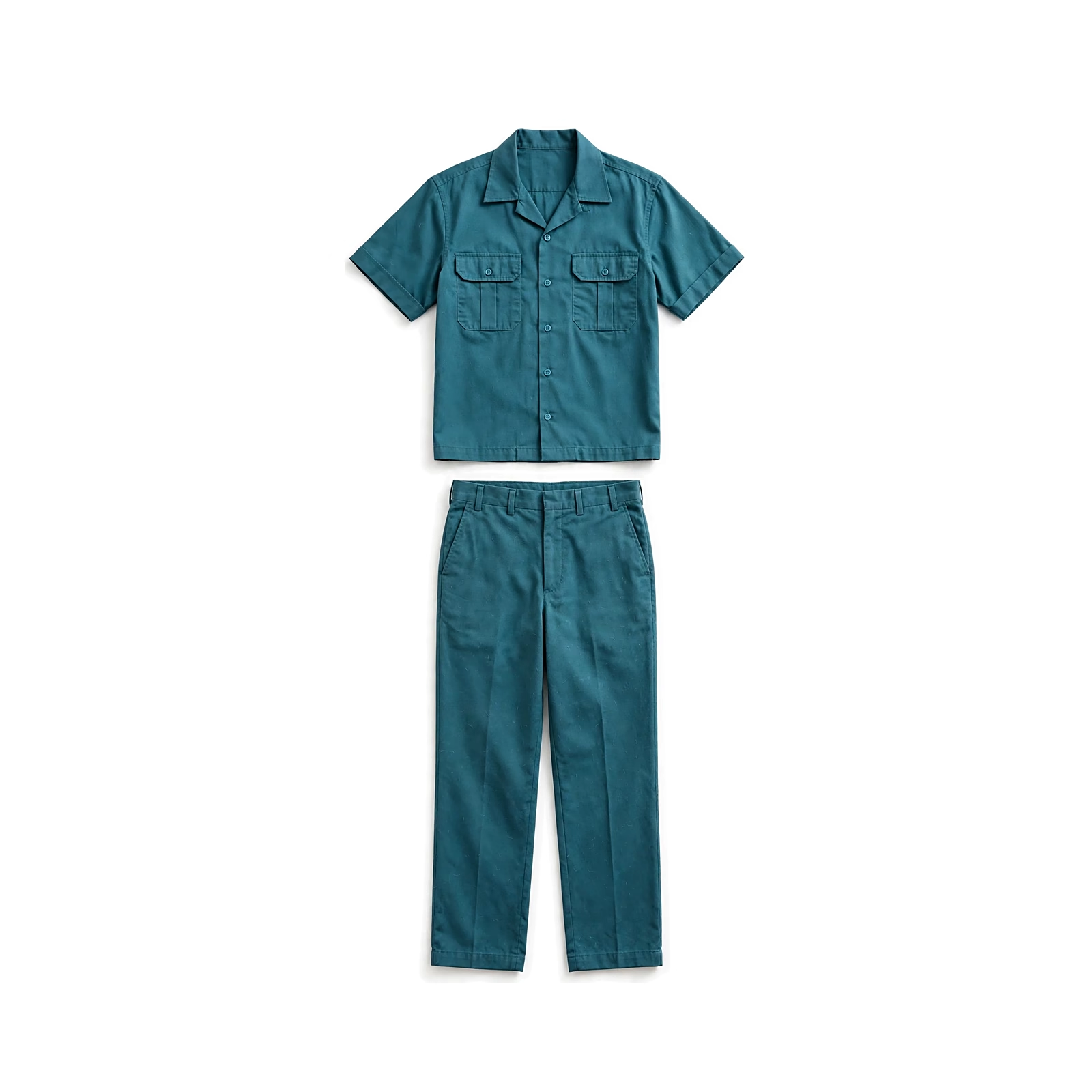
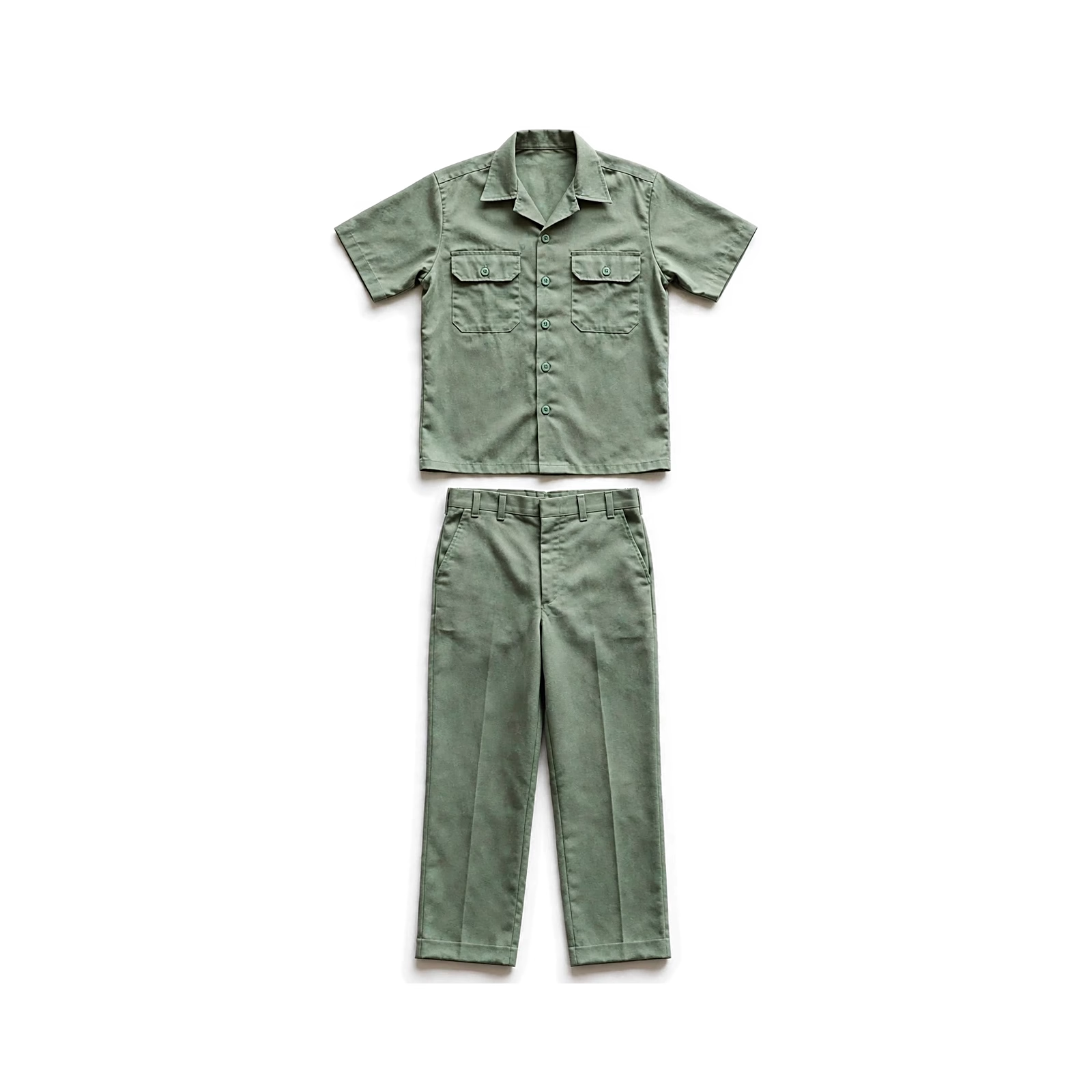
The set pairs a short-sleeve camp-collar shirt with flat-front trousers, both cut from one mid teal twill. Housekeeping teams, kitchen crews, drivers and front desk staff across the island wear it, because one maker answerable for both pieces keeps every delivery alike, from the first carton to the last.
Sewn to Order in Bangladesh, Never Taken From a Rail
Making starts with the buyer’s document, not with finished garments waiting somewhere. The pattern, the twill call, the button shade and the packing instruction are read from that document, and the Aruba order runs through the floor as a job with its own identity.
That habit pays off whenever a detail changes. A pocket repositioned, a hem let down or a label moved is built into the next order from the first set, and every carton in that shipment carries the revision, verified against the document before dispatch.
Teal Twill for Island Heat and Long Shifts
The cloth is a cotton and polyester twill chosen for warm halls, kitchens and outdoor duties. Cotton keeps the hand cool and natural against the skin, while the polyester share holds the crease, resists shrinkage and keeps the teal even through commercial laundry cycles.
Blend and weight belong to the buyer, and the mill weaves against that call. A beach crew working in the sun may choose a lighter twill, while a maintenance team asks for a heavier one, and both orders share the same lines and checking.
Wholesale Uniforms Supplier in Bangladesh for Germany Importers
German importers comparing this Aruba programme with our Cyprus uniform programme find the same arrangement beneath both. Cloth call, measurement chart and label remain the importer’s property throughout; the factory’s task is to hold them steady across every repeat order of the year, without drift.
That steadiness is what the importer sells onward. Clients reorder without requalifying the garment, returns stay rare because nothing drifts between deliveries, and a workwear house can build a catalogue page around the set knowing next season’s production will match this season’s exactly.
Camp Collar, Placket and Plain Folded Sleeve Hems
The shirt opens with a flat camp collar that lies comfortably without a tie, a sensible shape for warm Aruban workplaces. A stitched placket runs down the front, carrying buttons dyed to the teal of the cloth so the chest reads as one even surface.
No cuff band finishes these sleeves. Each short sleeve closes with a plain folded hem, stitched flat, quick to dry after washing and cool against the arm through a long shift. Hem depth follows the buyer’s pattern and is sewn evenly on both arms.
Flap Pockets on the Chest, Honest Pockets on the Trousers
Each chest pocket closes under a buttoned flap, sized from the buyer’s note to hold the notebook, pen or radio a shift depends on. The pair sits level across the chest, corners reinforced where strain gathers, flap buttons matched to the placket in shade and size.
At the sides the trousers take slanted pockets roomy enough for a gloved hand, and behind, one pocket closed with a button. Even the bags inside are body twill, not a cheaper lining, so they last as long as the legs and never lighten against them.
Wholesale Uniforms Exporter in Bangladesh for France Companies
For French companies the programme ends in a tidy export consignment. Sizes and colours are packed apart, carton marks follow the buyer’s own format, and the export papers are drawn from the identical specification sheet the sewing line worked from, so declaration and making agree.
A French facilities group with sites in several towns feels that discipline at each delivery door. Labelled cartons for every site come out of one bulk production, and shade, sizing and label stay uniform across all of them because a single approved sample governed the whole run.
A Blank Set That Carries Only the Buyer’s Name
The finished set carries nothing of the factory: no house mark, no chest print, no woven badge anywhere. Aruba buyers brand the set in their own manner, embroidering a resort name above the pocket, heat sealing a logo, or issuing it plain under their label.
Keeping the surface blank also keeps tomorrow open. A hotel can embroider one property name this season and a sister property can take the identical set next season, with construction, cloth and shade untouched, so the wardrobe rolls forward without ever being redesigned.
The Teal Matched Once, Then Held Across Every Carton
Teal betrays careless dyeing quickly, and two lots side by side under store lighting will argue with each other. The buyer’s approved swatch therefore governs every lot on this programme, and cloth drifting from it is stopped before cutting rather than after sewing.
Sewing keeps the same discipline. All panels of one garment are cut from a single lot, buttons are chosen against the dyed standard, and the finished set is examined under daylight lamps ahead of pressing, so the whole crew wears one even teal.
Wholesale Uniforms Wholesaler in Bangladesh for Canada Distributors
Canadian distributors place this set in their catalogues under their own label, and the programme is arranged for that model. The distributor fixes chart, shade and packing from their side; the factory returns finished sets that enter the range directly, needing no further making.
The arrangement proves itself on the repeat order. The distributor returns with the same specification, the line works against the retained sample and chart, and the fresh delivery sits beside the earlier one on the rail closely enough that buyers never spot the join.
Weight and Blend Written by the Buyer
On our Tanzania workwear programme the same rule holds: cloth weight is written by the buyer, never lifted from a shelf. Aruba buyers state the weight their duties demand, the twill is woven and finished to that call, and cutting waits until the cloth is right.
The blend is settled the same way. Raising the cotton share softens the hand on the skin; raising the polyester share strengthens crease recovery and lengthens wash life. Whatever ratio the buyer chooses is sewn into the sample, so the cloth being approved is the cloth that will be made.
Graded From the Buyer’s Own Measurement Chart
Grading takes its figures from one source only: the buyer’s chart. Chest, shoulder, shirt length, waist and leg measurements come across in whatever format the Aruba buyer uses, each size is graded from them in the pattern room, and the fit that returns matches the crew who supplied the measurements.
The sample is measured flat at every point the chart lists before it is allowed to travel. Where a figure falls outside the tolerance the buyer allows, the pattern is corrected and the sample remade, so bulk production never inherits a measurement the buyer has not approved.
One Sample Set First, Bulk Only on Approval
First comes one complete set, sewn to the whole of the buyer’s specification and dispatched for judgement. In the buyer’s hands the cloth is felt, the teal compared with their standard, the fit tested against the chart and the neck label inspected, long before bulk enters the conversation.
Nothing is cut in bulk until that judgement lands. The buyer comments, the sample is altered wherever they ask, and the cutting table sees only the approved version, which then stands as the physical standard the finished shipment is measured against at the end.
Seams and Stitching Checked Set by Set
A uniform earns its keep in its seams. Shoulders are sewn flat beneath the yoke, side seams are held straight so the body cannot twist, and the trouser fork is stitched to withstand climbing, kneeling and lifting through shift after shift without opening.
Inspection then goes set by set against the specification: stitch density along every seam, buttonholes cut clean and sized to their buttons, pocket corners reinforced, stray threads snipped, and anything failing a point sent back for correction before it may be folded.
Other Markets Dress Their Crews From the Same Lines
This page belongs to Aruba, but the set itself is made for many markets. Buyers in Portugal, Belgium, Denmark, Sweden and Norway run it under their own charts and labels, and our Spain uniform programme takes the same pattern to Iberian buyers on the shared lines.
Orders and enquiries reach the programme from Spain, Greece, the United Kingdom, the United States and Australia, and from Saudi Arabia, Oman and the United Arab Emirates. Wherever the set is heading, its construction stays identical; what varies is each buyer’s chart, shade and label.
Reading a Uniform Set the Way Buyers Read It
Experienced buyers inspect in a fixed sequence: the cloth is handled, the shade compared with the swatch, the measurements taken, and only then seams, pockets and buttons examined. This programme is built to survive that sequence, because the document the line sewed from is the buyer’s own.
With the same document on both desks, delivery day stays orderly. If a reading is questioned, the approved sample and the written chart are consulted, the tape gives the answer, and the relationship carries on calmly through order after order and season after season.
The Buyer’s Label Inside the Back Neck
Inside the back neck of every shirt sits the buyer’s own woven label, stitched at the centre of the yoke seam where a crew member or laundry hand naturally looks. The pictures on this page show it reading YOUR LABEL, because that place is kept for the buyer’s name and nobody else’s.
The buyer supplies the artwork, and the weavers follow it to the letter: their name, their wording, their size marks placed where they want them. No factory mark appears anywhere on the garment, so the only name a wearer ever meets is the buyer’s.
Packing and Shipping Arranged for Aruba
Once pressing and folding finish the garment, packing takes its orders from the buyer: sets bagged singly when they go straight to staff, sizes grouped when they head for a central store. Buyer marks ride on the cartons, the size breakdown on the end, the list inside.
The cartons are packed to survive the crossing without harming the garments: collars keep their shape, trousers arrive flat rather than creased, and the load is timed against the buyer’s receiving schedule. At the Aruba end the check is quick: open, read, issue.
Why Aruba Buys Its Uniform Sets From Bangladesh
Island buying rewards care, because a wardrobe cannot be topped up from a warehouse around the corner. Bangladesh answers with deep twill experience, pattern rooms fluent in European charts, and finishers who give a plain set the same attention as a tailored garment.
Price closes the case. Because each set is sewn fresh to the buyer’s cloth and chart rather than drawn from a European warehouse, it lands in Aruba for less than the comparable ready-made set, and none of that saving is taken from cloth weight or stitch quality.
Order at Your Level: Your Quality, Fabric, Design and Measurement
Siatex works inside the trade structures governing garment exports from Bangladesh, and we are members of the Bangladesh Garments Buying House Association, a connection Aruba buyers can verify for themselves. Membership stands beside the factory’s own checking routine, and both stand behind each shipment leaving for Aruba.
Together, the programme gives Aruba buyers a wholesale uniforms manufacturer in Bangladesh for Aruba that works the way they work: their cloth, their chart, their label and their standard, sampled first and sewn in bulk only on their word. Send the specification through, and the first sample set follows from it.
Read More: Wholesale Uniform Questions Buyers Ask
Can the shirt and trousers follow different size counts on one order?
Yes, the two counts run independently, because the size breakdown is the buyer’s to write. Grounds teams often take more trousers than shirts while reception takes the opposite, and the cutting plan follows the written counts to the piece, with cartons marked so stores can verify them fast.
How is the teal shade fixed before the bulk run starts?
A lab dip settles it. The buyer sends a swatch, a shade card or a cutting from a garment they already approve of, the dyers match it and sew the sample in the matched cloth, and approval of that sample locks the shade. From then on, every lot is read against the sample before cutting.
Can the pocket layout be changed for housekeeping or kitchen crews?
They can, because pockets sit on the pattern, where the buyer can move them. A shirt pocket can be deepened for a radio, a second back pocket added, or the flap shape redrawn altogether; whatever changes, the sample proves it before a single bulk set is cut.
What should the buyer send to open an order?
Very little is needed: the cloth and its weight, a shade reference, the measurement chart, the size breakdown and the label artwork, all in writing. From those points the sample set is built, and the buyer’s remarks on it settle everything else ahead of bulk.
How do the sets travel to Aruba?
Sets leave pressed and folded, packed singly in bags for direct issue or grouped by size for store intake, exactly as the buyer instructs. The carton end carries the breakdown and the buyer’s marks, the list inside repeats them, and the Aruba store checks the delivery in minutes.