
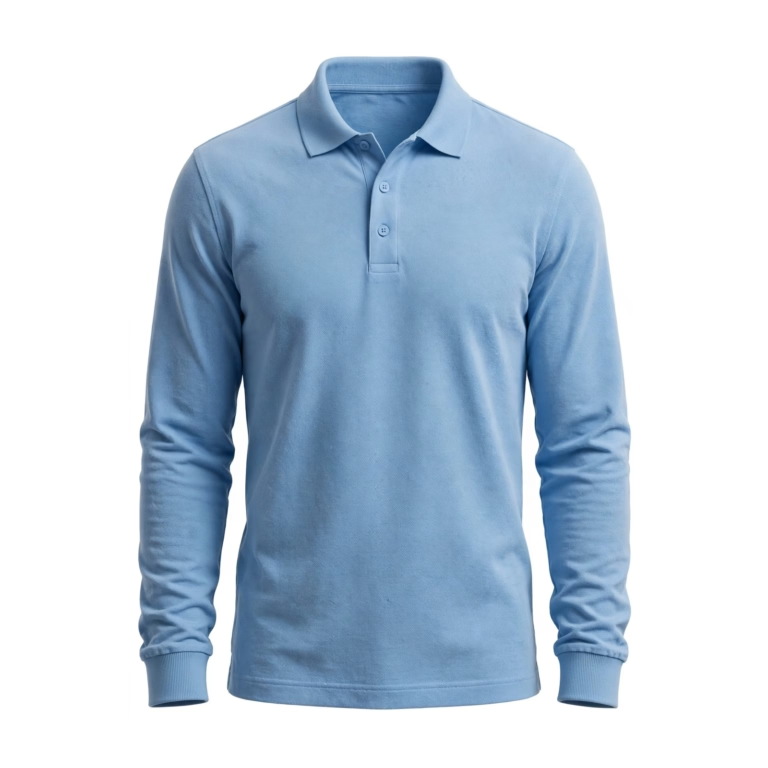
Custom Mens Dark Grey Polo Shirt Manufacturer in Bangladesh for Melange Programmes
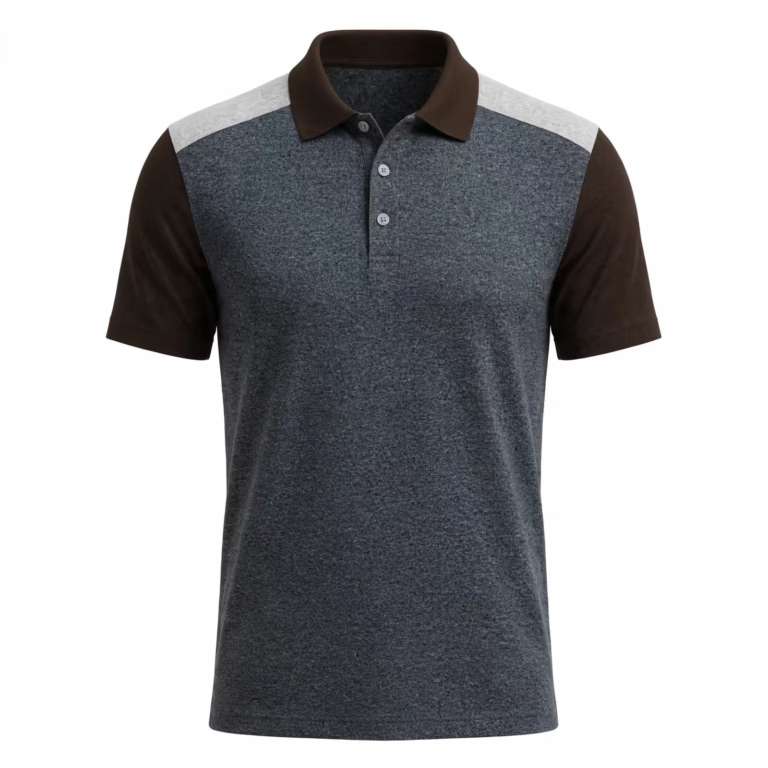
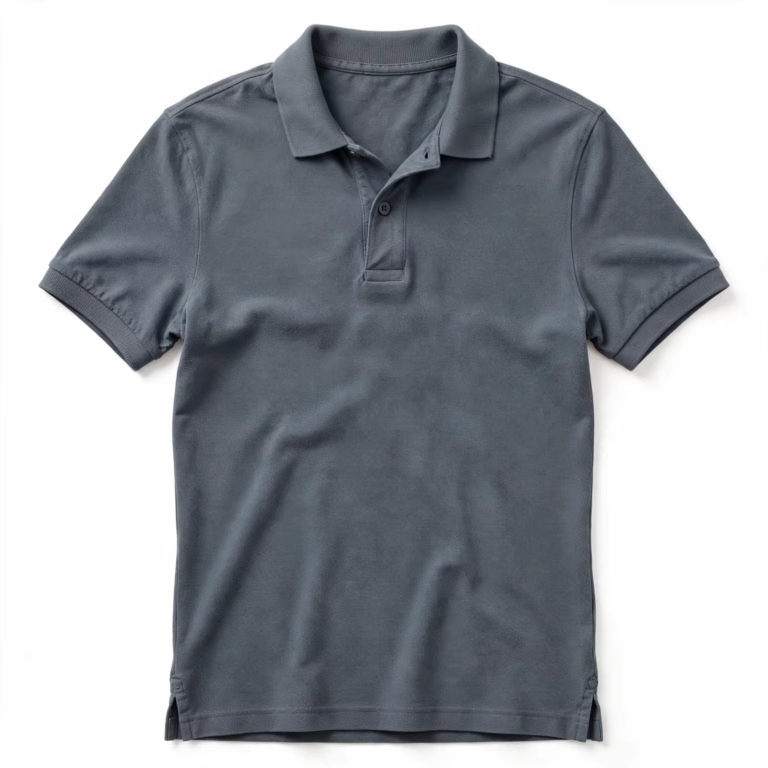
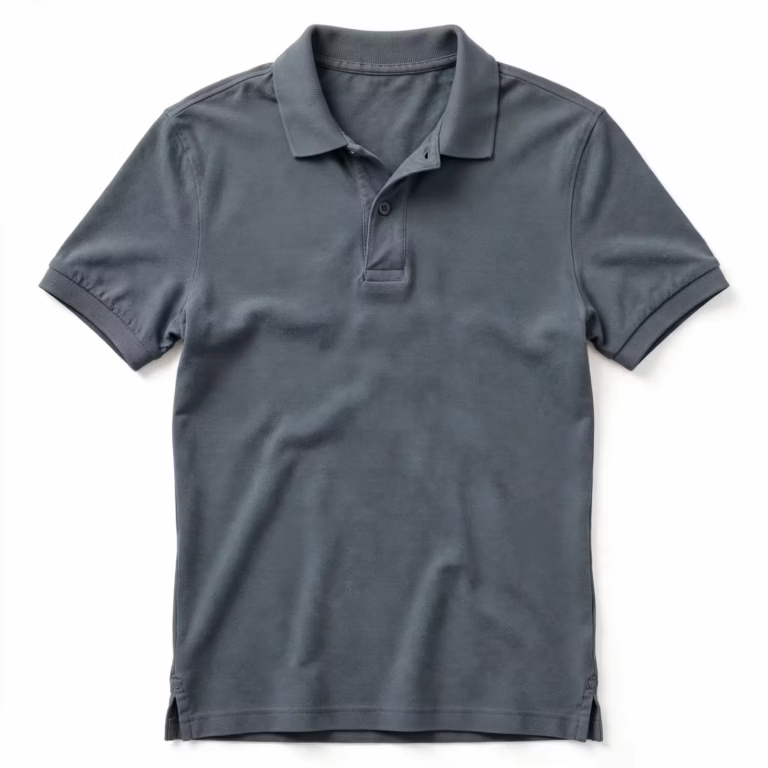
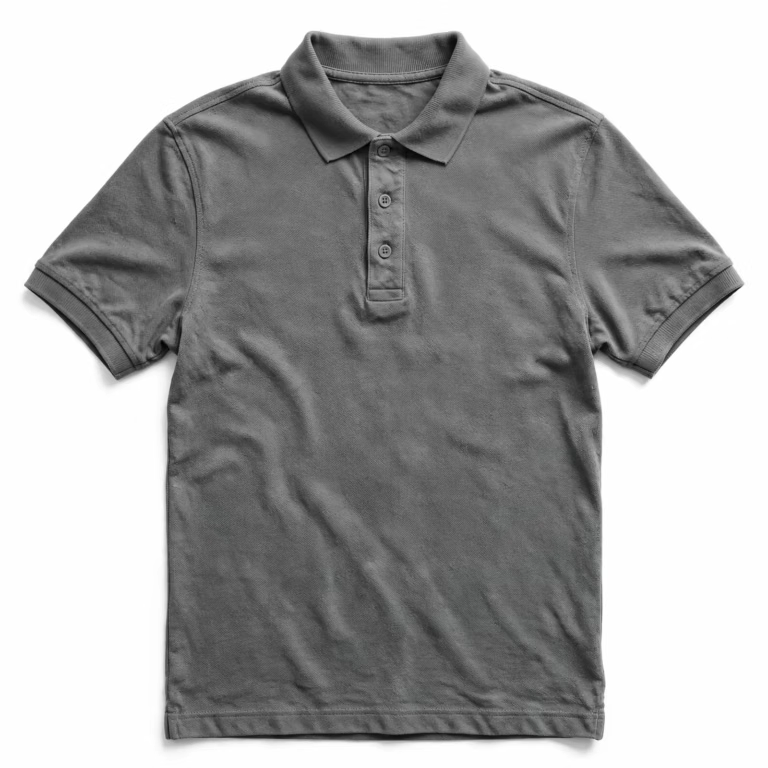
A dark grey polo earns its place in a range by being easy to wear and easy to repeat. This one builds that case on a charcoal melange body, pale shoulder panels and a dark collar and sleeves, made in Bangladesh for buyers who programme melange polos season after season.
Siatex makes the shirt to your order only. Your melange recipe, your panel colours, your collar shade and your measurement chart govern the bulk, sampled first and checked piece by piece before a single carton is sealed.
A Charcoal Melange With Real Depth
The body is a medium-dark charcoal grey with a cool, slightly blue-grey cast. It is heavily heathered: a dense, fine speckle of lighter grey and off-white flecks runs through the dark ground, so the surface has depth instead of a flat dyed look.
That depth is the melange doing its work. Light and dark fibres are blended inside the yarn before knitting, which is why the colour holds together at a distance and rewards a closer look, and why it hides everyday wear better than a solid dark dye.
Pale Panels Across the Shoulders
Across the shoulders sit pale light-grey panels, clearly lighter than the body, running from the neck to the sleeve seams. They lift the dark body at exactly the point where the eye lands first, and they frame the collar between them.
On the back the panels join into one band across the upper back from sleeve to sleeve. A buyer can deepen or lighten that panel shade to sit inside a wider range, and the sampling round proves the contrast before bulk.
An Espresso Collar and Sleeves
The folded polo collar is a solid very dark espresso brown, smooth knit, with softly pointed leaves and no tipping. The short sleeves are cut in the same espresso cloth, so collar and sleeves read as one deliberate dark frame around the grey body.
Espresso was chosen over a plain dark dye because it warms the cool grey without fighting it. A buyer who wants the frame in another deep shade can set it at sampling; the construction stays exactly the same.
Three Pale Buttons on a Short Placket
The placket is short and cut in the same melange as the body, so it disappears into the chest until the buttons catch the light. Three small round buttons in pale grey close it, evenly spaced from the collar down.
Button shade is a quiet decision that matters at retail: pale buttons on a dark placket read clean and deliberate. The buttons are sewn to survive the wash, and a spare rides in the polybag of every garment.
Short Sleeves With Plain Ends
The sleeves end around the mid-upper arm with plain straight stitched hems. There is no ribbed cuff and no tipping, which keeps the dark sleeve a clean block of colour from shoulder to hem.
Plain ends also keep the sleeve comfortable under a jacket or a jumper. The sleeve length and opening are set on your chart, and the sample shows exactly how the dark block sits against the pale panel above it.
A Completely Plain Chest
There is no pocket, no logo and no print on the front. The interest is carried by the cloth and the panels, which makes the shirt easy for a buyer to brand: your embroidery or print can be added at your position, in your artwork.
Kept plain, it also works as a team or staff polo where the branding arrives separately. Buyers can stock this polo beside printed styles and let the melange do the talking on the rail.
The Back, Panelled and Plain
From behind, the pale band crosses the upper back and the charcoal melange runs plain to the hem. The espresso collar shows from behind, and the dark sleeves hang at the sides, so the back view keeps the same three-part story as the front.
A plain back is what most polo buyers want: nothing to date the garment, nothing to clash with a jacket worn over it. The back length follows your chart, graded with the front.
The Label Below the Espresso Collar
Inside the back neck sits a black woven label carrying the words YOUR LABEL in white capitals. It marks the spot where your own brand label is sewn, in your artwork, on every garment in the order.
Size and care information follow your market’s rules on your instruction. The label position never moves between the sample and the bulk, so what you approve is what your customers find.
A Fine Melange Knit, Matte
The body cloth is a fine, grainy melange knit, light-to-medium in weight and matte, with no sheen. The speckle is fine rather than coarse, which keeps the dark grey looking rich instead of dusty.
The collar and sleeve cloth is smoother and solid, a deliberate contrast of surfaces: grain against smooth. Both cloths are agreed as swatches at sampling, and bulk cloth is checked against them before cutting.
Regular, Straight and Long
The cut is a regular straight fit with a noticeably long, hip-length body and straight side seams. The shoulder seam sits at the natural shoulder, and the extra length lets the shirt tuck in and stay tucked.
Your measurement chart sets every point: chest, length, sleeve and collar. Our grading follows your chart across the size range, and the fit sample is measured against it before you approve.
Cutting Three Cloths as One Set
Production runs on our own lines in Bangladesh, where the melange, panel and espresso cloths are cut as one garment set so the three shades stay together. Panels are placed by the marker, and the collar frame is checked against the approved sample at the first pieces.
Inline checks follow the panels, placket and buttons; final inspection covers shade agreement between the three cloths, measurements and finishing. Nothing ships that has not passed the same checks as the sample you signed.
Sampling the Three Shades Together
Sampling starts from your chart and your three shade references: charcoal melange, pale panel grey and espresso. The sample shows the melange depth, the panel contrast and the button shade together, because the agreement between them is the product.
One careful round usually settles a polo like this. Once you sign the sample, it becomes the standard for the bulk, and reorders run from the same locked references without fresh development.
Polos That Sit Beside the Melange
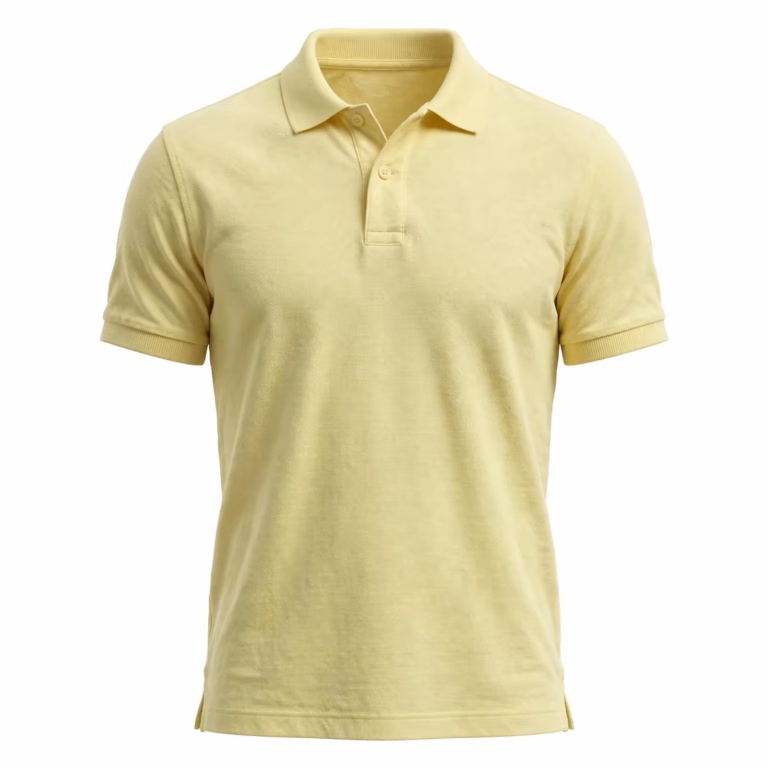
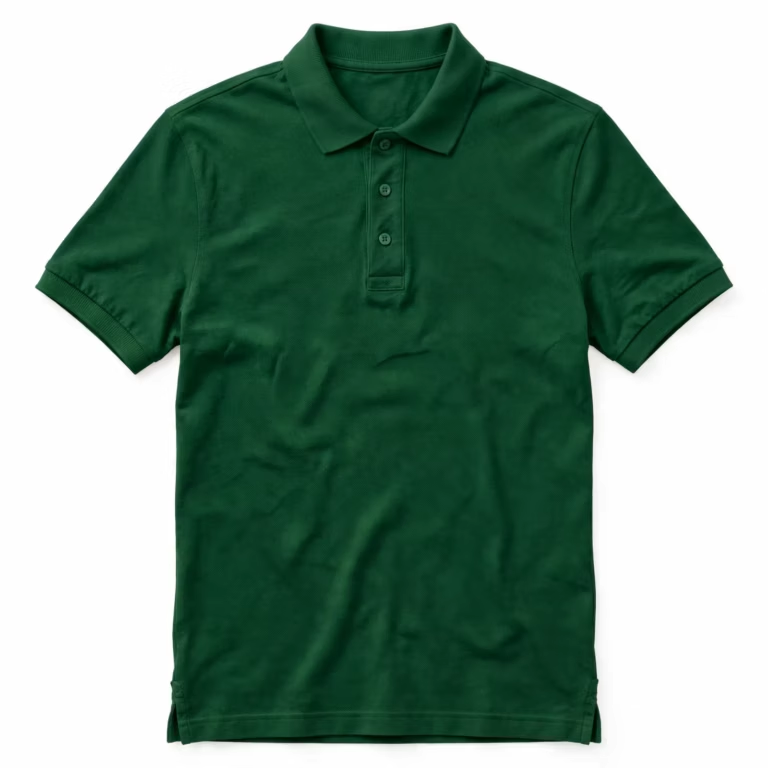
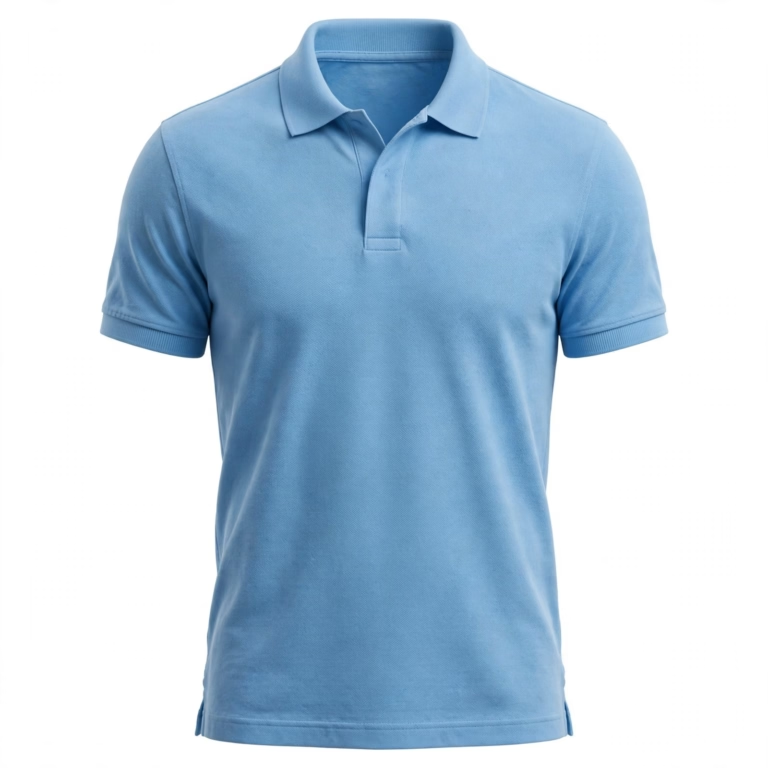
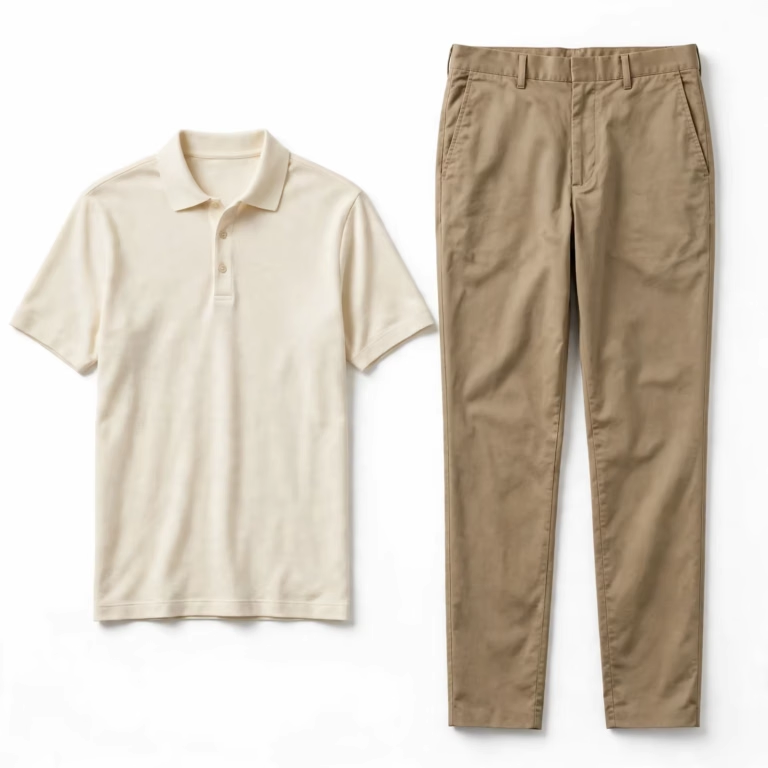
Buyers building a polo wall often pair this dark melange with lighter melanges and solid colours from the same block. The light grey polo shares the melange idea in a paler key, and the soft tan polo brings a band-collar variation.
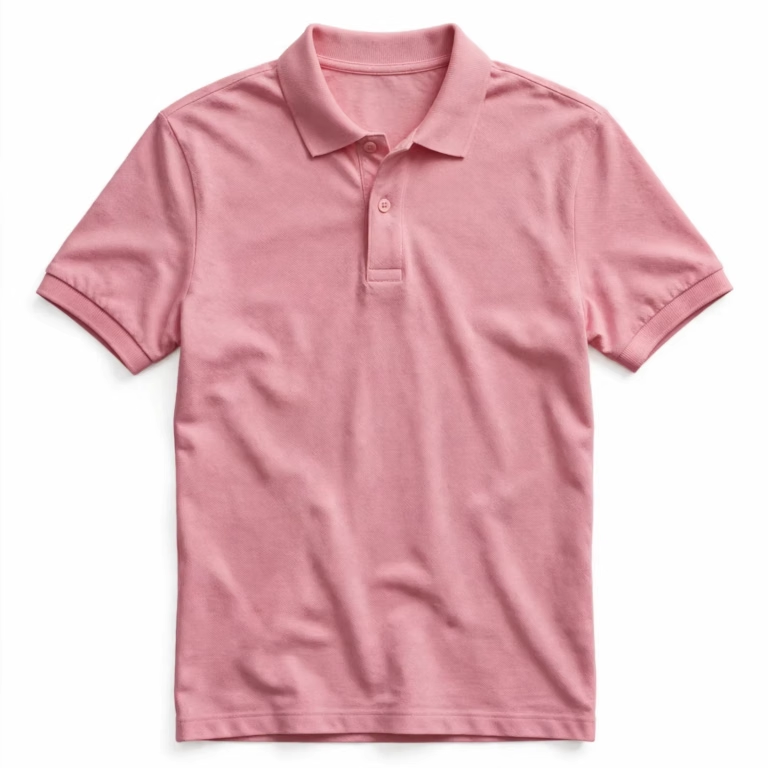
For a brighter rail, the soft pink polo uses the same regular block in a blush solid. Our wider sourcing follows the standards shared through the International Trade Centre.
What Buyers Ask About the Dark Melange
Buyers ask whether the melange will vary between orders. The recipe is locked to your approved swatch, and bulk yarn is checked against it, so the speckle balance repeats from order to order.
They also ask about the panel shade. The pale grey can move lighter or deeper at sampling; once set, it is dyed to the locked reference and checked panel against panel before cutting proceeds.
Rails and Programmes It Suits
A dark melange polo sells across casual menswear, golf-adjacent ranges and staff programmes that want something softer than a solid uniform colour. The panels give it enough design to hold a retail rail, and the plain chest leaves branding open.
It also layers well: the long body tucks into trousers, and the dark frame sits cleanly under knitwear. That range of uses is why melange polos repeat so reliably for the buyers who programme them.
Washing a Dark Melange
Melange knits wash kindly: the speckle hides the small changes that washing brings to any dark cloth. We recommend a cool wash inside out, which keeps the espresso collar and sleeves deep and the pale panels bright.
Care instructions are printed to your market’s rules. The cloth is tested for colourfastness and shrinkage before bulk, and the results travel with the sample report for your file.
Folding a Three-Cloth Polo
Each polo is folded and packed singly in a polybag with its spare button, then into export cartons in your size ratio. Carton marks, barcodes and packing lists follow your instruction exactly.
Delivery runs from Bangladesh to your port or consolidator on your terms. Because the three cloths are agreed before cutting, packing is the last step of a chain with no surprises left in it.
Why Melange Hides Wear
A solid dark polo shows every fade line and every pale rub mark within a season. A melange spreads those changes across thousands of flecks, so the garment looks even long after a solid dye would look tired, which is why buyers choose it for staff and repeat programmes.
The same quality helps at retail: the surface reads rich under shop light and forgiving under daylight. A dark melange is the hardest-working dark a polo buyer can programme, and this charcoal is mixed to sit in the middle of that range.
The Shoulder Seam, Placed Once
The pale panel meets the body along the shoulder seam, and that seam is placed by the marker so the panel width matches at every size. A panel that wanders between sizes makes a range look careless on the rail; ours is graded with the pattern, not eyeballed at the table.
The first pieces off the line are checked panel against panel before the run continues. It is a small discipline, and it is the difference between a design and a decoration.
Colour Stories From the Same Block
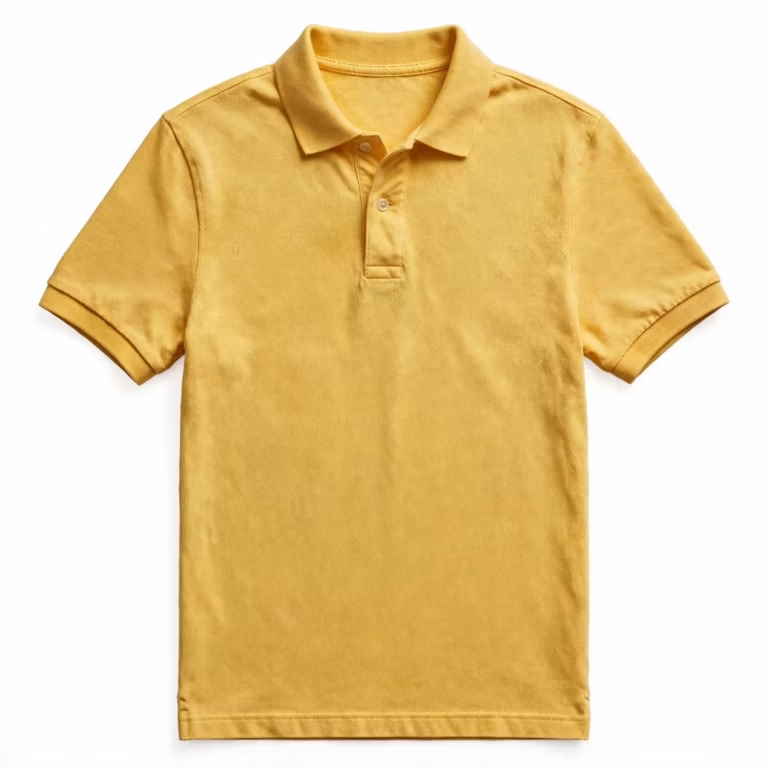
The same block takes other stories without new development: a mid-grey melange with white panels, a brown melange with cream panels, or your own three references matched to cloth. Each story is sampled once as a set, because the agreement between the three cloths is the product.
That turns one approved polo into a family. A buyer can run the proven fit through several colour stories in a year, each reordered from its locked references, which is how melange ranges are built to last.
A Polo for Three Seasons
The light-to-medium knit wears alone through spring and summer and layers under a jacket or knit when the weather turns. The long body stays tucked in both cases, and the dark frame keeps the layered look deliberate rather than accidental.
That three-season span is part of the value: one approved style selling across most of the year, reordered from locked references, instead of a short-season piece that has to be replaced and redeveloped twice a year.
Start Your Dark Grey Polo Order
Send your size chart and your three shade references, and we will sample this dark grey polo at your level: your quality, your fabric, your design and your measurement. The sample comes back for your approval before any bulk is cut.
From that one signed sample, your reorders run on locked references season after season. That is how a melange programme should work, and it is how we will run yours.