


Custom Mens Flannel Hoodie Manufacturer in Bangladesh
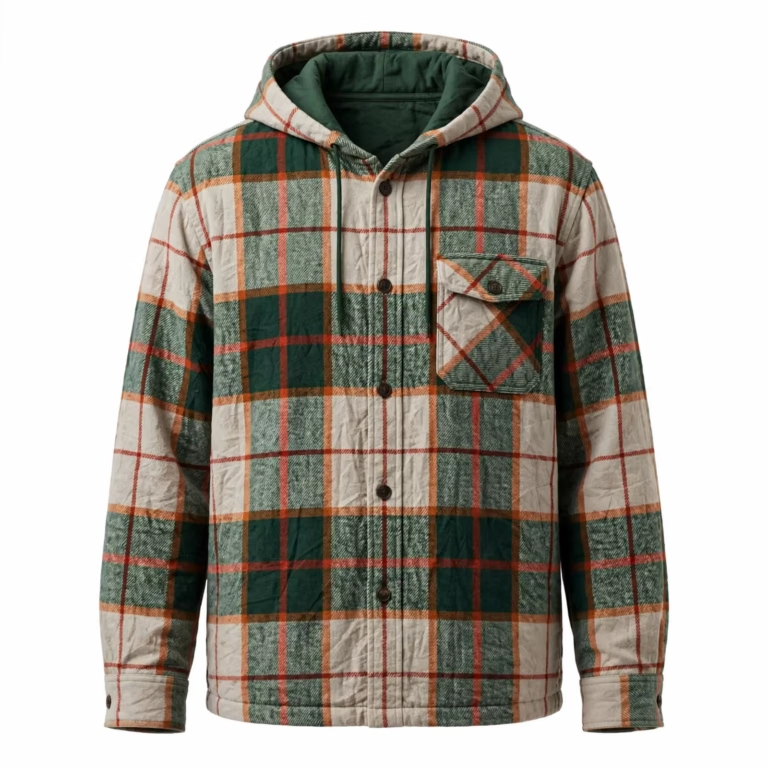
This is the layer a buyer reaches for when a plain hoodie feels too plain. A hooded shirt jacket in brushed flannel, it buttons down the front like a work shirt and carries a hood like a sweatshirt, so one garment covers both shelves.
We make it to order in Bangladesh for brands that sell warmth with a pattern on it. Your plaid, your crinkle, your fit and your sizes, graded on your own measurement chart.
A Hood Built Over a Shirt Front
Most hoodies pull over the head. This one opens flat, buttons up and wears like a shirt, which makes it an easy layer over a tee in autumn and under a coat in deep winter.
The hood is cut from the same plaid and lined in solid bottle green. Worn down, it rests behind the neck in a soft fold, showing a clean band of green at the collar line.
The Large Plaid, Square by Square
The check is big on purpose, two to three full blocks across the chest. Broad bottle green bands cross a warm stone grey ground, with narrower rust orange bands and fine rust red pinstripes laid over the top.
Because the repeat is large, placement matters. We cut the two fronts as a mirrored pair, keep the horizontal bands level across the placket, and let the sleeves carry the same squares at the same scale.
Crinkled Flannel With a Brushed Face
The cloth is a brushed cotton flannel with a clear natural crinkle worked through the whole surface. The crumple catches the light in soft folds, so the plaid never looks flat or printed on.
Brushing lifts a fine nap over the weave, which is what gives flannel its warmth without weight. The face feels soft against a tee and softer still after the first wash.
Five Buttons Down the Placket
A narrow placket runs from the neck to the hem in the same plaid, fastened with five dark brown buttons. The buttons are sewn through the placket layers, not glued or clipped, so they stay put through a season of daily wear.
Worn open over a henley, the garment reads as a light jacket. Buttoned to the top with the hood up, it closes like a proper cold weather layer.
One Pocket, Cut on the Bias
There is a single chest pocket on the wearer’s left, and it is cut on the bias so its plaid runs diagonally against the body check. That one turned square is the garment’s signature, small but impossible to miss on the rail.
The pocket carries a flap with one dark brown button. It is sized for a phone or a folded set of notes, and its corners are bar-tacked so the bias edge does not stretch out of shape.
Green Inside the Hood
Turn the hood inside out and the whole lining is solid bottle green. The contrast is deliberate: plaid outside for the rail, plain green inside where it frames the face.
The lining is a smooth cotton that slides over knitwear instead of gripping it. It also hides the hood’s centre seam, so the inside looks as finished as the outside.
Cords That Sit at the Chest
Two thin dark green drawcords leave the hood at the front and hang to mid chest. They are there to close the hood against wind, not to decorate, so they are kept narrow and plain.
The cord ends are knotted and heat sealed. Buyers can stock this style with cords tied or hanging free; the sample is approved with the cords exactly as they will ship.
Shirt Cuffs on a Hoodie Sleeve
The sleeves end in shirt cuffs, not ribbing. Each cuff is a plain band in the same plaid with a single button, cut over a short sleeve placket so the hand passes easily.
A buttoned cuff lets the wearer roll the sleeve to the forearm for work, then close it again for the ride home. It is also the detail that makes buyers call this a shirt jacket rather than a sweatshirt.
A Straight Hem, Nothing Added
The hem is straight, plain and level all round, with no rib band, no elastic and no drawcord. It sits at hip length, cut to wear untucked over jeans or chinos.
A level hem keeps the large plaid honest. The lowest band runs unbroken around the body, which is the first thing a quality checker looks for on a check garment.
Relaxed and Boxy, on Purpose
The block is relaxed and slightly boxy, with the shoulder at its natural point and a little room through the chest. It is cut for layering, so a size medium sits comfortably over a heavy tee or a thin sweater.
Your grading decides the ease. Send your own measurement chart and we grade chest, length and sleeve from your numbers, size by size, before the first sample is cut.
Cutting a Plaid That Has to Match
Check garments are won or lost on the cutting table. Our cutters lay the plaid in a single direction, mark the band positions on the pattern, and bundle each garment’s pieces together so fronts, sleeves and pocket come from the same part of the repeat.
The bias pocket is cut separately, on the true diagonal, from its own marker. That extra marker costs a little cloth and saves the whole look of the garment.
Grading a Boxy Block
A boxy block grades differently from a slim one. We add width gently through the body so the drape stays relaxed at every size, and we hold the plaid repeat constant so a size small and a size XXL read as the same garment on the rail.
Sleeve length and body length follow your chart, not a house standard. If your market wears its layers longer, the pattern moves before sampling, not after production.
Sampling the Flannel First
Every order starts with a sample in your chosen plaid and your chosen crinkle level. You see the cloth, the button quality, the hood lining and the pocket placement on a real garment, not on a swatch card.
Comments come back, the pattern is corrected, and a second sample is made when the change is structural. Bulk production starts only from the sample you signed.
Warmth Without Weight
Brushed flannel traps air in its nap, which is why a medium weight cloth wears warmer than its scale weight suggests. This layer suits the months when a coat is too much and a tee is not enough.
For colder markets, the same block takes a heavier flannel or a quilted lining. The pattern, the pocket and the hood stay; only the cloth build changes.
Washing a Crinkled Flannel
The crinkle is a finish in the cloth, not a crease pressed into it, so it survives washing. We recommend a cool machine wash, a line dry and no iron, which keeps both the nap and the crumple as they were made.
Care labels carry your instructions in your market’s language. If your buyers expect tumble dry tolerance, tell us at sampling and we test the cloth for it before bulk.
Layering Over Knitwear
The smooth green hood lining and the roomy block make this an easy third layer over knitwear. It sits over a crew neck sweater without pulling at the buttons, and the shirt cuffs close neatly over a sweater’s sleeve.
That layering story is how retailers merchandise it: over a tee in the first delivery, over knits in the second. One garment, two selling seasons.
Rails and Ranges It Suits
The style belongs in workwear inspired ranges, outdoor lifestyle collections and casual shirting programmes that want one hooded piece. It hangs well beside jeans, chinos and boots, and it photographs as a complete outfit with almost anything under it.
Colourways follow your range plan. The plaid structure stays constant while the ground and band colours move, so a family of three colourways can share one product page and one pattern.
Hoodies That Hang Beside the Flannel
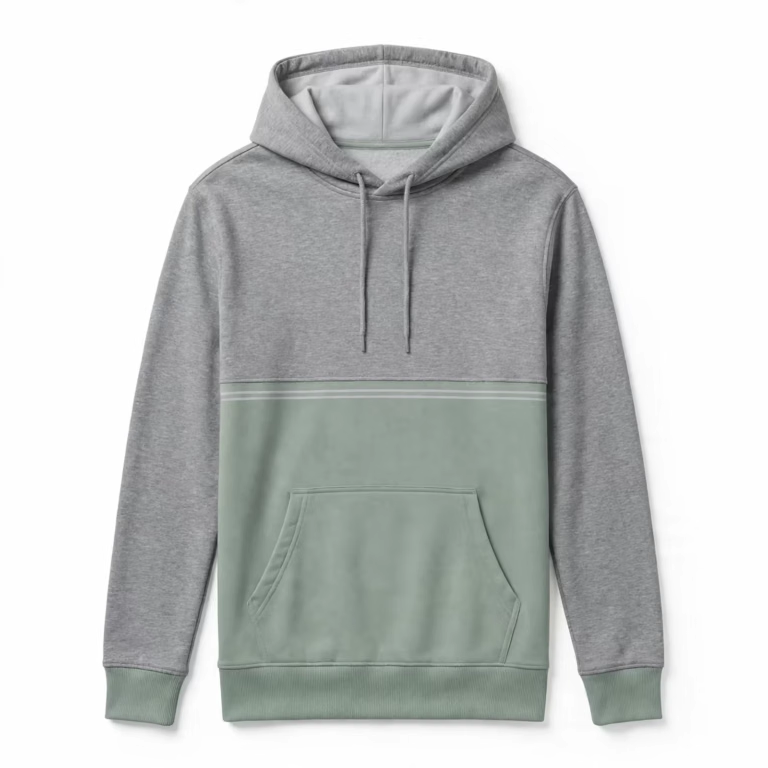
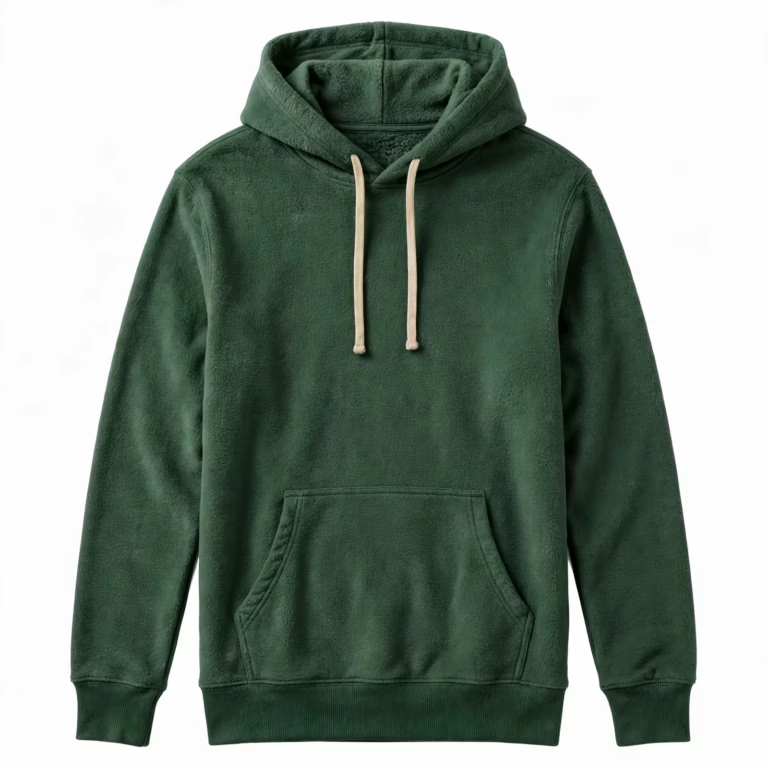
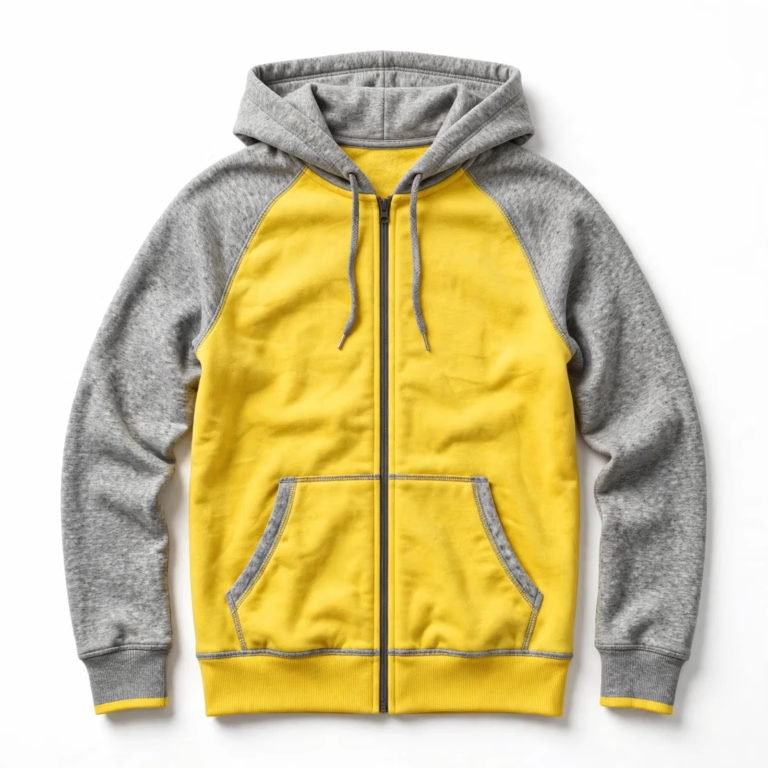
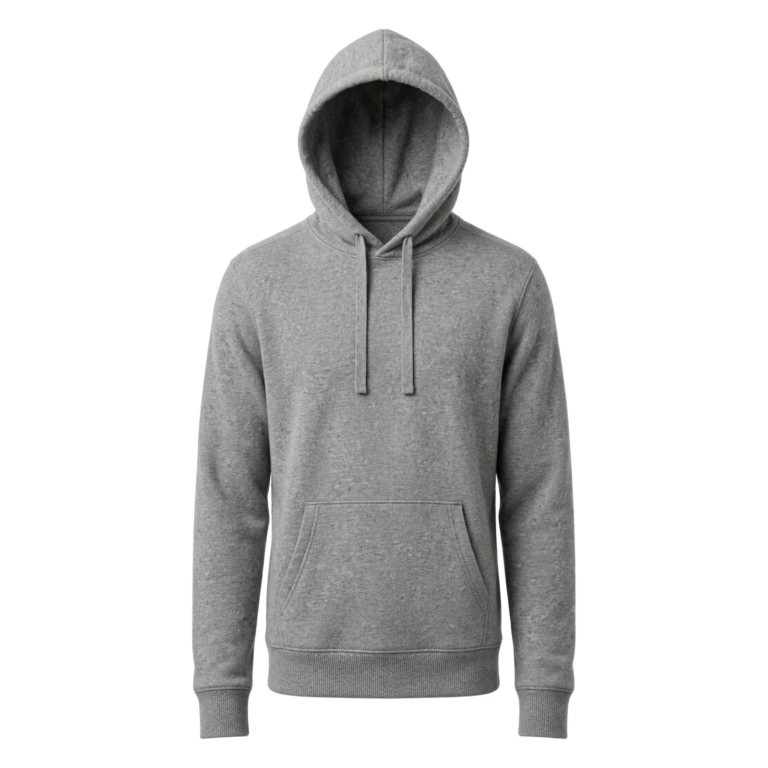
Buyers building a full hoodie wall usually pair this shirt jacket with a fleece pullover and a zip front. Our bottle green and red zip hoodie covers the sportier shelf, while the grey and pastel green pullover keeps a softer colour story.
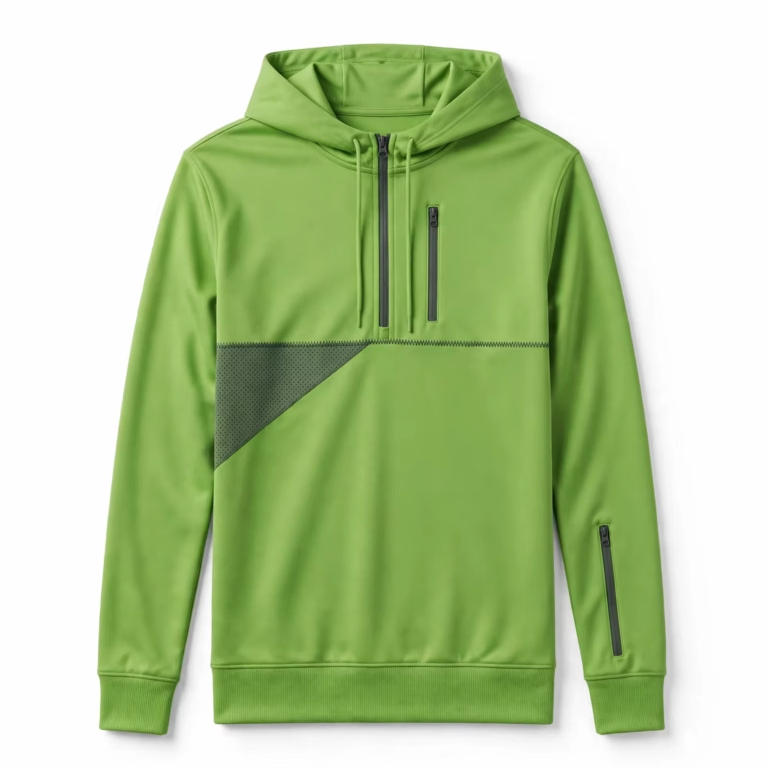
For a brighter designer line, the grassy green designer hoodie brings the half zip and mesh panel. Each style is sampled on its own block, so the wall never looks like one garment in four colours.
Your Label Under the Hood Seam
Inside the back neck, below the hood seam, sits a black woven label with your label in white capitals. It is the first thing the wearer sees when the garment comes off the hanger, and it is sewn in during production, never added after.
Send your artwork and we weave the label to your size and fold. Side seam labels, hem tags and printed neck transfers are available on the same order.
Buttons Sewn to Stay
Buttons on a button front garment take the strain of every wear, so ours are cross stitched with a wrapped shank and tested on the sample with a pull gauge. The cuff and pocket buttons get the same stitch, at the same tension.
A spare button is sewn inside the hem of every garment. It is a small cost that saves your customer service team a steady trickle of letters.
Folding a Button-Front Hoodie
Each garment is folded flat with the placket buttoned, tissue between the folds, and packed to your carton plan. The hood is folded inside the back panel so it arrives smooth, and the cords are tucked into the placket line.
Cartons are marked to your spec with size ratios as packed. If your warehouse needs polybag barcodes or RFID tags, they are applied at the packing table, not at your receiving dock.
What Buyers Ask About the Flannel Hoodie
Buyers ask whether the plaid can change. It can: the repeat scale, the ground colour and the band colours are all yours, and we strike a lab dip of the check before sampling.
They ask whether it is a shirt or a hoodie. It is honestly both, a hooded shirt jacket, and we describe it that way on the page so your customers know exactly what arrives.
They ask about the crinkle. It is a real finish in the cloth, stronger than a garment wash crease, and it is set at sampling so bulk matches the sample you approved.
Start Your Flannel Hoodie Order
Send your plaid reference, your measurement chart and your label artwork. We return a costed sample plan, make the sample in your flannel, and hold production until you sign it.
Siatex manufactures in Bangladesh for importers, wholesalers and private label brands worldwide, and this hoodie is made the same way as everything on this site: at your level, in your quality, your fabric, your design and your measurement. Trade buyers can verify our exporter standing through the International Trade Centre.