
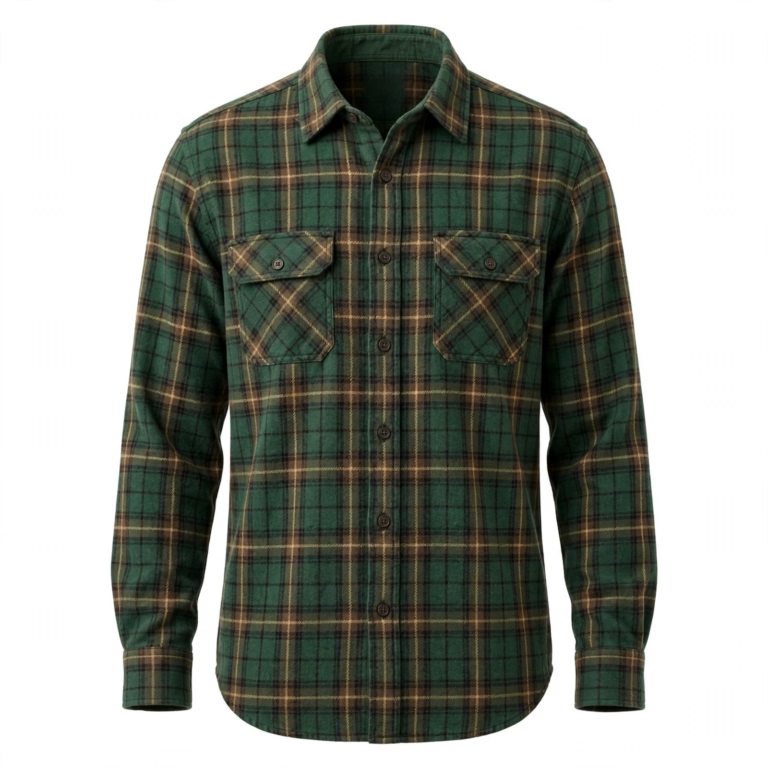
Custom Mens Pastel Green and Cream Check Shirt Manufacturer in Bangladesh for Heritage Ranges in the UK and USA
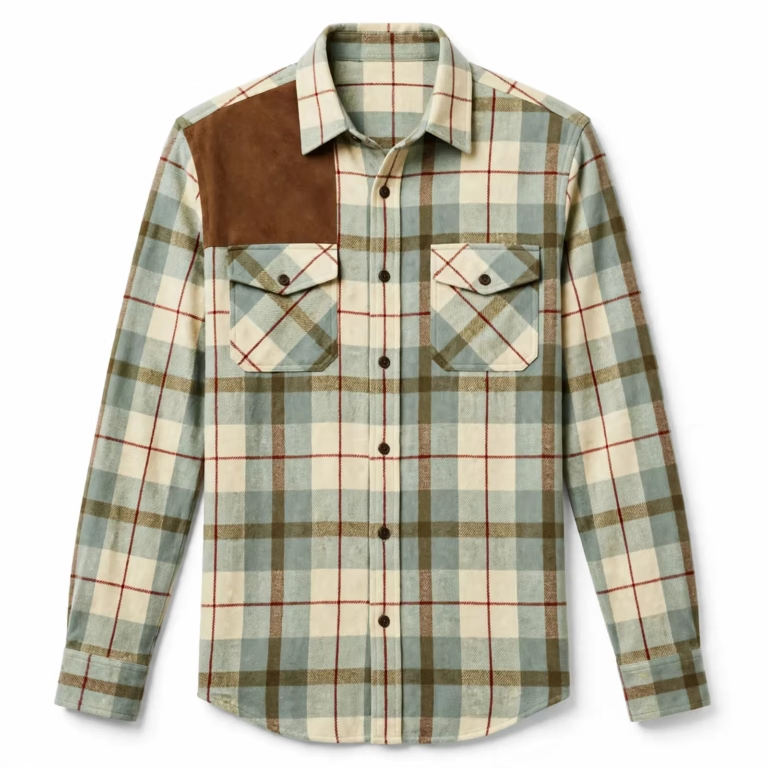
Some shirts sell on a colour, and this one sells on a whole palette. The pastel sage and cream plaid gives a range a soft heritage note that plain colours cannot, while the brown shoulder patch and bias-cut pocket flaps give buyers details they can point at on the rail and in a photograph.
We sew it in Bangladesh for outdoor labels, heritage brands and casual ranges that want a designed check shirt rather than a plain one. Every panel is cut and sewn to your pattern, in your plaid, with your labels, so the shirt that reaches your store is your product and nobody else’s.
A Plaid Woven to Your Own Colour Story
The check is a true woven plaid, not a print. Broad cream bands cross the sage green ground in both directions, olive-brown bands add the depth, and fine rust pinstripes run in pairs through the cream, so the pattern holds together from across a shop floor and rewards a closer look.
Because the plaid is woven from coloured yarns, your version can move the palette where your range needs it. Keep the sage and cream and deepen the olive, trade the rust stripe for burgundy, or rebuild the same structure in blue and stone for a second colourway in the same drop.
The Brown Shoulder Patch, Placed Exactly Where Your Pattern Says
The solid patch over the right shoulder is the shirt’s signature. It sits from the collar and shoulder seam down to just above the right chest pocket, with a straight lower edge, in a chestnut-brown panel cloth with a matte suede look that contrasts softly against the brushed check.
The patch is cut and stitched as its own panel, so its position is set by your pattern and checked on the sample before bulk. On your version it can stay exactly here, shrink to a smaller yoke panel, or move to a matching elbow patch brief if your designer prefers.
Why the Patch Panel Uses a Suede-Look Cloth
A solid panel on a patterned shirt only works when its surface is as considered as the pattern. The suede-look cloth brings a matte, slightly napped face that absorbs light instead of reflecting it, so the brown reads deep and warm against the brushed check rather than shiny and stuck on.
It is also a practical panel cloth: it holds its edges cleanly at the seam, takes topstitching well, and does not fray at the straight lower edge. Your version can keep the suede look, or take the same panel in corduroy, canvas or a plain woven in a colour from your own palette.
Two Flap Pockets Cut on the Bias
Both chest pockets are patch pockets with pointed flaps, and the flaps are cut on the bias. That one cutting decision turns the plaid diagonal across each flap, which quietly separates this shirt from every straight-cut check shirt hanging beside it.
Each flap closes with a small dark button matched to the front placket. The pockets themselves are cut on the straight grain and pattern-matched to the body, so the plaid flows across the pocket instead of breaking at its edges.
Brushed Cloth With a Soft Hand Feel
The cloth is lightly brushed, which raises a soft surface on the yarn and takes away any sharp new-shirt stiffness. It feels like a shirt that has already been worn and washed a few times, in the good way buyers mean when they handle a sample and nod.
Brushing also deepens the colours slightly, which suits this palette: the sage stays muted, the cream stays warm, and the rust stripes read as part of the cloth rather than lines printed on top of it. The weight is your call, from a lighter casual shirting to a heavier overshirt cloth.
Pattern Matching Across the Placket and Pockets
A check shirt is judged at its joins. Our cutting team matches the horizontal bands across the centre placket so the plaid runs unbroken from one front panel to the other, and matches the pocket placement to the body’s bands before a single seam is sewn.
The collar, yoke and cuffs are cut to sit square with the plaid as well. It takes more care at the cutting table than a plain shirt, and it is the difference between a check shirt that looks designed and one that looks assembled.
The Back Yoke and the Clean Back Panel
Turn the shirt over and the design goes quiet, which is exactly right. A straight back yoke in the same check sits across the shoulders, giving the back its structure and a clean seam for the plaid to align along, and below it the back panel runs plain to the curved hem.
There are no pleats and no hanging loop unless your pattern asks for them. The yoke is double-layered, so the inside of the upper back is finished in the same cloth, and the label seam at the neck stays neat under the collar band.
A Regular Fit Graded on Your Size Chart
The fit is a true regular: natural shoulders, a straight body with room to layer, and a hip length with a gently curved shirttail hem. It is the forgiving cut that sells across the widest size range in a casual and outdoor programme.
Your sizes are graded from your own measurement chart, and the sample is measured against it before bulk cutting starts. If your block runs longer in the body or narrower at the shoulder, the pattern follows your chart, not a house standard.
Collar, Cuffs and Buttons Finished Your Way
The collar is a standard pointed shirt collar in the same check, cut to sit flat with the top button open or closed. The long sleeves finish in wide button cuffs that wear at the wrist through the day and fold up cleanly when your customer rolls them, exactly the styling this design was drawn for.
Six small dark brown buttons run down the placket, with one more on each pocket flap and each cuff. Your version can take horn-effect, corozo or branded buttons, and spare buttons are sewn into the side seam or packed to your instruction.
Your Label, Your Buttons, Your Packaging
Your woven label sits at the centre of the inside back neck, stitched flat at both ends where your customer sees it the moment the shirt comes off the hanger. Size and care labels follow your market’s rules and your artwork, in your languages.
From there the finishing is yours: your hangtags, your folding style, your polybag or plastic-free wrap, and your carton marks. The shirt leaves our floor ready to go straight onto your rail or into your warehouse system.
How a Check Shirt Order Runs on Our Floor
Production with your custom mens pastel green and cream check shirt manufacturer in bangladesh starts with your sample or tech pack, from which we make a counter sample in the correct cloth and plaid. You check the patch placement, the pattern matching and the fit, and we adjust before bulk.
Bulk cutting then follows the approved sample panel by panel, with the plaid matched at the placket and pockets on every shirt. Sewing, buttoning, pressing and packing run in line, and every shirt is inspected before it is folded, including a check-by-check look at the joins.
Plaid Matching Tolerances We Sew To
Pattern matching is agreed as a tolerance, not a hope. At the sample stage we set how closely the bands must meet at the placket, the pocket edges and the yoke seam, and the bulk is inspected against that same standard, shirt by shirt, before folding.
Where a band is wide, the match is judged at its centre line; where the rust pinstripes run, they must continue across the placket without a step. A shirt that misses the tolerance is not packed and hoped for the best; it is pulled at inspection, and the cause is fixed at the cutting table.
Washing and Colour Care for Brushed Checks
A multi-colour plaid has to survive the wash without one band bleeding into another. We test the cloth for colour fastness before bulk, and the care label carries the wash your fabric choice needs, written for your market.
The brushed surface also softens further with washing rather than pilling away, when the yarn and brushing are right. That is a fabric decision made at the start, and it is why the cloth is approved as a washed sample, not just a loomstate swatch.
Check Shirts for Outdoor, Heritage and Casual Labels
This design sits comfortably in several ranges at once: outdoor and country labels take it for the patch and the brushed warmth, heritage brands take it for the plaid, and casual ranges take it as the one patterned shirt that lifts a plain wall of tees and overshirts.
It also photographs well, which matters more every season. The patch gives the eye a focal point, the diagonal flaps give it a second one, and the palette sits happily beside denim, chinos and boots in a lookbook shot.
A Shirt That Works Across Three Seasons
Brushed checks earn their keep by spanning seasons. In spring the shirt wears open over a tee, in autumn it layers under a jacket with the collar and cuffs showing the plaid, and on cold days the brushed face adds real warmth under knitwear without the bulk of a second shirt.
That three-season life is why buyers stock it as a continuity style and recolour it rather than replacing it. The pattern structure, the patch and the pockets stay constant, the palette moves, and the style becomes one your customers recognise as yours season after season.
More Shirts From Our Bangladesh Factory
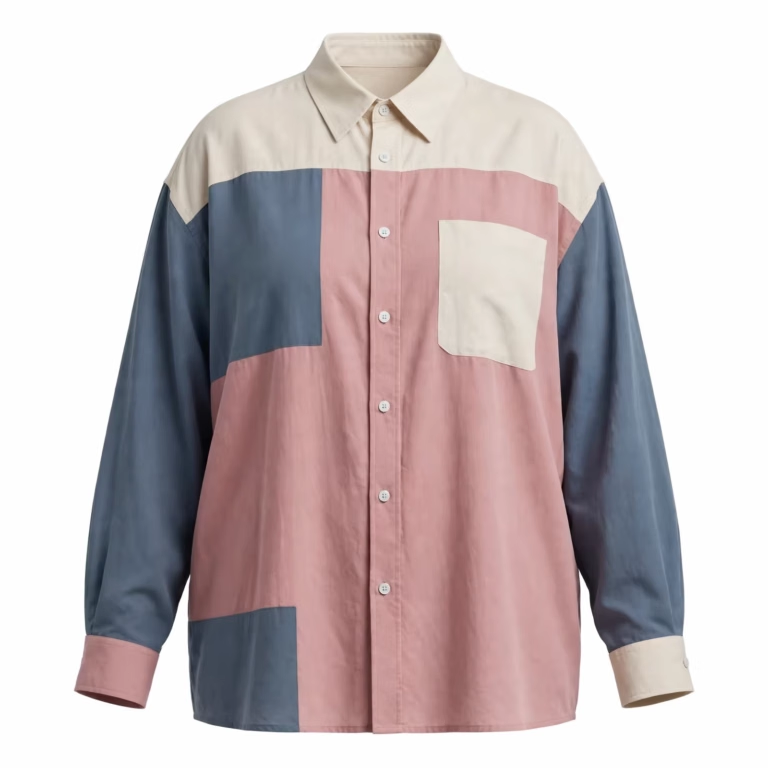
If this plaid is close but not quite your brief, the same floor makes our Custom Men’s Green Yellow Check Flannel Shirt for a bolder check, our Custom Men’s Casual Denim Shirt for a plain workhorse, and our Custom Men’s Plus-Size Dropped Shoulder Shirt for a colour-block fit story.
For fabric and trade background, the International Trade Centre publishes market research for apparel buyers at intracen.org. Every shirt in the range is made to order in Bangladesh, at your quality, in your fabric, to your design and on your measurement chart.
Questions Buyers Ask About This Check Shirt
Can the plaid colours be changed? Yes. The plaid is woven from coloured yarns, so your colourway is set at the yarn stage: the band widths, the ground colour and the stripe colours all follow your artwork or your physical swatch.
Can the shoulder patch be removed or moved? Yes. The patch is a separate panel set by your pattern, so it can be dropped, resized, matched on both shoulders or replaced with your own panel fabric, including a printed or embroidered panel.
Are the pocket flaps always bias-cut? They are on this design, because the diagonal check is part of its character. If your version wants straight-cut flaps matched to the body, the pattern changes at sampling and the bulk follows the approved sample.
Can it be made as an overshirt? Yes. The same design in a heavier brushed cloth, with a straighter hem and larger buttons, runs as an overshirt on the same line; tell us the cloth weight you want at the sample stage.
Can the sleeves be made short? Yes. A short sleeve version with a plain hemmed opening keeps the patch, the pockets and the plaid exactly as they are, and it runs on the same pattern block with the sleeve cut to your length.
What cloth weights can it run in? The design is drawn for brushed shirting, and it runs from a light casual weight for warm markets up to a heavy overshirt weight. We sample your chosen weight first, so the drape and the brushing are approved before bulk cutting begins.