

Polo Shirt Manufacturer in Bangladesh Serving Buyers Worldwide
Ask any importer what separates a top manufacturer from the rest and the answer is rarely price. It is the second order: whether the factory that made a good first sample can make the tenth batch land exactly the same, without the buyer chasing it.
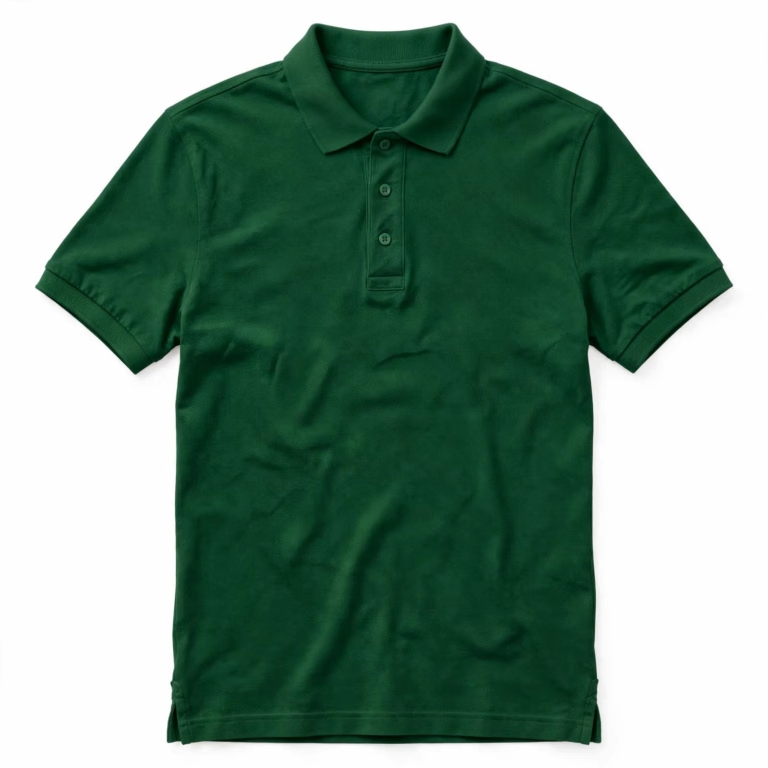
This polo is our proof garment for that test. One classic corporate style, run in a deep forest green, measured against a retained master sample at every stage, and built so a uniform buyer in Ohio or a retailer in Hamburg receives the same shirt.
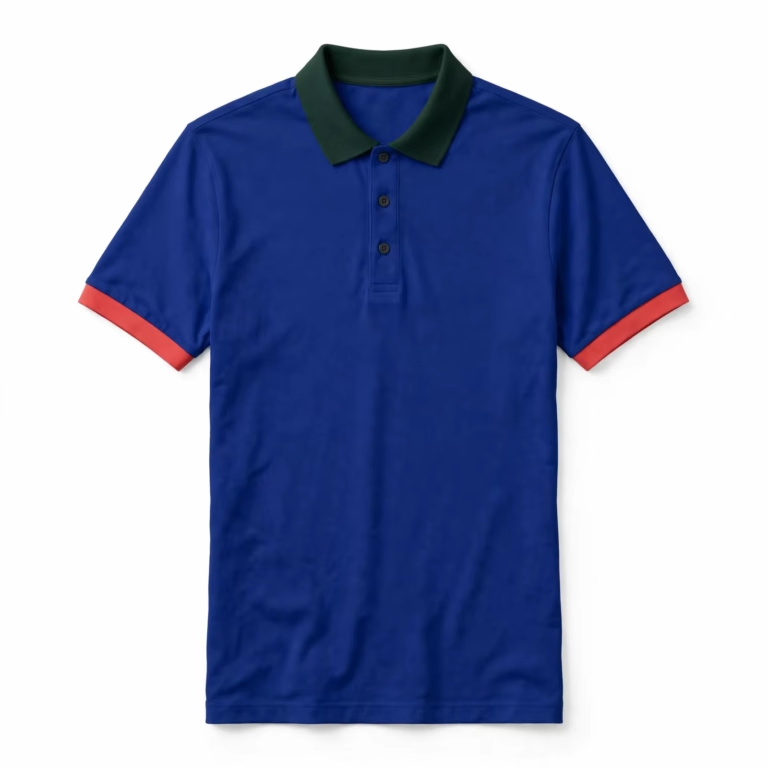
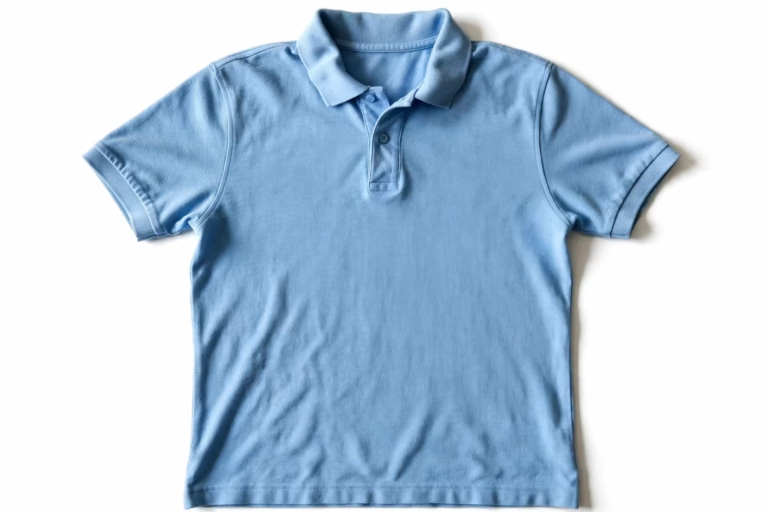
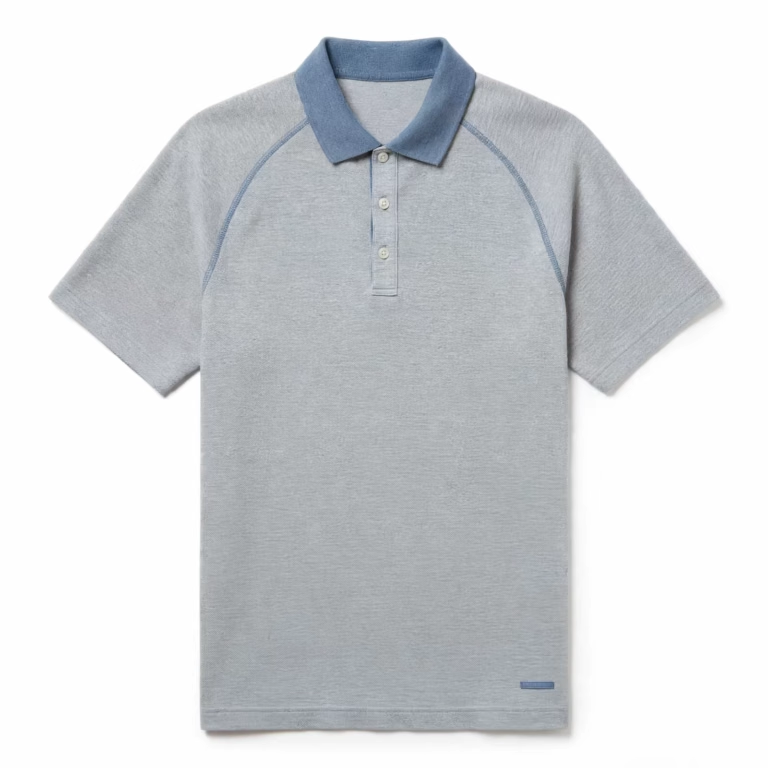
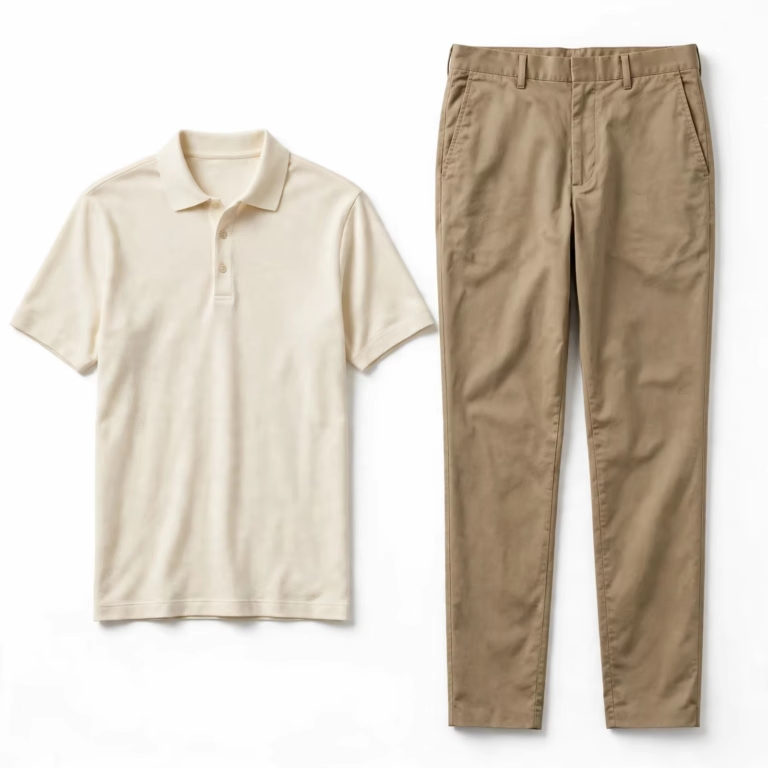
Forest Green Piqué Polo, Part by Part
The design is deliberately plain, because plain is where weak factories show. Every panel is visible, every stitch line can be checked, and there is nowhere for poor workmanship to hide.
A Collar That Stays Flat
The ribbed collar is knitted to hold its fold through a working day and a wash cycle. It sits flat against the neck, keeps its edge, and carries the herringbone tape inside the back neck.
- Knitted rib collar, shaped to lie flat
- Neck tape covering the back seam
- Collar points matched left and right
Three Buttons, Tonal and Tight
The placket carries three buttons dyed to match the green, sewn with thread that locks under pull. The placket itself is fused lightly so it stays straight instead of curling after washing.
- Three tonal buttons on a reinforced placket
- Button stitch tested against pull
- Placket length set from your tech pack
Ribbed Cuffs and a Level Hem
Sleeves finish in ribbed cuffs that grip without squeezing, and the hem runs level front and back with a small vent at each side. The vents are bar-tacked so they do not tear open in wear.
- Ribbed sleeve cuffs, even tension
- Straight hem with side vents
- Vent ends bar-tacked for strength
How Top Clothing Manufacturers Keep Every Batch the Same
Consistency is a paperwork habit before it is a sewing skill. Each order here keeps a batch record: the approved sample, the fabric lot reference, the dye shade card, and the measurement sheet the line actually worked to.
When a reorder arrives, that record comes out first. The new fabric is compared against the retained shade card under the same light, and the first garments off the line are measured against the master sheet before the run is allowed to continue.
Build Sheet for This Forest Green Polo
| Item | Specification |
|---|---|
| Fabric | Cotton-rich piqué knit, fine even loop face |
| Colour | Forest green as pictured, or your programme shade |
| Collar | Knitted rib collar with inside neck tape |
| Placket | Three tonal buttons, reinforced stitching |
| Sleeves | Short sleeves with ribbed cuffs |
| Hem | Level hem with bar-tacked side vents |
| Sizes | Men’s XS to 3XL, or your own grading |
| Label | Your woven label inside the back neck |
Your Label Inside the Collar
The label picture in the gallery shows the inside back neck, because that small woven strip is where a garment stops being ours and becomes yours. Send your artwork and the label is woven, folded and sewn at the neck on every unit.
Care and fibre content follow your market’s wording, and size tabs can sit beside the main label or at the side seam. Nothing carries our name anywhere on the garment.
Checks a Top Manufacturer Runs Before Cartons Close
Before a carton is sealed, garments pass a fixed sequence of checks on the finishing table, and a sample from each carton is pulled and measured again. The list below is the order those checks run in.
- Shade checked against the retained card
- Chest, length and sleeve measured per size
- Collar, placket and buttons inspected by hand
- Seams pulled gently for stitch security
- Loose threads trimmed, garment pressed flat
- Label, size and care content verified
Any garment that fails a step goes back to the line, not into the carton. That discipline, repeated daily, is most of what the phrase top manufacturer actually means in practice.
Sampling That Tells the Truth
A sample is a promise, so ours are made on the same machines and from the same fabric quality as bulk. If a detail cannot be repeated at production speed, we say so at sample stage rather than letting you discover it later.
Send a tech pack, a measurement chart, or a physical garment you want matched. The sample comes back with a note on anything we adjusted and why, so your approval is based on the real production method.
Grading From Your Own Size Chart
Corporate blocks differ between markets: an American uniform fit is not a German retail fit. We grade from your chart where you have one, keeping the chest, shoulder and length steps in your proportions across the full size run.
Where you have no chart, the standard men’s block applies, and a full size set can be sampled first so your team can fit-check every size before bulk begins.
Reorders That Match the First Delivery
Uniform programmes live on reorders: new starters join, sizes run out, and the replacement shirts must match the ones already in service. Our batch records exist for exactly this moment, holding shade, fabric lot behaviour and measurements together.
Tell us the original order reference and the new quantity per size. The run is set up from the record, and the first pieces are compared against the retained sample before the line continues.
Colour Discipline Across a Whole Programme
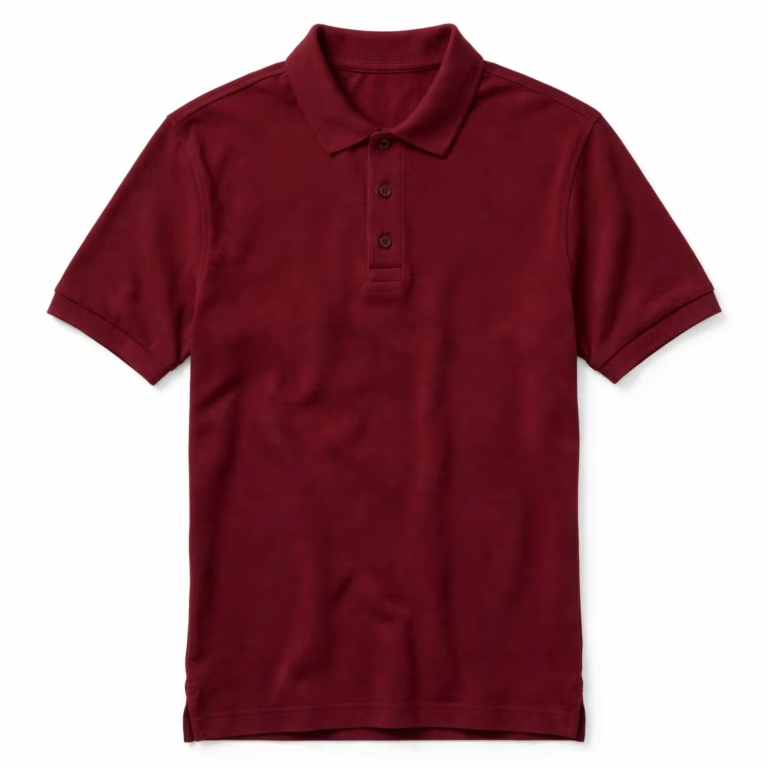
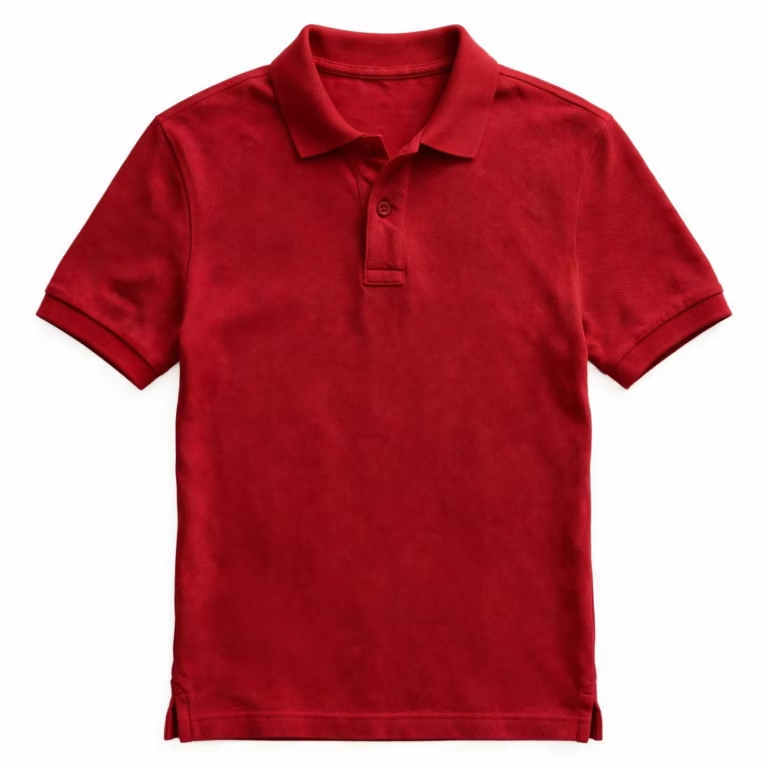
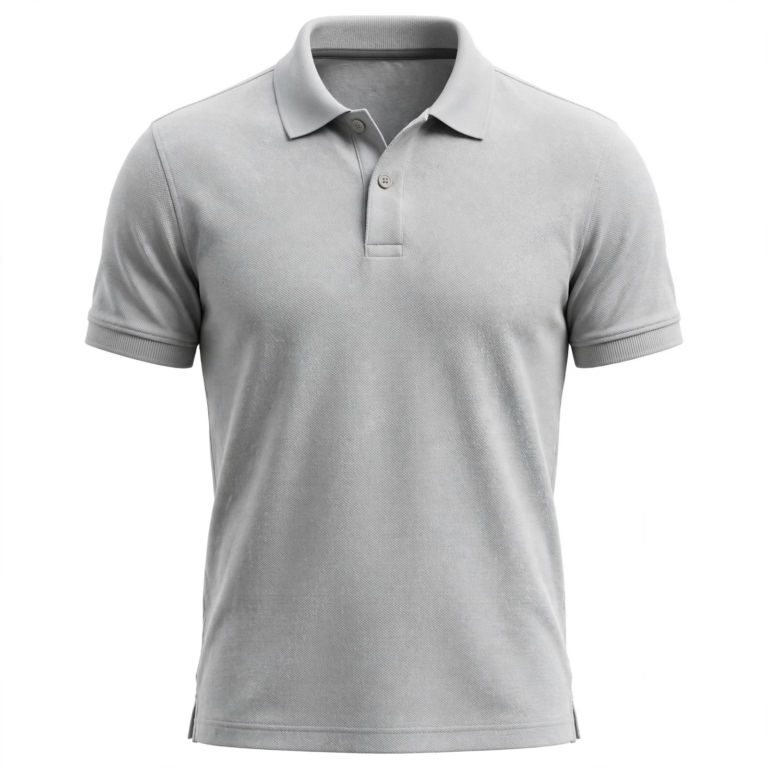
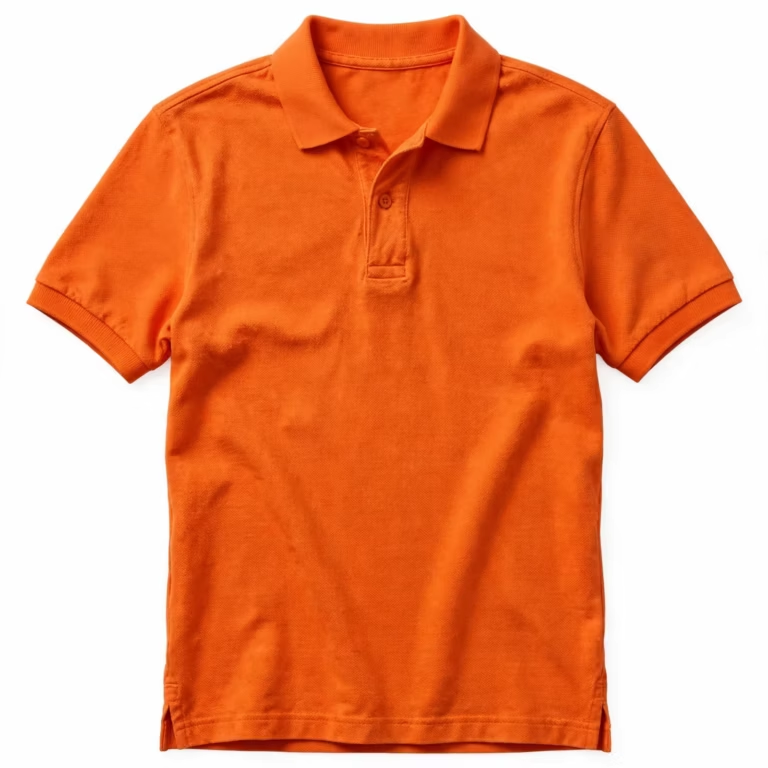
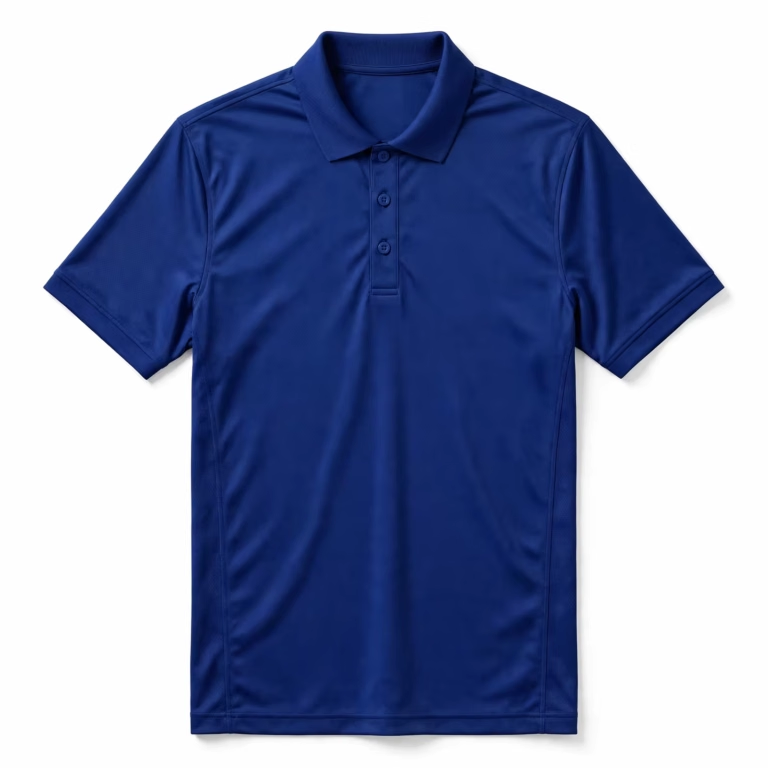
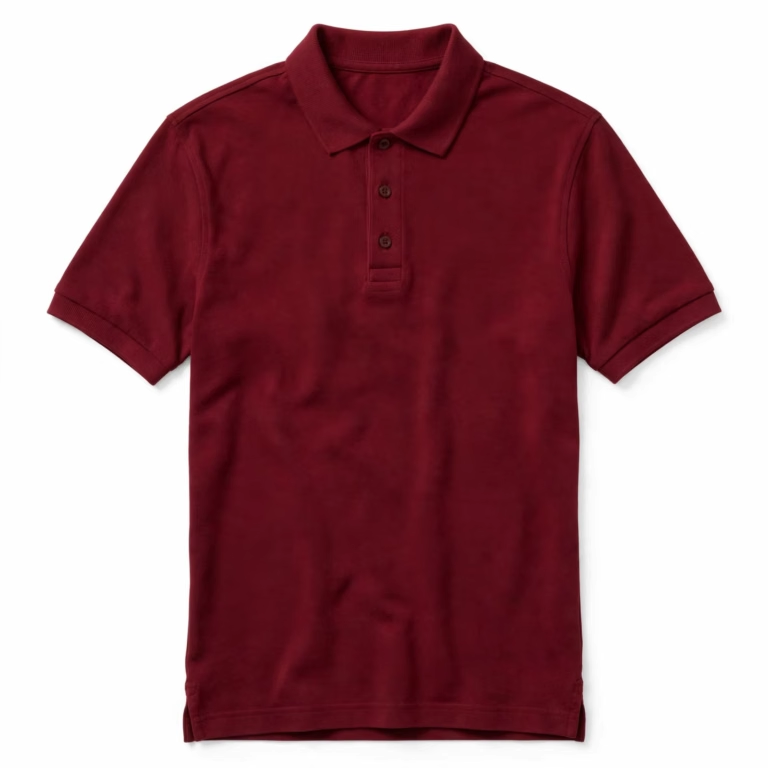
Forest green is the pictured colour, and it suits fleets, grounds teams and outdoor brands. The same polo runs in the other corporate standards: royal blue, burgundy, charcoal, sky and white among them, each dyed against its own retained shade card.
Multi-colour programmes are planned as one order, so a buyer running three colours across five sizes receives cartons that are labelled, counted and shaded consistently across the whole delivery.
Who Buys Polos From Bangladesh Top Clothing Manufacturers
The buyers who reorder this polo are uniform suppliers in the USA and Canada, workwear distributors in Germany and France, and private-label retailers in the UK who need a plain corporate polo that behaves identically across seasons.
Promotional companies also use it where a printed or embroidered chest logo goes onto a shirt that must survive weekly washing. The plain face takes embroidery cleanly, and the piqué holds the stitch without puckering.
Inside the Factory: How a Polo Moves From Yarn to Carton
Every stage of this polo happens under one roof and one record. Yarn is knitted into piqué on site, the cloth is dyed and finished, panels are cut against the graded patterns, and the sewing line works to the same sheet the sample room used.
Keeping knitting, dyeing and sewing in one flow is what lets a manufacturer promise shade and measurement together. When stages scatter between subcontractors, the records scatter with them, and consistency becomes a matter of luck.
- Yarn checked for count and cleanliness on arrival
- Piqué knitted and inspected roll by roll
- Dyeing matched to the retained shade card
- Cutting from graded patterns per size
- Sewing on a line set for this construction
- Finishing, pressing and final measurement in house
What Buyers in Different Markets Ask of the Same Polo
The shirt does not change between markets, but the questions do. Each buying region leans on a different part of the specification, and the programme record has to answer all of them at once.
United States and Canada
North American uniform buyers ask first about reorder speed and size depth: full runs held to one shade across distribution centres, with tall and extended sizes graded as carefully as the core sizes.
Germany and France
European workwear buyers measure everything twice: the chart, the delivered garment, and the garment after washing. Shrinkage behaviour and label accuracy carry as much weight as the sewing itself.
United Kingdom
British private-label buyers focus on hand feel and shelf presentation: how the polo folds, how the collar sits in a pack, and whether the green on the rail matches the green in the photograph.
Packing and Carton Standards for Export
Garments are folded to a standard retail fold, polybagged where the programme asks, and packed per size with carton quantities your warehouse can book in without recounting. Carton marks carry style, colour, size breakdown and your order reference.
Mixed programmes are packed so each style stays in its own cartons, clearly marked. A buyer receiving polos beside hoodies and t-shirts sorts the delivery in minutes, and any shortage shows at the carton, not at the shelf.
Why Bangladesh Holds the Polo Business
Polo shirts look basic, yet they punish weak supply chains: the collar rib, the body cloth and the buttons must all arrive in the same shade, in the same week, at production scale. Bangladesh’s knitwear cluster grew up around exactly that coordination problem.
Yarn suppliers, knitters, dye houses and sewing factories sit within one industrial belt, and a manufacturer working inside it can correct a shade or a measurement in days rather than weeks. That depth is why the world’s uniform programmes keep returning here.
The Trial Order: How Serious Buyers Test a Manufacturer
Few buyers commit a full programme on a first conversation, and a good manufacturer does not ask them to. The usual path is a trial: one style, a few hundred pieces across the size run, checked hard on arrival against the sample and the chart.
We welcome that test because it is the same test our own finishing table runs. Judge the trial on shade against the card, measurements across every size, collar behaviour after washing, and carton accuracy, and the bulk decision makes itself.
- One style across the full size run
- Checked against the retained sample
- Wash-tested before the programme decision
- Carton contents matched to the packing list
From First Email to First Carton
The path from enquiry to delivery follows the same order every time, so a buyer always knows which step their programme is on. It begins with your specification, and nothing moves to the next step without the previous one signed off.
- Specification reviewed and quoted
- Sample made and sent for approval
- Chart and shade locked on approval
- Bulk cut, sewn and checked in stages
- Cartons packed, marked and released
If a step raises a question, such as a fabric behaviour or a measurement conflict in the tech pack, it is raised at that step, in writing, before money and cloth are committed. Surprises belong in sampling, never in shipping.
Bangladesh Top Clothing Manufacturers: Buyer Questions
How do I know the bulk will match my approved sample?
Because the sample is retained and the bulk is checked against it. First-off-line garments are measured and shade-compared with the master before the run continues, and a unit from each finished carton is pulled and checked again.
Can one order mix polos with other products?
Yes. Many buyers run this polo beside t-shirts, hoodies or workwear in one programme. Each style keeps its own record and checks, and the cartons are marked per style so your warehouse sorts them quickly.
How are cartons marked for our warehouse?
Each carton carries the style name, colour, size breakdown, quantity and your order reference, printed from the packing list rather than handwritten. If your warehouse uses its own carton labels or barcode format, send the layout and we apply it at packing.
What do you need from me to start?
A tech pack or a sample to match, your size chart if you have one, label artwork, and quantities per size and colour. From there we quote, sample, and only move to bulk on your written approval.
Start With the Green Polo, Then Widen the Range
The fastest way to judge a manufacturer is one honest garment. Start with this forest green polo as a trial, check it against everything written on this page, and widen the programme only when it earns its place.
See the same polo discipline in other colours and programmes: the Morocco corporate uniform polo, the Norfolk Island uniform polo, the Austria corporate uniform polo, our wider polo shirts manufacturer Bangladesh range, and the blank polo programme for Ajman. For Bangladesh’s wider export picture, the International Trade Centre publishes the trade data behind this industry.