
Custom Mens Olive Green Tank Top Manufacturer in Bangladesh for Plain Muscle Tanks in the USA and Europe
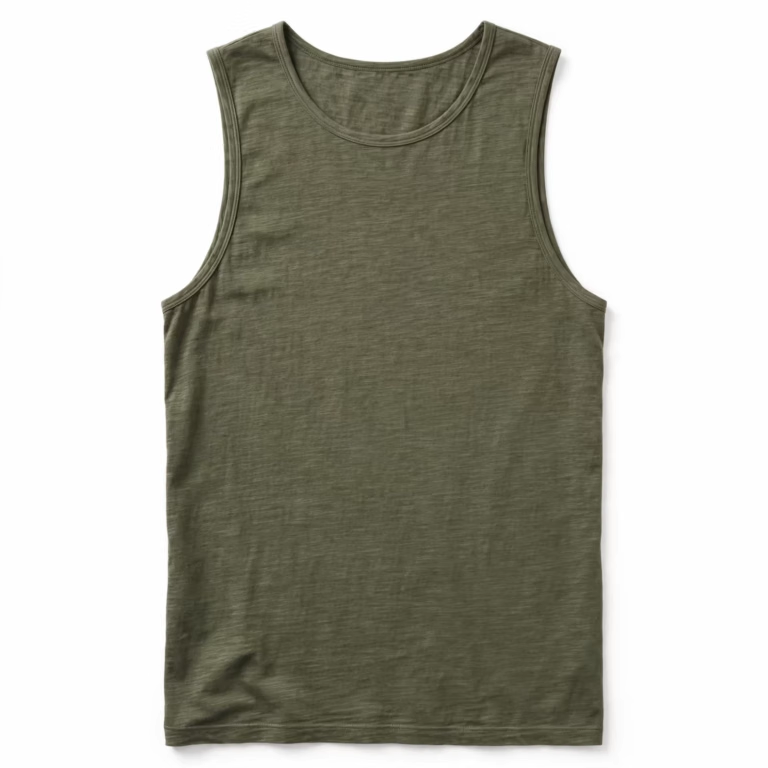
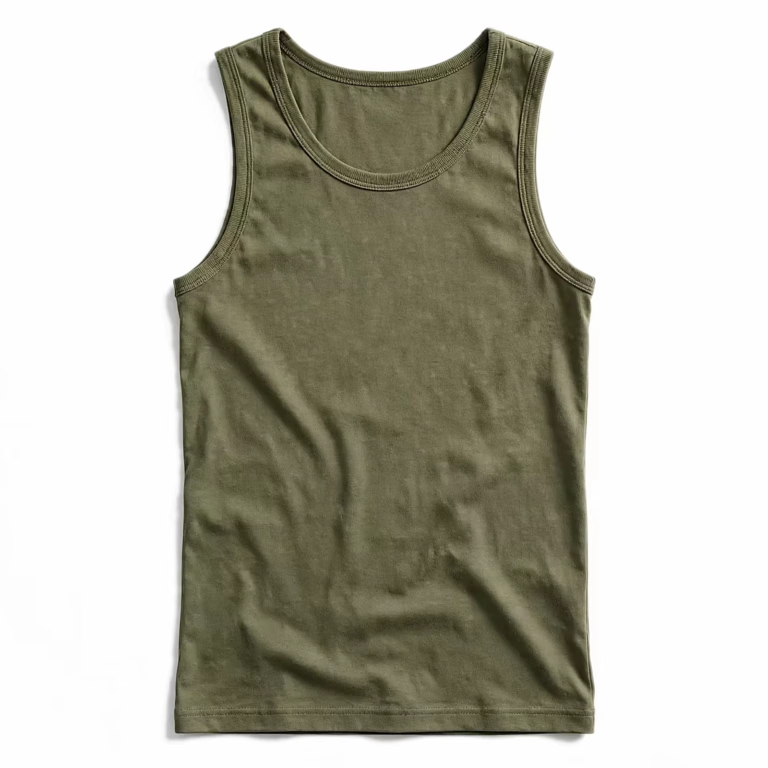
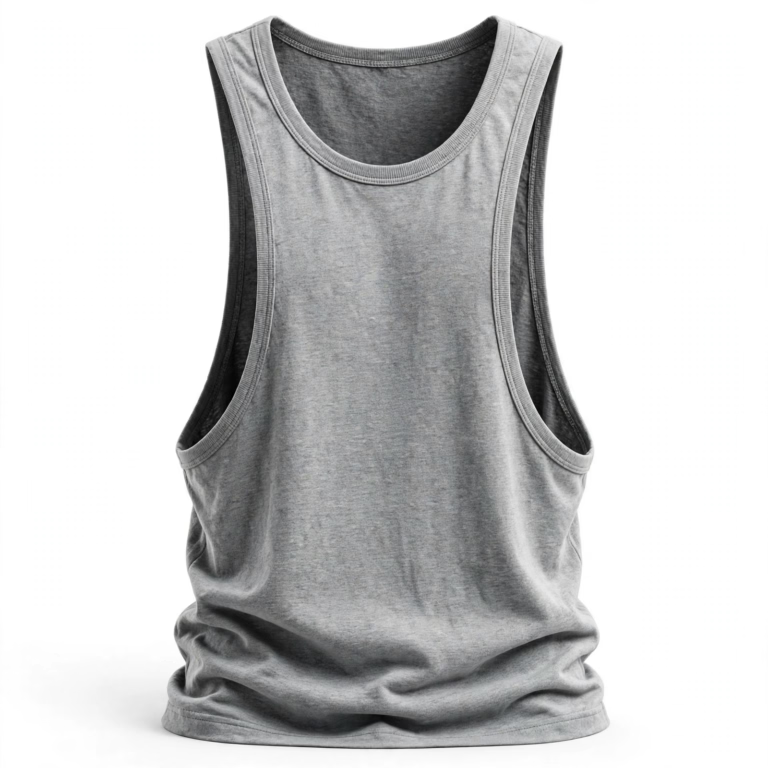
A plain tank top is the simplest garment in a summer range, and one of the easiest to buy badly. This one is a muted olive green muscle tank in a smooth lightweight single jersey, with deep straight armholes, a shallow crew neck and nothing on the front at all.
Siatex makes it at your level: your olive matched to your swatch, your light jersey, your relaxed fit and your sizes graded on your own measurement chart. The page that follows covers the cut, the bindings, the jersey and the checks that keep a plain garment honest.
A Muted Olive, Neither Khaki Nor Forest
The colour sits in the middle of the olive family: a moss or army olive with a yellow-green undertone, darker than khaki and lighter than a deep forest green. It is essentially solid, with only a very faint fine horizontal slub moving through it.
That middle position is what makes olive commercial. It pairs with denim, with black, with stone and with white, so a buyer can stock it inside almost any summer story without building a colour theme around it.
The Muscle Cut, Straight Down the Side
The armholes are the design. The shoulder fabric covers the top of the shoulder, then the edge runs almost straight and vertically down the side of the chest, opening the whole upper arm and shoulder.
That straight drop is the muscle-tank line, distinct from both a narrow vest cut and a racerback. The opening ends at about underarm level, deep enough to read as a muscle tank and high enough to wear without a layer under it.
Bindings in the Same Olive
Both the neck and the armholes are finished with narrow, flat self-fabric bindings in the same olive green. There is no contrast trim anywhere on the garment, which keeps the tank a true blank for a buyer’s own programme.
- Neck binding about a centimetre wide, flat and clean
- Armhole binding cut from the same cloth lot
- No contrast colour at any edge
- Bindings sewn to lie flat without curling
Binding quality decides whether a tank looks finished or raw. The bindings here are cut on the same grain discipline as the body and attached in one pass, so the edge stays smooth after washing.
A Shallow Crew Neck
The neckline is a round crew, shallow rather than scooped, sitting at the base of the neck just above the collarbones. On a deep-armhole tank, a shallow neck is the balance point: the front stays covered while the shoulders open.
The neck band is narrow and flat, in the same olive, with no ribbing and no contrast stitching. It is graded with the sizes so the opening keeps its proportion from the smallest size to the largest.
A Completely Plain Front
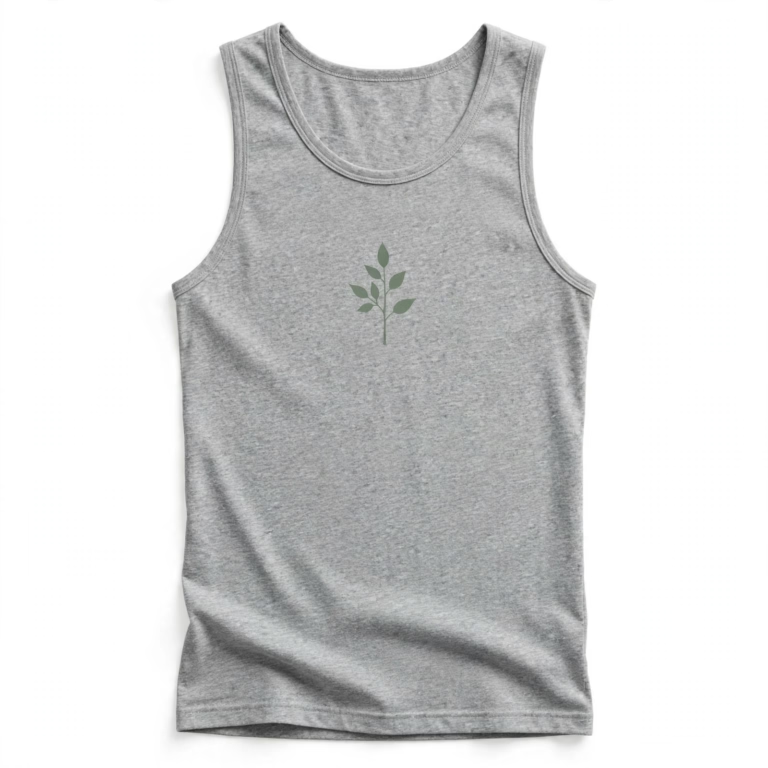
There is no pocket, no logo, no print and no graphic anywhere on this garment. The front is a clean field of olive jersey from neck to hem, which is exactly what private label buyers ask a blank supplier for.
Your print, your embroidery or your chest artwork can be added to your own specification, positioned from your artwork file. Or the tank ships plain, ready for your own local printing, with the surface smooth enough to take any of the usual print methods.
Smooth Single Jersey With a Faint Slub
The cloth is a smooth, lightweight single jersey with a soft drape and a very fine horizontal slub running through it. The slub is faint – a texture you notice in the hand and at close range, not a pattern.
Lightweight jersey is the right weight class for a summer tank: it breathes, it folds small for packing, and it hangs away from the body in the relaxed cut. The weight is confirmed with you at sampling, since tank programmes vary between beach-light and gym-weight.
A Relaxed Fit at Hip Length
The fit is relaxed and straight through the body, hanging away from the torso with a broad shoulder line and no taper at the waist. The length runs to the hip, covering the waistband, which suits both worn-out and layered styling.
The hem is straight and level with a narrow turned-up finish and no side slits. Sizes run from XS to XXL, with the armhole depth and neck width graded so the muscle cut keeps its line at every size.
A Regular Back, Not a Racerback
The back is a regular tank back in the same olive jersey, plain, with the back neck sitting higher than the front. It is not cut as a racerback, so the shoulder blades stay covered and the garment wears like a classic vest.
That choice matters for buyers whose customers wear a tank as a base layer or under an open shirt. The regular back gives full coverage while the deep front armholes keep the summer character.
The Label at the Back Neck
Your label is woven to your artwork and sewn inside the back neck, centred under the binding. On a garment with no other branding, that label is the whole identity, and it is placed where a wearer sees it every time the tank goes on.
Care and size information follows your market’s format. Your hangtags, stickers and polybag print complete the presentation, so the tank reaches your shelf as your product in every detail.
Who Buys a Plain Olive Tank
Plain tanks move in volume wherever summer basics are sold: beach and holiday ranges, gym and training edits, festival and streetwear basics, and as layering stock under shirts. Olive is the colour buyers choose when black feels too hard and white feels too plain.
- Summer and holiday basics ranges
- Gym, training and outdoor edits
- Streetwear blanks and print programmes
- Layering stock for open-shirt styling
Because the garment is a true blank, one approved block can serve several of those programmes at once, each with its own label and print plan.
More Tank Tops and Tees From the Same Line
The sleeveless and tee lines share the same jersey family. For a sleeved partner in the same colour family, the fern green pocket t-shirt carries a chest pocket, while the beige full sleeve t-shirt covers the long-sleeve end of the basics wall.
For a second pastel-plain option, the soft tan polo sits nearby in the range. Buying guidance for apparel exporters is published by the International Trade Centre.
Sampling a Blank
Sampling a plain tank is about the cut and the cloth, not about artwork. The sample confirms the armhole depth, the neck shallowness and the binding widths on the body, because those three measurements are the garment.
The olive is approved at the same stage against your swatch, under daylight and shop light. Once the cut and colour are signed off, the bulk conversation is quantities and dates.
Keeping Bindings Flat in Bulk
The bulk risk on a tank is binding behaviour: an armhole binding that curls or waves makes the whole garment look cheap. The line controls it by cutting bindings to a measured tension and checking the first pieces off every bundle against the approved sample.
Each finished tank is then read at the armhole and neck before folding. A binding that does not lie flat is corrected at that table, not discovered by your customer.
Packing a Lightweight Tank
Each tank is folded flat, sealed in its polybag with your stickers, and packed in dozens so the lightweight jersey travels without hard creases. Cartons are marked with your references, sizes and the colour name.
Mixed-colour basics cartons are separated and labelled by shade, so a warehouse can split a summer delivery quickly. The packing list mirrors the carton marks line for line.
Questions Buyers Ask About This Tank
Is it a racerback? No, the back is a regular tank back with full coverage; only the front armholes carry the deep muscle cut.
Can it take a chest print? Yes, the front is a smooth plain jersey field, and your artwork can be printed or embroidered to your specification, or the tank can ship blank for your own printing.
Can the armholes be shallower? The depth is a pattern measurement and can be adjusted on your instruction, with a revised sample approved before bulk.
Building a Tank Programme Around One Block
One approved tank block can carry a full colour programme: olive first, then your black, white, stone and seasonal shades on the same cut, each dyed to its own standard. A buyer building a basics wall gets size and colour depth without re-sampling a new garment for every shade.
Reorders follow the filed recipe – the jersey weight, binding widths and measurements held with the order – so the tenth delivery hangs like the first. For a garment this simple, consistency is the whole product.
Armhole Depth, Measured Not Guessed
Armhole depth is the measurement buyers argue about most on a muscle tank, because a centimetre changes the character of the garment. Here it is set on the pattern as a fixed drop from the shoulder point and checked on the sample worn, not just laid flat.
The grading holds that drop in proportion across the sizes, so a small does not turn into a vest and a large does not turn into a tunic opening. What the sample approved is what every size in the order delivers.
Washing a Lightweight Jersey
A light single jersey earns repeat orders when it washes without twisting, so the body is cut on the grain and the side seams are checked for torque after washing at the sample stage. A tank that hangs straight out of the wash is the one that stays in a basics programme.
The care label carries your instructions in your market’s format, and the olive is wash-tested as a finished garment so the shade settles evenly across body and bindings alike.
The Shoulder Line and Strap Width
Between the neck and the armhole, the shoulder strap carries the whole look of the tank. Here the strap is broad, cut straight from the neck band to the armhole drop, so the garment reads as a tank rather than a string vest.
The strap width is part of the graded pattern, widening slightly with size so the proportion holds. It is also where the shoulder seam sits, placed to lie flat under an open shirt without rubbing.
Start Your Olive Tank Order
Send your swatch, your size chart and your label artwork, and the sample follows. Your olive, your jersey, your cut and your label, made in Bangladesh at your level, with bindings that lie flat, armholes measured rather than guessed, and a front left clean for your programme. The sample leaves with its armhole depth and strap width written on its card, so your approval rests on recorded numbers rather than first impressions.