
Clothing Manufacturer in Bangladesh Running a Controlled OEM Process for Buyers Worldwide
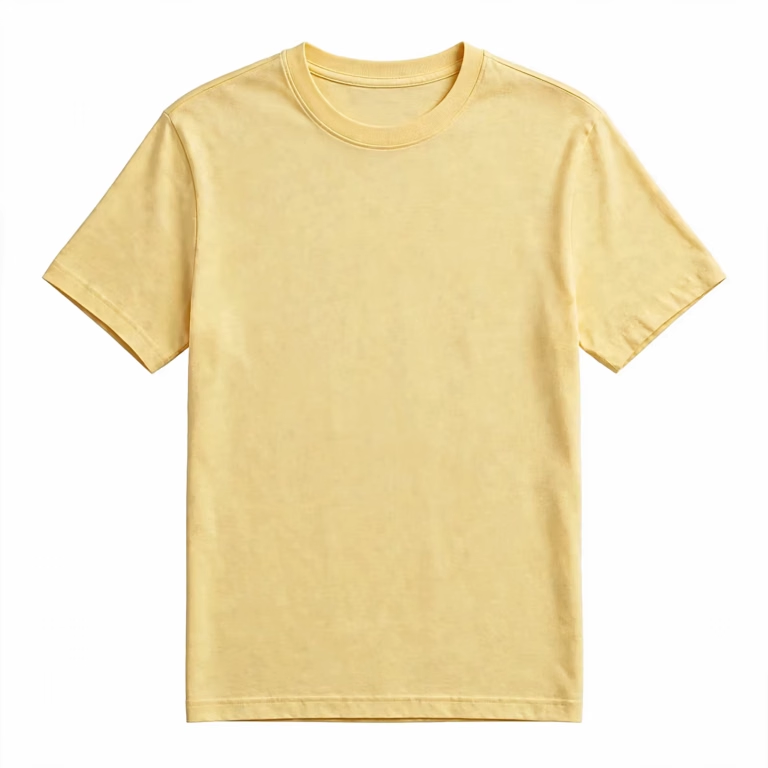
An OEM order succeeds or fails on process, not on promises. When a buyer in Europe, North America or the Gulf sends a tech pack to Bangladesh, the garment that arrives months later has passed through a dozen hands, and every hand has to work from the same specification. This page walks through the route an order takes on our floor, using the pale yellow crew neck in the pictures as the running example.
The point of a fixed process is repeatability. The first order sets the standard, and every reorder is measured against it: same fabric, same shade, same measurements, same label position, same packing. Buyers who import season after season do not want surprises, and the OEM clothing manufacturing process exists to remove them.
Inside the OEM Clothing Manufacturing Process
Every programme moves through the same stages in the same order, and no stage starts until the one before it is signed off. That discipline is what lets one floor run basics, fashion and workwear side by side without mixing their standards.
- Tech pack review: your specification, artwork and measurement chart are read line by line, and anything unclear is settled before sampling.
- Pattern and grading: the block is drafted and graded across your size range, then checked against your chart point by point.
- Fabric approval: lab dips, strike-offs and hand-feel swatches are approved by you before bulk fabric is cut.
- Cutting and sewing: panels are cut to the approved marker and sewn on lines set for the garment type, with inline checks at every operation.
- Decoration and finishing: print, embroidery, washing and pressing follow the approved sample exactly.
- Inspection and packing: finished garments are measured, inspected and packed to your folding, bagging and carton standard.
At each stage the approved sample travels with the work, so an operator never has to guess what right looks like. When a question comes up mid-order, it is answered against the sample and the tech pack, not from memory.
Pattern, Grading and the Tech Pack
The tech pack is the contract. It carries the measurement chart, the construction notes, the fabric and trim specification and the artwork, and the pattern room works from it alone. If your programme starts from a reference garment instead, the sample is measured point by point and those measurements become the chart.
Grading is where many OEM programmes quietly drift, so it is checked twice: once on paper against your increments, and once on sewn size samples before bulk. The pale yellow tee in the pictures was graded this way, with chest, body length and sleeve verified on every size.
Fabric Sourcing and Lab Approval
Fabric is approved before it is bought in bulk. Yarn, weave or knit structure, weight and finish are matched to your specification, then shade is approved under standard light from a lab dip or a cut swatch. For jersey programmes like the tee shown, the weight in grams per square metre and the shrinkage allowance are fixed at this stage.
Only approved fabric enters the cutting room, and each roll is inspected for shade bands, holes and weaving faults as it is spread. A roll that fails is set aside, because a fault found at cutting costs minutes and a fault found at final inspection costs the order.
Cutting and Sewing the Example Tee
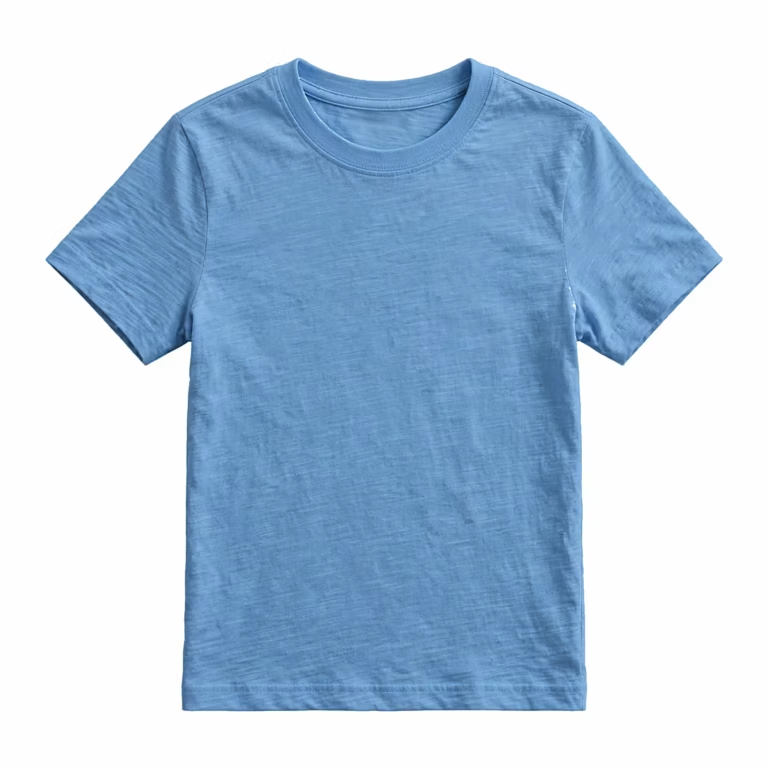
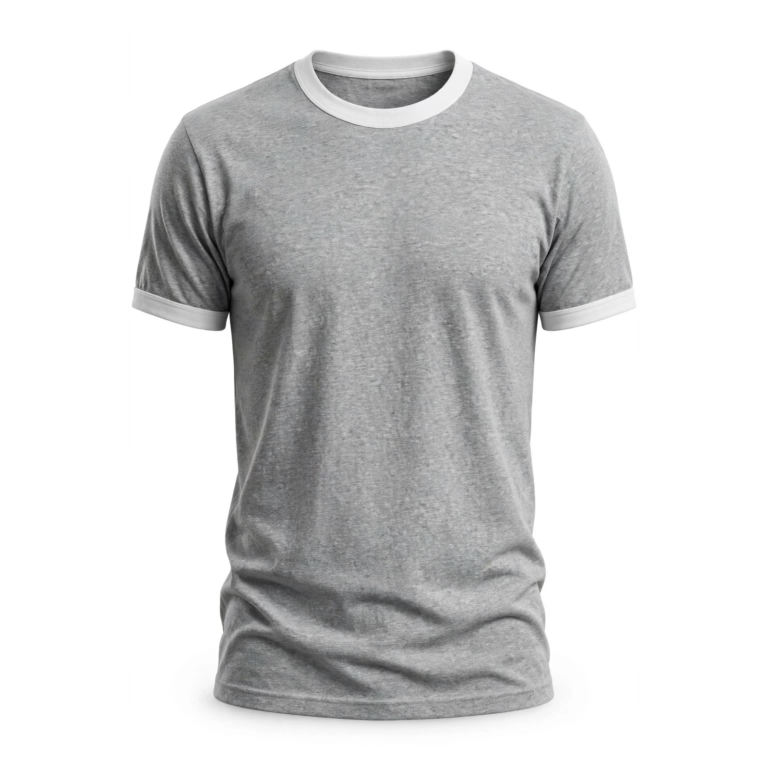
The crew neck in the pictures shows what the sewing stages produce: a ribbed collar with elastane so the neck holds its shape, shoulder tape so the shoulders sit flat, a side-sewn body so the garment hangs straight, and twin-needle hems. None of it is decorative; each operation protects the fit the buyer approved.
Inline inspectors check operations as garments move down the line, so a drifting stitch or a twisted sleeve is caught on the tenth piece, not the thousandth. Bundles carry the size and shade lot with them, keeping every carton consistent when it is packed.
Print, Embroidery and Finishing
Decoration follows the approved strike-off: screen print, digital print, embroidery and transfers each run with their own approval sample, placement template and curing or stitch standard. Placement is measured from fixed points on the garment, so a chest print sits in the same place on every size.
Finishing is where the garment becomes a product: loose threads trimmed, stains checked under light, measurements verified on a sampling plan, and pressing done to the standard your market expects, from a soft retail fold to a hard workwear press.
Quality Checks at Every Stage
Checks are layered so no single inspection carries the whole order. Fabric is inspected at spreading, panels at cutting, operations inline, and finished garments at final audit against your acceptable quality level. Measurements are taken from finished, pressed garments, because that is the state your customer receives.
The results are recorded per order, so when a reorder comes in, the file shows exactly what was approved and what was measured last time. That record is the backbone of the OEM clothing manufacturing process: it turns one good order into a repeatable programme.
Build Sheet for an OEM Programme
- Garment: any style from your tech pack or reference sample, shown here as a men’s crew neck tee.
- Fabric: your specified fibre, structure, weight and finish, lab-approved before cutting.
- Pattern: drafted and graded from your measurement chart, verified on sewn size samples.
- Decoration: your print, embroidery or transfer artwork at your placement and size.
- Label: your woven label in the back neck, with your size pips, care label and hang tag.
- Packing: your folding style, polybag, carton size and shipping marks.
Labels, Packing and Export
Your label sits inside the back neck of every garment, sewn at the same operation as the collar so it can never be forgotten at finishing. Care and fibre content follow the rules of your market, and size pips match the graded range exactly.
Cartons are packed to your ratio or solid-size standard, weighed and marked with your references, then handed to the export desk for documents that match the packing list line by line. From Dhaka’s export channels the goods move to your port on the schedule agreed at order stage.
Questions Buyers Ask About the Process
Can the process start from a reference garment instead of a tech pack?
Yes. A reference garment is measured point by point, its fabric and construction are analysed, and those details become the working specification. Buyers who start this way approve a first sample against their original before bulk begins.
How is shade kept consistent between orders?
Shade is approved from lab dips against your standard, fabric lots are kept together through cutting and sewing, and finished garments are checked under standard light. The approved standard stays on file, so a reorder months later is matched to the same target.
What does the buyer approve before bulk production?
The fit sample, the fabric and shade, the decoration strike-off and the measurement chart. Bulk starts only after those approvals, which is why the finished order matches the sample the buyer signed.
Start Your Programme
If you are comparing clothing factories and want to see how your product would run, send the tech pack or the reference garment and the team will walk it through the same stages described here, starting with a sample made to your level: your quality, your fabric, your design and your measurement. Buyers usually begin with one style from our t-shirt range, check the MOQ requirements for how orders are structured, and then contact Siatex with the specification.