

Custom Mens Grey with Blue Collar Polo Shirt Manufacturer in Bangladesh for Casual Menswear Brands
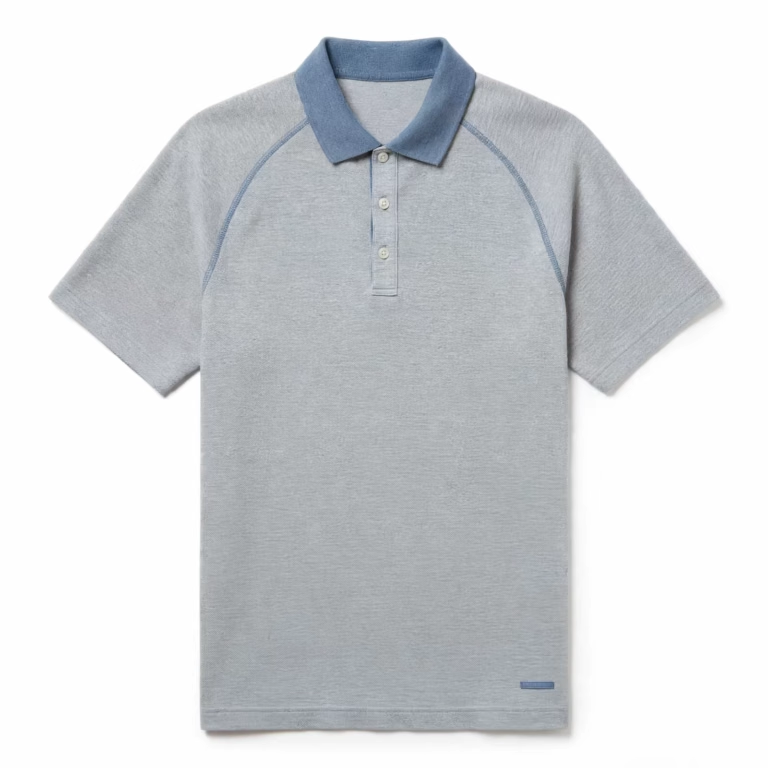
A grey polo earns its place in a range by being easy to wear with everything, and this one adds the detail that stops it being ordinary: a dusty blue collar in a woven chambray cloth, set against a soft grey melange body. It reads casual, considered and quietly different from the plain polos around it.
Siatex sews it in Bangladesh for brands that build their basics carefully. The melange depth, the collar shade, the button choice and the grading all follow your specification, because a staple product is exactly where a buyer’s own standard shows most clearly.
A Melange Grey With Real Depth
The body is a light, cool grey melange: pale grey yarns flecked with white and slightly darker grey fibres, giving the surface a fine mottled grain instead of a flat colour. It is the kind of grey that pairs with denim, chinos and tailoring alike.
Melange quality lives in the yarn. The flecking has to sit inside the yarn itself, evenly blended, so the grain looks the same at the chest, the sleeve and the back. We knit from melange yarn spun for this cloth, not from a printed imitation, and the difference survives every wash.
The Blue Collar, in Chambray
The collar is the signature: a solid dusty blue, muted like worn denim, cut not from the body knit but from a woven chambray-textured cloth. The change of texture at the neck is subtle and deliberate, and it is what buyers notice first when the shirt comes off the rail.
The collar folds in the classic polo shape with two short, softly pointed leaves and no tipping or piping at the edges. Inside the stand the blue continues, slightly deeper in tone, and the collar is set to lie flat and keep its points through washing.
Three Buttons on a Short Placket
The placket is short and narrow, ending in the upper chest, and carries three small round off-white buttons with a soft sheen. Against the grey body and the blue collar, the pale buttons keep the front clean and light.
Placket work is checked button by button at the finishing bench: spacing even, stitching straight, buttons sewn to survive daily fastening. A polo is opened and closed thousands of times in its life, and the front is built for that count.
Raglan Seams From the Collar
Curved raglan seams run diagonally from the collar toward the sleeves, front and back. They give the shoulders a soft, easy line, remove the shoulder-point seam of a standard set-in sleeve, and add to the relaxed character the collar starts.
Raglan construction also helps the fit across sizes: the diagonal line follows the shoulder rather than ending at a fixed point, so the shirt sits comfortably on different builds. The seam stitching is kept fine and even so the line reads as design, not repair.
Plain Sleeve Hems, a Straight Hem
The short sleeves end in plain narrow stitched hems in the same grey melange, with no band and no tipping: the design keeps its one contrast at the collar and lets the sleeves stay quiet. The bottom hem is straight, plainly stitched, with no side vents.
Low on the wearer’s right side, just above the hem, sits one small horizontal woven tab in the same dusty blue as the collar, with a finer darker line through it. It is the only other accent on the garment, placed where a hand passes it, and it ties the hem back to the collar story.
No Pocket, on Purpose
There is no chest pocket. On a melange this fine, a pocket interrupts the grain and fights the raglan line, so the chest stays clean and the collar keeps the whole of the attention.
Buyers who need a pocket for a workwear version can add one at sampling, pattern-matched from the same melange so the grain runs true across it. The base design, though, is deliberately plain, and most ranges keep it that way.
The Cloth: Fine Jersey, Matte
The body cloth is a fine, smooth jersey with a micro-grained melange surface and a completely matte finish. It sits between a tee and a piqué polo in character: softer and smoother than a classic piqué, with more body than a plain single jersey.
Weight is set at sampling. Most buyers take this pattern in a light-to-medium weight for spring and summer ranges; the same pattern sews cleanly in a heavier jersey for cooler markets, with the collar cloth held constant so the design reads the same.
The Back, Kept Quiet
The back is one clean melange panel with the raglan seams continuing their diagonal and the blue collar sitting above it. Nothing interrupts the grey, which makes the shirt easy to fold, easy to display and easy to pair in a buyer’s own photography.
The back length matches the front on a straight hem, so the shirt wears tidily tucked or untucked. For buyers adding their own back print or embroidery, the panel is cut flat and stable for that work.
Your Label Under the Blue Stand
Inside the back neck, below the blue collar stand, your own woven label is sewn in your artwork. In our pictures it reads YOUR LABEL, because that space carries your brand, your size marking and your care wording, not ours.
Label artwork is approved before the first sample is sewn. The approval also covers size pips and the small side tab if you want it in your own colours, so every branded detail arrives consistent across the order.
Fit and the Size Run
The fit is regular and straight: moderate width through the chest and waist, sides running nearly straight down, and the body finishing at hip length. It is the forgiving block that suits the widest customer base in a casual range, from younger buyers who wear it loose to older customers who want room through the middle without sizing up.
Sizes run on your chart, with the raglan line and the collar graded to hold their proportions at every size. Send your measurements, and the sample is made to them; your fit comments govern the run that follows.
Made in Bangladesh, Checked at the Bench
Production runs in our own Bangladesh lines, where melange jersey and woven collar cloth are handled by machinists who sew this combination daily. Cutting keeps the melange grain running the same way on every panel, and the first garment of each size is checked against the approved sample.
Bangladesh gives the order its honest cost base and its depth of knitwear skill. Shade, collar setting, button spacing and tab placement are all verified before packing, so what arrives matches what was approved.
From Sample to Signed Order
Sampling begins with your collar shade, your melange depth and your size chart. The first sample is measured and photographed, then sent for your approval of fit, colour and collar cloth.
Corrections are made, the sample is re-approved, and only then does bulk cutting start. Buyers can stock this polo beside the royal blue and tan versions in the same catalogue, knowing each colourway is sampled with the same discipline.
Companion Polos on the Rail
For a stronger colour story, the Custom Men’s Royal Blue with Red Piping Polo Shirt carries its contrast in piping and collar bands. The Custom Men’s Soft Tan Polo Shirt offers a warm neutral with a striped band collar.
The Custom Men’s Soft Pink Polo Shirt covers the pastel slot with a flap pocket. For trade research, the International Trade Centre publishes market data for your target countries.
Questions Buyers Ask About the Grey Polo
Buyers ask whether the chambray collar washes like the jersey body. The collar cloth is pre-shrunk and tested with the body panels, so the two cloths age together and the collar keeps its shape and shade against the grey.
They also ask whether the melange can run deeper or paler. It can: the fleck balance is set at yarn stage, so a paler silver grey or a deeper charcoal-leaning melange follows the same pattern with the same blue collar.
Keeping the Grey Bright
Melange jersey keeps its depth washed cool, inside out, with similar colours, and dried away from harsh sun. The care instructions are yours to word, and we sew in the label your market expects.
The collar cloth is chosen to hold its dusty tone through the same cycle, so the contrast the buyer approved is the contrast the customer keeps. A polo that looks the same at the twentieth wash as at the first is the one that gets reordered.
Two Cloths, One Garment
Sewing a woven collar onto a knitted body is the technical heart of this design. The two cloths behave differently under the needle and in the wash, so the collar is cut with its own allowance, set with a stabilised seam, and pressed to sit into the jersey rather than on top of it.
That work is invisible in the finished shirt, which is the point: the collar simply looks right, wash after wash. It is also why the sample stage matters for this pattern: collar setting is approved on a sewn garment, never from a swatch alone.
Where This Polo Sells
The grey-and-blue combination sits in the broadest part of casual menswear: weekend ranges, resort and golf-adjacent lines, uniform-adjacent casual programmes and any rail where a buyer needs a neutral with a signature. It photographs well, folds well and pairs with the trousers customers already own.
Because the contrast is confined to the collar, the shirt also takes a chest embroidery cleanly if a buyer’s programme needs one, placed on the left chest over the melange where the grain carries stitch work without distortion.
Packing the Two-Tone Detail
Each polo is folded with the collar set and protected, so the blue arrives crisp against the grey rather than crushed into it. Cartons follow your size ratios and markings, and mixed colourway orders across the polo catalogue are packed to the split you set.
That care at the last stage protects the first impression: the collar is what the customer sees when the bag opens, and it should look exactly as it did on the sample table.
Start Your Grey Polo Order
Send your size chart, your collar shade reference and your label artwork, and the first sample comes back for your approval before any bulk cutting. The pattern is resolved, the cloths are proven together, and the line is ready.
That is how Siatex works as your manufacturer in Bangladesh: your level, your quality, your fabric, your design and your measurements, sewn into a staple polo with one memorable detail. Reorders run from your approved sample and your stored grading, so the tenth order matches the first in shade, collar setting and fit, and your customers meet the same shirt every season they come back for it.