
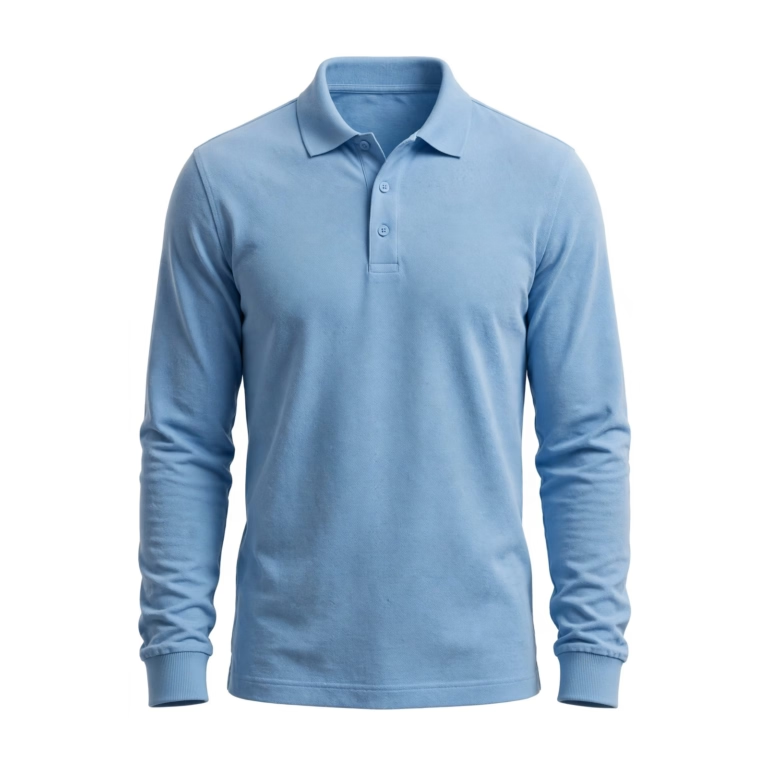
Custom Mens Ice Blue Polo Shirt Manufacturer in Bangladesh for Staff, Leisure and Own-Label Ranges
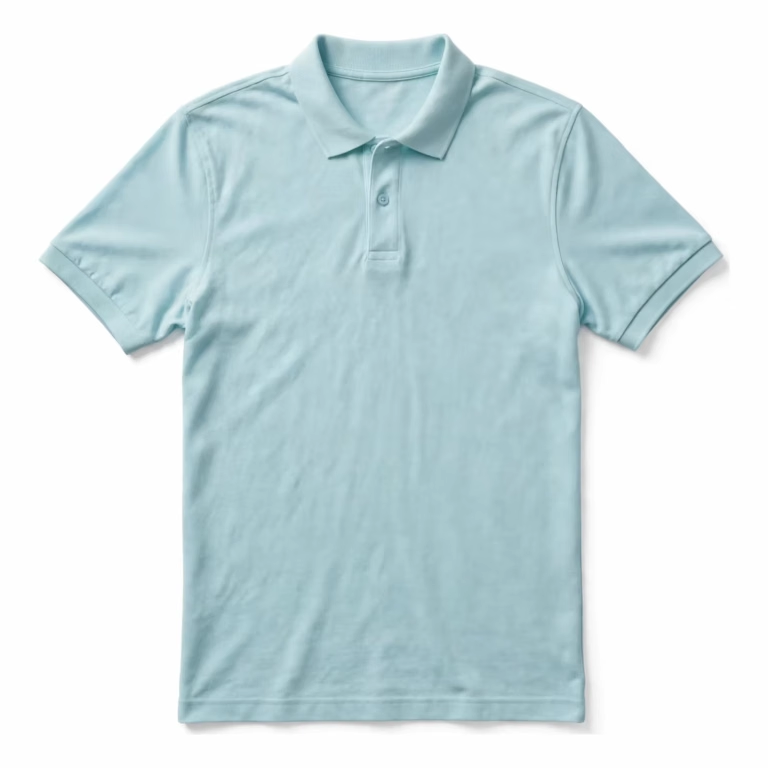
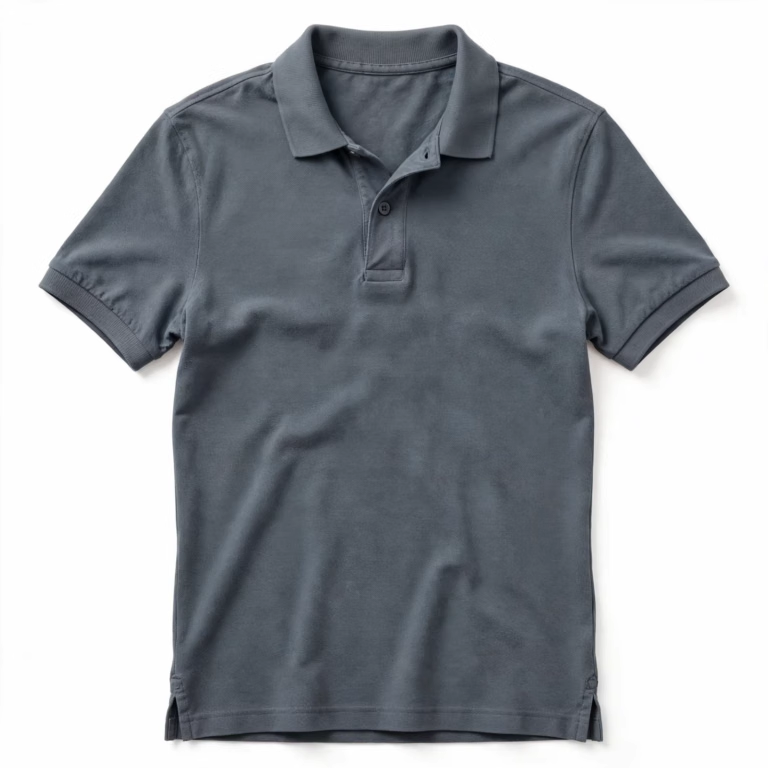
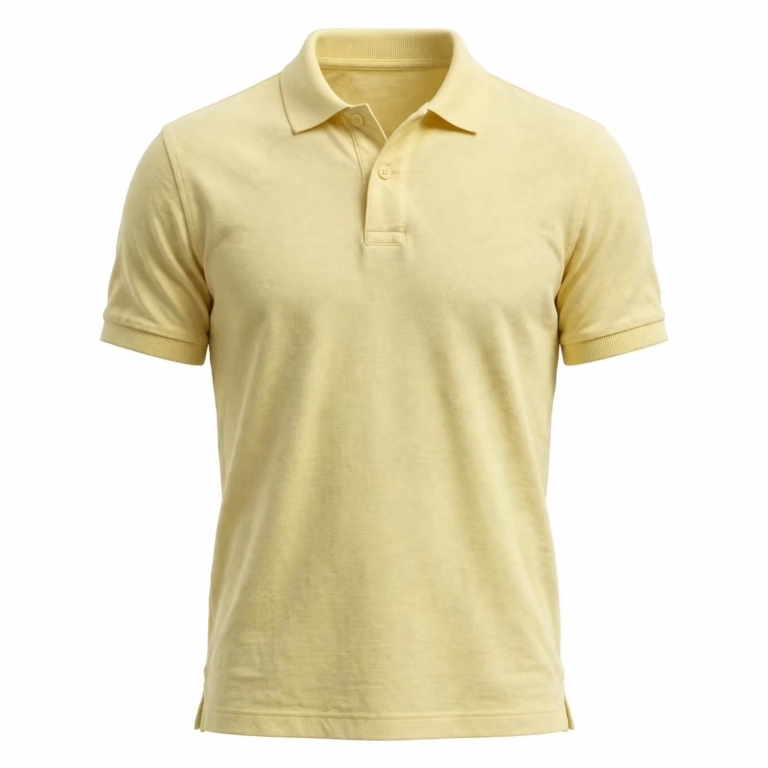
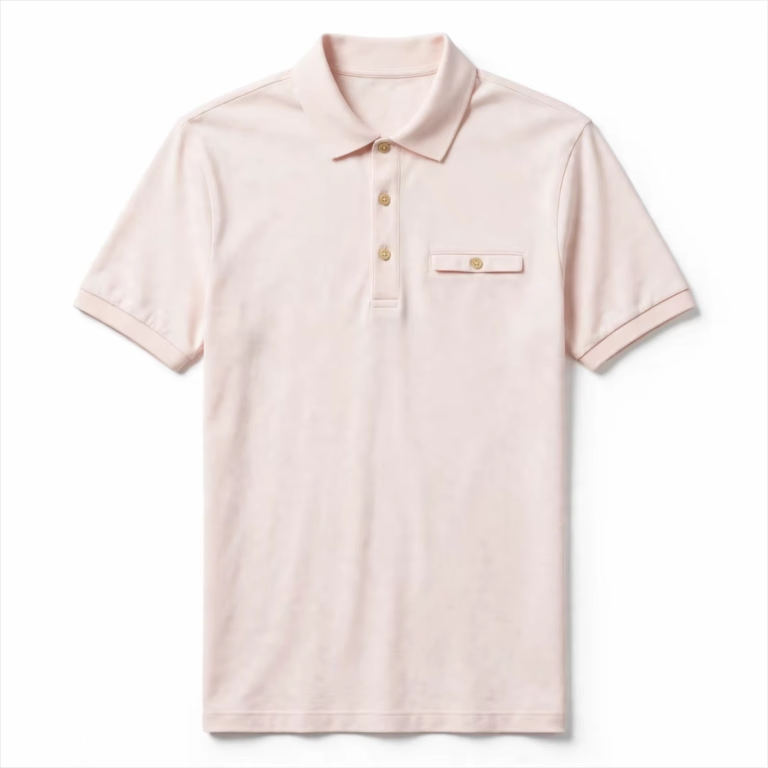
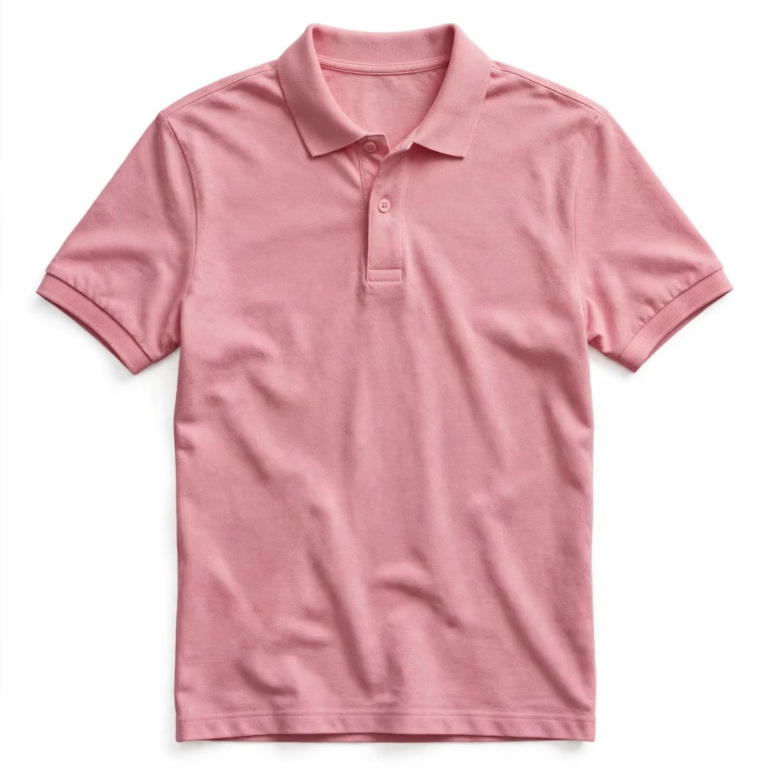
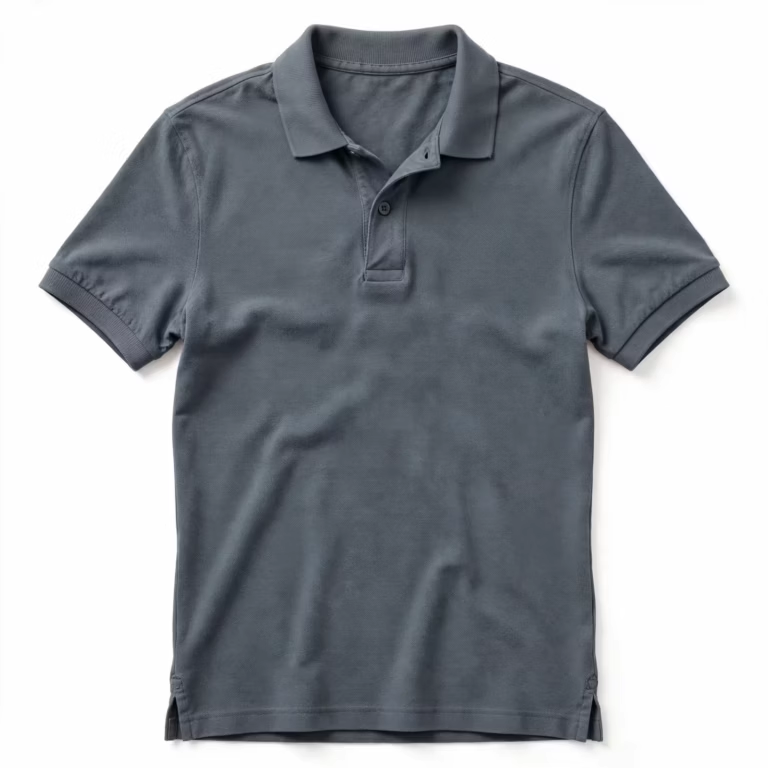
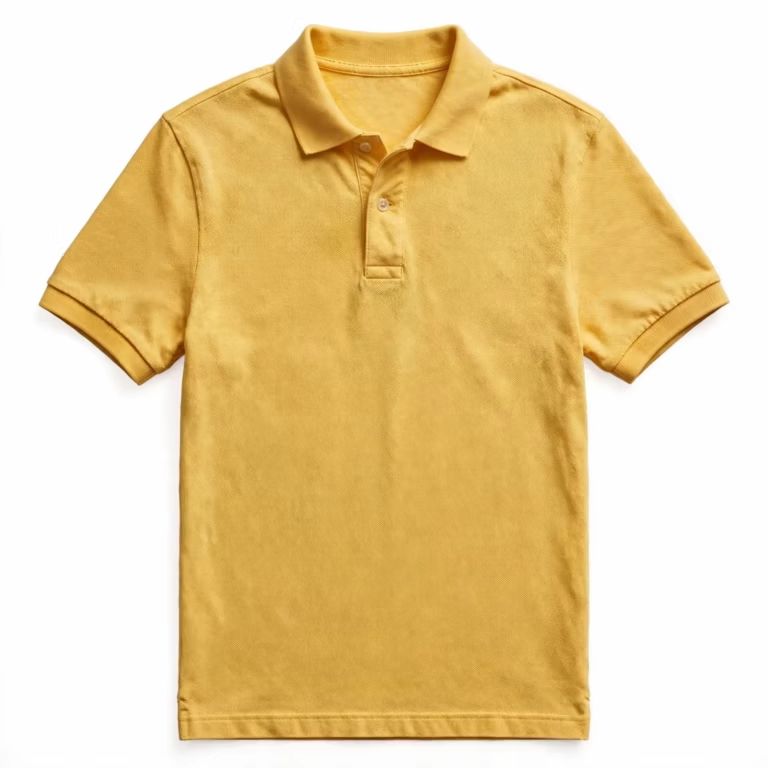
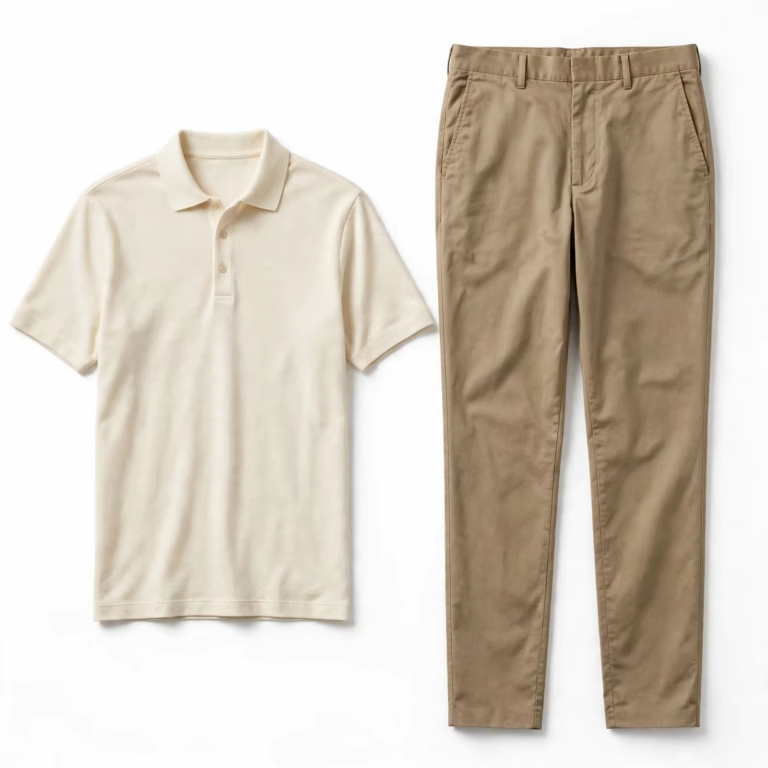
A pale polo lives or dies on two things: the shade has to be exactly the cool blue that was ordered, and the collar has to sit like a polo collar should. This one is a classic two-button polo in ice blue pique, built boxy and graded on your chart.
Nothing here is overworked: a ribbed collar, a short placket, plain sleeves and a straight hem. As your custom mens ice blue polo shirt manufacturer in bangladesh, we build it at your level: your quality, your fabric, your design, your measurement.
A Cool Pale Blue, Dyed Before Knitting
Ice blue is a soft aqua-blue, pale without washing out, and it is dyed into the yarn before knitting so the colour runs through the pique instead of sitting on its surface. Pale shades show dye faults first, so the standard is checked before a panel is cut.
That through-colour matters at the collar and cuffs, where a surface-dyed cloth would show a paler core at the fold. Here the blue is the same at the edge as it is on the chest.
The Collar That Makes It a Polo
The collar is ribbed, knitted in the same ice blue, and set to lie flat with its points even. A polo collar that curls or stands away from the neck makes the whole garment look tired, so the collar is checked on the finished shirt, not on the roll.
Below it, the placket carries two buttons in a matching tone, stitched straight and finished cleanly at the base. Open or closed, the front reads tidy, which is the entire point of a polo.
Who Orders a Pale Blue Polo
This shade earns its keep across more programmes than most. Regular buyers include:
- Hospitality and service brands dressing staff in a cool, clean colour
- Leisure and resort ranges built around pale summer shades
- Corporate programmes that want colour without a loud logo wall
- Own-label brands running a classic polo in a soft colour story
Each of them embroiders or prints their own mark on the chest. The garment underneath has to be consistent enough that the mark is the only variable.
Boxy Proportions, Straight Sides
The body is boxy in the current cut: wide through the chest, the same width down to a hem that finishes at hip level. It sits comfortably over trousers and shorts alike and photographs the way buyers now expect a polo to look.
Straight side seams keep the shirt hanging evenly, open or buttoned. A polo that twists at the placket is a return waiting to happen, so seam alignment is part of the final check.
Sleeves That Sit Easy on the Arm
The sleeves are set in and short, hanging down alongside the body at a natural angle, finished with plain narrow hems rather than tight ribbed bands. They sit comfortably on the arm without gripping it.
Sleeve length and opening follow your chart. Staffwear buyers often grade the sleeve differently from leisure buyers, and the pattern carries your figure through every size.
Pique Knit With a Light Crinkle
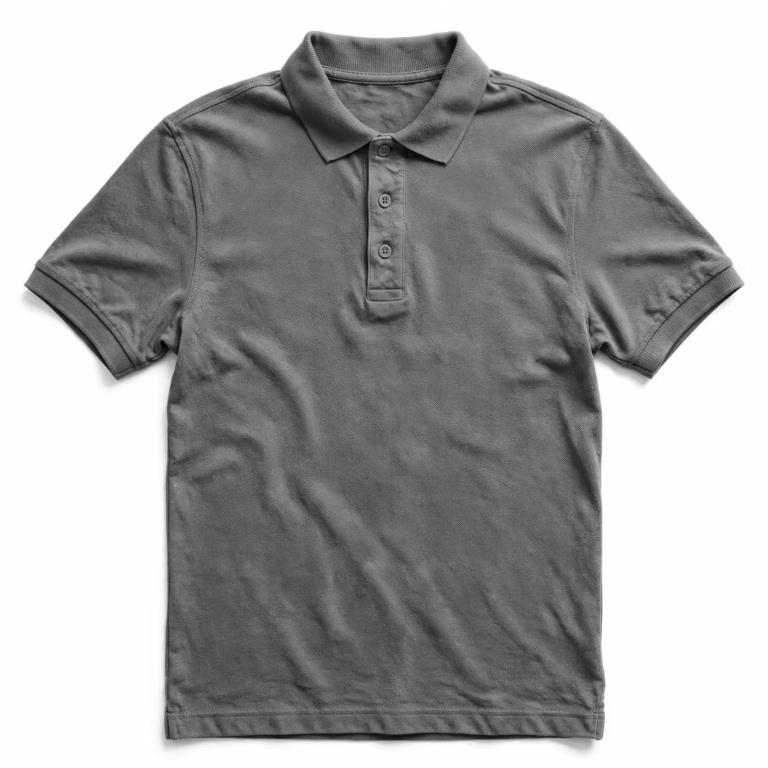
The cloth is a cotton pique, the small open knit that lets air move and gives a polo its dry hand. Look at the fabric picture: the pique cells are small and even, at the scale a hand-span of real cloth shows.
A light natural crinkle runs through the surface, so the pale blue reads as cloth with life in it rather than a flat sheet. It also keeps the shirt presentable out of the bag, which staffwear buyers quietly depend on.
A Straight Hem, Never a Ribbed Bottom
The bottom is a plain straight hem, stitched level all round. On our polos the hem is always a hem: a ribbed bottom would pull the shirt in at the waist and change the whole hang of the garment.
Worn tucked or untucked, the hem sits where a hem should. Side vents can be added on your instruction when your programme wears the shirt untucked over trousers.
Your Chart Sets Every Measurement
Sizes run from XS to XXL as standard, graded step by step from the chart you send us. Chest, body length, sleeve and collar all follow your figures, and extended sizes join the same curve when a staff range needs them.
Because the grading is yours, this polo sits in your range beside your other colours and styles without a fit argument between them. One chart, one fit story, every garment.
Your Label Sewn Below the Collar
Inside the back neck sits a black woven label with your label in white capitals, sewn flat under the collar. The wearer meets your name there every morning the shirt goes on, which is the quietest branding a garment carries.
Size and care labels follow your artwork, and bags, tickets and barcodes are set from your files. The polo leaves Bangladesh ready to embroider, or ready to hang, under your label alone.
Checked Collar, Placket and Panel
Finished polos are checked on the table against the chart: chest, length and sleeve measured, collar points compared, placket alignment confirmed, and the pale panels inspected for marks or shade variation.
The final pass covers:
- Collar flat, points even, placket straight
- Chest and length true to the chart at each size
- Panels clean and even in the pale shade
- Hem level, sleeves even, buttons secure
Approved shirts are folded with the collar dressed, and packed to your instruction with sizes separated and marked.
This Polo Beside the Wider Polo Family
The ice blue sits in a polo family built on the same block. The dark red polo shirt takes the deep end, while the grey V-neck pocket t-shirt covers the casual tee end of a staff range.
For tees in pale shades there is the sky blue pocket t-shirt, and for a patterned option the blue vertical striped t-shirt. A buyer can dress a whole team from this family, all graded on one chart.
Shade Held Steady Across Reorders
Staffwear lives on reorders, and a pale blue that drifts between orders shows immediately when old and new shirts stand side by side. We hold your approved ice blue standard on file and check every yarn lot against it before knitting.
If a lot reads off the standard, it is corrected before cutting. The polo in your tenth order stands next to the polo in your first without a visible difference, which is what a uniform programme actually needs.
Embroidery Sits Clean on the Pique
Most of these polos carry a chest embroidery, and the pique takes it well: the knit is stable enough to hold a stitched logo without puckering when the backing is set correctly. The chest panel is plain and even for exactly that reason.
Embroidery position follows your instruction, measured from the placket and the shoulder seam. Samples are stitched before bulk so you approve the mark on the real garment, not on a swatch.
Folded With the Collar Dressed
The polos fold to a standard retail fold with the collar dressed flat, and pack by size with stickers and carton marks from your artwork. A uniform store and a retail stockroom both receive them in working order.
Packing follows your instruction: single pieces in printed bags, ratio packs for wholesale, or folded sets for retail. Barcodes print from your files so the goods scan straight into your system.
Warm Climates Are Its Home Ground
Pale blue and pique were both made for heat. The open knit lets air through where a flat jersey would hold it, and the pale shade reflects the day instead of absorbing it, which is why this polo sells hardest in warm regions and summer programmes.
Resort, marina and outdoor-service buyers run it season after season for exactly that combination. It looks cool in the plain sense and behaves cool in the literal one, and staff who wear it all day notice the difference by the second hour.
Buttons Matched to the Shade
The two placket buttons are dyed to sit quietly in the ice blue rather than contrast against it. On a pale garment a dark button shouts, and a white one looks like a replacement; a matched button keeps the front calm and lets an embroidered mark do the talking.
Buttons are sewn with a small shank so they sit flat and fasten easily, and a spare is carried on the care label on request. It is a small detail, and it is the kind staffwear buyers check first because their wearers notice it daily.
One Polo Across a Whole Team
A single style that grades cleanly from XS past XXL lets a buyer dress a whole team from one order line. The boxy body is forgiving across builds, the collar keeps every wearer looking uniform, and the extended sizes follow the same curve rather than a separate block.
That is why this polo is specced the way it is: not as a fashion piece, but as a garment a hundred different people can wear on the same morning and look like one team, in one shade, with one collar line. Consistency across bodies is a design decision, made here at the pattern stage.
What Buyers Ask Before Ordering This Polo
Is the bottom ribbed? No. The hem is a plain straight hem, as on every polo we build; a ribbed bottom changes the hang and we do not use it.
How pale is the blue? A clear ice blue with an aqua cast, dyed to your approved standard before knitting. It reads as a colour against white, never as a washed-out near-white.
Can the block run in my colours? Yes. Ice blue is this garment; the same boxy polo builds across the polo family colours or in a shade dyed to your own standard.
A Classic Polo in a Cool Shade, Done Properly
Strip it back and this is a classic garment done with care: a two-button polo in pale ice blue pique, boxy and straight-sided, with a collar that sits flat, buttons matched to the shade and a colour that holds across orders. Staff and leisure buyers build on it season after season because it does not surprise them.
We make it in Bangladesh for export buyers who dress teams or sell under their own label, to the standards of trade described by bodies such as the International Trade Centre. Send your chart, and the first sample will show the shade, the collar and the fit your programme needs, measured and checked before it leaves our table for your approval.