
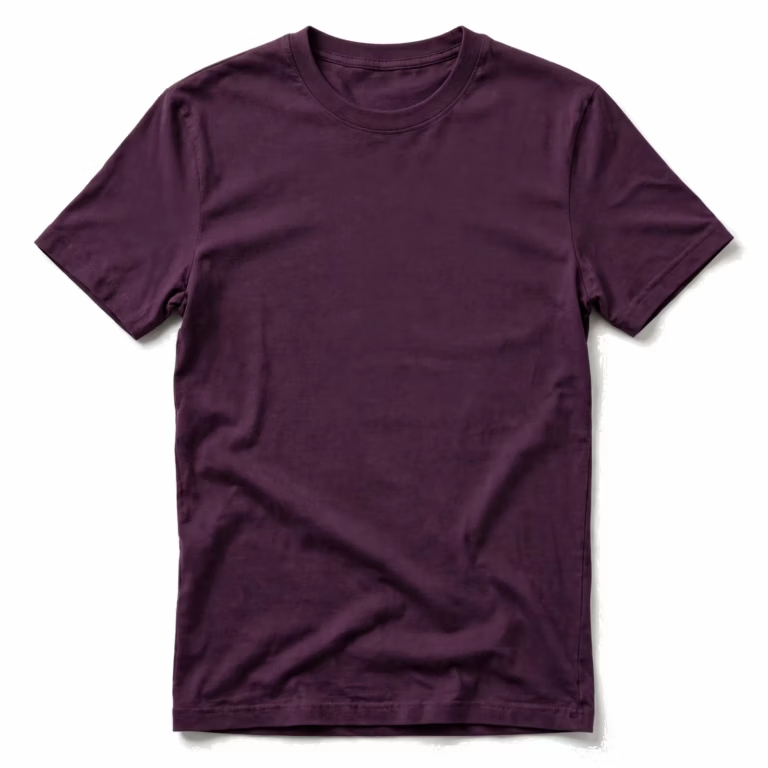
Custom Mens Limestone Yellow Blank T-Shirt Manufacturer in Bangladesh for Soft-Colour Basics Ranges
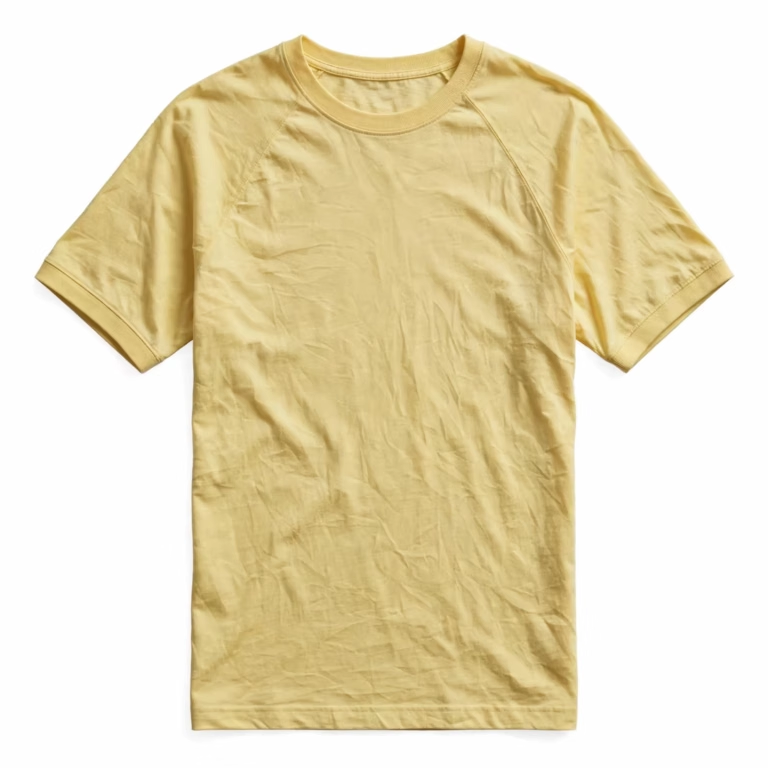
Not every blank needs to shout. This one comes in a soft limestone yellow, cut with raglan sleeves and left completely plain, so it sits as easily in a spring basics range as it does under a print.
Siatex works as a custom mens limestone yellow blank t-shirt manufacturer in bangladesh for own-label ranges, print shops and promotional buyers. Your shade, your fit block and your label are settled at sampling, then held steady across every repeat order.
A Quiet Yellow That Still Gets Noticed
Limestone yellow sits between lemon and sand: warm, soft and easy to wear against most skin tones. It gives a range a light colour that is not white, which is exactly where many basics programmes have a gap.
Because the shade is muted, it pairs with navy, olive, stone and denim without fighting them. Buyers use it as the soft story in a colour pack while the stronger colours carry the noise.
The Raglan Shoulder, Borrowed From Sportswear
The diagonal seam from neckline to underarm is the raglan line, taken from sports kit because it lets the arm swing freely. On a plain blank it also gives the shoulder a clean, athletic shape that a set-in sleeve cannot copy.
There is no seam sitting on top of the shoulder to rub under a bag strap or a jacket. The line reads neat from the front and keeps its shape because the seam itself carries the structure.
Crinkle in the Cloth, Character on the Rail
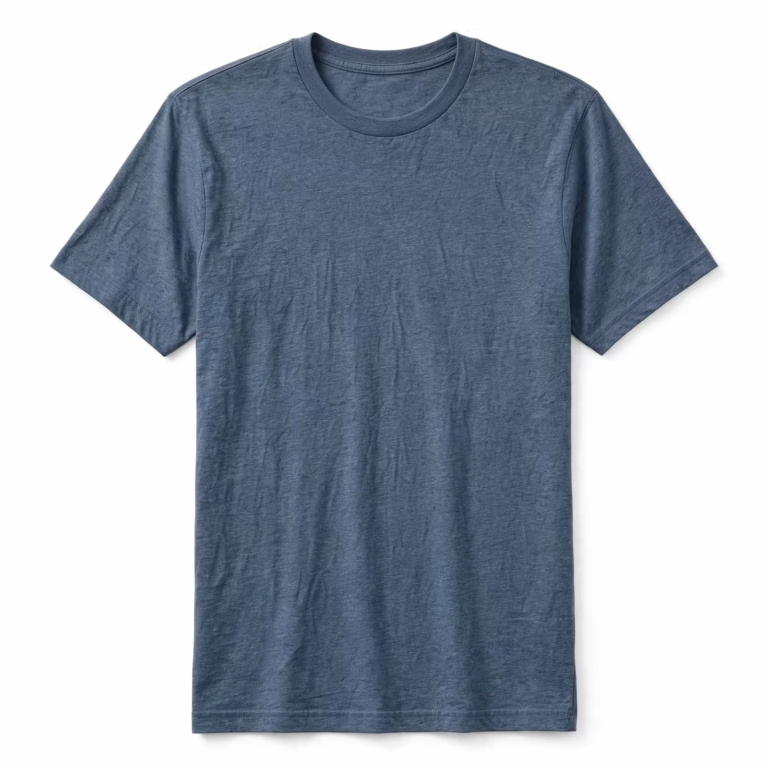
The single jersey is knitted and finished so the finished garment holds a natural crumple all over. Held up to the light the surface breaks into soft highs and lows instead of one flat shine.
That texture is practical as well as good-looking. Minor creases from folding and travel disappear into the crinkle, so the tee comes off the shelf or out of a suitcase looking the way it should.
A Neck Band Dyed in the Same Lot
The crew band is cut from the same cloth and dyed in the same lot as the body. On a pale colour a band even slightly off shade shows at once, so body and band are never allowed to drift apart.
The band is narrow and sits close, with a fine ribbed look and a stitched edge. It is cut to recover after stretching over the head, so the neckline stays tidy through the garment’s life.
Sleeve Ends Finished Plain and Simple
- Raglan short sleeves ending on the upper arm
- Plain folded hem bands, about two centimetres deep
- No cuff, no rib and no elastic anywhere on the sleeve
- Straight level body hem with twin-needle stitching
The plain folded end keeps the whole garment in one fabric and one colour. Nothing interrupts the yellow, which is the point of a true blank.
Where This Soft Yellow Blank Works Hardest
Resort and holiday ranges take it because the colour reads like sunlight without glare. Cafes, bakeries and garden brands take it for staff tees that feel warm rather than corporate.
Print shops like it as a soft base for water-based inks and tonal prints. A white or cream print on limestone yellow gives a gentle contrast that bright blanks cannot offer.
Print Behaviour on a Crinkled Surface
Screen print, DTG and embroidery all run on this jersey, and the crinkle settles under a press the same way it settles under an iron. We recommend a strike-off on the actual cloth before any decorated bulk, and we make that sample on your own fabric.
If the tee is to be sold plain, the crinkle is the decoration. Either way the surface is honest cotton, with the yarn and fibre visible the way a buyer expects from a real garment photograph.
Your Measurement Chart Runs the Grading
Sizes are graded from the chart you send, not from a house block you have never seen. Chest, length, sleeve and neck opening follow your numbers size by size, and the graded set is checked against the chart before a single bulk panel is cut.
If your range runs a slim block for one market and a regular block for another, both are held on file under your name. Re-orders come back to the same numbers without a new conversation.
Held to Your Shade Standard, Order After Order
Your approved yellow is kept as a physical standard in our dye file, with the lab dip that matched it. Every new lot is compared against that standard in daylight and under store light before cutting starts.
Soft colours drift more visibly than dark ones, so the check matters. A limestone yellow that creeps toward lemon or toward beige is rejected at the lot stage, never argued about at delivery.
The Label Your Customers Learn to Trust
Inside the back neck sits your own woven label, black with your name in white, sewn in before the garment is folded. Size and care labels follow your wording and your market’s rules.
It is a small thing that changes how the garment is read. A blank with a proper woven label sells as a brand’s own product, not as an anonymous promo tee.
Cut and Sewn Under One Roof
Cutting, sewing, checking and packing happen on our own floor in Bangladesh, with inspection at the panel stage, at the machine and again before folding. A fault found at the panel stage costs a panel; a fault found at packing costs a garment, so the checks sit early.
Needle lines, seam strength and measurement are sampled through the run, not only at the end. The carton that reaches you has already passed the checks your own QC would run.
Re-orders skip the sampling stage once your file is complete: shade standard, chart and label artwork are already approved, so a repeat order moves straight to cutting.
Try the Shade on a Sample First
A colour like this should be judged in the hand, not on a screen. Samples are made in your yellow, on your chart, with your label, so the piece you approve is the piece the bulk is matched against.
Tell us if the shade should lean warmer or cooler and the lab adjusts before bulk dyeing. Once the sample is signed, that exact shade becomes the standard for every later order.
Built Beside Its Blank Tee Family
This raglan blank sits in a wider family of own-label tees made the same way. The same cut in a vivid orange is the Orlando orange raglan blank tee, and the deep green version is the glassy green blank t-shirt.
For cooler stories there is the sky blue long sleeve t-shirt, and for a pocket detail the fern green pocket t-shirt. One pattern family, one label standard, a full colour wall.
What Buyers Usually Ask Before Ordering
Can the yellow be matched to our brand colour? Yes. Send a swatch, a Pantone reference or a garment, and the lab dip is made against it; bulk starts only after your approval of the dip.
Is the crinkle a coating that washes out? No. The texture is in the knitted cloth and its finish, so it stays through washing the way the garment’s own character does.
Can we mix this style across several colours in one order? Yes. The same block runs across the blank family, so a colour pack shares grading, labels and packing rules.
Packed Flat, Ready for Your Warehouse
Each tee is folded flat, bagged and cartoned to your packing instruction, with your size ratios and your carton marks. Folded pieces keep the crinkle because nothing is pressed flat under heat.
If your warehouse works to a barcode or a polybag print, send the artwork with the order. The packing line works from your sheet, checked against the first carton before the run continues.
Trade Buyers and Fair Sourcing
Export orders are handled with the documentation your market requires, and our sourcing follows the fair-trade principles promoted by the International Trade Centre for small exporters in developing economies.
Production is always in Bangladesh, in our own unit, and the garment is made to order for your programme. Nothing is pulled from a shelf of ready stock in another brand’s specification.
Wash Behaviour, Checked on the Actual Lot
Pale colours are judged harshly after washing, so the dye lot for this blank is wash-tested before cutting. The test piece is checked for shade change and for staining against white cloth, and the lot only proceeds when both pass.
The care label then carries the instruction the testing supports. Your customer reads advice that matches how this exact cloth behaves, not a generic label copied from another garment.
Weights for Summer and for Layering
The standard cloth is a mid-weight single jersey that holds the crinkle and still breathes in warm weather. A lighter weight can be knitted for high-summer programmes, and a heavier one for tees that will be worn as a layer.
Weight changes the hand feel but not the block: the same chart, the same raglan line and the same label standard carry across. Tell us the season the range is for and the sample is made in the matching weight.
Planning a Soft-Colour Story Across a Range
One soft colour rarely sells alone; it anchors a story. Limestone yellow works as the light note beside stone, sage and washed blue, and we can run the same block across a colour set so the rail reads as one family.
Each colour in the set is dipped and approved separately, then held to its own standard. Your range keeps its balance order after order, with no single colour drifting away from the others.
Cotton Chosen for a Soft Hand Feel
The yarn is a combed cotton chosen because a pale shade shows every fault in the fibre. Short fibres and neps that a dark colour would hide stand out on limestone yellow, so the cleaner yarn is not a luxury here, it is a requirement.
The result is a surface that feels soft from the first wear and stays smooth where the crinkle settles. If your programme prefers a cotton-elastane blend for recovery, the same shade and the same block run in that cloth as well.
Set Your Yellow and We Keep It
Send your chart, your shade reference and your label artwork, and the first sample comes back in your limestone yellow for approval. From that sample onward, the colour, the crinkle and the fit are held as your standard.
That is how a blank should work: your level, your quality, your fabric, your design and your measurement, made in Bangladesh and repeated without drift every time you re-order.