
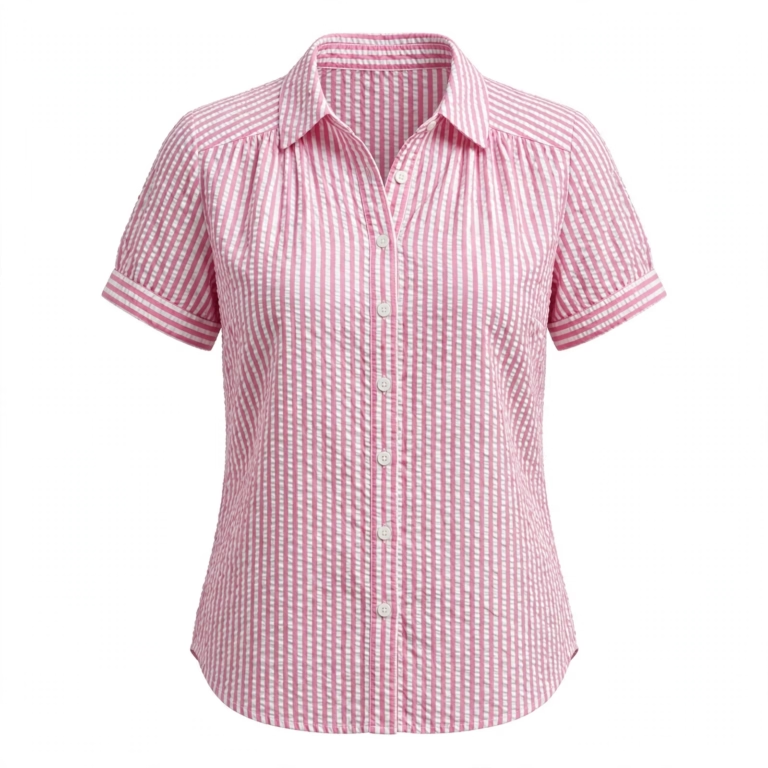
Custom Mens Light Blue Full Sleeve Shirt Manufacturer in Bangladesh for Dress Shirt Programmes in the UK and USA
The plain light blue dress shirt is the hardest-working garment in menswear, and the least forgiving to make: there is no print, no pocket and no trim to hide behind, so the collar, the cloth and the fit have to carry the whole garment on their own.
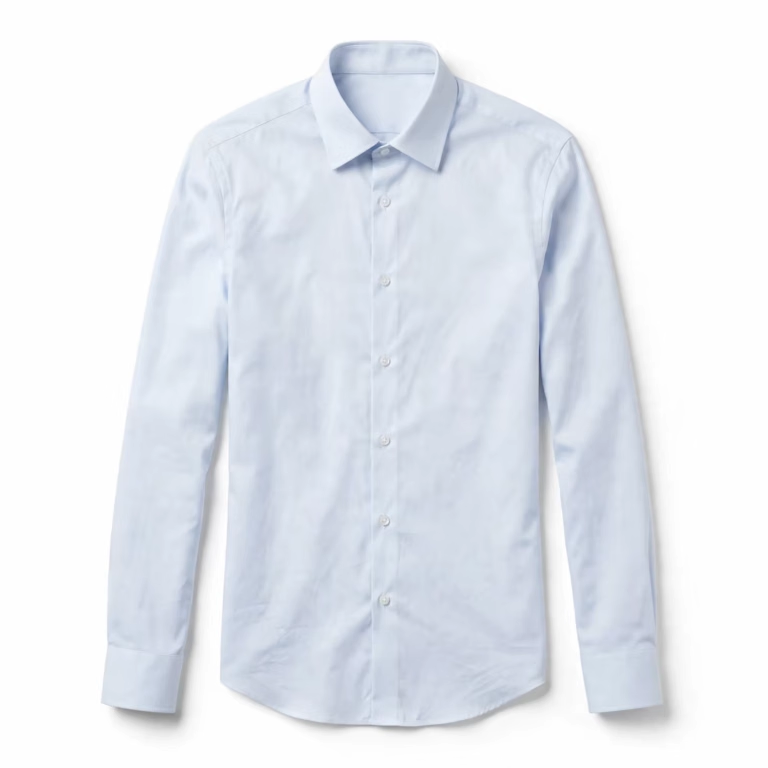
This one is built as a classic: a pale sky-blue poplin, a standard point collar, seven white buttons down a narrow placket, single barrel cuffs and a curved shirttail hem. It is the shirt every office, uniform and formal-casual range needs in volume, made properly.
A Plain Front With Nothing to Hide Behind
The front is deliberately empty. No chest pocket breaks the line, no logo sits on the cloth, and the placket is narrow and flat so the buttons read as a clean vertical rhythm from collar to hem. On a plain shirt, pressing and alignment are the design.
That plainness is also what makes the shirt so flexible for buyers. It takes a tie, it takes a blazer, it takes your embroidery if you want it, and it works as a uniform shirt, a dress shirt or the blue base of a casual range without changing the pattern.
The Point Collar and Collar Band
The collar is a standard point collar with sharp, fairly narrow points and a moderate spread, set on a proper collar band. The points lie flat against the chest, the band stands at a height that takes a tie knot cleanly, and the top button fastens without pulling.
Collar construction is where dress shirts are won and lost. The interlining weight is matched to the poplin so the points stay crisp without going stiff, and the collar is checked on the sample both open and buttoned, because a collar that only behaves one way is only half finished.
Seven Buttons Down a Narrow Placket
Seven small white buttons close the front, evenly spaced from the collar band to the hem. The spacing matters more than the buttons themselves: even gaps keep the front flat when the shirt is worn, tucked or untucked, sitting or standing.
- Seven white buttons on a narrow flat centre-front placket
- Single barrel cuffs with one button each
- A sleeve placket with its own small button above each cuff
- No chest pocket, so the front stays completely clean
The buttons are smooth resin in a clean white that sits quietly against the pale blue. Your buttons can carry your name instead, and a tinted or pearl-look button is available on the same pattern if your range wants a softer finish.
Full Sleeves and Barrel Cuffs
The sleeves are full length and straight, set in at the natural shoulder, and they finish in single barrel cuffs. A barrel cuff is the working cuff of the dress shirt: one button, a clean rectangular shape, and a placket above it with its own button so the sleeve opens properly for rolling and washing.
Sleeve length is graded with the size, not added as an afterthought. On a tailored shirt a cuff that shows the right amount below a jacket is part of the fit, so sleeve lengths are checked against the size chart at the sample stage, size by size.
The Yoke and Centre Box Pleat at the Back
The back carries a straight yoke across the shoulders and a single centre box pleat below it. The pleat is not decoration: it gives the small amount of movement room a tailored shirt needs across the shoulder blades without adding bulk anywhere else.
The yoke seam is also a fit checkpoint. It should sit level and straight, and on a plain pale cloth any drift shows at once, so backs are inspected flat before the shirts are folded. The label picture in the gallery shows the inside of the same construction, where your label sits below the collar band.
Poplin, Woven Smooth and Fine
The cloth is a smooth, fine poplin with a soft sheen: a plain weave that presses crisply, drapes cleanly and holds the pale blue evenly from collar to cuff. Poplin is the classic dress-shirt cloth because it looks formal without weight, and it washes and irons back to a flat finish.
The shade is a true pale sky blue, matched from your swatch and held across the order. Pale shades show dye-lot drift more honestly than dark ones, so cloth is checked roll against roll under the same lights before cutting, and panels from different rolls are never mixed inside one shirt.
A Tailored Fit With a Long Body
The fit is tailored: close through the chest and waist without pulling at the buttons, with a long body and a curved shirttail hem that stays tucked through a working day. The curve of the hem is part of the pattern, deeper at the sides of the tail and clean at the front.
Your grading rules decide the final shape. Send your size chart and the block follows it, including neck sizes where your market sells shirts by the collar. A regular-fit version of the same pattern is also available for uniform programmes that dress a wider range of builds.
Your Label Below the Collar Band
The branding position is the inside back neck, directly below the collar band: a black woven label with your name in white capitals, visible the moment the shirt is taken off its hanger. It is the position every wearer checks first, and it is sewn flat so it never scratches.
Side-seam care labels carry your washing instructions in your market’s format, and your buttons, hangtags and packaging follow the same artwork file. One artwork set drives the whole branding, so nothing drifts between the sample you approved and the bulk that ships.
Where This Shirt Gets Worn
Light blue is the default shirt colour of offices across the United States, the United Kingdom, Germany and France, and the same pattern serves hotel, airline and corporate uniform programmes that need a formal shirt without a logo on the chest. Buyers stock it as the permanent blue in a colour family beside white and a stripe.
It also anchors formal-casual ranges: worn open-collared with chinos it reads relaxed, and with a tie it is fully formal. That range is why plain blue shirts reorder so reliably; a buyer who finds a maker whose collar and fit are right tends to keep the programme running for years.
Other Shirts From the Same Benches
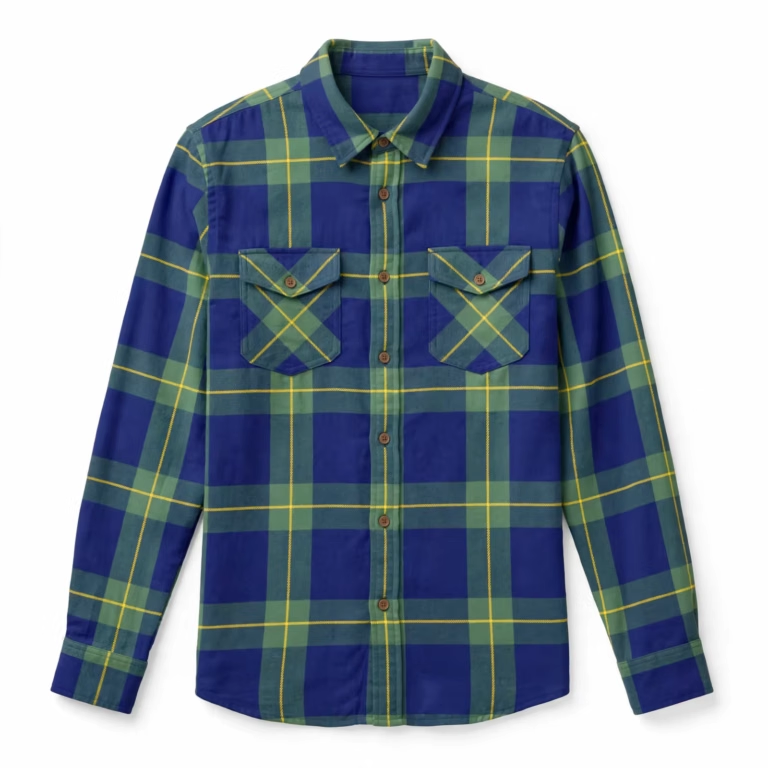
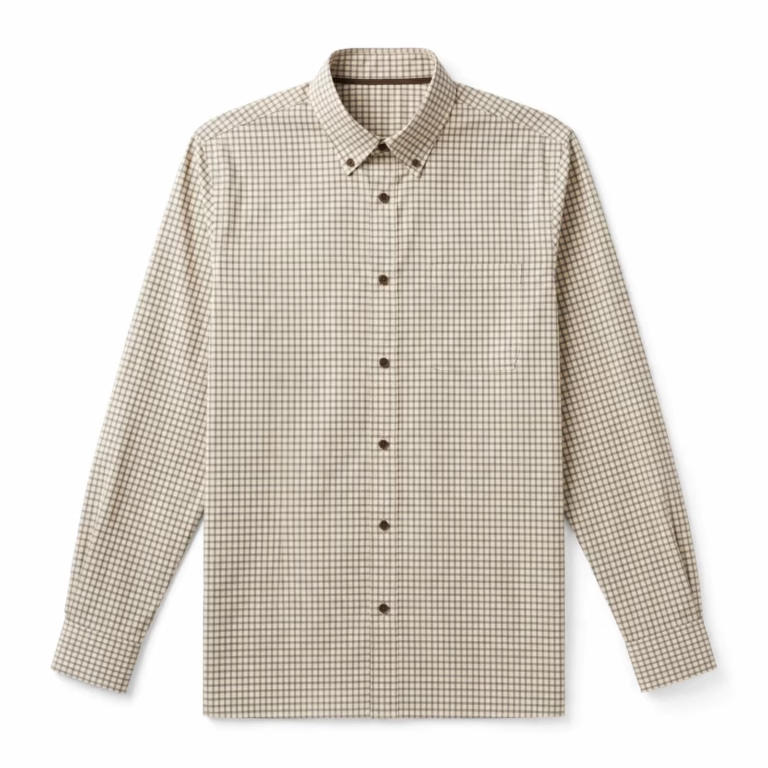
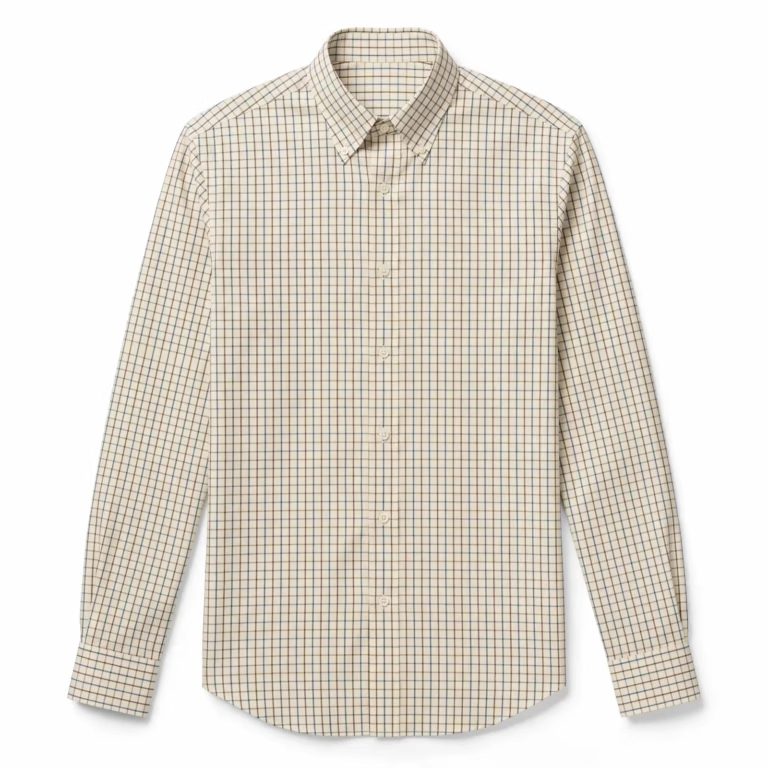
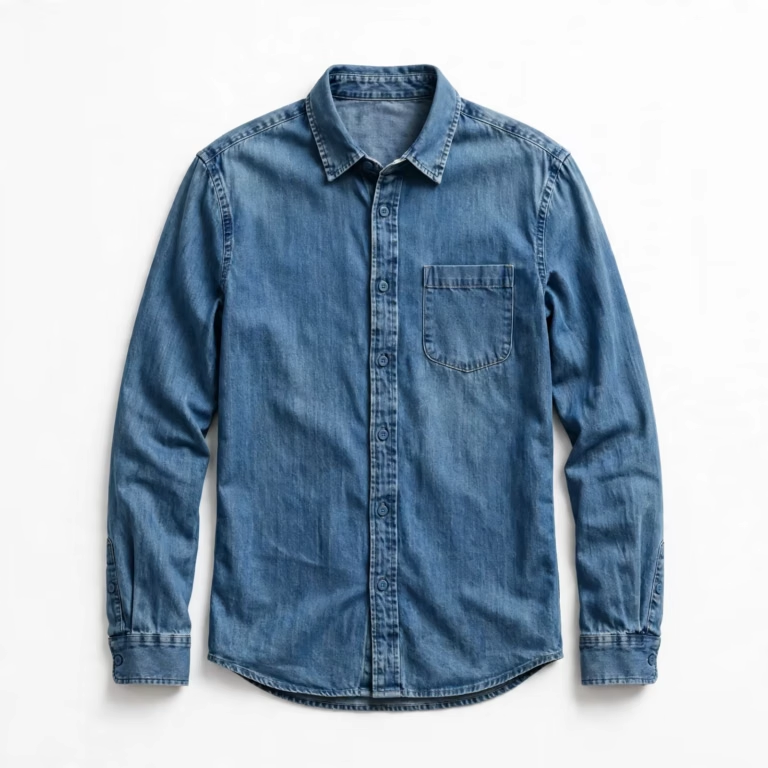
The blue, white and yellow check shirt is the patterned partner to this plain blue, the pastel green and cream check shirt covers the soft colour story, and the casual denim shirt takes the same block into workwear cloth. For knit layers over a shirt, the soft tan melange polo is the casual option.
Shirt buyers planning seasonal volumes often consult the International Trade Centre for trade data on woven shirt demand in Europe and North America. Its figures help set how deep a plain colour programme should run beside the patterned styles.
How a Sample Shirt Is Judged
A dress shirt sample is judged in a set order: collar first, then placket alignment, then sleeve and cuff, then the back yoke, then the hem curve, and only then the cloth and shade. A fault found early in that order is cheaper to fix than one found at the end, so the sample report follows the same sequence.
Photographs on a white ground come before the parcel, so you can see the collar and front exactly as your customers will. The physical sample then settles fit, cloth hand feel and button choice, and it is washed and pressed before approval so the finish you sign is the finish that ships.
Sewing and Finishing Standards
Seams are sewn at a fine stitch density suited to poplin, so the placket and yoke lines stay smooth without puckering. Collar points are trimmed and turned by hand-checked operators, because a rounded or uneven point is the first thing a shirt buyer looks for.
Finishing includes a full press with the collar shaped, buttons checked one by one, and loose threads removed inside and out. Each shirt is folded with the collar standing as it should, so it comes out of its bag ready to photograph or to hang.
Packing for Dress Shirts
Dress shirts travel best packed properly: singly folded with collar support, pinned or clipped to your specification, bagged, and cartoned by size and shade. Uniform programmes can be packed by wearer or by department where your order file asks for it.
Carton marks and barcodes follow your instructions, and assortments are built at packing rather than sorted later. Delivery dates are planned backwards from your selling or issue date, with each stage confirmed as it completes.
Questions Buyers Ask About This Dress Shirt
Can the collar style change? Yes: the same pattern takes a button-down collar, a wider spread or a cutaway, and the collar is sampled separately so you can approve it before the full shirt is made.
Can a chest pocket be added? Yes: a single open pocket on the wearer’s left chest is the standard addition, and it is pattern-matched to the body cloth so it sits quietly on the plain front.
Does the pale blue hold its shade in washing? Yes: the cloth is wash-tested at the strike-off stage, and the shade is checked after washing, not only before, so the blue you approve is the blue your customers keep.
Neck Sizes and Collar Grading
Many shirt markets sell by the collar, so this pattern grades by neck size as readily as by chest size. The collar band, the button spacing and the body proportions move together, so a 15-inch collar and an 18-inch collar are the same shirt at different sizes, not two different shirts.
Half sizes are included where your chart carries them. On a tailored garment the difference between a collar that fastens comfortably and one that pulls is half an inch, and grading that respects it is the difference between a shirt that is worn and one that is returned.
Reorders on a Permanent Colour
Plain light blue is a permanent colour, and permanent colours live on reorders. Your pattern, collar build, label setup and shade reference stay on file, so a repeat order starts from the approved shirt and the approved cloth reference rather than from a new sample round.
Shade continuity is checked against the retained reference under the same lights at every reorder. That is what keeps a uniform programme looking like one programme across years of issues, and a retail colour family consistent across seasons.
Start Your Light Blue Shirt Programme
Send your shade, your collar choice and your size chart, and the first sample comes back pressed and folded as it would ship. From the first strike-off to the final carton, this shirt is made at your level: your quality, your fabric, your design and your measurement.