
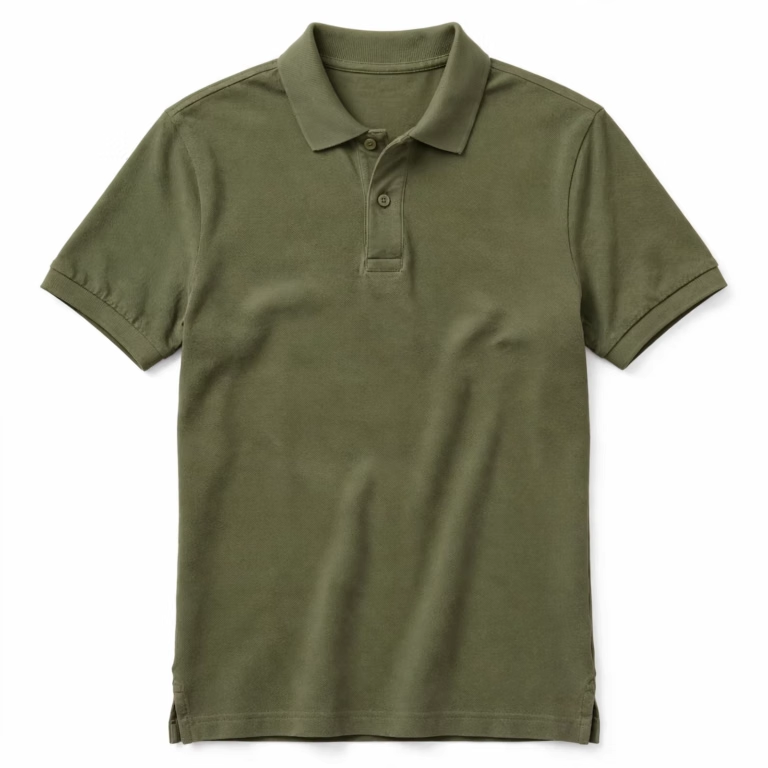
Custom Mens Plain Brown Polo Shirt Manufacturer in Bangladesh for Contrast Collar Polos in the USA and Europe
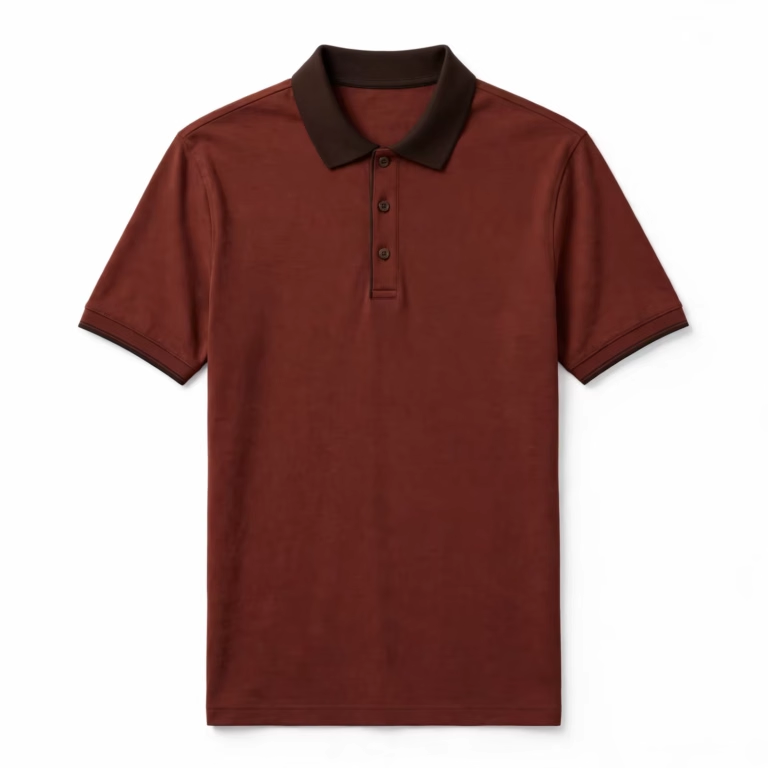
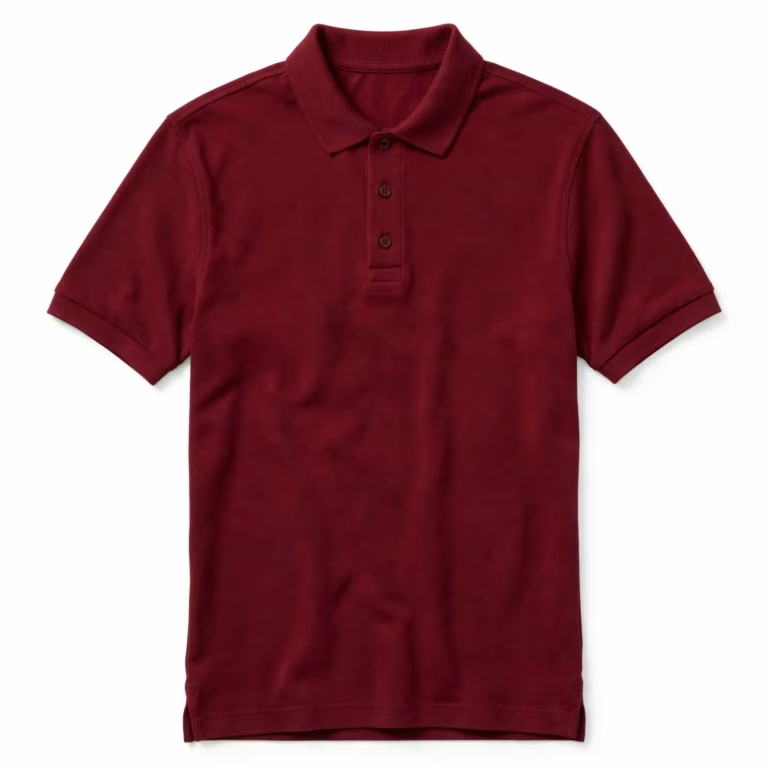
Some polos earn their place in a range by being quiet, and this is one of them: a deep reddish-brown body in a smooth fine jersey, set off by a dark espresso collar. No pocket, no logo, no print – the two browns do all the work.
Siatex makes it at your level: your brown matched to your swatch, your fine jersey, your slim-regular fit and your sizes graded on your own measurement chart. The sections below cover the colour pairing, the collar, the placket and the checks behind a plain garment.
Two Browns, One Garment
The body is a solid deep reddish-brown, closer to a dark maroon-brown than to a neutral chocolate. Against it sits the collar in a very dark espresso brown, a contrast strong enough to frame the face without leaving the brown family.
That pairing is the whole design, and it is a deliberate one. A buyer gets a polo that reads as considered and premium on the rail, while the garment itself stays a simple, repeatable blank for a private label programme.
The Espresso Collar
The collar is a classic folded polo collar with pointed leaves, knitted firm so the points lie flat. Its espresso shade is dyed as its own colour, not borrowed from the body lot, which is how the contrast stays exact across a full order.
Inside the back neck, a light greyish-white panel carries the label, a small construction detail that keeps the neck comfortable and gives the branding a clean ground. The collar stand holds the fold so the leaves sit the same on the first shirt and the last.
A Short Placket, Three Dark Buttons
The placket is short and narrow, cut in the body colour, running from the collar to the upper chest. Three small dark brown buttons close it, spaced evenly, toning with the espresso collar rather than the body.
- Three buttons, dark brown, evenly spaced
- Placket in the body colour, ending at the upper chest
- Buttonholes stitched dense for daily use
- A spare button sewn inside on request
Placket behaviour is checked on the sample worn open and closed, because a polo is sold on how that small area sits. The bulk line works to the same approved set.
Plain Sleeve Hems With a Dark Edge
The short sleeves end in plain straight hems, with no ribbed cuff. A very thin dark espresso line runs along the bottom edge of each sleeve, echoing the collar and finishing the arm without a band.
That fine line is the kind of detail that separates a designed plain garment from a merely empty one. It is knitted into the hem edge, so it cannot peel, crack or fade at a different rate from the rest of the shirt.
Smooth Fine Jersey
The body cloth is a smooth, fine jersey knit with a soft, even surface and no visible texture break. Fine jersey gives a polo a cleaner, more formal read than a coarse knit, which suits the slim fit and the dark colour pairing.
The surface takes embroidery cleanly if your programme adds a chest mark, and it stays smooth under a collar-and-tie casual brief. The weight is confirmed with you at sampling, since buyers place this style anywhere between a summer shirt and a year-round uniform layer.
A Slim-Regular Fit, Long in the Body
The fit sits between slim and regular: close through the chest and waist with a slight taper, neat shoulders that are not dropped, and a body long enough to reach the hip and stay tucked when it needs to.
The hem is straight across with a plain narrow finish and no side vents. Sizes run from XS to XXL, with the collar size and placket length graded so the proportions hold at the ends of the range.
A Plain Back With the Collar From Behind
The back is plain reddish-brown jersey with the espresso collar seen from behind and the light inner neck panel just visible under it. There is no back print, yoke detail or vent, keeping the garment as quiet from behind as from the front.
That simplicity is what lets the style move between programmes: the same shirt reads as a uniform polo in one buyer’s range and as a smart casual piece in another’s, with only the label changed.
Your Label on the Light Inner Panel
Your label is woven to your artwork and sewn inside the back neck, centred on the light inner panel where it reads clearly against the pale ground. On a garment with no other branding, that label carries the whole identity.
Care and size information follows your market’s format. Your hangtags, stickers and polybag print complete the presentation, so the polo arrives as your product in every detail.
Where a Brown Polo Sells
Deep brown is a working colour: hospitality and golf programmes use it because it hides a day’s wear better than pale shades, and casual ranges use it as the warm alternative to black. The espresso collar lifts it above a basic uniform blank.
- Golf, club and hospitality programmes
- Smart casual and autumn ranges
- Uniform edits that need a warmer dark
- Private label basics in earth tones
Because the design is two stock colours and a plain body, reorders stay simple, which is what programme buyers value most in a style like this.
More Polos From the Same Bench
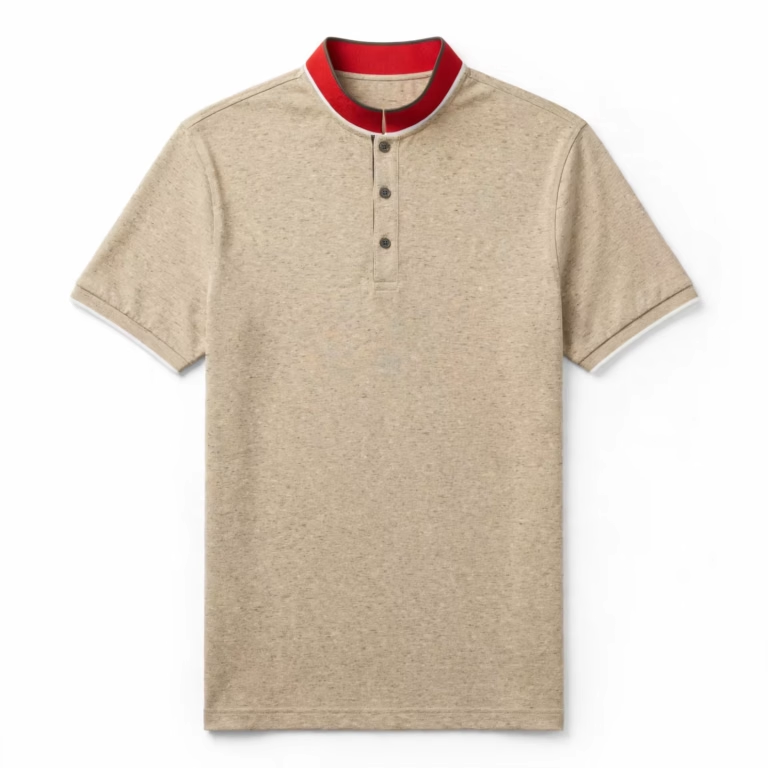
The polo bench covers the colour range widely. For a softer plain option, the soft pink polo carries a flap pocket, and the soft tan polo wears a band collar with a red stripe.
For a brighter contrast, the royal blue polo with red piping shows the piping route. Sourcing guidance for apparel buyers is published by the International Trade Centre.
Matching Two Browns in Bulk
Two-colour garments fail in bulk when the contrast drifts: a collar lot slightly lighter than the approved one changes the whole read. The dye plan therefore fixes body and collar as a pair, approved together on one strike-off card.
Cutting keeps the pairs together, and the final check reads collar against body under the same light for every bundle. A pair that does not match the card does not leave the table.
Sampling the Contrast
The sample stage settles three things: the body brown against your swatch, the espresso against its own standard, and the pair read together. Approving the colours separately is not enough on a two-tone garment, and the sample card shows them side by side.
The fit sample also confirms the taper and the longer body length worn tucked and untucked. Once colour pair and fit are signed, bulk is a production conversation.
Packing a Dark Polo
Each polo is folded with the collar set flat, sealed in its polybag with your stickers, and packed so dark shades travel without pressure marks. Cartons are marked with your references and the colour name, with body and collar shades named separately on the packing list.
Mixed earth-tone cartons are separated by shade and labelled, because browns sit close together under warehouse light. The list mirrors the carton marks line for line.
What Buyers Ask About This Brown Polo
Is the collar black? No, it is a very dark espresso brown, chosen to stay inside the brown family while giving a strong contrast against the reddish-brown body.
Can our logo be embroidered on the chest? Yes, the smooth jersey takes embroidery cleanly, and your artwork can be placed to your specification, or the chest can stay plain as photographed.
Can the body colour change and keep the collar? Yes, the espresso collar pairs with most mid and dark bodies, and the pair is re-approved on a strike-off before bulk.
Reorders on a Two-Colour Style
Reorders follow the filed pair: both dye recipes, the button shade and the measurements held with the order. The tenth delivery’s collar sits against the first delivery’s body without a visible step, which is the test a two-colour programme lives by.
That consistency is what turns a single trial order into a standing line. The style is simple; keeping it identical is the work, and it is done at the dye and checking stages, not left to chance. Buyers who run uniform and club programmes feel the difference most, because their members wear the same shirt side by side, where any drift between deliveries would be visible at a glance across a whole team wearing them together daily.
The Fine Line at the Sleeve
The thin espresso line at each sleeve hem deserves its own note, because it is the detail customers notice last and remember. It closes the design loop between collar and body, giving the arm the same two-brown story as the neck.
Because the line is part of the hem knitting rather than an applied trim, it survives washing at the same rate as the shirt itself. Small, permanent details are what make a plain garment feel finished.
A Collar Knitted to Hold Its Fold
A contrast collar only works if it behaves: the leaves must lie flat and even, wash after wash, or the two-brown idea collapses at the neck. The collar here is knitted firm with a stand that holds the fold line where the pattern sets it.
That firmness is checked on the washed sample, not the fresh one. A collar that still frames the face after washing is the collar that goes into bulk.
Washing Dark Browns
Dark shades show fading first at the edges, so the body and collar are wash-tested as a finished garment and read as a pair afterwards. Two browns that fade at different rates would break the design within a season.
The care label carries your instructions in your market’s format, and the dye recipes are chosen for matched fastness, so the pair ages together rather than apart.
Earth Tones on the Rail
On a rail of polos, earth tones do quiet commercial work: they sit between the bright summer colours and the dark uniform shades, and they photograph warmly for online listings. This reddish-brown with its darker collar holds that middle ground with more character than a flat tan.
Buyers building an autumn or transitional edit often anchor it on a shade like this, then layer brighter and paler pieces around it. A polo that can anchor a rail earns larger first orders than one that can only fill a gap.
Start Your Brown Polo Order
Send your colour standards, your size chart and your label artwork, and the paired strike-off and sample follow. Your two browns, your jersey, your fit and your label, made in Bangladesh at your level, with the collar matched as a pair on every shirt in the order and the fine sleeve line holding the same espresso from the first carton to the last.