
Kitchen Cooking Aprons Exporter in Bangladesh Supplying Kitchens Worldwide
An apron looks like the simplest garment in the building until a service runs long. Straps dig in, pockets tear at the corners, ties come up short on a front bow, and a dye that looked fine in the box bleeds into a white shirt on the first hot wash. Kitchens notice all of it, which is why aprons are a programme buy, not a spot buy.
We sew for the buyers who carry that programme: restaurant groups standardising one apron across many sites, catering firms kitting out new contracts, hotel purchasing teams, and cookshop retailers whose customers cook seriously at home. Each of them buys the same garment for a different reason, and the spec work below is how one apron serves all four.
The Bib, Panel by Panel
The bib panel is cut from one piece of twill so the front hangs straight without a centre seam. Its top edge is bound and double stitched, because that edge takes the strain every time the neck strap is pulled tight. The curve into the waist is shaped so the apron sits against the body instead of bellowing out over a worktop.
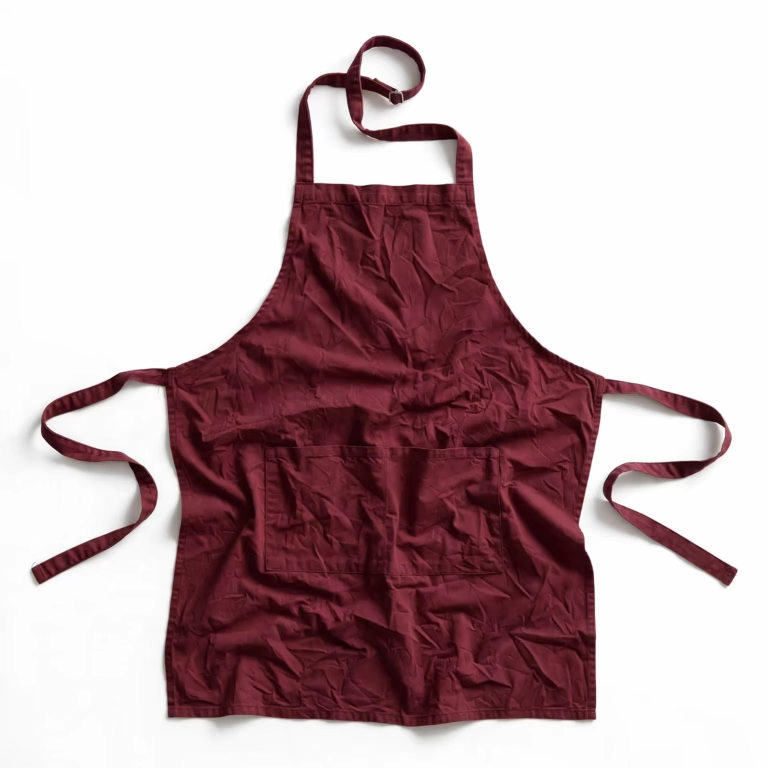
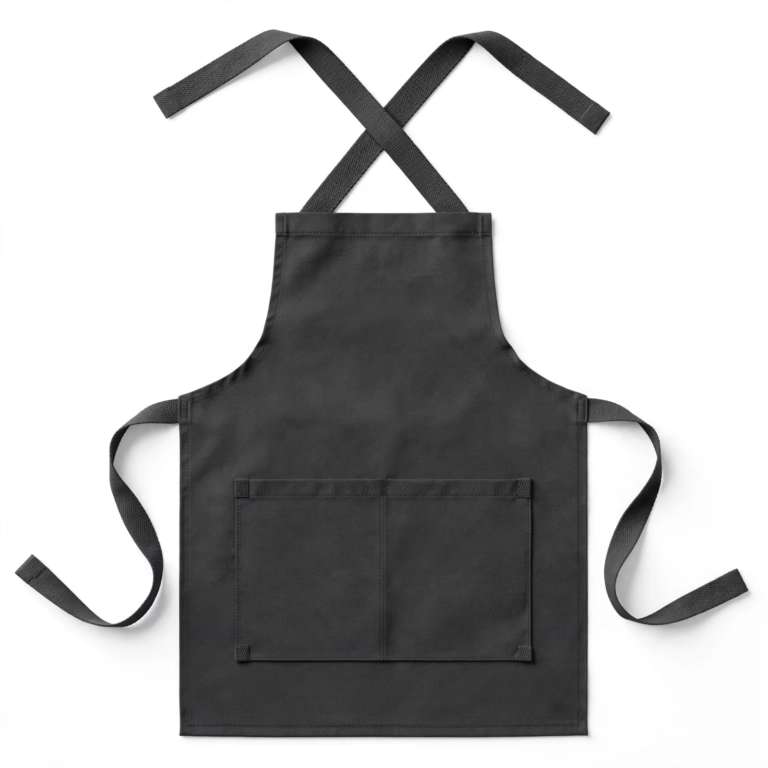
The burgundy apron pictured runs a divided pocket across the lower front. The division is stitched, not tacked, so a thermometer rides on one side and a folded side towel or notebook on the other. Pocket corners are bar-tacked, the single most common apron failure answered at the machine rather than in a returns report.
Straps and Ties That Survive a Shift
The neck strap adjusts on a metal slider and is sewn into the bib with a boxed cross stitch. A strap that slips mid-service is an annoyance; a strap that tears out is a lost apron. Buyers can spec a cross-back pattern instead, which takes the weight off the neck entirely and suits long prep shifts.
Waist ties are cut long and hemmed, never left as raw woven tape that frays in the wash. Length is set on your chart, with enough wrap for a front bow on your largest size. Tie ends are angle cut and stitched so they stay neat through hundreds of laundry cycles.
Twill Weights and Kitchen Laundering
Most kitchen programmes run on cotton twill or a polyester-cotton twill. Pure cotton breathes and takes embroidery beautifully; the blend dries faster and holds colour longer under industrial laundry. Weight follows the work: lighter for cafe and front-of-house aprons, heavier for prep kitchens where the apron is armour as much as uniform.
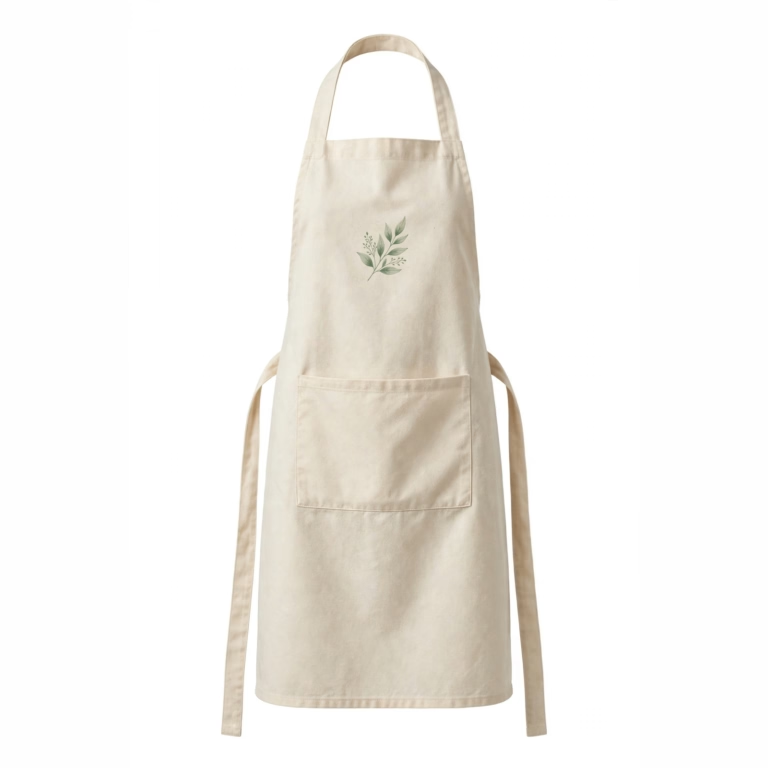
The aprons carry the crinkled finish shown in the gallery, the natural un-ironed character of washed cotton twill. Bulk is pressed only enough to fold and pack, so the cloth keeps that character when the carton opens at your kitchen.
Colour fastness is tested against hot washing before bulk, not argued about after. A burgundy that migrates onto a white shirt fails the only test a chef cares about. Shrinkage is measured on the same wash, and the cutting ticket carries the allowance so the bib length you approved is the bib length that arrives.
The Apron Build Sheet
Every order is sewn against a build sheet that fixes the details a photograph cannot show. Bib width and length, strap type and finished length, tie length, pocket position measured from the waist seam, pocket division width, stitch density, and thread colour all sit on one page that the line supervisor and the final checker both work from.
Changes travel on the sheet, not by message. When a restaurant group asks for the pocket moved two centimetres lower for a taller team, the sheet is reissued with a new revision mark, and the old one is pulled from the line. That discipline is what makes the five hundredth apron match the first.
Your Label and Your Embroidery
The label picture in the gallery shows the mark inside the top of the bib: your name, white capitals on black woven cloth, sewn where the wearer sees it every time the apron goes on. For retail programmes the same label discipline extends to a printed care label and your hangtag position.
Embroidery sits where your brand needs it, chest or pocket, worked from your artwork with a stitch count set for twill so the logo stays flat after washing. Print is offered for lighter designs and event aprons. Either way, a struck-off sample of the mark is approved before the bulk line touches it.
Checks Before a Carton Closes
Finished aprons are checked strap by strap. The slider must grip and release cleanly, ties are measured against the chart, pocket divisions are pulled at the bar-tacks, and the bib is read against the colour standard under daylight lamps. Any apron with a skipped stitch at a stress point is rejected at the table, not repaired quietly.
Cartons are packed to your instruction: folded singles for retail, banded dozens for kitchen issue, or mixed colour sets for cookshop ranges. Each carton carries the size and colour breakdown on its mark so a goods-in team can check a delivery without opening every box.
Samples, Grading and Reorders
Samples follow your route: send a worn apron, a pattern, or a photograph with measurements, and the first sample comes back in your fabric and colour for fitting on a real wearer. Aprons are graded on bib dimensions rather than body sizes, and split-front, waist and cross-back variants all grade from the same base block.
Reorders are where an apron programme earns its keep. Your build sheet, label plate and colour standard stay on file, so the reorder that lands next season ties on exactly like the first delivery. Restaurant groups rolling out new sites feel this most: one spec, every kitchen, no surprises at opening.
Colours Beyond Burgundy
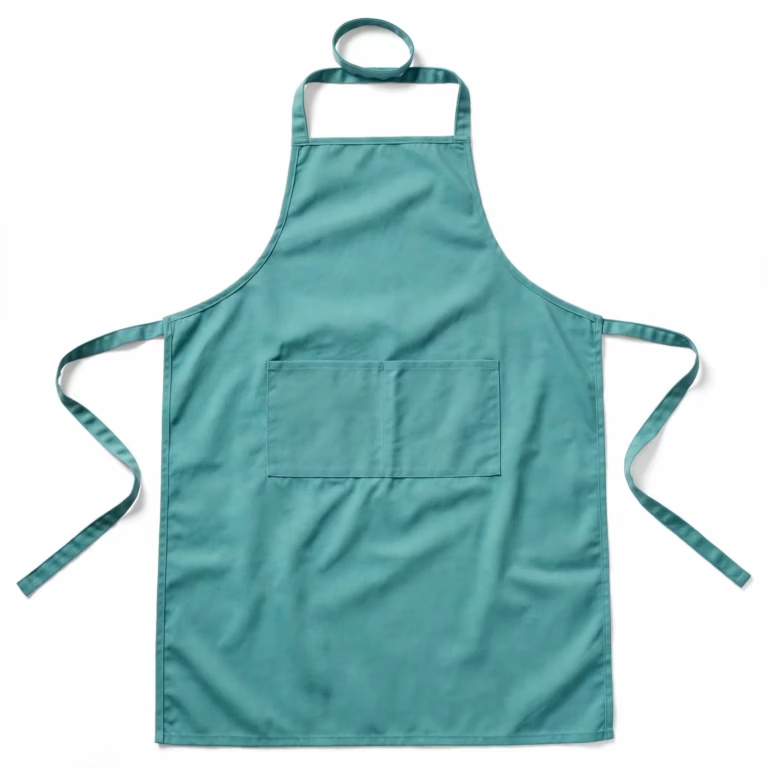
Burgundy carries the page because it hides kitchen work gracefully and reads warm under dining room light. The same apron runs in the colours kitchens actually order: deep green, charcoal, stone, white for bakery programmes, and the black alternative many groups choose for open kitchens. Colour is set by your swatch or your Pantone reference and held across dye lots by the fastness testing above.
Two-tone programmes, a contrast tie or a contrast pocket stitch, are sewn on the same line. Retail buyers often build a small range this way, one apron body in three colourways, so a cookshop wall looks like a collection rather than a commodity.
Waist Aprons and Other Kitchen Formats
Not every station wears a bib. Bar and service teams often run waist aprons with the same divided pocket logic at hip level, and bakeries ask for a longer split front that lets the wearer stride and crouch without the cloth pulling. All three formats are cut from the same twill programme, so a group can dress the whole building from one fabric standard.
The formats share the checks as well. A waist apron’s tie channel is bar-tacked where the bib’s straps are, because the strain point simply moves. Buyers who start with the bib and add formats later find the colour and hand feel already settled, which is the real value of running aprons as a programme rather than as separate purchases.
Questions Apron Buyers Ask
Buyers ask whether the ties are long enough for a front bow on larger sizes; on the standard chart they are, and the build sheet states the finished length so you can check it against your own team. They ask about the slider: it is metal, not plastic, because plastic sliders crack in hot laundry. They ask whether the pocket fits a tablet for stock counts; the divided pocket takes a small notebook and a phone, and a wider single pocket is a standard variant.
They also ask how the apron behaves after fifty washes. The honest answer is that twill softens and the colour holds when the fastness work is done at sampling, which is why we test before bulk and keep the test result with your file.
Start Your Apron Programme
Send your apron spec, colours and quantities through our contact page. We will make it at your level: your quality, your fabric, your design, your measurement, and your kitchen will tie on an apron that still looks the part a year from now.
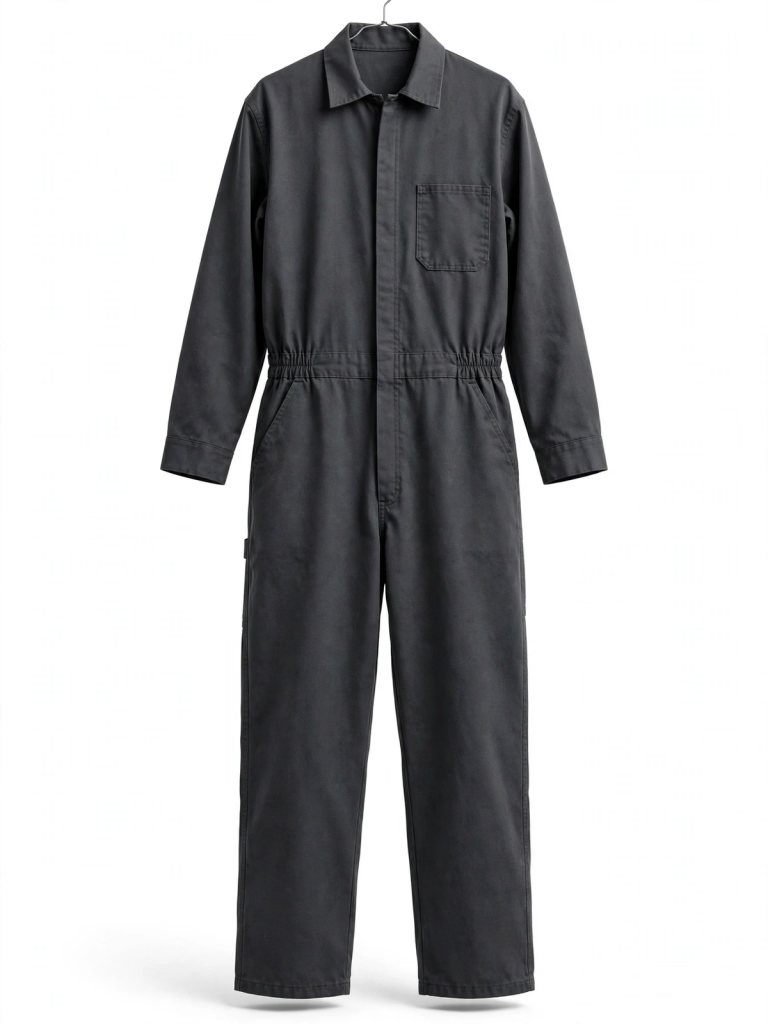
Buyers building a wider kitchen and workwear range can see the same construction discipline on our workwear coverall programme and our knitwear range for staff layers. Background on Bangladesh garment exports is published by the International Trade Centre.