
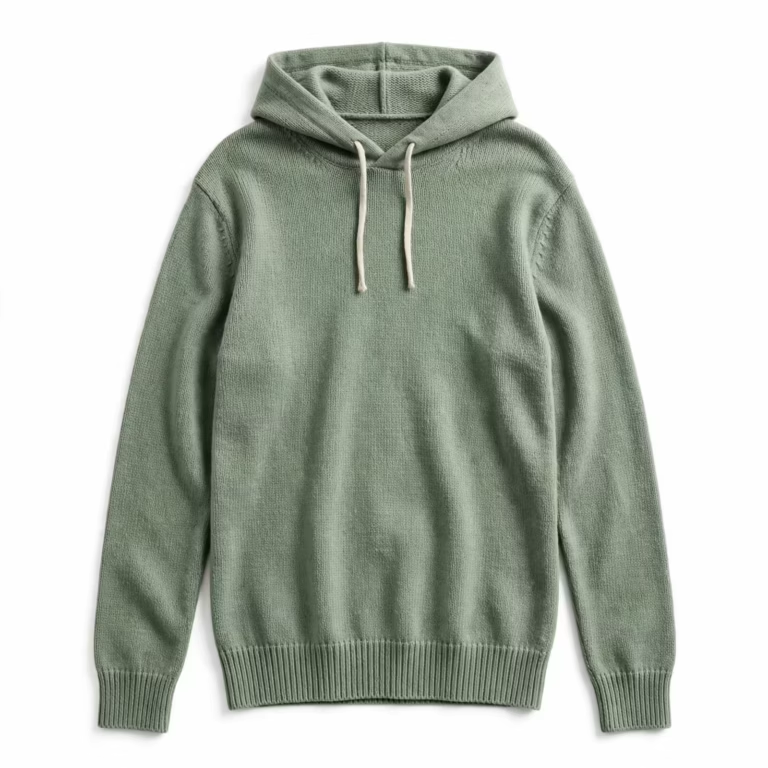
Knitwear Bangladesh Manufacturer Knitting for Importers Worldwide
A sweater is judged twice: once on the rail, by its colour and hand feel, and once in February, by whether the collar still sits flat and the cuffs still grip. Knitwear that passes the first test and fails the second comes back as returns and lost listings. Our knitwear programme is built around the second judgement as much as the first.
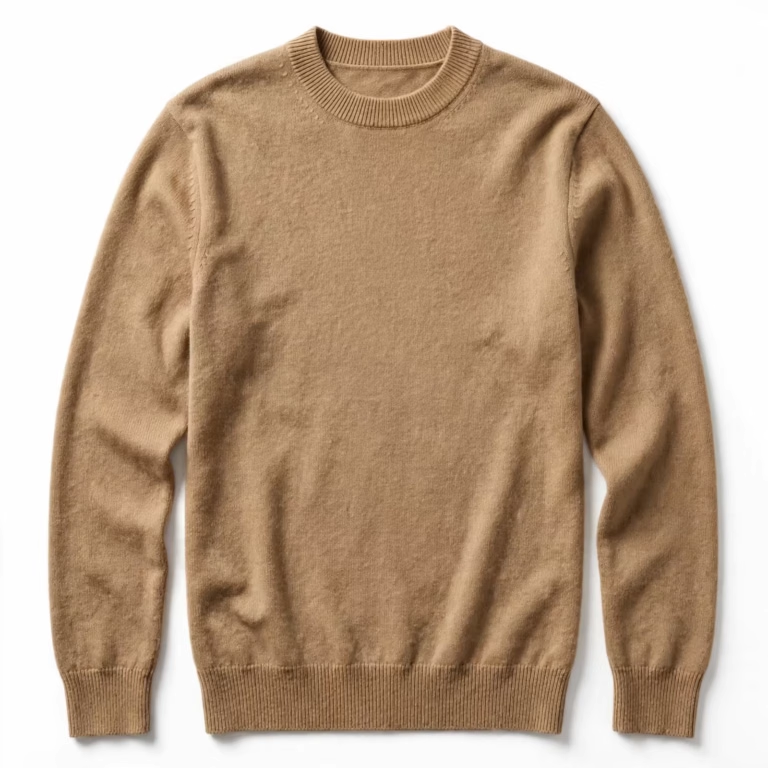
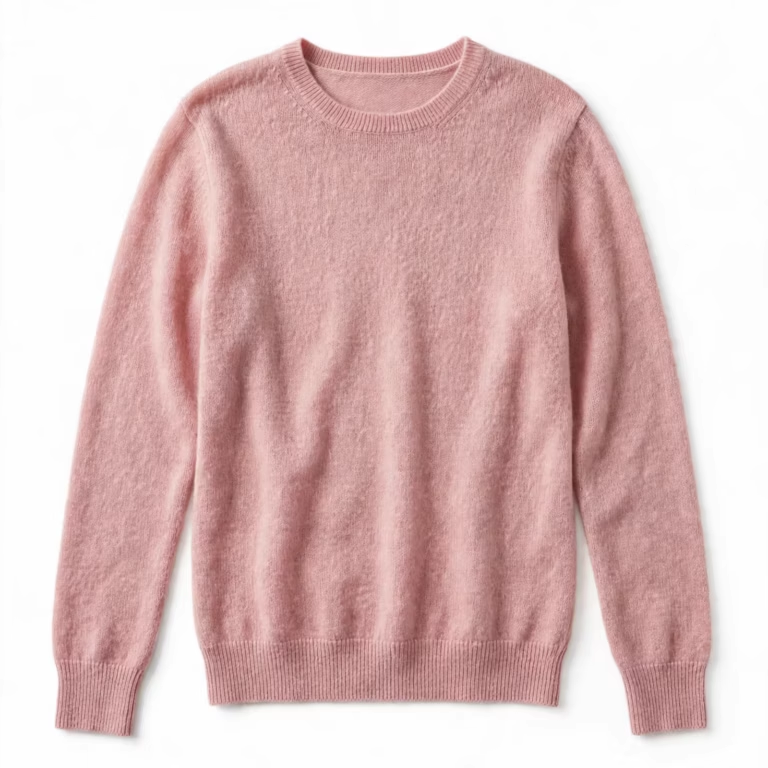
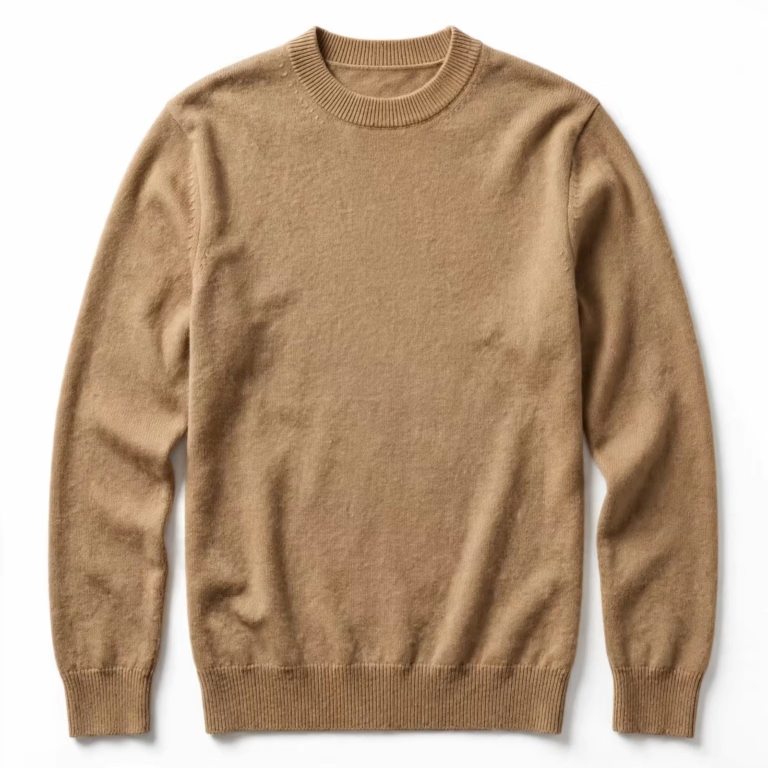
The camel merino crew on this page is the reference garment. It is a plain stitch fine gauge knit, fully fashioned, with a ribbed crew collar, ribbed cuffs and a ribbed hem. Nothing exotic, which is the point: the basics of knitwear, gauge, linking, rib recovery and colour, done properly and held across a whole order.
Fully Fashioned, Panel by Panel
Each panel is knitted to shape on the machine, with the increases and decreases formed in the stitch, then linked seam to seam. There is no cut edge to fray and no overlocked bulk at the armhole. The shoulder is the panel buyers should turn inside out first: on a linked sweater it lies flat and smooth, and it stays that way after washing.
The crew collar is a true rib, knitted separately and linked on, so it can be specified deeper or shallower against your block. The gallery’s neck view shows the rib up close. A collar that recovers after being pulled over a head a hundred times is a collar that was knitted with the right elasticity, not stretched onto the body.
Merino and the Yarn Question
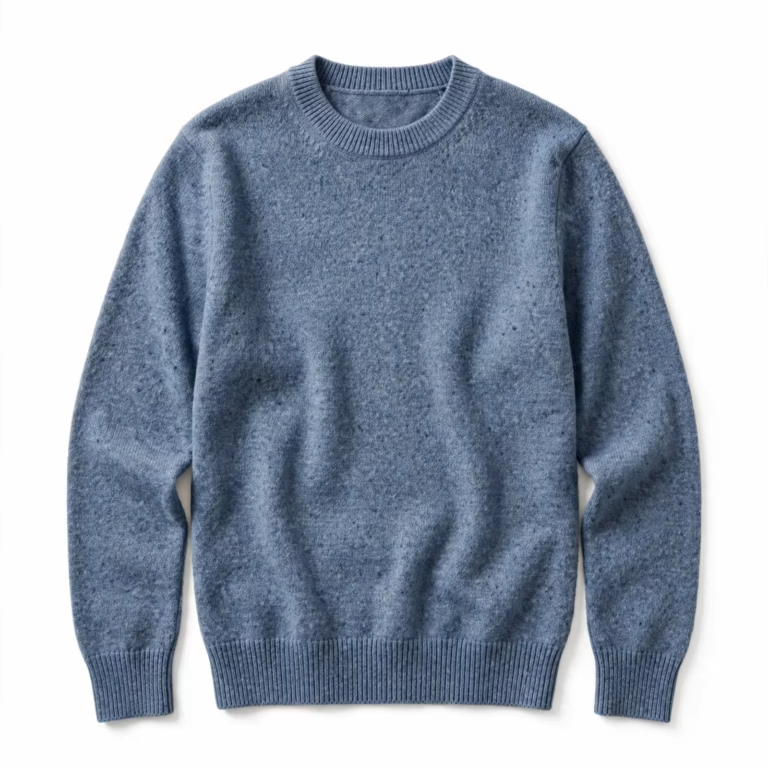
Merino carries this page because it shows what the programme can hold: a fine, soft yarn that pills when it is knitted loosely and blooms when the gauge and twist are right. Yarn is bought against your specification, micron, blend and ply, and a knitted swatch is approved before a single panel is made. The fabric view in the gallery is that swatch logic at garment scale: fine, even stitches with the yarn’s natural life in them.
The same machines run lambswool for a drier hand, cotton knits for spring programmes, and wool blends where a buyer needs easier care. What does not change is the order of work: yarn approved, swatch approved, panel measurements locked, then bulk.
The Knitwear Build Sheet
Every style runs against a build sheet that reads like a knitter’s document, because it is one. Gauge, stitch structure, panel measurements at chest, length and sleeve, rib depths at collar, cuff and hem, linking thread, and the washing and pressing finish are all written down. The sheet travels with the order from knitting to linking to final check.
When a buyer asks for the body lengthened by two centimetres for a northern market, the sheet is reissued and the panels change at the machine. Nobody stretches a finished sweater and hopes. That is the difference between a knitwear factory and a sewing room with knitting machines in it.
Your Label Inside the Neck
The label view sits third in the gallery, where it belongs: your name in white capitals on black woven cloth, sewn inside the back neck. On knitwear the label is also a construction point, stitched so it cannot curl or scratch, sitting flat against the linking seam.
Retail programmes add your side seam flag, your hangtag and your polybag print on the same approval round. Private label buyers running several brands through one programme keep a label plate per brand on file, and the line changes plates, never standards.
Checks a Sweater Has to Pass
Finished sweaters are measured laid flat against the build sheet, chest, length and sleeve, because knitwear relaxes and a garment measured hanging will lie to you. Ribs are stretched and released at collar and cuff to test recovery. Seams are read along the linking line for skipped stitches, and colour is checked panel to panel, since a body knitted from one dye lot and a sleeve from another shows exactly there.
Washing is sampled from every bulk: one sweater in fifty goes through the wash the care label promises, and it is remeasured afterwards. Shrinkage beyond tolerance stops the packing line until the cause is found. Buyers rarely see this work, but they see its absence in returns when it is skipped.
Washing, Pressing and the Final Hand
Knitted panels come off the machine with the yarn’s natural oils and tension still in them. Every sweater is washed and finished before pressing, which relaxes the stitch into its true measurements and gives merino its finished hand. Measuring before that wash would grade a garment that no longer exists, so the build sheet’s measurements are all post-wash figures.
Pressing is done on shaped forms, not flat irons, so the body keeps the drape it was knitted with. The sweater is then rested before folding, because a knit folded warm keeps the fold. These are small disciplines, but they are the difference between a sweater that arrives ready for the rail and one that needs an hour of steaming in your stockroom.
Samples, Grading and Reorders
Samples start from your reference garment, your tech pack or your swatch. The first sample is knitted in your yarn and colour so the hand feel you approve is the hand feel that ships. Grading follows your chart across the size range, with panel measurements, not guesswork, carrying the differences between sizes.
Reorders run from the stored build sheet and the retained yarn standard. A camel that sold through in October can be reknitted for January with the same gauge, the same rib depth and the same shade, because nothing about the style lives only in someone’s memory.
Colour and Pattern Range
Camel anchors the page because it is the hardest colour to fake: any unevenness in dye or stitch shows on it immediately. The programme knits the full sweater wardrobe around it, charcoal, stone, deep green, burgundy and the seasonal colours your range plan calls for, each dyed to your swatch and held across lots.
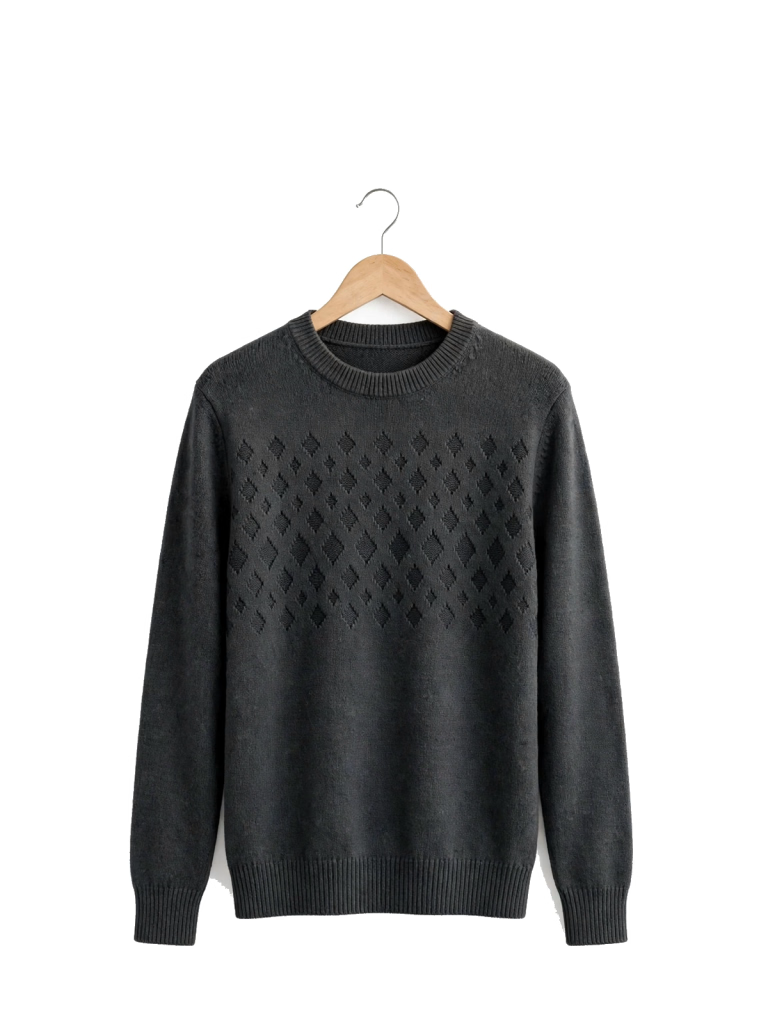
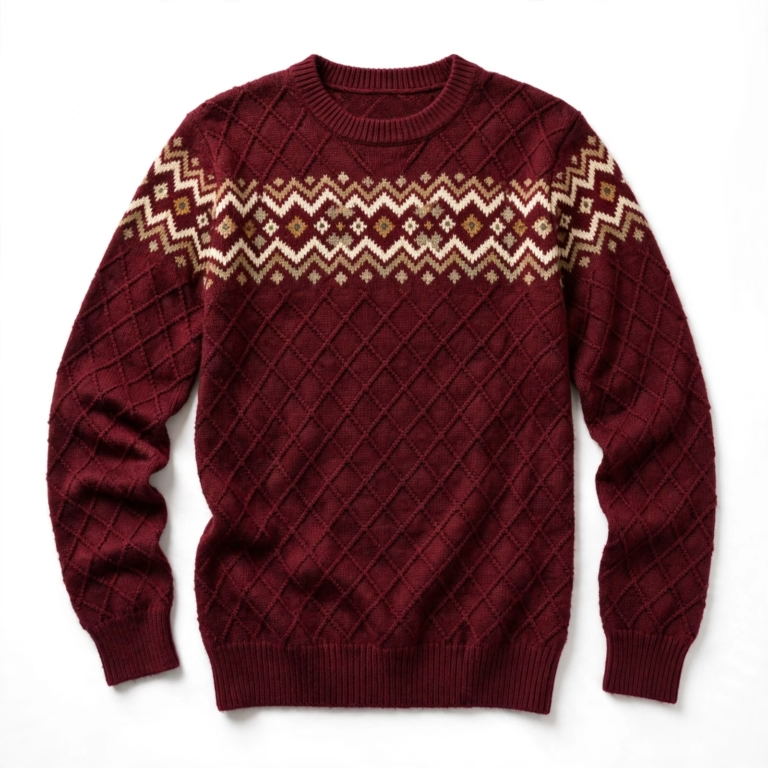
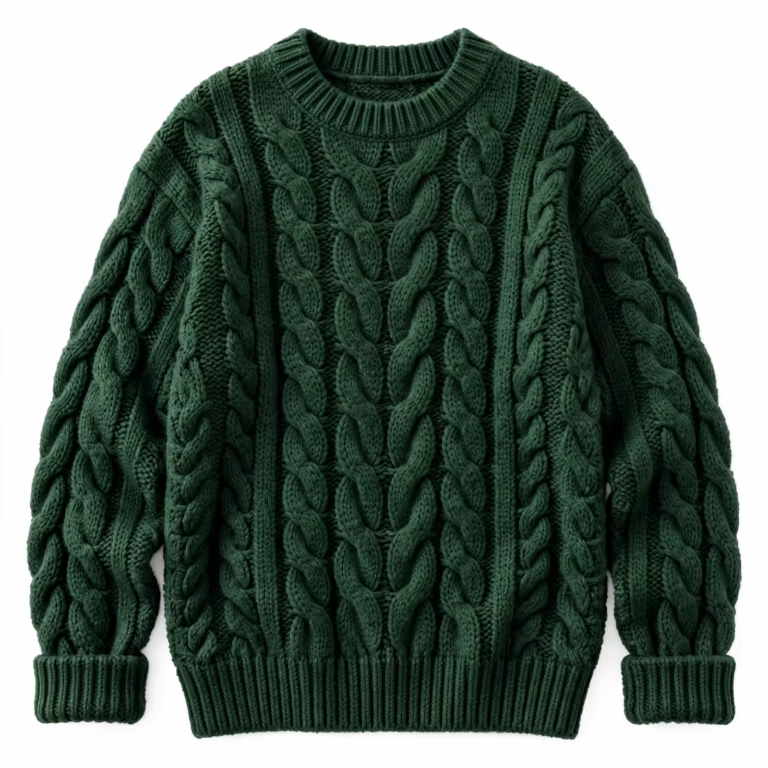
Pattern is knitted in, not printed on: cables, pointelle, stripes set at the machine, and intarsia blocks for buyers who want a graphic without a print table. A striped programme grades its stripe repeat by size on the build sheet, so the pattern sits at the same chest point on an XS and an XXL.
Beyond the Crew Neck
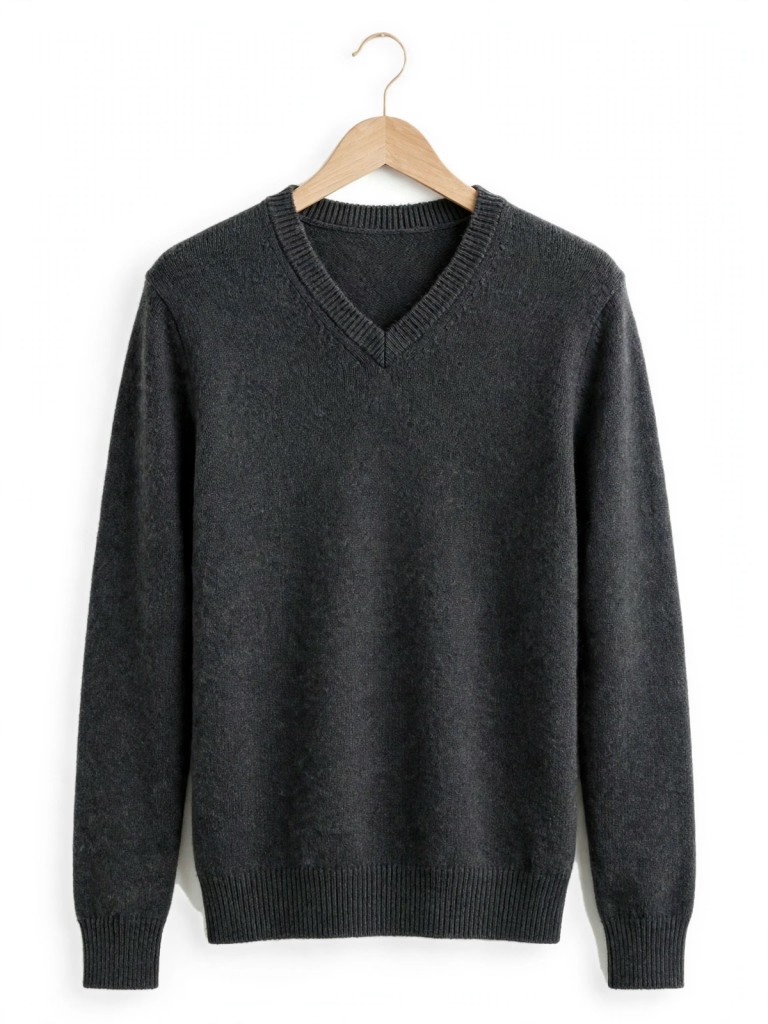
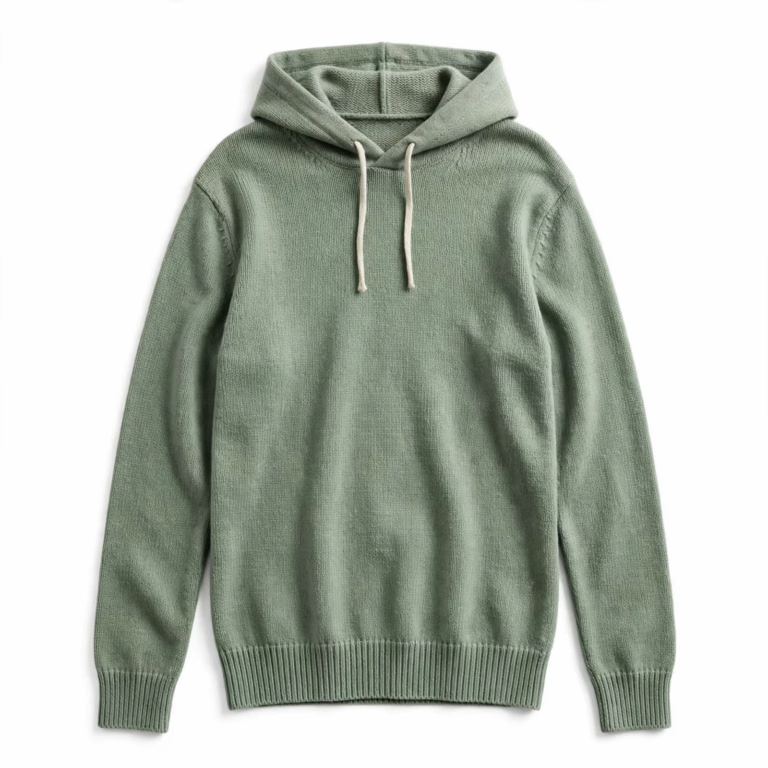
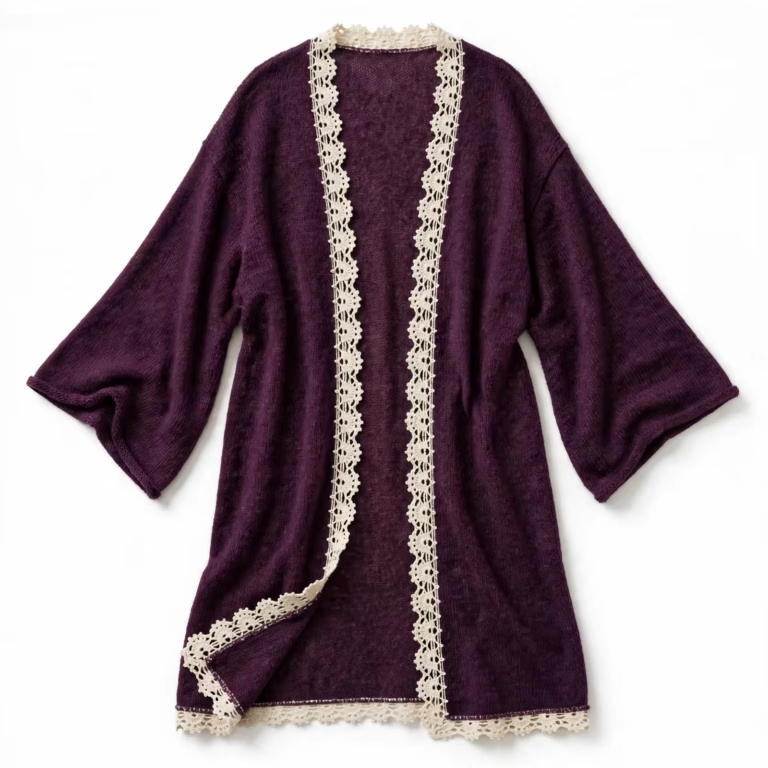
The crew is the reference, not the limit. The same fully fashioned discipline builds V-necks, cardigans with button or zip fronts, roll necks and sleeveless slips, each knitted to shape rather than cut down from the crew’s panels. A cardigan’s front bands are knitted with the buttonholes formed in the stitch, so they cannot stretch into waves the way a sewn band can.
Buyers building a knitwear wall usually start with two or three shapes on one yarn standard. The colour, gauge and finish stay constant while the silhouettes change, which keeps a range looking deliberate. It also keeps reorders simple: one yarn file can feed several styles, and a shade that performs in the crew can be trusted in the cardigan.
Questions Knitwear Buyers Ask
Buyers ask about pilling first, and the honest answer is that pilling is set by yarn quality and knit tightness, both of which are sampling decisions we make together and record. They ask whether the sweater can be machine washed; a merino programme can be built for gentle machine care when the yarn and finish are chosen for it at the start. They ask about minimum flexibility across colours; a style can run several colourways on one build sheet, which is how most ranges are actually bought.
They also ask how the collar sits after a season. The rib recovery test at final check is our answer, and the retained sample from your bulk lets either of us prove it months later.
Start Your Knitwear Programme
Send your sweater spec, yarn and colours through our contact page. We will make it at your level: your quality, your fabric, your design, your measurement, and your buyers will reach for a knit that still earns its place on the rail next season.
Importers building a wider Bangladesh programme can see the same discipline on our cashmere sweater range and our pajama sets for retail chains. Export background on Bangladesh knitwear is published by the International Trade Centre.