
Pajama Sets Wholesale Supplier in Bangladesh for Retail Chains Worldwide
Retail sleepwear lives or dies on the second purchase. A pajama set is a gift buy and a self buy at the same time, and the customer who finds the waistband honest and the jersey still soft in March comes back for the summer set. Chains know this, which is why their pajama programmes are specified like uniforms and checked like babywear.
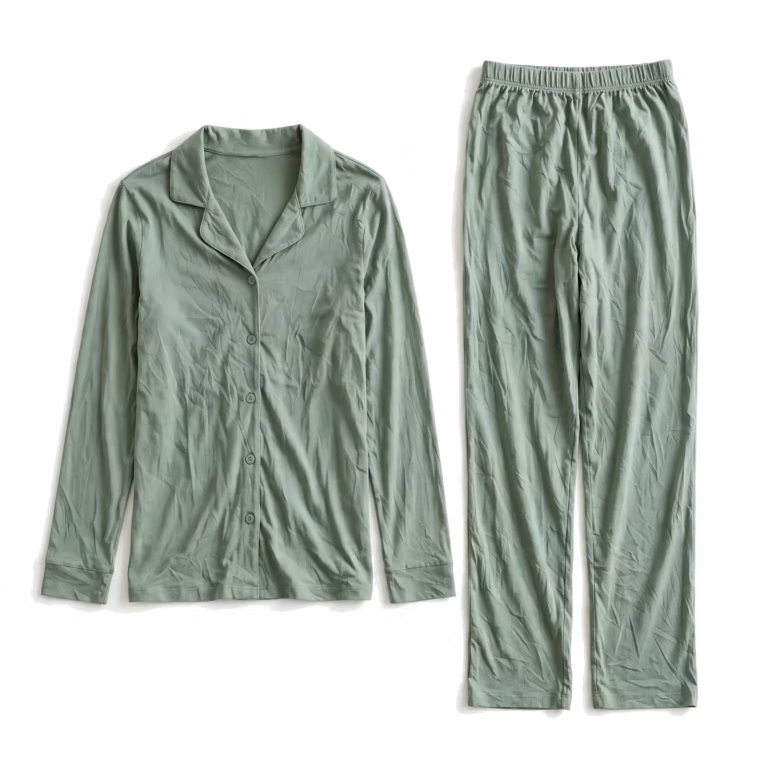
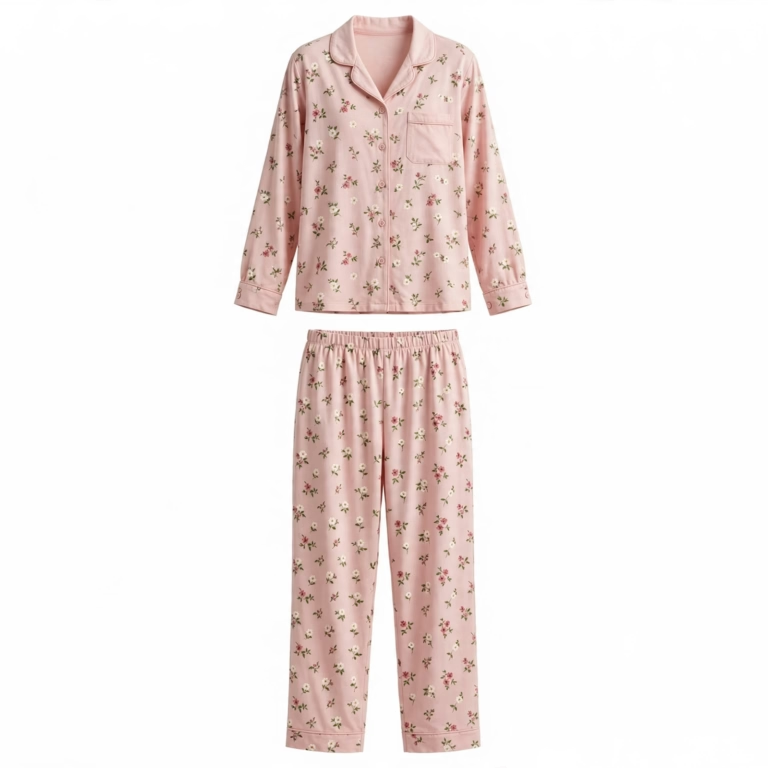
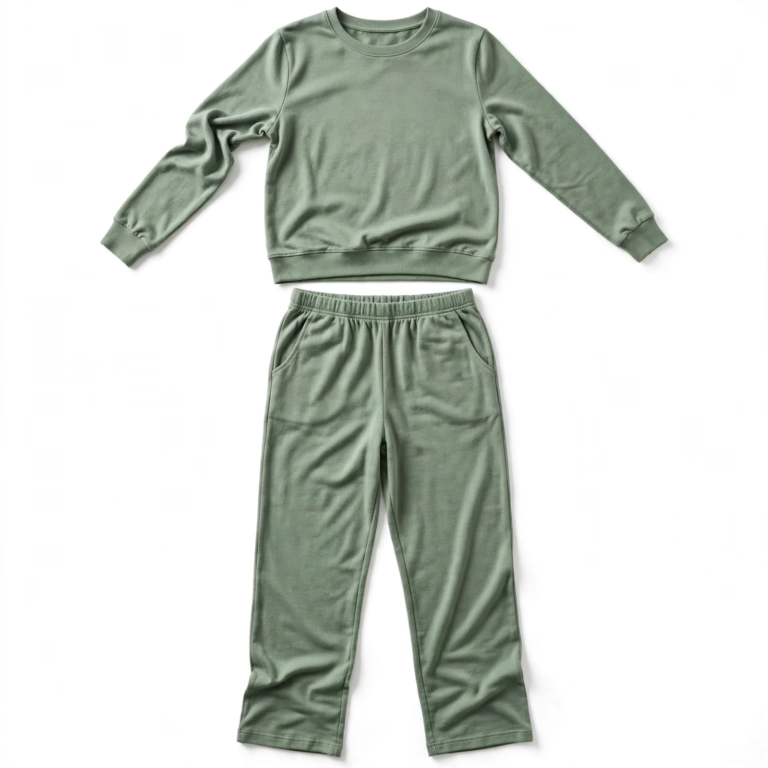
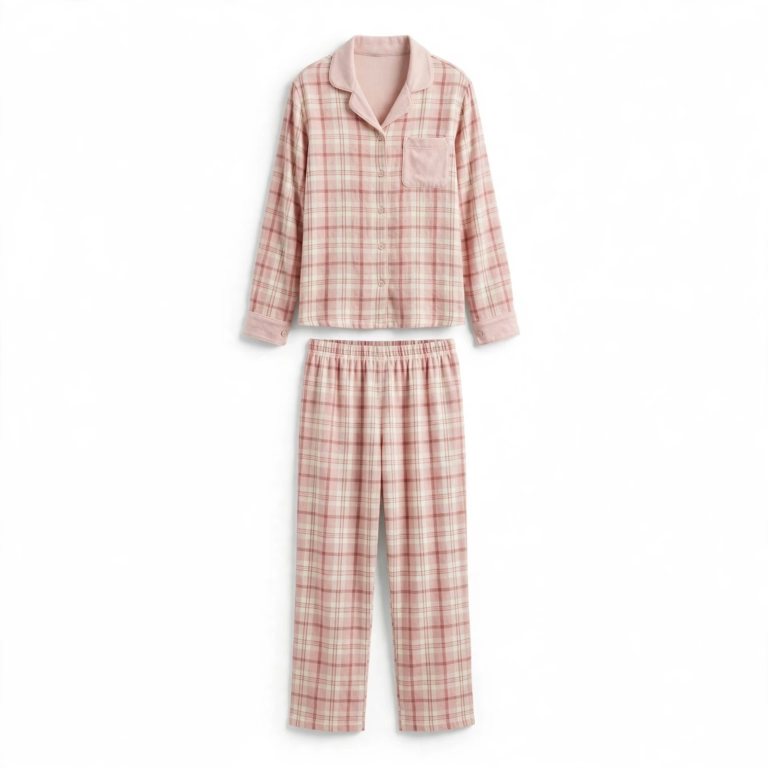
This page is built around the set in the gallery: a women’s sage green cotton jersey set, button-front top and full-length trousers laid side by side the way a retail buyer reads them. Plain dyed, no print, nowhere to hide. If the seams, the collar and the drape are right on a plain set, they will be right on your printed one.
The Top, Seam by Seam
The top is a classic pajama cut: a notch collar that folds and sits flat, a button front with buttons spaced to your spec, and long sleeves with a plain cuff. The collar is the inspection point. It is interfaced lightly and stitched so it keeps its fold after washing instead of curling into a ribbon by the third laundry day.
Buttons are sewn with a shank that survives tumble handling, and a spare rides inside the side seam on retail programmes. The hem is straight with side vents small enough to keep the line clean. Every one of these points sits on the build sheet, because a chain buying ten thousand sets cannot re-argue the collar at every delivery.
The Trouser, Waist to Hem
The trouser is full length with an elasticated waist and a working drawstring, not a decorative cord sewn shut. The elastic is specified by width and recovery, stitched so it cannot roll inside the channel. Legs hang straight, cut on the grain so they do not twist around the ankle after washing, the quiet fault that makes a good set feel cheap.
The hem view in the gallery shows the leg finish: a clean double-stitched hem with the jersey falling naturally above it. Inseam measurements are graded with the size curve, so a set bought in two sizes fits like the same set, not like cousins.
Jersey, Weight and the Korean Hand Feel
Korean retail buyers specify hand feel as firmly as weight. The jersey for this market runs soft with a smooth face, cotton or a cotton-modal blend where the programme wants extra drape. Weight is set by season: lighter single jersey for spring and summer sets, brushed and heavier knits when the range turns to winter.
Colour is dyed to your standard and checked under store lighting, not only daylight, because sleepwear sells under warm retail light. Sage carries this page because it is a proven retail colour in the Korean market: calm on the rail, easy in a gift box, and kind to a wide age range.
The sets carry the crinkled finish shown in the gallery, the natural character of washed cotton jersey left un-ironed. They are folded without hard pressing, so the texture your customer sees on the rail is the texture she takes home.
The Pajama Build Sheet
A set runs on one build sheet covering both pieces. Top chest, length, sleeve and collar measurements sit beside trouser waist, hip, inseam and leg opening, with the button spec, elastic spec, stitch types and the folding instruction all on the same document. The line sews from it, the checker packs from it, and your QC reads the same page we do.
When a chain adjusts its curve, say more of the middle sizes for a promotion, the sheet records the ratio change while the garment itself stays untouched. That separation, garment on one page, packing ratios on the same page’s second half, is what keeps a promotional order from arriving as a different product.
Your Label and Retail Presentation
The label sits third in the gallery: your name in white capitals on black woven cloth inside the back neck of the top, with the size and care label written in your market’s wording. For Korean retail programmes the care text follows the format your compliance team approves, set at sampling, not improvised at packing.
Presentation is part of the product at retail. Sets are folded as one unit, top over trouser, banded or boarded to your instruction, with your hangtag and barcode placed where your stores expect them. A set that arrives shelf-ready saves a chain more labour than a small price difference ever will.
Checks Before a Set Is Folded
Each set is checked as a pair, never as loose pieces. The top’s buttons are pulled, the collar fold is read, the trouser elastic is stretched and released, and the two pieces are laid together to confirm the dye lots match, the fault that only shows when top and trouser were cut from different rolls. Shade continuity across a set is a hard reject point.
Measurements are taken from both pieces against the build sheet, and one set in every bundle goes through a wash before packing begins. Shrinkage that would shorten the trouser below tolerance stops the line. Retail returns are decided here, at our table, or later at your customer’s home; we prefer our table.
Samples, Size Curves and Reorders
Samples come from your reference set or your tech pack, sewn in your fabric and colour so the hand feel at approval is the hand feel on the rail. The size curve is graded as a pair, top and trouser moving together, and the curve’s ratios are packed exactly as your order states them.
Seasonal reorders are the rhythm of this trade. Your build sheet, label plate, dye standard and folding instruction stay on file, so the autumn set matches the spring set in everything except the weight you asked us to change. Chains running a core pajama programme across many stores feel that continuity in their return rates.
Prints and Colourways
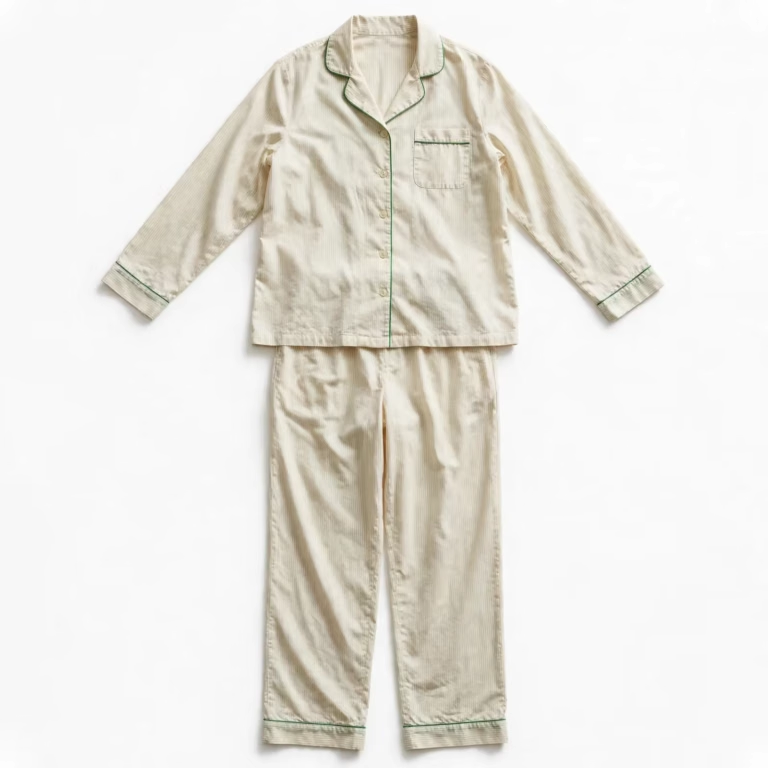
Sage is the plain anchor. The same set carries prints, stripes set in the knit, contrast piping on the collar and pocket, and button colours matched to the ground shade. Print artwork is struck off and approved at panel size so a motif sits where the designer placed it, not where production found convenient.
Most chains build a small wall: one plain, one stripe, one print on the same block. Because the build sheet is shared, the three colourways fit identically, and a customer who trusts the fit buys the second colourway without trying it on. That is the quiet economics of a good pajama programme.
The Wider Sleepwear Range
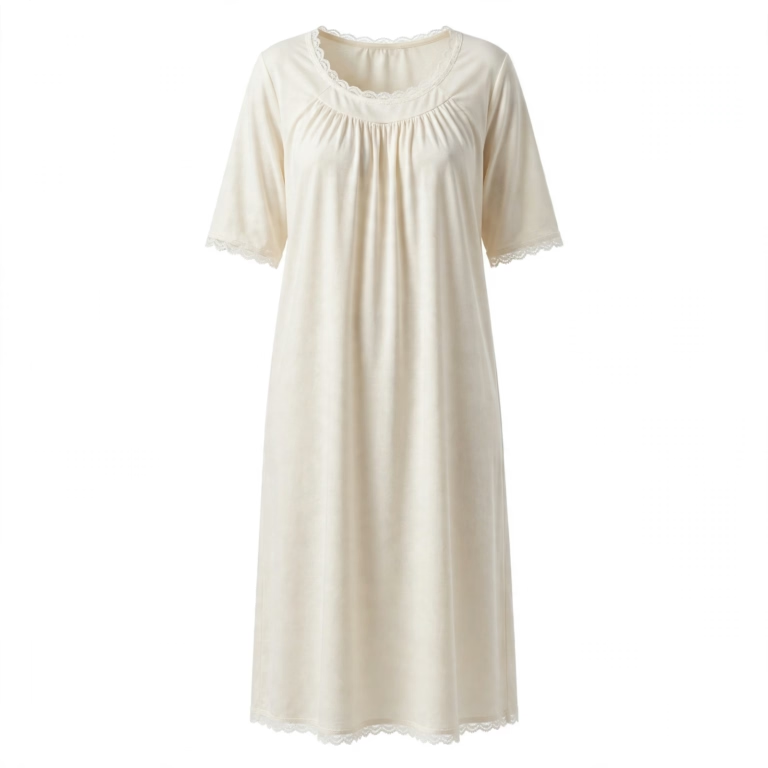
A pajama set rarely travels alone. Chains extend the same block into nightdresses, robe wraps and lounge separates, all sharing the jersey standard and the label programme, so the sleepwear wall reads as one family. The notch collar top pairs with a matching robe for gift season, and the trouser block carries into lounge pants sold on their own rail.
Keeping one fabric and finish standard across the family pays for itself at reorder. A customer who trusts the pajama jersey buys the nightdress without a fitting room visit, and the chain’s buyers manage one quality file instead of four. That is how a single set becomes a department.
Questions Retail Buyers Ask
Buyers ask whether the drawstring actually works; it does, and the elastic behind it is the primary fit, so the set stays comfortable if a cord end is lost. They ask about the collar after washing, answered above by construction and by the wash sample in every bulk. They ask whether the set can run in a short-sleeve summer version; the same block grades to short sleeves and shorts or cropped trousers without a new fitting round.
They also ask how colour holds across a large order. Dye lots are allocated per set at cutting, top and trouser from the same roll wherever the design allows, and the pair check at folding catches any exception before it reaches a carton.
Start Your Pajama Programme
Send your set spec, size curve and colours through our contact page. We will make it at your level: your quality, your fabric, your design, your measurement, and your stores will sell a set that brings the customer back for the next season.
Chains building a wider Bangladesh programme can see the same discipline on our knitwear range and our kitchen apron programme for hospitality buyers. Trade background on Bangladesh apparel exports is published by the International Trade Centre.